
Table of Contents >> Show >> Hide
- Before You Start: A Quick Yellow Game Plan
- 23 Yellow Living Room Ideas You’ll Actually Want to Try
- 1) Paint one “sun wall” instead of the whole room
- 2) Go soft with butter yellow as a “new neutral”
- 3) Try mustard on a velvet accent chair
- 4) Paint built-ins (or a bookcase) in a golden yellow
- 5) Color-block with yellow + white + charcoal
- 6) Pair yellow walls with warm wood and woven textures
- 7) Add yellow through curtains for “filtered sunshine”
- 8) Use yellow pillows like punctuation marks
- 9) Bring in a yellow rug to anchor the palette
- 10) Paint the ceiling a pale yellow for a cozy lift
- 11) Use yellow as a trim or door color
- 12) Make a yellow sofa the main character (and keep the rest calm)
- 13) Mix yellow with navy for instant sophistication
- 14) Try yellow + gray for a modern, clean look
- 15) Combine yellow with sage or olive for an earthy vibe
- 16) Layer yellows instead of using just one
- 17) Add a yellow lamp for “warmth on demand”
- 18) Try yellow artwork if you’re commitment-shy
- 19) Use yellow in a pattern: stripes, florals, or geometrics
- 20) Highlight architectural details with a sunny yellow
- 21) Use yellow in small decor: vases, books, and bowls
- 22) Choose a “honey yellow” paint for walls that change beautifully all day
- 23) Pick a designer-loved yellow paint and sample it like a pro
- Quick Troubleshooting: When Yellow Goes… Weird
- Real-World “Experience Notes” for Living With Yellow (Extra )
Yellow is the friend who shows up unannounced with coffee, good news, and the ability to make everyone look slightly more awake. In living rooms, it does the same thing: it warms up corners, flatters wood tones, and makes “we should really replace that rug” feel less urgent because, hey, the vibe is already cheerful.
But here’s the twist: yellow isn’t just one big neon highlighter. It’s a whole familybuttercream, marigold, saffron, honey, ochre, mustardeach with its own personality. Some are soft enough to pass as a neutral; others are bold enough to make your sofa feel underdressed. The key is picking the right yellow for your light, your style, and your tolerance for compliments from guests (“Your living room is so… sunny!”).
Below are 23 yellow living room ideas you can mix, match, and steal shamelesslyplus a longer, real-world “what it’s like to live with yellow” section at the end (because pretty pictures never warn you about the way color changes at 7:30 p.m. in February).
Before You Start: A Quick Yellow Game Plan
- Test in real light: Yellow shifts dramatically between morning sun, cloudy afternoons, and warm evening bulbs.
- Pick your “yellow role”: Background (walls), supporting actor (textiles), or main character (sofa).
- Balance it: Yellow loves neutrals (white, cream, greige) and looks extra sharp with deep contrast (navy, charcoal, black, forest green).
- Mind the undertone: Some yellows lean green (cooler), some lean orange/red (warmer). Undertone decides whether your room feels “fresh lemon” or “golden hour.”
23 Yellow Living Room Ideas You’ll Actually Want to Try
1) Paint one “sun wall” instead of the whole room
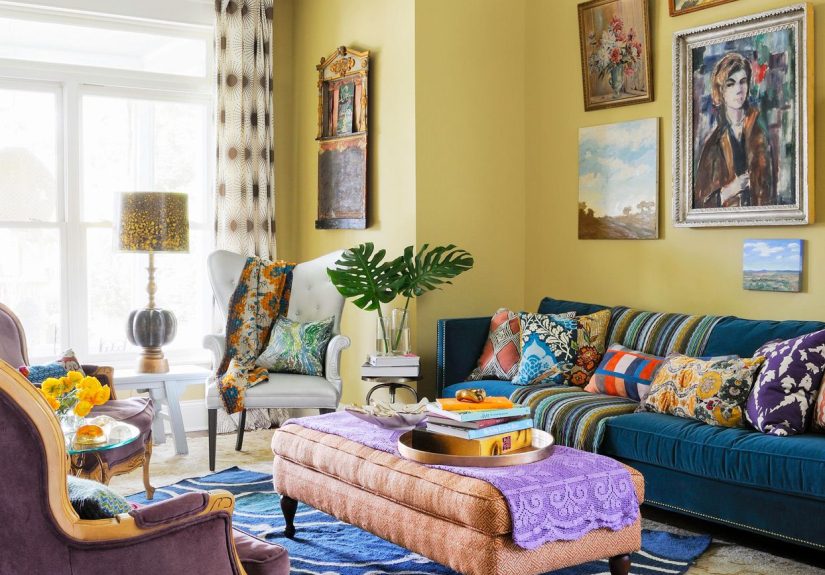
Want the glow without the full commitment? Paint a single feature wall in a buttery or honey yellow and keep the other walls warm white. It reads intentional, not accidental, and it creates a natural focal point behind a sofa, media unit, or fireplace.
2) Go soft with butter yellow as a “new neutral”
Butter yellow (the pale, creamy kind) is sneaky-good: it gives you warmth like beige, but feels brighter and fresher. Use it on walls if you want a gentle lift, or on trim if you’re feeling brave and slightly rebellious.
3) Try mustard on a velvet accent chair
A mustard chair is the easiest way to add yellow with maximum payoff. It’s a strong color, but a small footprintlike a spicy condiment. Pair it with a neutral sofa and let the chair do the talking (politely, but confidently).
4) Paint built-ins (or a bookcase) in a golden yellow
Yellow shelving looks curated even when it’s holding “important papers” and a candle you never light. Keep the back panel the same color for depth, or paint the interior slightly lighter to make the shelves feel airy.
5) Color-block with yellow + white + charcoal
Color-blocking sounds like a runway trend, but in living rooms it’s just smart geometry. Use yellow on the lower half of a wall (or a wide stripe), white above, and charcoal accents in frames or lighting to keep it crisp.
6) Pair yellow walls with warm wood and woven textures
Yellow and natural materials are best friends. Think oak coffee tables, cane chairs, rattan baskets, jute rugs. The texture keeps the color from feeling flat, and the whole room ends up looking like it has a good skincare routine.
7) Add yellow through curtains for “filtered sunshine”
Sheer or linen curtains in a pale yellow can make daylight feel softer and warmer. It’s subtle, but the room looks brighterespecially if your walls are white and you want a hint of glow without painting anything.
8) Use yellow pillows like punctuation marks
If your living room is mostly neutral, two to four yellow pillows can wake it up fast. Mix solids with patterns (stripes, checks, botanical) so it feels layered instead of “I panicked and bought the first pillow I saw.”
9) Bring in a yellow rug to anchor the palette
A rug with yellow woven through it (not necessarily solid yellow) ties everything together. Look for designs that mix yellow with cream, gray, navy, or rust so you have built-in coordinating colors for art and accessories.
10) Paint the ceiling a pale yellow for a cozy lift
Ceiling color can change how tall or intimate a room feels. A very light yellow overhead adds warmth without closing the space ingreat for rooms that feel a bit cold or shadowy. Keep trim crisp so it doesn’t feel “sepia.”
11) Use yellow as a trim or door color
Yellow trim is playful, but it can also look classic if the shade is creamy and the rest of the room is restrained. Painting an interior door yellow is an even easier winlike a little surprise every time you walk in.
12) Make a yellow sofa the main character (and keep the rest calm)
If you want a yellow couch, let it shine by keeping walls and big furniture neutral. Then repeat yellow in two or three smaller placeslike a lamp shade, a throw, and one piece of artso it feels designed, not random.
13) Mix yellow with navy for instant sophistication
Yellow + navy is a classic high-contrast combo that works in modern, coastal, traditional, and even eclectic spaces. Navy grounds the brightness, yellow adds energy. Use navy in a rug, curtains, or a painted cabinet.
14) Try yellow + gray for a modern, clean look
Gray can cool down yellow and make it feel sharperespecially with brighter yellows. This pairing works beautifully when you add white and black accents, and it’s an easy palette for art and patterned textiles.
15) Combine yellow with sage or olive for an earthy vibe
Yellow looks surprisingly relaxed next to greens. Think sunflower + sage, mustard + olive, butter + soft eucalyptus. Add pottery, plants, and warm wood, and your living room becomes a calm little ecosystem.
16) Layer yellows instead of using just one
Monochrome doesn’t mean one exact shade. Mix a pale yellow wall with deeper golden textiles and a mustard accent. The tonal variation keeps things rich and intentionallike a well-made soup, not a single-note sauce.
17) Add a yellow lamp for “warmth on demand”
Lighting is the mood manager of any living room. A yellow ceramic base, a pleated shade with a yellow lining, or even a warm-toned bulb can make evenings feel cozy without changing paint or furniture.
18) Try yellow artwork if you’re commitment-shy
A large piece of art with yellow in it can set the palette for the whole room. Pull one or two shades from the artwork for pillows and decor, and suddenly your living room looks “curated” instead of “collected.”
19) Use yellow in a pattern: stripes, florals, or geometrics
Patterns make yellow feel more livable because the eye reads it as part of a mix. Consider a striped rug, a floral chair, or geometric pillows. Bonus: patterns hide everyday life better than solid color does.
20) Highlight architectural details with a sunny yellow
Got picture-frame molding, a mantel, or built-in niches? Paint those details yellow for a playful twist. This works especially well when the wall color is a soft neutralyour architecture becomes the room’s jewelry.
21) Use yellow in small decor: vases, books, and bowls
This is the lowest-risk way to try yellow. Stack a few books with yellow spines, add a bowl on the coffee table, and toss in a vase. If you love it, keep building. If not, you’ve only committed to… a bowl.
22) Choose a “honey yellow” paint for walls that change beautifully all day
Some warm yellows shift subtly with the sunbrighter in the morning, richer in late afternoon, cozy at night. If your living room gets lots of natural light, a honey shade can feel dynamic rather than flat.
23) Pick a designer-loved yellow paint and sample it like a pro
Designers often recommend starting with tested, classic yellow familiescreamy, golden, or ochrethen sampling multiple swatches on different walls. Example paint names you’ll see people gravitate toward include buttery creams, golden “sunset” yellows, and deeper ochres that read like a grounded neutral.
Quick Troubleshooting: When Yellow Goes… Weird
- If it looks neon: Switch to a softer, more muted yellow or add more warm neutrals (cream, tan, wood).
- If it looks dingy/greenish: Your yellow may have a green undertone + cool lighting. Try warmer bulbs or a warmer yellow.
- If the room feels too busy: Reduce patterns and keep big items neutrallet yellow be the accent, not the entire marching band.
Real-World “Experience Notes” for Living With Yellow (Extra )
Decorating inspiration often skips the part where you actually live in the roomwhere sunlight changes hourly, where TV glare exists, and where someone inevitably asks, “So… is this like a mustard thing?” Here are the real-life patterns people tend to notice once yellow moves from idea to reality.
First, yellow is a lighting truth-teller. In bright, south-facing rooms, a cheerful yellow can look crisp and optimistic in the morning, then deepen into a richer gold by late afternoon. That’s a feature, not a bugif you like a room that feels alive. But in dim or north-facing rooms, the same yellow may skew cooler (sometimes slightly greenish), especially under cool white bulbs. One of the easiest “experience upgrades” is swapping to warmer bulbs and adding layered lightingtable lamps, floor lamps, and sconcesso yellow looks intentional at night instead of like it’s waiting for better weather.
Second, yellow changes the way your neutrals behave. Whites look creamier, grays can look cooler, and wood tones often look warmer and more expensive. That’s why people who add yellow often find themselves suddenly liking furniture they were about to replace. It’s also why the best yellow rooms usually repeat the color in small doses: one yellow chair plus a pillow and a piece of art tends to feel designed; one yellow chair alone can feel like it arrived at the wrong party.
Third, yellow impacts mood in a very practical way. Many people describe yellow living rooms as “energizing” during the day and “cozy” at night when paired with warm lighting and soft textures. The secret is texture: a yellow wall with nothing but sleek, hard surfaces can feel loud; a yellow wall with linen curtains, a wool rug, a chunky knit throw, and a little patina looks welcoming. If you want the “happy” effect without the “buzzing,” go for butter yellow or a warm off-white that leans yellow, then build warmth through textiles.
Fourth, yellow is surprisingly forgiving for family lifewhen you choose the right finish and placement. A yellow accent wall in a washable eggshell finish is easier to maintain than a full room in matte (which looks gorgeous but can show scuffs). Patterns with yellowrugs, pillows, wallpaperhide everyday wear better than solid blocks of color. And if you have pets or kids, it’s often smarter to keep yellow off the highest-touch zones (like the sofa arms) and use it on “easy swap” items like throws and pillows.
Finally, yellow tends to invite compliments. People notice it, because it’s not the default safe choice. The funniest part is that the compliments usually come from people who claim they “don’t like yellow.” That’s because most people don’t hate yellowthey hate the wrong yellow, in the wrong light, with the wrong supporting cast. When you pick a shade that matches your room’s natural light and balance it with neutrals and contrast, yellow doesn’t feel loud. It feels like your living room learned how to smile.







 Close
Close