
Table of Contents >> Show >> Hide
- Why Lavender Harvesting Is Weirdly Specific
- What Is the Zenport Lavender Knife and Sickle?
- Knife vs. Sickle: Which One Fits Your Harvest Style?
- How to Get Better Lavender Bundles (Without Overcomplicating Your Life)
- Care and Maintenance: Keep It Sharp, Keep It Happy
- Safety Notes That Actually Help
- Frequently Asked Questions
- Real-World Experiences: What Gardeners Notice With Zenport-Style Lavender Sickles (About )
- Conclusion
Lavender is the diva of the herb world: fragrant, photogenic, and extremely particular about how you handle it.
One minute you’re dreaming of silky bundles drying in your pantry; the next you’re staring at bruised flower spikes
that look like they got into a bar fight with your pruning shears.
That’s where a purpose-built harvesting toollike the Zenport lavender knife and sickleearns its keep.
This style of curved, hand-held blade is designed to make quick, clean cuts through multiple slender stems with less
crushing and fumbling. In plain English: it helps you harvest prettier lavender, faster, with fewer “oops” moments.
Why Lavender Harvesting Is Weirdly Specific
Lavender isn’t hard to grow, but it’s easy to harvest poorly. The stems are thin, the flower spikes are delicate,
and the whole point is preserving aroma and appearance. The wrong tool (or a dull one) can pinch, tear, or mash the
stemsespecially when you’re grabbing handfuls for bouquets, sachets, culinary use, or drying.
Timing matters more than people admit
Lavender is typically harvested when the flowers are starting to openoften recommended for peak fragrance and
attractive dried bundles. Many growers also prefer harvesting in the morning after dew dries, when aromatic oils are
less likely to be lost to midday heat.
Plant health matters, too
Lavender can get woody over time, and heavy cutting into old wood can stress the plant. While harvest cuts and pruning
aren’t the same thing, it helps to keep the “green growth vs. woody base” distinction in mind so you don’t turn your
lavender hedge into a sad collection of sticks.
What Is the Zenport Lavender Knife and Sickle?
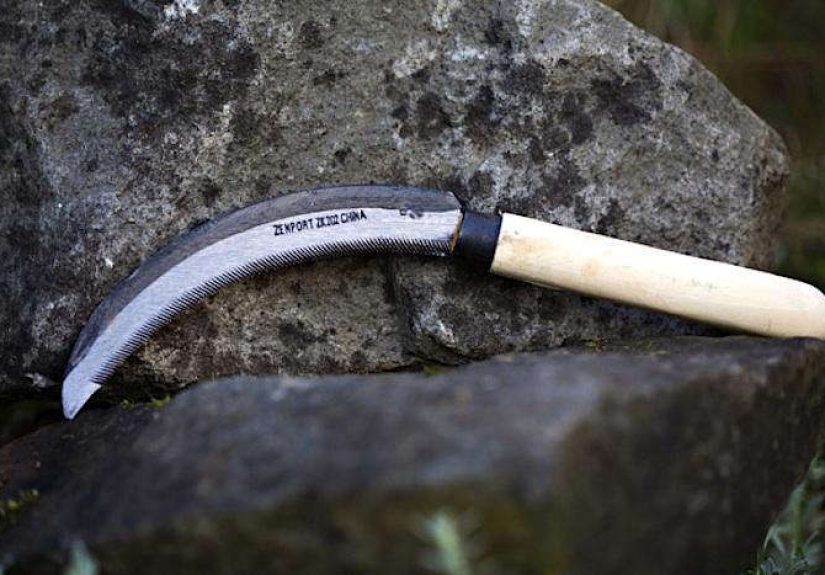
“Lavender knife and sickle” sounds like a medieval job title, but it’s really a compact harvesting tool with a curved,
hook-like blade and a comfortable handle. Zenport’s lavender harvesting models are commonly described as having a
curved 6.5-inch blade, often with a serrated edge, paired with a notched wooden handle.
This combination is popular for harvesting lavender, berries, and other small-stem crops, plus light weeding and trimming.
The curved hook blade: built for “gather and cut” harvesting
The curve is the secret sauce. Straight blades are great for slicing something on a cutting board. Lavender harvesting
is different: you’re usually cutting upright stems while holding a bundle. A curved blade naturally “hooks” around stems,
helping gather multiple stalks before the cut. That can reduce the amount of awkward repositioning that slows you down
(and makes bundles uneven).
Serrations: not just for steak knives
On many Zenport lavender sickles, the edge is lightly serrated. Serrations can help the blade “bite” into slippery,
fibrous stems, especially when you’re working with a handful of stalks. The goal is to cut cleanly without crushing.
A clean cut can also be kinder to the plant compared with tearing or snapping stems.
Carbon steel vs. stainless steel: the trade-off you actually feel
You’ll see Zenport harvesting tools described with carbon steel blades in some models and
stainless steel in others. Carbon steel is widely valued because it can hold an edge well, but it’s also
more prone to rust if you store it dirty or damp. Stainless steel is generally more rust-resistant, though it may have
different sharpening characteristics. Translation: carbon steel rewards basic care; stainless is more forgiving when life gets messy.
The notched wooden handle: grip when things get humid (or sweaty)
Lavender harvest season can be hot, and plants can be damp even after dew has evaporated. A notched wooden handle is
meant to improve gripespecially when hands are wetso the tool feels more stable during repetitive harvesting.
It’s a small detail, but it matters after the 30th bundle.
Knife vs. Sickle: Which One Fits Your Harvest Style?
People use “knife” and “sickle” interchangeably with these tools because the blade can look like a mini sickle but be
used like a harvesting knife. Here’s a practical way to think about it:
Choose the sickle style when you want speed and bundling
- You harvest by the handful and want tidy bundles for drying or bouquets.
- You work in tight spacing (raised beds, narrow rows, small hedges).
- You want a “hook and slice” motion that gathers stems without chasing them around.
Choose a knife-like harvesting tool when you need precision
- You’re selective harvesting (only the best stems for arrangements).
- You’re working around mixed plantings and don’t want to snag neighboring stems.
- You want cleaner access for light weeding or trimming in between crops.
In reality, many gardeners keep one curved harvesting tool as their “lavender day” blade and use pruners or shears for
heavier cutting or woody cleanup. That’s not cheatingit’s tool harmony.
How to Get Better Lavender Bundles (Without Overcomplicating Your Life)
Since this is a sharp cutting tool, always follow the manufacturer’s directions and use appropriate protective gear.
If you’re under 18, it’s smart to have an adult handle any cutting tools during harvesting.
A simple workflow that keeps quality high
- Pick a harvest window when blooms are beginning to open and the plants are dry.
- Decide the end use: drying bundles, culinary, crafts, or fresh arrangements.
- Harvest consistently: similar stem length makes drying and arranging easier.
- Bundle loosely: airflow prevents musty surprises while drying.
- Dry in the right spot: cool, dry, dark, and well-ventilated is the classic recipe.
The Zenport lavender knife/sickle style supports this workflow because it’s designed for fast, repeatable cuts through
multiple slender stems. The curve helps gather; the edge helps cut; your job is mainly “don’t rush and don’t crush.”
Care and Maintenance: Keep It Sharp, Keep It Happy
A harvesting blade is like a good cast-iron pan: low drama if you treat it right, high drama if you don’t.
Basic care pays off in cleaner cuts and longer tool life.
After each harvest session
- Clean off plant sap and debris so residue doesn’t turn into sticky grime.
- Dry thoroughly (especially important for carbon steel).
- Apply a light protective oil to metal surfaces if recommended for your blade material.
Occasional upkeep
- Sharpen as needed so you’re slicing, not crushing.
- Address surface rust early with gentle removal methods and then protect the metal.
- Condition wooden handles if they feel dry or rough (many people use a suitable wood oil).
If you’re choosing between carbon steel and stainless steel in Zenport’s lineup, remember: carbon steel often rewards
you with edge retention, but it’s less forgiving about moisture. Stainless is typically easier to live with if you’re
the kind of person who has ever “temporarily” stored tools in a damp shed for three months. (No judgment. We’ve all been there.)
Safety Notes That Actually Help
Harvesting tools are sharp by design. Treat them like you would kitchen knivesrespectfully, intentionally, and never
casually tossed into a bucket with loose metal parts.
Common-sense precautions
- Wear gloves and eye protection when appropriate for garden work and tool handling.
- Store the tool safely with the blade protected and out of reach of children.
- Don’t work when tired; repetitive harvesting is when slips happen.
- Keep the tool clean to reduce disease transfer between plants and to protect the blade.
Frequently Asked Questions
Is the Zenport lavender knife and sickle only for lavender?
No. This tool style is commonly used for other small-stem harvestingberries, herbs, and certain vegetablesplus light
trimming and weeding. Lavender is just the headline act.
Will a serrated blade damage lavender stems?
When sharp and used properly, serrations are intended to help grip and slice fibrous stems rather than crush them.
The bigger risk to lavender quality is a dull edge or rough handling that bruises the flower spikes.
How do I stop a carbon steel blade from rusting?
Keep it clean, keep it dry, and protect it according to the manufacturer’s guidanceoften a light oil film for storage.
Rust is usually a “left it wet” problem, not a “the tool is bad” problem.
Real-World Experiences: What Gardeners Notice With Zenport-Style Lavender Sickles (About )
People who switch from basic garden scissors or standard pruners to a curved harvesting sickle often describe the same
first reaction: “Ohthis is faster than I expected.” Not because the tool is magical, but because the motion becomes
more consistent. With pruners, you tend to pinch one or two stems at a time, reposition, pinch again, and repeat.
With a curved harvesting blade, gardeners often work in small clusters of stems, which can make bundles more uniform.
Another common observation is how the curve changes the feel of harvesting. Lavender stems don’t always
stand perfectly upright; some lean, some weave, and some hide behind flower spikes like they’re playing a very quiet
game of tag. A hook-shaped blade can help “collect” stems into a manageable group. In a small backyard patch, that
feels like less fumbling. In a longer hedge or small farm row, it can feel like less fatigue because you aren’t constantly
adjusting your grip and wrist angle.
The handle texture is a sneaky quality-of-life feature people mention after a few harvest sessions.
When it’s warm out, hands get sweaty; when you’re harvesting early, plants can still have a little moisture. A notched
wooden handle tends to feel more secure than a slick handle, especially during repetitive motion. And repetitive motion
is the real story with lavender: it’s not one heroic cut, it’s dozens (or hundreds) of similar cuts where consistency matters.
Gardeners who dry lavender for crafts often talk about the “bundle look.” They want long, straight stems, flower spikes
that don’t look squashed, and a bundle that dries evenly. While drying technique matters most (airflow and a cool, dry
location are huge), the harvesting tool can influence how neat the bunch is from the start. When stems are cut cleanly
and gathered with less tugging, the bunch tends to look more intentionallike something you’d actually hang in your kitchen
instead of something you’d hide in a closet and pretend is “rustic.”
On the maintenance side, gardeners commonly learn the carbon-steel lesson at least once: if you leave sap on the blade
and put it away damp, you may meet a little surface rust later. The good news is that most people find the routine easy
once it becomes habit: wipe, dry, protect. After that, the tool tends to age well, and many users appreciate that a sharp
harvesting blade makes cleaner cuts than a tool that’s been neglected into dullness.
Finally, there’s the “surprise bonus use” category. Even buyers who came for lavender often end up using the same curved
blade for light harvesting in the vegetable garden, trimming herb stems, or tidying small weeds in tight spacesjobs where
a big tool feels clumsy. It’s not that the Zenport lavender knife and sickle replaces everything; it’s that it becomes the
tool you reach for when you want speed, control, and a clean cut without dragging out half the shed.
Conclusion
The Zenport lavender knife and sickle is a practical, purpose-built harvesting tool for people who want cleaner bundles,
faster harvesting, and fewer crushed flower spikes. The curved, often serrated blade helps gather and cut small stems with
consistency, while the notched handle improves grip during repetitive work. Pair it with good harvest timing, careful drying,
and basic blade care, and you’ll get more of what you grew lavender for in the first place: fragrance, beauty, and that
“I totally have my life together” vibeat least in the herb department.





 Close
Close