
Table of Contents >> Show >> Hide
- From a Hackaday Headline to a Global Reality
- What Facial Recognition Actually Sees
- The Many Places Your Face Is Already Traveling
- Why Your Face Data Is Extra Sensitive
- Law, Policy, and the Patchwork of Protections
- There Are Benefits If Guardrails Exist
- How to Keep Your Face Closer to Home
- of Real-World Experience in the Age of Face Tracking
- Conclusion: Your Face, Your Choice As Much as Possible
You used to worry about where your passport was going. Now you have to worry about where your face is going, too.
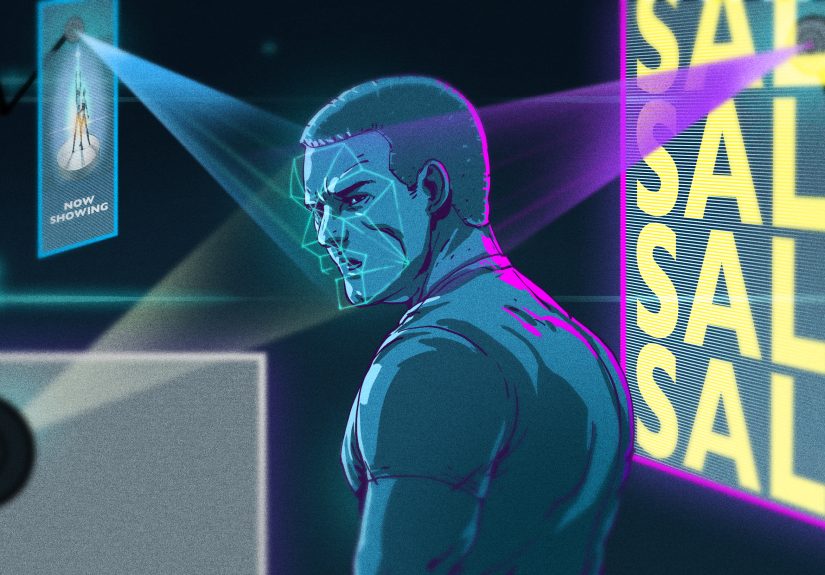
Cameras on street corners, smart doorbells, stadium gates, border crossings, even billboards all of them can grab your face,
turn it into data, and send it on a little world tour you never signed up for. That’s the unsettling reality behind the
tongue-in-cheek warning: “Your Face Is Going Places You May Not Like.”
Inspired by a widely discussed Hackaday piece on AI, facial recognition, and public shaming in high-tech cities, this article
takes that idea and zooms out. We’ll look at how facial recognition works, where your face is already traveling, why that matters
for privacy, and what you can realistically do to keep your biometric data from becoming a frequent flyer.
From a Hackaday Headline to a Global Reality
The original Hackaday article spotlighted Chinese cities investing heavily in AI-driven facial recognition systems. In some
places, these tools are used for border control and airport security; in others, they’re used for something much more petty:
publicly shaming jaywalkers by flashing their faces and names on giant screens. It’s the digital equivalent of getting put in
the stocks for crossing on a yellow light.
It sounds like science fiction, but the infrastructure that makes it possible is very real: dense networks of high-resolution
cameras, cloud computing power to process footage in real time, and massive databases that link faces to names, ID numbers,
and behavior histories. While that particular example comes from abroad, the same building blocks are rapidly spreading
worldwide, including throughout the United States.
What Facial Recognition Actually Sees
Facial recognition doesn’t “see” you the way another person does. It doesn’t care if your hair looks good or if you’re having
a tragic eyebrow day. Instead, the software maps dozens or even hundreds of points on your face distances between your eyes,
angles of your cheekbones, shape of your jawline, contours around nose and mouth and converts them into a mathematical
template, often called a “faceprint.”
That template can be compared against a database containing millions of other templates. If it finds a close enough match,
the system says, “Hey, that’s probably this person.” Unlike a password, your faceprint can be captured from a distance,
without your knowledge, while you’re just living your life: walking to work, attending a protest, or picking up groceries.
And unlike a password, you can’t change your face if it gets compromised.
Accuracy, Bias, and False Matches
Vendors love to talk about how accurate their systems are, but reality is messier. Accuracy can drop in the real world where
lighting is bad, cameras are cheap, or images are captured from awkward angles. Studies and government reports have found that
some facial recognition systems misidentify people of color, women, and younger people far more often than white men. When
these tools are used in policing, that’s not just a software bug it can mean wrongful arrests, harassment, and lasting harm.
Even in commercial settings say, at a store or stadium a false match can mean being flagged as a potential shoplifter or
trespasser when you’ve done nothing wrong. Your face, in other words, can accidentally go places you really don’t want your
reputation to follow.
The Many Places Your Face Is Already Traveling
You may not think of yourself as “using” facial recognition, but odds are you interact with it more often than you realize.
Here are some of the main routes your face might be taking today:
1. Airports, Borders, and Government Checks
Many airports now use facial recognition at check-in, security, and boarding gates to match passengers against ID photos or
passport databases. At border crossings, your face may be scanned to verify your identity, speed up processing, and flag
people on watchlists. The trade-off: convenience in exchange for more biometric data stored by governments and their
contractors often for longer than most travelers realize.
2. Phones, Laptops, and Smart Devices
Face unlock on smartphones and laptops feels harmless and in many ways it is, especially when biometric data stays
encrypted on the device. But features like automatic photo tagging in cloud albums or “memories” that recognize people
across years of pictures mean your face and your social graph are being analyzed continuously. That data can be highly
revealing and very tempting for advertisers, data brokers, and, in some cases, law enforcement.
3. Retail Stores, Stadiums, and “Smart” Venues
Some stores and entertainment venues use facial recognition to flag suspected shoplifters, enforce bans, or offer
personalized experiences. A handful of companies maintain watchlists of “known offenders” and compare live camera feeds
to those lists. If your face ends up in such a database correctly or not you could be denied entry, followed around,
or confronted by security based on an algorithm’s say-so.
4. Social Media and Web Scraping
Then there are companies that scrape billions of images from public social media profiles, websites, and news stories,
using them to train facial recognition databases without the knowledge or consent of the people in the photos. Those
databases have reportedly been marketed to law enforcement agencies, private investigators, and even corporations looking
to identify people from surveillance footage or online posts.
In other words, a selfie you posted for fun years ago could now be helping fuel a face search engine that you never agreed
to and can’t meaningfully control.
Why Your Face Data Is Extra Sensitive
Your face is more than just another piece of personal data. It’s a biometric identifier, like a fingerprint or iris pattern,
but it’s exposed 24/7. That creates a few serious issues:
Consent Is Often Missing
In many situations, you’re never clearly told that your face is being scanned, much less given a real choice to opt out.
A tiny notice on a sign, a buried line in a privacy policy, or no notice at all may be all you get. That flies in the face
(pun fully intended) of basic privacy principles like informed consent and transparency.
Data Security and Breaches
Biometric databases are extremely attractive targets for hackers. If a company stores face templates or raw images without
strong security, a breach can expose millions of people to long-term risk. You can reset a password or cancel a credit card,
but you can’t revoke your face. Once biometric data leaks, the damage is potentially permanent.
Surveillance, Chilling Effects, and Misuse
When cameras plus facial recognition can identify and track people across multiple locations, it becomes possible to map
who attends a protest, visits a certain clinic, goes to a religious service, or meets with a journalist. Even if such
tracking isn’t happening constantly, the possibility alone can make people censor themselves. That’s called a “chilling
effect” on free speech and free assembly and it worries civil rights advocates for good reason.
Law, Policy, and the Patchwork of Protections
In the United States, there’s no single federal law that fully regulates facial recognition across all contexts. Instead,
we have a patchwork:
-
A few states have biometric privacy laws that limit how companies can collect and store facial templates and require
consent in many cases. -
Federal agencies and regulators have issued best-practice guidance, emphasizing privacy-by-design, data minimization,
security, and giving people meaningful notice and choice. -
Some cities have restricted government use of facial recognition, especially in policing, over concerns about accuracy,
bias, and mass surveillance.
Meanwhile, high-profile enforcement actions and lawsuits have targeted companies that scraped photos or built face
databases without clear consent. In some cases, regulators have ordered those firms to stop processing certain data,
delete faceprints, or pay hefty fines. Yet enforcement is uneven, and many actors still operate in gray areas.
There Are Benefits If Guardrails Exist
It’s worth acknowledging that facial recognition isn’t inherently evil. Used carefully, with strong safeguards, it can
genuinely help people:
- Unlocking phones and laptops securely.
- Helping verify identity for online banking or government services.
- Speeding up boarding at airports or check-in at secure workplaces.
- Assisting in finding missing persons under strict legal oversight.
The problem is not that the technology exists; it’s how and where it’s deployed. When organizations embrace principles like
data minimization (collect only what you truly need), limited retention (don’t keep biometric data forever), robust
security, and clear consent, the risks shrink. When they skip those steps in the name of convenience or profit, your face
is the collateral damage.
How to Keep Your Face Closer to Home
You can’t completely stop your face from traveling unless you plan to live in a cabin, never post a picture again, and
wear a large hat at all times. (Tempting, but impractical.) You can, however, reduce unnecessary exposure and push
for better protections.
1. Lock Down Your Social Media Images
- Set your profiles to private where possible.
- Limit who can tag you in photos or automatically recognize your face.
- Think twice before posting high-resolution close-ups that can be scraped and reused.
2. Check Your Face Settings
Many platforms and photo apps have a “face recognition” switch. Turning it off won’t erase all past data, but it can stop
some new scanning. On your phone, understand whether your face data is stored locally in a secure enclave (better) or
synced to the cloud (riskier).
3. Ask Questions in the Real World
When you see a sign saying “Video surveillance in use,” that doesn’t always mean facial recognition but sometimes it does.
If a store, landlord, employer, or school is using advanced video analytics, ask:
- Are you using facial recognition or just regular cameras?
- What are you matching faces against?
- How long do you keep biometric data?
- Who has access to it, and is it shared or sold?
You may not always get clear answers, but asking sends a message that people care about how their faces are being used.
4. Support Stronger Rules and Transparency
Policy change might sound abstract, but it’s one of the most powerful tools you have. Support efforts that:
- Require explicit, informed consent before collecting or using facial data in most commercial settings.
- Limit law enforcement use of facial recognition, especially for real-time public surveillance.
- Mandate audits for bias and accuracy, with public reporting.
- Give people the right to access, correct, or delete their biometric data where possible.
of Real-World Experience in the Age of Face Tracking
To really feel what “Your Face Is Going Places You May Not Like” means, picture a few everyday scenes.
Scenario 1: The Airport Upgrade
You’re running late for your flight, juggling a bag, a coffee, and questionable life choices. At the boarding gate, there’s
no boarding pass scanner just a camera. You walk up, the agent says, “Look at the screen,” and a second later the gate
beeps. You’re cleared, your seat number flashes, and you’re waved through. Magic, right? Behind that moment, your face has
just been matched against a government database, logged as “boarded,” and potentially stored for years. You got convenience;
the system got another datapoint.
Scenario 2: The Stadium Surprise
A few weeks later, you’re at a big game. You breeze through a “fast entry” lane that promises shorter lines thanks to
“advanced security.” On the jumbo screen, the camera pans across the crowd for a hype montage. You cheer and wave. What you
don’t see is the software quietly scanning faces at the gates, comparing them to a list of banned attendees and persons of
interest. You’re not on any list but if you were mistakenly added, that same system could keep you out before you ever
knew why.
Scenario 3: The Job Interview
You hop on a video interview with an HR platform that uses AI to “analyze” candidates. While the recruiter chats with you,
software in the background may be tracking your micro-expressions, eye movements, and engagement level. Some tools even try
to infer personality traits or “culture fit” from your face. You’re there to talk about your experience; the software is
quietly judging your eyebrows.
Even if facial recognition isn’t being used directly, the line between emotion recognition, face analytics, and identity
tracking is blurry. Your face is treated as a rich data source, not just a way to tell you apart from other applicants.
Scenario 4: The Protest Camera
Now imagine you attend a peaceful protest. You believe in the cause, you stay lawful, you go home proud of having spoken up.
Later, you learn that police or private contractors used facial recognition on footage from the event to identify attendees.
Your presence is now in some database: your face, your location, your cause. Maybe nothing happens now. But next time, you
hesitate. That hesitation that little voice saying, “If I show up, will it be used against me someday?” is exactly how
surveillance chills democratic participation.
Scenario 5: The Parent at the School Door
On a more complicated note, picture being a parent. Your kid’s school installs a facial recognition system at the front
door, promising to keep out unauthorized visitors and streamline pickup. Part of you is relieved; another part wonders
who runs the system, how long the data is kept, and what happens if there’s a breach. Safety and privacy collide in a very
personal way.
These scenarios aren’t sci-fi. Variations of them are already here. Each one shows how your face can quietly participate in
someone else’s system, project, or investigation. You might get convenience, security, or a cool new feature. But unless
there are strong rules and genuine transparency, your face is effectively traveling on a ticket you never got to read.
Conclusion: Your Face, Your Choice As Much as Possible
The Hackaday-style warning was meant to be catchy, maybe even a little funny: Your Face Is Going Places You May Not Like.
But beneath the clever title is a serious truth. Facial recognition and AI-driven video analytics are spreading fast, often
faster than the laws and safeguards meant to keep them in check.
You can’t fully stop your face from traveling, but you can become a more informed traveler: limit how much high-quality face
data you give away, ask harder questions of the organizations that scan you, and support clear, enforceable rules for how
facial recognition can and cannot be used. Technology doesn’t have to lead straight to a surveillance nightmare but avoiding
that future means treating your face like what it is: powerful, personal, and worth protecting.






 Close
Close