
Table of Contents >> Show >> Hide
- What Happened (And Why It Hit So Hard)
- Why Travel Turns Small Issues Into Big Relationship Tests
- Is This a Dealbreakeror a Wake-Up Call?
- The Trust Problem: “If You Left Me There, Will You Leave Me Elsewhere?”
- How to Talk About It Without Turning It Into World War Gate C-17
- What a Real Apology Looks Like (Spoiler: It’s Not “My Bad”)
- Practical “Couples Travel Rules” That Prevent This Exact Disaster
- If This Is Part of a Bigger Pattern, Take It Seriously
- Conclusion: The Flight Was Missed, But the Real Question Is Trust
- 500 More Words: Real-World Experiences That Mirror This Moment (And What People Learn)
Airport time has a unique superpower: it turns perfectly reasonable adults into sprinting, snack-hoarding, emotionally fragile creatures who will absolutely argue about a $9 bottle of water like it’s a constitutional right. And when couples travel, that pressure cooker can expose something way bigger than “who forgot the neck pillow.”
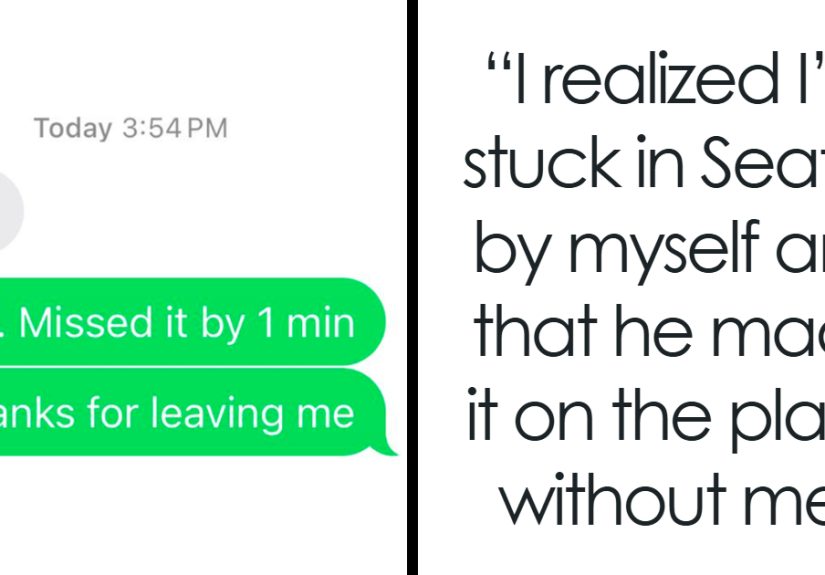
In the viral story behind the headline, a boyfriend made a series of choices that got him homewhile his girlfriend was left behind, alone, in an unfamiliar city, staring at a closed gate and the terrifying realization that the person who’s supposed to be “my person” just… boarded without her. One minute late. One minute that felt like a lifetime.
The question isn’t just “Was that rude?” It’s: What does it reveal about how this relationship works under stressand can trust come back after a moment that feels like abandonment?
What Happened (And Why It Hit So Hard)
The details vary depending on which retelling you saw, but the core is the same: the couple was cutting it close for a flight home. The boyfriend prioritized saving money/time earlier in the day, they ended up racing through security, and the girlfriend arrived at the gate just after it closedonly to find out he made it onto the plane.
That “I’m stuck here” moment isn’t just inconvenient. It’s destabilizing. It can trigger a flood of very human thoughts:
- Safety: “I’m alone. What do I do now?”
- Belonging: “If we’re a team, why am I suddenly solo?”
- Priority: “Did he just show me where I rank?”
- Trust: “If he’ll leave me here, what happens when life gets harder than airport security?”
Missing a flight is stressful. Being left behind by your partner can feel personallike a vote cast against the relationship. Even if he claims it was “logical,” logic is not a blanket you can put over someone who’s shivering from shock.
Why Travel Turns Small Issues Into Big Relationship Tests
Travel stacks stressors like a Jenga tower built by someone who’s had three hours of sleep: early alarms, unfamiliar routes, tight timelines, crowds, and decisions that have to happen fast. When the body goes into stress mode, people tend to get reactive: they rush, they snap, they problem-solve like they’re in an action movie, and empathy can drop off a cliff.
In that state, couples often revert to their default patternsespecially around control, anxiety, and responsibility. That’s why travel can reveal whether you operate as “me + you” or “us.”
The “Us” Mindset vs. the “Me” Mindset
In a healthy “us” mindset, the rule is simple: we move together. If one person gets delayed, the other adjusts. Not because it’s romantic, but because it’s respectful. You don’t have to be a poet about ityou just have to act like your partner matters.
In a “me” mindset, the rule becomes: I make it; you figure it out. Sometimes that’s defended as practicality, but it often lands like indifference. And indifference is relationship kryptonite.
Is This a Dealbreakeror a Wake-Up Call?
People online love to declare a relationship “over” in the time it takes to microwave popcorn. Real life is messier. Whether “guy flies home without girlfriend” is the end depends on context and pattern.
It leans toward dealbreaker if…
- This fits a pattern of selfishness, “my way,” or minimizing your feelings.
- He blames you, the gate agent, the universe, or Mercury retrogradeanything except his choices.
- He’s more annoyed about being criticized than concerned about your safety and stress.
- He uses silence, sarcasm, or stonewalling instead of accountability.
- You feel smaller, less safe, or constantly on edge in the relationship.
It leans toward wake-up call if…
- This is genuinely out of character and he immediately owns it.
- He shows consistent repair behavior (not just one apology text).
- He’s willing to examine why he chose himself in that momentand change.
- You can talk about it without you becoming the “overreacting one.”
The event matters. But the repair matters more. Trust isn’t rebuilt with flowers and a breakfast sandwich (delicious as that may be). It’s rebuilt with responsibility, empathy, and consistent behavior.
The Trust Problem: “If You Left Me There, Will You Leave Me Elsewhere?”
Here’s what makes this scenario uniquely painful: it can activate an abandonment alarm. Even people who are normally secure can get shaken by a moment that feels like “you’re not worth waiting for.”
If you already lean anxious in relationships, an incident like this can hit even harder. Anxious attachment is often described as a fear of abandonment and a high need for reassuranceespecially when something suggests rejection. That doesn’t mean your feelings are “too much.” It means your nervous system got a loud message and did what nervous systems do: it reacted.
Meanwhile, if he tends to cope by shutting down, avoiding conflict, or minimizing (the emotional equivalent of closing a laptop mid-argument), the gap between you widens fast. One partner wants closeness and repair; the other wants escape and quiet. Congratulations: you have a mismatch that can spiral unless both people take responsibility.
How to Talk About It Without Turning It Into World War Gate C-17
The goal of this conversation isn’t to “win.” It’s to find out whether you have a partner who can hear you, care about the impact, and change behavioror whether you’re dating someone who thinks empathy is an optional add-on.
Step 1: Name the impact (not just the event)
Try something like:
“When you got on the plane without me, I felt abandoned and unsafe. I didn’t just miss a flightI felt like I didn’t matter.”
Step 2: Ask a values question
“In a crisis, do you see us as a team? Because your choice told me we aren’t.”
Step 3: Listen for accountability, not excuses
A repair-oriented response sounds like:
“You’re right. I panicked and chose myself. I’m sorry. That was wrong, and I understand why it shook your trust.”
A non-repair response sounds like:
“You’re being dramatic. You should’ve run faster. It’s not my fault.”
That difference is your answer. Not your closureyour data.
What a Real Apology Looks Like (Spoiler: It’s Not “My Bad”)
A real apology has structure. It’s specific, it’s empathic, and it includes change. If he wants to rebuild trust after flying home without his girlfriend, he needs to do more than feel guilty for 12 minutes and then watch TV.
A strong repair includes:
- Specific ownership: “I boarded without you.”
- Impact acknowledgment: “That left you stranded and scared.”
- Empathy: “I understand why that felt like abandonment.”
- No defensiveness: No “but you…” add-ons.
- Amends: “Here’s what I’ll do to prevent this again.”
- Patience: Accepting that you may not “get over it” on a schedule.
If he’s willing, you can also use a simple “after-the-fight” framework: each person explains what they felt, both perspectives get validated, responsibility is accepted, and you agree on a better plan next time. That’s how you turn a rupture into a repair instead of a slow breakup.
Practical “Couples Travel Rules” That Prevent This Exact Disaster
If you stay together, travel gets easier. If you split up, the airport becomes a reality show called “So You Think You Can Sprint.” Here are simple rules that save flights and feelings:
1) Use the “two-hour buffer” like it’s seatbelt law
Build a cushion. Rushing is the birthplace of bad decisions. If you’re cutting it close, you’re already payingwith stress, not money.
2) Security rule: same line, same pace
Unless one person has pre-check and the other doesn’t (and you’ve agreed how to handle that), choose the same line. The “I’ll go ahead!” move is how people become luggage orphans.
3) Agree on the dealbreaker rule: “We board together.”
For most couples, the default should be: Either we both make it, or we both rebook. There are rare exceptions (medical emergency, kids, truly unavoidable), but “I didn’t want to be inconvenienced” isn’t one.
4) Make a “missed flight plan” before you travel
- Who calls the airline?
- Where do you meet if separated?
- Do you rebook together no matter what?
- What’s the budget for a last-minute fix (rideshare, hotel, food)?
Planning for problems doesn’t invite problems. It just means you won’t treat your partner like a surprise obstacle.
If This Is Part of a Bigger Pattern, Take It Seriously
One bad decision under stress can be repaired if the person shows remorse and changes. But repeated “I choose me, you deal with it” behavior can erode self-trust: you start questioning your instincts, excusing disrespect, and shrinking your needs to keep the peace.
If you notice a pattern of control, humiliation, intimidation, or you feel unsafe in the relationship, it may help to talk to a licensed therapist or a confidential support resource. You deserve a relationship that doesn’t make you feel disposable.
Conclusion: The Flight Was Missed, But the Real Question Is Trust
The airport incident isn’t just a travel mishapit’s a relationship snapshot. In one frame you can see priorities, empathy, teamwork, and how someone behaves when the clock is loud and the stakes feel high.
If you’re the girlfriend in this story, you’re not “crazy” for feeling shaken. You’re responding to a moment that signaled abandonment. If you’re the boyfriend (or someone who sees themselves in him), the path forward is clear: own it, repair it, and change your operating system from “me” to “us.”
Because the real dealbreaker isn’t missing a flight. It’s realizing your partner won’t wait for youliterally or emotionally.
500 More Words: Real-World Experiences That Mirror This Moment (And What People Learn)
If you’ve ever traveled with another human being, you already know the truth: airports don’t create character flawsthey highlight them with fluorescent lighting and a TSA line that moves at the speed of existential dread. And stories like “guy flies home without girlfriend” go viral because so many people have lived a smaller version of the same feeling: “Wait… are we in this together, or am I on my own?”
One common experience is the “split decision” at security. A couple arrives late, sees two lines, and someone says, “You go there, I’ll go here!” It sounds efficient until one person gets pulled aside for extra screening (because apparently your shampoo is a known threat to national security), and suddenly you’re separated with no plan. Couples who do well afterward usually have one thing in common: the person who gets through first doesn’t treat it like a race. They wait where they can, communicate clearly, and make sure the other person isn’t alone in panic mode.
Another shared experience is the “I’ll hold the gate” fantasy. People imagine gate agents as magical guardians who can pause time. In reality, boarding doors close when they close. So the healthiest couples don’t gamble on miracles they gamble on teamwork. They agree ahead of time: if one of us isn’t there, neither of us boards. Not because it’s dramatic, but because it’s practical: getting stranded alone can be expensive, unsafe, and emotionally brutal.
Then there’s the repair moment after the fact, and this is where relationships either level up or quietly rot. In real life, the “right” apology isn’t a grand speech in the baggage claim like it’s a rom-com. It’s showing up with energy that matches the harm. People remember whether their partner acted like: “I can’t believe I did that to youhow are you? What do you need?” or like: “Well, you made it eventually, so can we stop talking about it?” The first response rebuilds safety. The second one tells you the person is more committed to comfort than connection.
A lot of couples also describe a “marker moment”a single incident that becomes a reference point in the relationship. Not because they love keeping score, but because the incident revealed a rule the relationship was operating under. Some couples discover their rule is: “We protect each other when it’s hard.” Others discover their rule is: “Every person for themselves when stress shows up.” Once you see the rule, you can’t unsee it. That’s why incidents like this can feel like the beginning of doubt.
If you’re trying to decide whether it would “1000000% be the end,” consider this: the airport is the spark, but the relationship is the fuel. One spark doesn’t burn down a healthy houseunless the house was already soaked in gasoline. The most telling part isn’t that he boarded. It’s what he did next: did he repair, change, and show reliable “team” behavior afterward? Or did he treat your hurt like inconvenient background noise? Your answer is in the pattern, not the panic.






 Close
Close