
Table of Contents >> Show >> Hide
- What Makes an Instrument a “Woodwind”?
- Quick List: Woodwind Family at a Glance
- Flute Family (Edge-Blown Woodwinds)
- Recorder Family (Duct/Fipple Woodwinds)
- Clarinet Family (Single-Reed Woodwinds)
- Saxophone Family (Single-Reed Woodwinds)
- Oboe Family (Double-Reed Woodwinds)
- Bassoon Family (Double-Reed Woodwinds)
- Woodwinds in Real Ensembles
- How to Choose a Woodwind (Without Regretting It)
- Care, Feeding, and Survival Tips for Woodwind Players
- Conclusion: The Woodwind Family Is Big, Bright, and Surprisingly Logical
- Experiences With Woodwinds: The Parts People Don’t Tell You (But Everyone Learns Anyway)
If you’ve ever looked at an orchestra and thought, “Why are some shiny metal tubes called woodwinds?”
you’re not alone. The woodwind family is less about the material and more about how sound is made:
by vibrating a column of air inside a tube, usually controlled with keys and tone holes.
Some woodwinds use reeds, some don’t, and a few are basically “blow here, make magic” (and occasionally squeaks).
In this guide, you’ll get a clear, practical list of woodwind instruments, grouped by how they produce sound,
plus real-world examples of where you’ll hear them, how they differ, and what it’s like to actually learn one.
Consider this your friendly roadmap to the woodwind neighborhoodwhere everyone’s breathing on purpose.
What Makes an Instrument a “Woodwind”?
Woodwinds are grouped by their sound mechanism: air vibrates inside the instrument’s tube, and the player controls pitch
with tone holes (opened/closed with fingers or keys). Some woodwinds use reeds (thin pieces of cane that vibrate),
while others create sound by splitting air across an edge (like a flute) or channeling it through a duct (like a recorder).
That’s why a saxophone is a woodwind even though it’s usually made of brass: the sound starts with a
single reed, just like a clarinet. The family reunion is based on acoustics, not cosmetics.
Quick List: Woodwind Family at a Glance
| Woodwind Type | How It Makes Sound | Common Instruments |
|---|---|---|
| Edge-blown (Flutes) | Air split across an edge | Flute, piccolo, alto flute, bass flute |
| Duct/Fipple | Air directed through a channel to an edge | Recorder (soprano, alto, tenor, bass) |
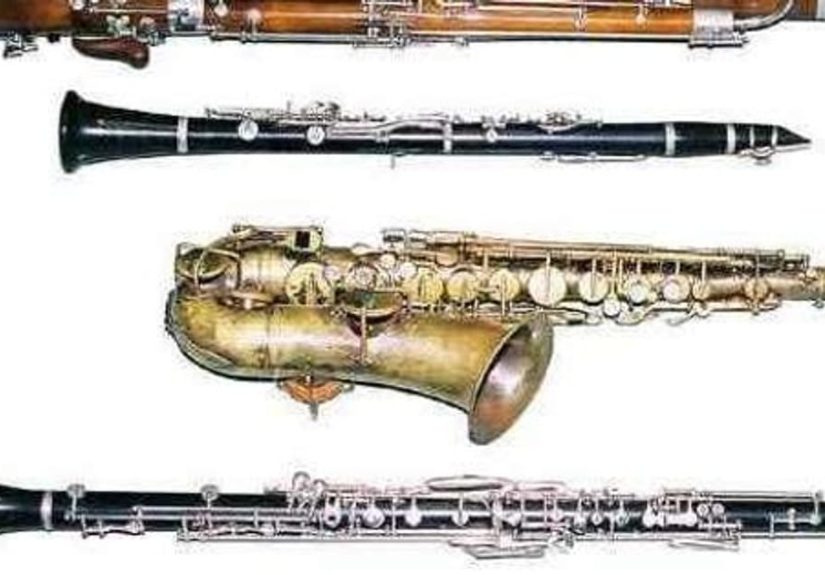
| Single-reed | One reed vibrates against a mouthpiece | Clarinet family, saxophone family |
| Double-reed | Two reeds vibrate against each other | Oboe family, bassoon family |
Flute Family (Edge-Blown Woodwinds)
Flutes create sound when you blow air across an opening, like blowing across the top of a bottleexcept with better posture
and fewer confused bystanders. They’re known for clarity, agility, and that “sparkle” that cuts through an ensemble.
Concert Flute (C Flute)
The standard orchestral flute is the one most people picture: silver (or nickel/silver-plated), full of keys, and capable of
everything from delicate whispery lines to fast, acrobatic runs. It appears in orchestras, concert bands, chamber groups, and film scores.
Piccolo
A smaller flute with a brighter, higher sound. In many settings, it’s used for brilliance and emphasisthink musical fireworks.
It’s famous for punching through a full orchestra like it owns the place (because, acoustically, it kind of does).
Alto Flute
Larger than the concert flute, with a warmer, darker tone. It’s often used for colorlush and mellowespecially in contemporary,
film, and chamber music.
Bass Flute (and Bigger Flutes)
Bass flute brings a low, breathy richness that feels like velvet with a little fog machine. You’ll see it more in modern ensembles
and flute choirs than in standard school bands. Even larger flutes (like contrabass flute) exist too, typically in specialized groups.
Recorder Family (Duct/Fipple Woodwinds)
Recorders are woodwinds with a built-in air channel (fipple/duct) that directs the airstream. They’re famous in music education
because you can make a sound quicklythough “quickly” does not always mean “beautifully,” especially on day one.
They’re also deeply respected in early music and professional performance.
Common Recorder Sizes
- Sopranino: very high and bright
- Soprano: the classroom classic
- Alto: a common choice for serious players and ensembles
- Tenor: lower, rounder tone
- Bass: rich low voice (and physically larger)
Clarinet Family (Single-Reed Woodwinds)
Clarinets use a single reed attached to a mouthpiece. Their cylindrical bore helps create a distinctive tone that can be
smooth and mellow or bright and cuttingbasically the instrument version of “range.”
B♭ Clarinet (Standard Clarinet)
The most common clarinet in bands and orchestras. It’s a go-to beginner woodwind because it’s versatile and has lots of parts in ensembles.
It also teaches strong fundamentals: breath control, finger coordination, and reed management (a.k.a. “Why is it squeaking today?”).
A Clarinet
Often used in orchestras alongside B♭ clarinet. It helps players perform certain keys more comfortably and blends beautifully in classical repertoire.
E♭ Clarinet
Smaller and higher than the B♭ clarinet, with a brilliant, sometimes spicy tone. It’s common in orchestras and concert bands for sparkle and bite.
Bass Clarinet
A larger clarinet with a deeper, richer sound. Bass clarinet shows up in concert bands, orchestras, clarinet choirs, and modern music.
It can be haunting, heroic, or unexpectedly funny (in the best way) depending on the part.
Other Clarinet Family Members
- Alto Clarinet: less common, often in school ensembles and clarinet choirs
- Contralto Clarinet (often in E♭): deep and powerful in clarinet ensembles
- Contrabass Clarinet: huge, very low, and unforgettable when it enters
- Basset Horn / Basset Clarinet: used in select classical and specialty repertoire
Saxophone Family (Single-Reed Woodwinds)
Saxophones are single-reed woodwinds with a conical bore. They’re central to jazz, common in concert bands, and occasionally featured
in orchestral works. Their sound can be smooth, smoky, bright, or loud enough to convince a wall to reconsider its life choices.
Common Saxophones
- Soprano Saxophone: higher, focused tone
- Alto Saxophone: the most common beginner sax; flexible and widely used
- Tenor Saxophone: warm and robust; a jazz favorite
- Baritone Saxophone: big, low, and surprisingly agile
- Bass Saxophone (and beyond): specialty instruments, rare but real
Oboe Family (Double-Reed Woodwinds)
Oboes use a double reedtwo thin blades of cane vibrating together. The result is a focused, expressive sound that can feel
lyrical, reedy, bright, and emotionally direct. Oboe is famous for giving the orchestra a tuning note before concerts.
Oboe
The standard oboe has a clear, penetrating tonegreat for solos and melodic lines that need to be heard without shouting.
It’s also one of the more challenging woodwinds at the beginner level because it demands precise breath and embouchure control.
English Horn (Cor Anglais)
A larger, lower member of the oboe family with a warm, haunting tone. If a soundtrack suddenly feels like it’s looking out over
a misty hillside, the English horn might be the reason.
Oboe d’amore and Other Relatives
The oboe family includes other specialty instruments like the oboe d’amore (with a softer, more mellow sound) and
less-common low oboes used in specific repertoire.
Bassoon Family (Double-Reed Woodwinds)
Bassoons are double-reed woodwinds known for a deep, reedy sound and a wide emotional range. They can be elegant and warm,
or comically nimble when composers decide the bassoon should sprint.
Bassoon
The bassoon often supports harmony and rhythm, but it also gets gorgeous solos. Its long, folded tube gives it a distinctive look
and a voice that can sound like a wise storytelleror a mischievous one, depending on the music.
Contrabassoon
The contrabassoon is the bassoon’s larger, lower sibling, providing some of the deepest pitches in the orchestra.
When it plays, you don’t just hear ityou feel it.
Woodwinds in Real Ensembles
In a typical symphony orchestra, the core woodwind section centers on flutes, oboes, clarinets, and bassoons,
with common “extra” instruments such as piccolo, English horn, bass clarinet, and contrabassoon.
Concert bands often add multiple clarinets and saxophones, expanding the woodwind palette dramatically.
The Classic Wind Quintet
Want a quick “woodwinds + one honorary guest” lineup? The classic wind quintet is:
flute, oboe, clarinet, bassoon, and French horn. It’s a popular chamber format because each voice is distinct,
and together they cover a huge range of color.
How to Choose a Woodwind (Without Regretting It)
The “best” woodwind depends on your goals, budget, and tolerance for tiny accessories that vanish the moment you set them down.
Here’s a practical guide:
If You Want the Easiest First Sound
- Recorder: quick tone production, great for basics
- Flute: no reed, but requires focused air direction
If You Want the Most Ensemble Opportunities
- B♭ Clarinet: tons of band/orchestra parts, flexible roles
- Alto Saxophone: popular in band and jazz settings
If You Love Expressive Solos (and a Challenge)
- Oboe: expressive and iconic, but reeds and control matter
- Bassoon: unique voice, big personality, bigger case
Care, Feeding, and Survival Tips for Woodwind Players
- Swab after playing to remove moisture (pads and corks will thank you).
- Handle reeds gentlythey’re thin, temperamental, and weirdly expensive for something that fits in your pocket.
- Keep a small kit: cleaning cloth/swab, cork grease (for some instruments), extra reeds, and a pencil (musicians are basically note-taking athletes).
- Protect against heat: leaving a woodwind in a hot car is like asking it to become “abstract art.”
Conclusion: The Woodwind Family Is Big, Bright, and Surprisingly Logical
Once you know how woodwinds make soundair vibration, tone holes, and reeds or edgesthe family tree gets a lot easier to understand.
Flutes and piccolos slice the air with brilliance, clarinets and saxophones bring reed-powered flexibility, and double reeds (oboe and bassoon families)
deliver character you can recognize in a single note. Whether you’re choosing a first instrument, building a curriculum, or just satisfying curiosity,
a good woodwind instruments list is really a map of how humans learned to turn breath into music.
Experiences With Woodwinds: The Parts People Don’t Tell You (But Everyone Learns Anyway)
Reading a list of woodwind instruments is helpful, but actually living with one is a whole different adventure. Many woodwind players
share a common origin story: the first day you assemble the instrument, take a confident breath, and produce a sound that can only be described as
“startled animal.” That moment is not a failureit’s tradition. Woodwinds are intimate instruments. You’re not just pressing buttons; you’re literally
negotiating with air, physics, and (if you use reeds) a tiny piece of cane that sometimes behaves like it has personal boundaries.
Clarinet and saxophone players often talk about the “reed roulette” experience. Two reeds from the same box can feel like totally different instruments:
one sings, one squeaks, and one seems to have been designed for competitive suffering. Beginners learn quickly that reeds have a sweet spot:
too soft and your sound can get thin; too hard and the instrument feels like you’re trying to drink a milkshake through a coffee stirrer.
Over time, players get weirdly skilled at tiny adjustmentssoaking, rotating, storing, and quietly blaming humidity for everything.
Flute players, meanwhile, face a different challenge: the instrument doesn’t give you a reed to “help” start the vibration.
The sound depends on the exact angle and speed of your air. Early flute practice can be a parade of airy whispers interrupted by occasional,
surprisingly loud honkslike the flute is reminding you it can be powerful if you stop blowing like you’re fogging up a mirror.
The payoff is huge: once a clean tone clicks, the flute becomes one of the most agile voices in any ensemble, capable of floating melodies
and lightning-fast runs that make your fingers feel like they’re auditioning for a superhero movie.
Double-reed players (oboe and bassoon) often describe their experience as part musician, part engineer. Oboists, especially, learn that reeds
aren’t just accessoriesthey’re a major part of the instrument. Many players eventually experiment with reed adjustment or even reed-making,
which can feel like a crafts project with very high stakes: the difference between “warm, centered tone” and “goose in a megaphone”
can be millimeters. Bassoonists add another layer: the instrument is physically large, and there’s a real sense of pride when you finally
assemble it smoothly and produce a stable low note that sounds like the floor just got 10% more sophisticated.
Ensemble life is where woodwinds become unforgettable. Players learn how to blendmatching tone, tuning, and volumeso the section sounds like
one organism instead of five people politely disagreeing in public. And then there are the classic woodwind moments: the piccolo entry that
makes everyone snap to attention, the bass clarinet line that suddenly turns the music cinematic, the English horn solo that makes time slow down,
or the bassoon passage that somehow sounds both elegant and comedic at once. Even rehearsals have their shared rituals: the quiet chaos of warming up,
the “who stole my swab?” mystery, and the universal panic of realizing you left your only good reed at home.
The most consistent experience woodwind players report is progress that feels sneaky. One week you’re counting measures and hoping not to crack a note;
the next, you’re shaping phrases and noticing how your sound changes with breath support, posture, and embouchure.
Woodwinds teach patience in a very physical way: your body is part of the instrument, and you get better by training both technique and listening.
That’s why the woodwind family isn’t just a list of instrumentsit’s a set of skills and stories that turn breath into confidence, one note at a time.







 Close
Close