
Table of Contents >> Show >> Hide
- The Blink That Breaks the Spell
- Your Brain Hates “Almost Real” Faces
- What the Tech Is Actually Doing (and Why That Matters)
- Old Photos Mean Somethingand Animation Changes the Meaning
- Digital Resurrection Can Ambush Your Emotions
- It’s Wholesome… and It’s Also Deepfake-Adjacent
- Consent, Privacy, and the “Who Gets to Decide?” Problem
- How to Try Photo Animation Without Ruining Your Night
- Why Some People Love It Anyway
- Conclusion
- Extra: Real-World Experiences People Report (About )
You upload a century-old portrait, tap a button, and suddenly your great-grandpa is blinking like he just remembered where he left his keys. It’s impressive. It’s sweet. And for a lot of people, it’s also weirdly unsettlinglike your phone briefly opened a tiny portal to the “nope” dimension.
AI photo animation (made famous by tools like MyHeritage’s “Deep Nostalgia” and a wave of “bring this picture to life” apps) does something our brains aren’t used to: it turns a still record of the past into motion that pretends to be present. A moving face is one of the strongest “this is a living person” signals humans haveand when that signal is synthetic, our emotions often notice before our logic does.
The Blink That Breaks the Spell
Still photos have an unspoken contract with us: they’re frozen moments. They can be emotional, but they stay in their lanequiet, contained, safely “then.” When the face starts to move, the contract breaks. Your brain instantly tries to read the motion as meaning: mood, intention, personality. That’s where the trouble begins.
The animation isn’t the person’s real movement; it’s a generated performance mapped onto their features. So you get a strange mix of recognition and doubt at the same time: “That’s her” + “That isn’t her.”
Your Brain Hates “Almost Real” Faces
Uncanny Valley 101
The “uncanny valley” is a classic explanation for why near-human replicas can feel eerie. If something is clearly artificial (a cartoon), your brain relaxes. If it’s convincingly human (a real video), your brain relaxes. But if it’s almost humanclose enough to trigger empathy, but off enough to trigger suspicionyou get discomfort instead of connection.
Motion Is the Give-Away
We tolerate a lot in a still image. But the moment a face moves, we become picky. Real facial motion has imperfect timing: asymmetry, tiny pauses, breath, tension, the micro-messiness that signals “a mind is in here.” AI animation often uses learned motion patterns (sometimes from “driver” clips) and applies them to a face. It can look smooth and “lifelike,” while still feeling emotionally hollowlike the face is acting without the inner life that normally drives it.
Eyes are especially sensitive. Humans are wired to read gaze direction, focus, and “aliveness” from tiny eye movements. If the eyes don’t quite track naturally, if the blink rhythm feels too regular, or if the smile reaches the mouth but not the eyes, your brain flags it. You might not be able to explain what’s wrongonly that something is “off.”
That’s why blinking matters so much. Blinking is intimate. It’s a “live human” cue. If the cadence or eye focus feels wrongeven subtlyyour brain gets conflicting messages: alive and not-alive at once. Conflict reads as creepy.
What the Tech Is Actually Doing (and Why That Matters)
Most consumer “animate this photo” tools aren’t resurrecting hidden video from inside the picture. They’re generating plausible motion based on patterns learned from many faces. Some systems pick from pre-recorded motion templates and map them onto the photo; others synthesize motion more fluidly. Either way, the output is a best-guess performance: a generic blink, a generic micro-smile, a generic head tiltcustom-fit to a specific face.
That’s why the effect can feel both realistic and wrong. You’re looking at a face that’s authentically your relative’s, but the motion is essentially “borrowed” from elsewhere. Your brain senses the mismatch between identity (real) and behavior (estimated).
Old Photos Mean Somethingand Animation Changes the Meaning
Stillness Is Part of the Point
Historic photos aren’t just faces; they’re artifacts. The stillness is part of the emotional language: a captured moment, a trace of a life, a piece of evidence that someone existed. When AI adds a modern-looking smile, wink, or head tilt, it can feel like it’s rewriting the moment rather than revealing it.
Memory Mismatch Hits Harder When You Knew Them
If you actually knew the person, the effect can sting in a very specific way. Your memory includes their voice, posture, and the exact smile they used when they were trying not to laugh. The animation is guessing. So your mind runs two movies at once:
- Recognition: “That’s my dad. I know that face.”
- Mismatch: “My dad didn’t smile like that.”
That mismatch creates cognitive dissonancean internal “something isn’t lining up” feeling. Even if you understand the tech, your brain still dislikes being teased with a near-perfect imitation.
Digital Resurrection Can Ambush Your Emotions
For some people, animating a photo of someone who has died is genuinely movingespecially if there’s no video of them. But grief isn’t tidy. A small, convincing “hello” from a face associated with loss can arrive like an emotional jump-scare. You might open the app for a quick curiosity hit and end up feeling things you weren’t planning to unpack before dinner.
There’s also a deeper unease: a moving face implies presence and agency. The animation can feel like it’s borrowing the person’s dignity to create a moment they never chose. That’s why people describe the experience as “beautiful but wrong,” or “comforting but creepy.”
It’s Wholesome… and It’s Also Deepfake-Adjacent
Animating faces sits in the same technical neighborhood as deepfakes: synthetic expression and movement that can look convincingly human. Even if your use is innocent, our culture now associates realistic synthetic faces with manipulationscams, misinformation, and “don’t believe your eyes.” That background noise can make it hard to enjoy the effect without a little unease humming underneath.
And because these tools can work from a single image, they also highlight a modern anxiety: a photo isn’t just a memory anymore; it can be raw material. For most families, the risk is emotional, not criminalbut knowing the wider landscape can change how “safe” the effect feels.
Consent, Privacy, and the “Who Gets to Decide?” Problem
If the person is alive, consent is clear. If the person has died, families often make choices on their behalfbut families don’t always agree, and not everyone would want their image turned into a loopable animation (or shared online). The ethical tension is simple: a face is personal, and animation turns it into a new creation.
Practically, there’s the data question. Uploading photos can involve storage, security, and terms you probably didn’t read because you value joy. (No shame. The terms are basically a novel where the villain is always “metadata.”) If you’re animating family portraits, you’re sharing biometric information and personal historyso it’s worth being intentional about which services you trust and what you post publicly.
How to Try Photo Animation Without Ruining Your Night
- Start with a clear portrait. The better the lighting and the more visible the eyes/mouth, the less “uncanny” the result tends to be.
- Frame it as art, not evidence. Tell yourself (and anyone you share it with) it’s an AI reenactment, not recovered reality. Expectations are half the vibe.
- Handle grief gently. Don’t surprise someone in active grief with “LOOK, GRANDMA IS WINKING.” Offer context and choice.
- Watch privately first. Your reaction might be “aww” or “absolutely not.” Either is normal.
- Be mindful with sharing. If a living relative is in the photo (or the subject was intensely private), consider keeping it off public feeds.
Why Some People Love It Anyway
Even with all the reasons it can feel unsettling, photo animation can also be meaningful. For family historians, it can make the past feel closer. For people who never met an ancestor, it can be the first time they’ve seen them “move” at all. In classrooms and museums, careful, clearly labeled animation can help audiences engageso long as it’s presented as interpretation, not truth.
In the best cases, it doesn’t replace the original photo; it adds a new layer of storytelling. The key is honesty: label it as AI-generated, respect the subject, and don’t let the “wow” effect turn into “wait… is this real?”
Conclusion
Animating old photos is a strange magic trick: it uses tiny motions to make a face feel present. That can be touching, but it can also be disturbing because it lands in a psychological zone humans aren’t built forfamiliar enough to spark empathy, artificial enough to spark alarm.
If it creeps you out, you’re not “overreacting.” Your brain is doing what it evolved to do: read faces for truth. AI can get close to looking real, but “looking real” isn’t the same as “being real.” And sometimes, that difference is exactly what gives us goosebumps.
500-word experience add-on starts here
Extra: Real-World Experiences People Report (About )
Spend five minutes in any comment section about animated photos and you’ll see the same emotional tug-of-war. One person writes, “I started crying immediately,” and the next replies, “I had to look away because it felt like it was watching me.” Both reactions can be truesometimes in the same viewer, five seconds apart.
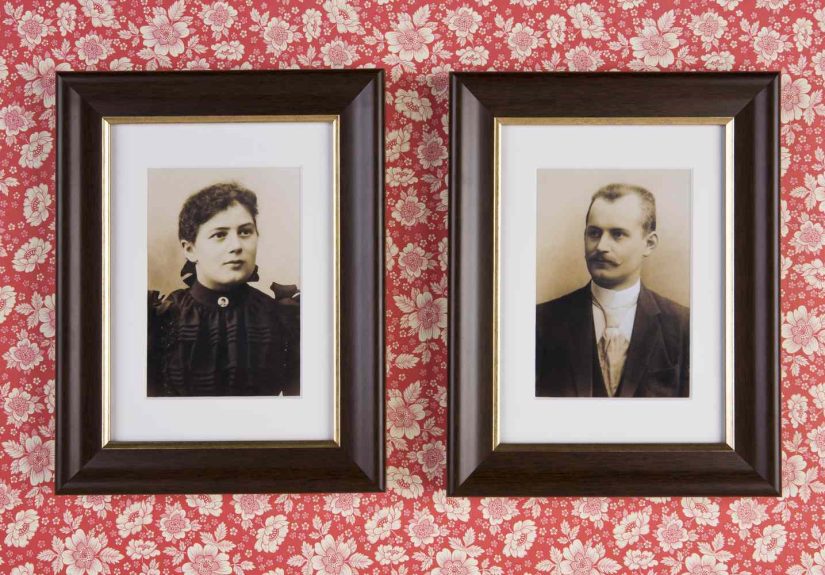
A common story starts with curiosity. Someone uploads the only photo they have of a great-grandparent: a formal portrait, buttoned-up and serious. The animation runs, and suddenly there’s a blink, a tiny smile, a subtle head turn. People often describe a rush of intimacy, like the photo finally “says hello.” If there’s no home video of that person, this can feel like the first time they’ve ever seen them do anythingno longer a still symbol, but a moment with motion.
Then the second wave arrives: the “wait… why does that feel wrong?” wave. Viewers notice the smile doesn’t quite match the vibe of the era, or the eyes seem to focus on nothing in particular. Some describe it as the person “wearing” an expression rather than having one. Others say the looping is what gets them: real humans don’t reset and repeat the same blink like a GIF. A tender moment can turn mechanical fast, especially when you watch it twice and the exact same micro-smile shows up on cue.
People who knew the subject in real life often report a sharper kind of weird. The face is unmistakable, but the mannerisms aren’t. You’ll see comments like, “That’s my mom’s face, but not my mom,” which is basically the uncanny valley in one sentence. Some viewers feel oddly protective, as if the AI is putting emotions onto the person that they didn’t choose. Even a “friendly” smile can feel like rewriting someone’s personalityespecially if the person was known for being reserved.
And yes, plenty of families love it. Some share the animations at reunions, pairing them with stories and laughter. Others keep them private, like a digital keepsake they pull out on anniversaries. Teachers and museum folks sometimes use subtle animation in presentations, where the “creepy” factor drops because it’s framed as a modern reenactment and clearly labeled as AI-generated.
A smaller but common reaction is laughternervous laughter, specifically. People describe watching the animation with friends, joking about “haunted iPhones,” and then immediately getting quiet when the face looks too alive. Humor becomes a pressure valve: if you laugh, you don’t have to admit you’re unsettled.
The most repeated experience is the whiplash: awe and unease in the same breath. It’s the feeling of seeing something you’ve only known as “past” suddenly behave like “present.” For many people, the simplest description is the truest: it’s amazing… and it’s weird… and somehow it’s both on purpose.
experience add-on ends here






 Close
Close