
Table of Contents >> Show >> Hide
- Yes, the Scarecrow in Wicked Is Fiyero
- Who Is Fiyero Before He Becomes the Scarecrow?
- Why Fiyero Matters So Much to Elphaba
- How Does Fiyero Become the Scarecrow in Wicked?
- How This Changes the Meaning of the Original Scarecrow
- What About Gregory Maguire’s Novel?
- Why the Scarecrow Reveal Matters to Glinda Too
- Is the Movie Setting This Up Too?
- What the Scarecrow Symbolizes in Wicked
- Audience Experience: Why Realizing the Scarecrow’s Identity Hits So Hard
- Final Thoughts
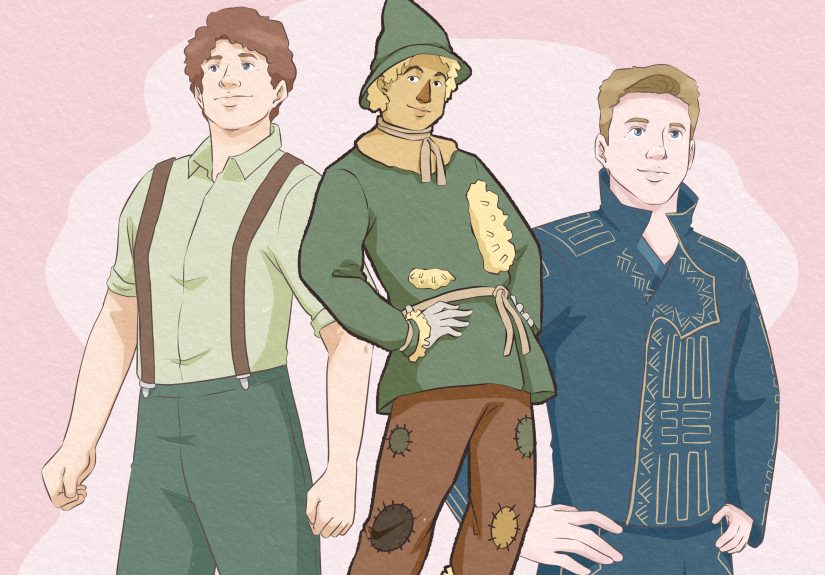
If you walked into Wicked thinking the Scarecrow was just the floppy, lovable guy from Dorothy’s road trip, surprise: Oz has paperwork for that plot twist, and it is dramatic. In the Wicked musical and its film continuity, the Scarecrow is not some random farm decoration with excellent cheekbones. He is Fiyero, the charming prince who enters the story like a human wink and ends up at the center of one of its most emotional reveals.
That twist matters because it changes the way audiences see The Wizard of Oz. Suddenly, the Scarecrow is not only Dorothy’s brain-seeking companion. He is also a man with a past, a romance, a political awakening, and a painful transformation linked directly to Elphaba. What looks silly on the Yellow Brick Road becomes heartbreaking in hindsight. Classic Oz move, honestly: one minute whimsy, the next minute existential sadness in excellent costume design.
So who is the Scarecrow in Wicked? Why does he become the Scarecrow? And how does his backstory connect Elphaba, Glinda, and the larger mythology of Oz? Let’s follow the straw.
Yes, the Scarecrow in Wicked Is Fiyero
The short answer is this: in the stage version of Wicked, and in the film adaptation’s broader canon, the Scarecrow is Fiyero. He begins as Prince Fiyero Tigelaar, a handsome, carefree royal who becomes romantically tied to both Glinda and Elphaba. By the time the story reaches its darker second-half events, Fiyero’s loyalty shifts, his life is put in danger, and a desperate act of magic leads to his transformation into the Scarecrow.
That reveal is one of the cleverest pieces of retroactive storytelling in modern musical theater. It takes a familiar Wizard of Oz character and gives him a human identity, emotional stakes, and a tragic edge. Once you know the truth, every scene involving the Scarecrow feels a little less goofy and a lot more loaded.
Who Is Fiyero Before He Becomes the Scarecrow?
A prince with charm, swagger, and a serious ability to distract a room
Fiyero first appears as the sort of person who seems to have been born to make a dramatic entrance. He is handsome, confident, popular, and just detached enough to look like he might drift through life on pure charisma. In many versions of the story, he is referred to as a prince, and the movie leans into that royal status more openly than the original stage show often does.
At first glance, Fiyero looks like the classic privileged pretty boy. He likes fun. He likes attention. He is not exactly applying for extra homework. If Shiz University had a major in Vibes, he would graduate summa cum laude.
But that surface-level image is exactly why his story works so well. Wicked loves exposing the gap between appearances and truth. Glinda is more complicated than “popular girl.” Elphaba is more compassionate than “wicked witch.” And Fiyero is far more substantial than the seemingly shallow prince introduced early on.
His role in the love triangle
Fiyero is important to Wicked not just because he becomes the Scarecrow, but because he sits right inside the emotional triangle at the heart of the story. He catches Glinda’s eye almost immediately, and she treats him as exactly the kind of dazzling prize a future icon of goodness should probably have on her arm. But Fiyero’s deeper connection grows with Elphaba.
That shift is essential. He is one of the first people in Oz who really starts to see Elphaba as a person instead of a rumor, a spectacle, or a political problem. What begins as curiosity evolves into genuine understanding. And in Wicked, understanding someone is practically the most romantic thing possible because this is a story where nearly everyone is being misread.
Why Fiyero Matters So Much to Elphaba
Elphaba spends much of the story being judged before she even speaks. People react to her appearance, fear her power, and weaponize her image. Fiyero becomes one of the rare characters who moves past that. He begins to recognize her intelligence, her conviction, and her loneliness. Their relationship gives Elphaba something she rarely gets from Oz: tenderness without agenda.
That is why his transformation into the Scarecrow hits so hard. It is not just a plot twist. It is the cost of loving the wrong person in a corrupt society. Fiyero is punished because he chooses empathy over propaganda and loyalty over convenience. In a story full of political manipulation, that choice carries real consequences.
How Does Fiyero Become the Scarecrow in Wicked?
The moment everything changes
By the later part of the story, Fiyero is no longer coasting through life with a grin and excellent posture. He has taken a side. He helps Elphaba, defies the forces aligned with the Wizard, and becomes a target because of it.
When he is captured and threatened for protecting Elphaba, she makes a frantic attempt to save him with magic. This is where Wicked takes a huge emotional swing. Instead of giving audiences a neat heroic rescue, the story gives them a magical consequence. Elphaba’s desperate act preserves him, but not in the form anyone expected. Fiyero survives, yet he is transformed into the Scarecrow.
That outcome is pure Wicked: loving someone does not always protect them cleanly. Sometimes it saves them in a way that still leaves scars. Or straw. In this case, both.
Why the transformation is so thematically perfect
There is delicious irony in turning Fiyero into the Scarecrow. Early in the story, he seems unserious and unserious people are often dismissed as empty-headed. Later, he becomes the literal “brainless” figure from Oz lore. But the joke is on everyone else. Like Baum’s original Scarecrow, Fiyero proves that the person labeled thoughtless may actually possess insight, loyalty, and emotional intelligence all along.
That makes the twist feel earned rather than random. The transformation is strange, yes, but Oz has always run on fairy-tale symbolism with a side of theatrical chaos. In story terms, it fits like a patch on a well-made coat.
How This Changes the Meaning of the Original Scarecrow
In L. Frank Baum’s original The Wonderful Wizard of Oz, the Scarecrow is a straw figure who joins Dorothy because he wants a brain. He is funny, kind, and often smarter than he realizes. Wicked keeps the broad outline of that Oz icon but rewires the backstory.
That means the Scarecrow is no longer just comic relief. He becomes living evidence that Oz turns people into symbols. Fiyero starts as a prince, becomes a rebel, and ends up wearing the identity of a supposedly foolish sidekick. His humanity is hidden inside a familiar fairy-tale costume.
Once you know that, the Scarecrow’s whole presence in the Oz myth feels different. He is not merely tagging along with Dorothy. He is carrying the wreckage of another story entirely, one built on political lies, lost love, and survival.
What About Gregory Maguire’s Novel?
This is where things get interesting. The original 1995 novel by Gregory Maguire is darker, messier, and less interested in clean emotional closure than the stage musical. While the musical turns Fiyero into the Scarecrow in a clear, crowd-pleasing way, the novel handles the connection more ambiguously and tragically.
In other words, if you came from the book and expected a tidy reveal with a big romantic bow on top, the novel basically says, “That sounds adorable, but have you considered dread?” Maguire’s version is more psychologically tangled, and the Fiyero-Scarecrow connection is not presented with the same directness the musical uses.
That difference matters because many fans blend the versions together. But they are doing different jobs. The novel is a darker literary reimagining of Oz. The musical streamlines that material into a more emotionally legible arc. The film adaptation, in turn, draws heavily from the musical while expanding certain character details and visual clues.
Why the Scarecrow Reveal Matters to Glinda Too
It is tempting to read Fiyero’s story only through Elphaba, but Glinda is deeply tied to this reveal as well. Fiyero is part of the glittering life she is expected to want: status, romance, beauty, and approval. On paper, he fits perfectly into her world. In practice, his emotional bond with Elphaba exposes the limits of the role Glinda has been performing.
That makes the Scarecrow reveal quietly devastating for her. It represents not just a lost romance, but a truth she cannot fully claim in public. By the end of Wicked, Glinda and Elphaba have become two women shaped by image, compromise, and impossible choices. Fiyero’s fate sits right in the middle of that heartbreak.
Is the Movie Setting This Up Too?
Yes, very much so. The film version gives Fiyero a larger sense of royal identity and spends more time building his chemistry with Elphaba. It also leans into visual and narrative clues that connect him to his eventual Scarecrow fate. That makes the reveal feel less like a last-minute shock and more like a destination the story has been quietly walking toward in polished boots.
The expanded screen time helps because Fiyero needs more than charm to land emotionally. He has to feel like a real person before the audience can mourn what happens to him. The stronger his backstory and relationships become, the more powerful the Scarecrow twist becomes.
What the Scarecrow Symbolizes in Wicked
On one level, the Scarecrow is a literal transformed character. On another, he symbolizes one of Wicked’s biggest themes: public stories are often false. The people of Oz think they know who is good, who is wicked, who is smart, and who is foolish. They are wrong with stunning consistency.
Fiyero becoming the Scarecrow also reflects sacrifice. He loses his old identity because he refuses to abandon Elphaba. His transformation is not random punishment. It is the physical mark of choosing love and conscience in a kingdom that rewards obedience and performance.
There is also a neat irony in the brain motif. The original Scarecrow spends his journey seeking intelligence even though he repeatedly shows it. Fiyero, meanwhile, spends much of his early arc being underestimated because of his carefree attitude. Turning him into the Scarecrow completes a symbolic loop: the man people think is frivolous becomes the icon people think is brainless, while the audience knows he has become one of the story’s most emotionally awake characters.
Audience Experience: Why Realizing the Scarecrow’s Identity Hits So Hard
For many viewers, the Scarecrow reveal is one of those wonderful “wait a second” moments that makes a familiar world suddenly click into place. Even people who know The Wizard of Oz by heart often do a mental double take when Wicked reframes the old characters as the outcomes of other people’s pain. It is a classic prequel pleasure: the joy of recognition mixed with the sting of understanding.
Part of the experience comes from timing. Fiyero is not introduced as a tragic figure. He is introduced as fun. He sings, flirts, postures, and generally behaves like the human equivalent of a very expensive scarf blowing in the wind. That makes audiences relax around him. They assume he is there to bring charm, romantic tension, and maybe a little comic sparkle. Then Wicked slowly reveals that he is morally growing up, emotionally choosing sides, and walking straight toward consequences he probably cannot outrun.
That shift lands hard in live theater because the audience can feel the room change. A character who once represented freedom and lightness becomes a symbol of damage and survival. On screen, the effect can be even sharper because close-ups let the audience track every glance, hesitation, and emotional pivot. Fiyero stops being a type and becomes a person. Once that happens, the idea of him ending up as the Scarecrow stops being clever trivia and starts feeling heartbreaking.
There is also something satisfying about how the reveal rewards attention. Fans love spotting clues. They love rewatching scenes and realizing the story was hinting at the truth long before it said it out loud. That makes the experience interactive in the best way. Wicked trusts the audience to connect emotional dots, not just plot dots.
And then there is the emotional contrast. The Scarecrow is one of the most whimsical figures in Oz mythology. He is soft, odd, friendly, and visually ridiculous in a charming way. Pairing that image with Fiyero’s fate creates a powerful dissonance. You are looking at a beloved fantasy figure while suddenly understanding the cost behind the costume. That is exactly the kind of bittersweet storytelling that gives Wicked its staying power.
For longtime fans, the reveal often feels like one of the story’s most moving payoffs because it ties together romance, sacrifice, symbolism, and nostalgia all at once. For newcomers, it tends to be the moment when Wicked stops feeling like a revisionist fairy tale and starts feeling like a tragedy with excellent melodies. Either way, it sticks. You do not really watch the Scarecrow the same way again.
Final Thoughts
So, who is the Scarecrow in Wicked? He is Fiyero: prince, love interest, rebel, survivor, and one of the smartest uses of retroactive character-building in modern fantasy storytelling. His backstory deepens the entire Oz myth by turning a familiar companion into someone with history, grief, and heart.
That is what makes the twist so memorable. It is not there just to surprise the audience. It rewrites the emotional meaning of the Yellow Brick Road. In Wicked, nobody is only what the public says they are. Not Elphaba. Not Glinda. And definitely not the Scarecrow.
Under all that straw is one of Oz’s saddest and sweetest love stories. Which is honestly very on-brand for a world where the costumes are fabulous, the politics are terrible, and the feelings are absolutely enormous.






 Close
Close