
Table of Contents >> Show >> Hide
- Why chest freezer organization matters
- Step 1: Empty the freezer and toss the questionable stuff
- Step 2: Clean and defrost if needed
- Step 3: Group food by category
- Step 4: Create zones with baskets, bins, or crates
- Step 5: Label everything like your future self is forgetful
- Step 6: Put the most-used items on top and use FIFO
- Step 7: Keep a freezer inventory
- Step 8: Maintain the system once a month
- Common chest freezer organization mistakes to avoid
- Best chest freezer storage ideas for everyday life
- Extra: Real-life experiences with chest freezer organization
- Conclusion
- SEO Tags
If your chest freezer currently looks like a frosty archaeological dig, welcome to the club. One minute you are stocking up on chicken breasts and frozen berries like a responsible adult. The next minute you are elbow-deep in a polar vortex, wondering why there are three half-open bags of tater tots and something mysterious wrapped in foil that may be chili… or a science experiment.
The good news is that organizing a chest freezer is not complicated. It just needs a simple system that makes food easy to see, easy to grab, and hard to forget. A well-organized chest freezer can help you save money, reduce food waste, speed up meal planning, and stop the classic “I know I bought frozen shrimp” meltdown before it starts. Better yet, it can make bulk shopping and make-ahead cooking feel genius instead of chaotic.
In this guide, you will learn exactly how to organize a chest freezer in 8 practical steps. We will also cover common mistakes, smart storage ideas, and real-life experiences that make deep freezer organization actually stick.
Why chest freezer organization matters
A chest freezer gives you tons of storage, but that extra space can turn sneaky fast. Because food stacks vertically, smaller items disappear under bigger ones, leftovers get buried, and unlabeled packages become icy mystery novels. When you cannot see what you have, you are more likely to buy duplicates, forget older food, and waste both groceries and freezer space.
Good chest freezer organization fixes that. It creates zones, improves visibility, and helps you rotate food before quality drops. It also makes cooking easier. Instead of spending ten minutes digging for soup while your fingers lose the will to live, you can open the lid, grab what you need, and move on with dinner.
Step 1: Empty the freezer and toss the questionable stuff
Before you can organize a chest freezer, you have to face the frozen truth. Take everything out and place it in coolers, insulated bags, or another freezer if you have one. Lay towels nearby, because chest freezers love turning “quick projects” into “why is the floor wet?” events.
As you unload, sort items into three groups: keep, use soon, and toss. This is the perfect time to get rid of anything with severe freezer burn, broken packaging, or no label at all. If you cannot identify it with confidence, do not give it a dramatic second chance. Freezer roulette is not a meal plan.
Look for duplicates too. You may discover four bags of peas, two boxes of waffles, and an ambitious amount of ground beef. That is not failure. That is inventory with character.
Step 2: Clean and defrost if needed
Once the freezer is empty, give it a good cleaning. If you notice heavy frost or ice buildup, especially around the upper edges, now is the time to defrost. A chest freezer with too much ice is harder to organize, less efficient to use, and more annoying every single time you open it.
Wipe down the inside with a mild cleaning solution that is safe for food storage areas. Many people use a simple baking soda and warm water mix because it cuts odors without leaving behind a strong scent. Dry the interior thoroughly before you reload anything.
This step may not feel glamorous, but a clean freezer is like a clean desk. Suddenly your brain believes in fresh starts. Also, your frozen food will not smell faintly of forgotten onion soup from 2024, which is always a win.
Step 3: Group food by category
Now comes the real organizing part. Start by sorting food into categories. This is the foundation of any smart chest freezer system, and it makes a huge difference when you are trying to find dinner in under thirty seconds.
Simple chest freezer categories to use
- Raw meat and poultry
- Seafood
- Frozen vegetables
- Frozen fruit
- Prepared meals and leftovers
- Bread, dough, and baked goods
- Breakfast items
- Snacks and desserts
You can get more specific if your freezer is large. For example, separate homemade meals from store-bought meals, or divide proteins into chicken, beef, pork, and fish. The goal is not to create a museum exhibit. It is to make your freezer intuitive enough that anyone in your household can find the burger patties without excavating the smoothie packs.
Step 4: Create zones with baskets, bins, or crates
If you only remember one thing from this article, let it be this: a chest freezer needs containers inside the container. Otherwise, everything slides into one cold pile of regret.
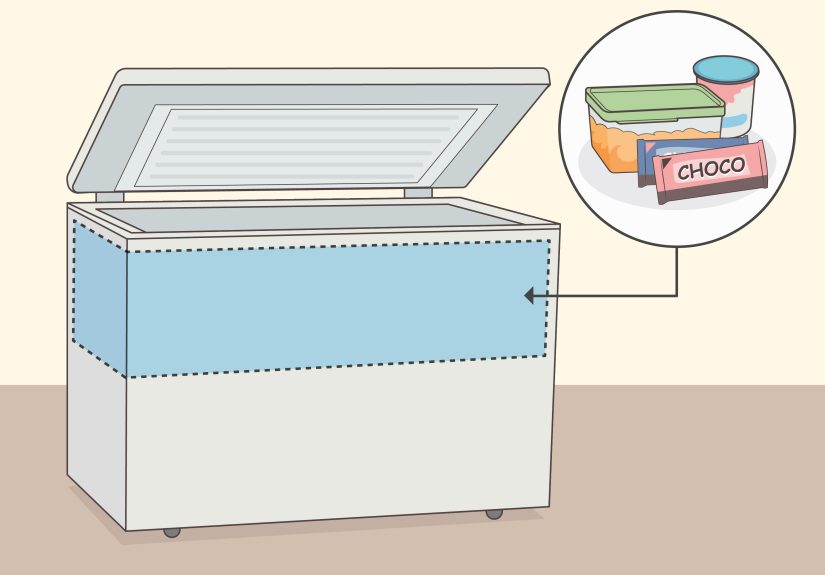
Use freezer-safe bins, baskets, or crates to create separate zones for each category. Hanging baskets are great for smaller items and anything you reach for often, such as frozen vegetables, breakfast sandwiches, or ice cream. Larger bins below can hold bulky items like meat, casseroles, and bulk purchases.
Clear bins are helpful because you can see what is inside, but solid bins work too if you label them well. The key is choosing containers that fit your freezer dimensions and are easy to lift out. Oversized bins that jam or wobble are not organizers. They are future arguments.
If you store lots of bagged foods, stand them upright whenever possible. Flat-frozen soups, sauces, shredded cheese, or marinated meat can be filed vertically like frozen folders. It is weirdly satisfying and very space-efficient.
Step 5: Label everything like your future self is forgetful
Your future self is forgetful. Mine too. That is why labels matter.
Every freezer bag, container, or wrapped package should include the food name and the date it went into the freezer. If it is a homemade dish, add a quick note like “lasagna, fully cooked” or “chili, spicy.” That tiny bit of detail can save a lot of confusion later.
A permanent marker works well on bags and masking tape. For reusable containers or bins, use moisture-resistant labels. Keep your label style simple and consistent so you actually stick with it. If you create an elaborate color-coded system with tiny printed labels, it may look beautiful for one weekend and then vanish forever the first time life gets busy.
Labeling helps with food safety, but it also helps with quality. Food stored at the right temperature can stay safe for a long time, but texture and flavor still fade. Dating items gives you a practical way to use food while it is still at its best.
Step 6: Put the most-used items on top and use FIFO
A chest freezer should be organized by both category and convenience. Frequently used foods belong near the top or in the baskets. Rarely used items can go lower down.
Think about your actual habits. If your family eats frozen fruit every morning, that fruit should not live under a frozen turkey and two mystery casseroles. If you use ground beef every week, keep it within easy reach. Holiday items, bulk backup food, and long-term storage items can stay deeper down.
This is also where FIFO comes in: first in, first out. Put older food toward the top or front of each zone and newer food underneath or behind it. That way, you naturally use older items first. FIFO sounds like corporate jargon, but in the kitchen it just means “stop buying more ravioli until you eat the ravioli you already own.”
Step 7: Keep a freezer inventory
This step is underrated, and it is the one that separates “organized for now” from “organized for real.” Keep a simple inventory of what is inside your chest freezer.
You do not need a complicated spreadsheet unless that brings you joy. A dry-erase board on the wall, a clipboard nearby, or a note in your phone works just fine. List the item, quantity, and date frozen if possible. Then update it every time you add or remove something.
What to track on a chest freezer inventory
- Item name
- How many packages or portions you have
- Date frozen
- Optional notes such as cooking instructions or “use soon”
This makes meal planning easier, reduces duplicate shopping, and helps you spot what should be used next. It also gives you the strange thrill of feeling like the competent captain of your own frozen ship.
Step 8: Maintain the system once a month
The best chest freezer organization system is the one you can maintain without drama. Set a recurring monthly reminder to do a quick reset. It only needs to take a few minutes.
During your monthly check-in, remove anything that is clearly past its prime, update the inventory, wipe spills, and move older foods to the top. Every few months, do a deeper clean and check for ice buildup. If your chest freezer starts looking like a snow cave, do not wait until you need a pickaxe.
Also, try not to overpack the freezer. A chest freezer can be wonderfully full, but it should not be packed so tightly that air cannot move around the food. A little breathing room helps maintain better performance and makes it easier to find things without launching an avalanche of frozen corn.
Common chest freezer organization mistakes to avoid
- Keeping food in bulky store boxes: Outer packaging often wastes space. Remove items when practical and keep only essential cooking instructions if needed.
- Skipping labels: “I will definitely remember what this is” is one of the great household lies.
- Freezing hot food right away: Let leftovers cool first, ideally in the refrigerator, before freezing.
- Ignoring categories: A random pile is not a system. It is a frozen scavenger hunt.
- Not rotating food: Older food should be easiest to reach.
- Waiting too long to clean: Ice buildup and spills make the freezer harder to use and less pleasant to open.
Best chest freezer storage ideas for everyday life
If you want your deep freezer organization to work long term, tailor it to how you actually shop and cook. A household that buys meat in bulk will need more protein bins. A meal-prepping household may want a large “ready-to-heat dinners” zone. A smoothie-loving household should probably dedicate prime real estate to frozen fruit, because berry bags multiply when nobody is looking.
Many people also find it helpful to store foods by meal type instead of ingredient type. For example, taco night items in one bin, breakfast foods in another, lunch backups in a third. That approach can be especially useful for busy families because it turns the freezer into a shortcut instead of a puzzle.
The point is not perfection. The point is creating a chest freezer setup that saves time, saves money, and makes weeknight cooking less chaotic.
Extra: Real-life experiences with chest freezer organization
People usually decide to organize a chest freezer after one of three moments. First, they buy too much food during a sale and discover their “extra freezer space” is really “one giant frozen backpack.” Second, they lose an item they know is in there somewhere and spend fifteen minutes digging through frost while dinner gets later and later. Third, they find a package so old and unrecognizable that it triggers a mini identity crisis. Was this soup? Was it stock? Was it a side dish from a holiday meal nobody can date with confidence? These are the moments that turn ordinary people into freezer reformers.
One common experience is realizing that chest freezers do not become messy because people are lazy. They become messy because the space is deep, stacked, and inconvenient by design. You cannot see everything at once. If food is not grouped, labeled, and contained, it disappears fast. That is why even a simple basket system can feel life-changing. Suddenly frozen vegetables live in one spot, meat lives in another, and leftovers stop drifting through the cold like lonely icebergs.
Another real-world lesson is that the “best” organization method is the one your household will actually follow. Some people love detailed inventories on their phones. Others do better with a dry-erase board hanging next to the freezer. Some like clear bins. Others prefer wire baskets because they are lighter and easier to lift. Some families organize by food type, while others organize by meal purpose, such as breakfasts, lunches, and quick dinners. None of these systems is wrong. The wrong system is the one that looks pretty for two days and then collapses because it is too fussy to maintain.
Many people also learn that labeling is not optional. A package of frozen shredded chicken and a package of frozen pulled pork can look weirdly similar six weeks later. Soup, sauce, broth, chili, and stew can all become frozen blobs with identical personalities. A marker and ten extra seconds can prevent a lot of confusion.
There is also the money factor. Once a chest freezer is organized, shopping becomes smarter. You know what you have, what you need, and what you absolutely do not need four more packages of. That means fewer duplicate purchases, fewer forgotten leftovers, and a better chance of using bulk buys before quality drops. People often say freezer organization feels satisfying, but the deeper truth is that it feels calming. It reduces friction in everyday life.
And perhaps the most relatable experience of all: once your chest freezer is organized, you will open it several times just to admire it. This is normal. This is healthy. This is what victory looks like in adulthood.
Conclusion
Learning how to organize a chest freezer is less about buying fancy containers and more about building a system you can trust. Start by clearing it out, cleaning it up, and sorting food into clear categories. Add bins or baskets, label everything, rotate older items forward, and keep a simple inventory. Then protect your hard work with quick monthly maintenance.
Do that, and your chest freezer will stop being a frozen black hole and start acting like the useful kitchen sidekick it was meant to be. You will waste less food, save more money, and spend a lot less time rummaging for dinner with your arm buried in subzero chaos. That alone deserves a celebratory freezer pop.







 Close
Close