
Table of Contents >> Show >> Hide
- Why the Moon Again, and Why Now?
- Location, Location, Location: The Lunar South Pole
- The Base Would Be Modular, Not Monumental
- How the Habitats Would Actually Work
- Power: The Base Cannot Run on Hope and Good Intentions
- Mining, Making, and Living Off the Land
- Mobility: The Base Is Not Just One Spot on the Map
- Communications, Navigation, and Digital Life
- Robots Would Build the Place Before Humans Really Occupy It
- So What Would It Look Like, Visually?
- The Human Experience: What Living There Might Actually Feel Like
- Conclusion
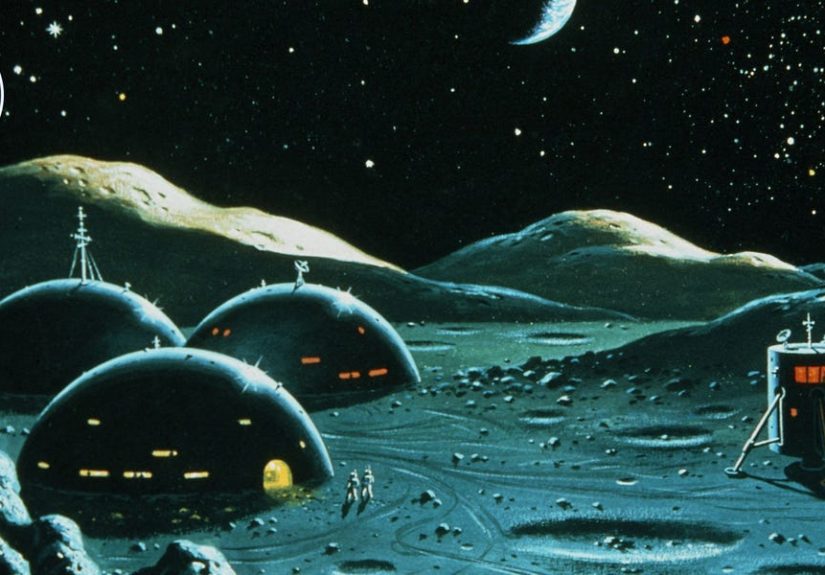
If your mental picture of a moon base still looks like a shiny silver dome with a neon sign that says “Luna City,” it may be time for an upgrade. A real 21st century moon base would be less like a sci-fi postcard and more like a rugged research outpost, construction zone, logistics hub, and survival puzzle all rolled into one very expensive address.
In other words, the first modern lunar base probably would not look glamorous. It would look smart.
That means modular habitats instead of giant glass bubbles. Robotic bulldozers instead of heroic astronauts doing everything by hand. Dust control, radiation shielding, power redundancy, and water recycling would matter more than sleek aesthetics. The future base would likely rise near the Moon’s south pole, where scientists and engineers see the best mix of sunlight, scientific opportunity, and access to water ice. It would be a place designed to keep people alive first, productive second, and photogenic a distant third.
Still, even a practical moon base would be astonishing. It would be humanity’s first serious attempt to build a working neighborhood on another world. And once you zoom past the Hollywood version, the real thing becomes even more interesting.
Why the Moon Again, and Why Now?
The Moon is no longer just a place to visit, plant a flag, and leave boot prints for future historians to admire. In the 21st century, it is increasingly viewed as a proving ground for long-duration space living. If humans want to build reliable systems for Mars, the Moon is the logical place to learn. It is close enough for faster communication with Earth, easier logistics, and more realistic emergency planning. It is also harsh enough to expose every weak point in habitat design, mobility, life support, and operations.
That makes a moon base more than a prestige project. It is a systems test for deep-space civilization.
NASA’s Artemis-era thinking has pushed lunar exploration away from one-off stunts and toward repeatable surface operations. The broad idea is simple: begin with robotic deliveries, expand mobility, add power and communications, introduce semi-permanent habitats, and gradually create the conditions for crews to stay longer and work farther from their landing zones. So the moon base of this century would not appear overnight like a pop-up hotel. It would grow in phases, like a frontier settlement that starts with cargo, tools, and temporary shelter before maturing into a functioning outpost.
Location, Location, Location: The Lunar South Pole
If a 21st century moon base had a real estate agent, that agent would be obsessed with the lunar south pole. There is a good reason for that. Unlike the Moon’s equatorial regions, the polar area offers terrain with more favorable lighting patterns, making solar power more practical at selected sites. It also contains permanently shadowed regions where water ice is believed to exist in meaningful quantities.
Water is the lunar jackpot. It can support life support systems, hygiene, oxygen production, and potentially fuel-making processes. A base near the south pole would not sit casually inside a dark crater like a dramatic villain lair. Instead, it would more likely be positioned on nearby ridges or elevated terrain with better sunlight, while robotic systems scout or extract resources from colder shadowed zones nearby.
That setup makes the base both strategic and slightly fussy. You want sunlight, but you also want access to ice. You want scientific value, but you also need safer terrain for landings and surface movement. So the first true lunar base would probably look like a carefully distributed camp: living modules on relatively favorable ground, resource operations in nearby zones, and transportation routes connecting the pieces.
The Base Would Be Modular, Not Monumental
The first thing people often get wrong is size. A 21st century moon base would not begin as a sprawling city under one giant dome. It would likely start as a cluster of specialized modules. Think less “space metropolis,” more “Antarctica with robotics and much worse dust.”
At its core, the base would probably include several essential elements:
- A surface habitat for sleeping, working, medical support, and private crew time.
- A pressurized rover for longer surface trips and mobile living space.
- An unpressurized vehicle for short-range cargo hauling and local movement.
- Power units, energy storage, and thermal systems.
- Communications and navigation equipment.
- Landing and cargo zones set away from the main habitat.
- Robotic construction and maintenance systems.
This matters because moon-base design is all about risk separation. Landing areas kick up dust and create hazards. Power systems may need shielding and spacing. Habitats need stable, protected placement. Resource-processing gear may be noisy, dirty, and maintenance-heavy. So instead of one giant structure, a smart lunar base would likely spread functions across a connected site plan.
In practical terms, it might resemble a compact campus: a habitat cluster here, power field there, a communications mast on slightly higher ground, and a landing pad at a deliberate distance so the base does not get sandblasted every time a spacecraft arrives. Nothing says “advanced civilization” quite like thoughtfully placing the rocket exhaust away from your bedroom.
How the Habitats Would Actually Work
Rigid cores, soft expansion
Early habitats may rely on rigid modules launched from Earth, because reliability matters more than architectural flair. Over time, those habitats could be supplemented by expandable sections or additional pressure shells that increase usable volume. A moon base needs room for sleeping quarters, exercise gear, medical equipment, workstations, storage, airlocks, and maintenance access. Astronauts can tolerate cramped conditions for a few days. For longer missions, cramped becomes miserable, and miserable becomes operationally dumb.
Buried or shielded exteriors
The Moon offers no breathable atmosphere, little natural protection from radiation, and extreme thermal swings. That means the habitat would likely be shielded with lunar regolith, the dusty broken material covering the surface. Engineers have long viewed regolith as a useful local material for radiation protection, thermal buffering, berms, landing pads, and other surface infrastructure.
So the moon base would probably look partly buried, bermed, wrapped, or thickly covered rather than sleek and exposed. Some future concepts even imagine 3D-printed shells made with local material, then lined internally with airtight layers. In that version, the habitat exterior might look more like a sculpted bunker than a shiny spacecraft cabin.
Airlocks would be a big deal
On the Moon, every trip outside threatens to drag abrasive dust back inside. That makes airlocks critical. A modern base might use dust-tolerant entry systems, suit ports, cleaning procedures, filtered transition spaces, and operational rules designed to keep lunar grime from invading crew lungs, electronics, seals, and sanity.
If the Apollo missions taught one visual lesson, it is that lunar dust gets everywhere. A 21st century moon base would treat dust the way a submarine treats leaks: not as a minor nuisance, but as an enemy with a talent for finding weak points.
Power: The Base Cannot Run on Hope and Good Intentions
Power is one of the biggest design drivers for any lunar outpost. A modern moon base would almost certainly use a hybrid energy strategy.
Solar power where it makes sense
Solar arrays would be attractive, especially in south-polar regions with better access to extended sunlight. Tall or carefully positioned arrays could feed the base during bright periods, power instruments, charge vehicles, and reduce dependence on imported fuel.
Energy storage for the ugly hours
But sunlight is not enough. The Moon is not a cheerful suburban grid with friendly utility crews. Darkness, terrain shadow, and mission interruptions mean the base would need batteries, fuel cells, and smart power management. Recharge stations for rovers and field equipment would be especially important for mobility and survival.
Nuclear backup for real staying power
For a truly sustained base, fission surface power could become the game-changer. A compact nuclear system offers steady, continuous energy regardless of sunlight or temperature. That makes it especially valuable for long lunar nights, critical systems, industrial equipment, and any future expansion beyond a tiny camp. Once that kind of dependable base-load power exists, the moon base starts to look less like a temporary expedition and more like infrastructure.
In plain English: solar can help you visit, but robust multi-source power helps you stay.
Mining, Making, and Living Off the Land
No serious lunar base can depend forever on shipping everything from Earth. That would be financially brutal and operationally fragile. So a 21st century moon base would gradually shift toward in-situ resource utilization, the elegant phrase engineers use when they mean, “Please stop making us launch every single thing from Florida.”
Water and oxygen
Water ice is one of the biggest reasons the south pole matters. If extracted and processed efficiently, it could support drinking water, oxygen generation, and hydrogen-based fuel production. Even partial success would change the economics of lunar operations.
Regolith as building material
Lunar dirt may not win any interior design awards, but it is useful. Regolith can be shaped into pads, roads, berms, foundations, and shielding. Construction systems may sinter or fuse local material, stack it, bag it, or move it in bulk with autonomous equipment. The point is not to make pretty lunar pottery. The point is to reduce how much mass has to come from Earth.
Manufacturing spare parts and tools
Over time, the base may also include advanced manufacturing, from 3D printing selected parts to fabricating structural pieces or field repairs. A base that can repair itself even modestly is far more resilient than one waiting for every replacement item to arrive on a future lander.
Mobility: The Base Is Not Just One Spot on the Map
A 21st century moon base would be a network, not a single room with a great view. That means surface mobility matters.
Expect at least three kinds of movement:
- Short-range crew movement: astronauts walking or driving near the habitat for setup, inspection, and science tasks.
- Pressurized exploration: longer missions in a rover that allows people to travel farther without racing the clock back to the airlock.
- Autonomous logistics: robotic vehicles hauling cargo, tools, regolith, instruments, and spare parts.
The pressurized rover could become one of the most important parts of the whole system. It turns the base from a fixed camp into a regional exploration platform. Scientists could reach more complex terrain. Maintenance teams could inspect distributed assets. Crews could shelter during longer traverses. In the future, a rover might function like a mobile field station, parked for days or weeks while astronauts work beyond the main base.
So when people ask what a moon base would look like, the answer is partly this: it would look mobile. It would not just sit there. It would range outward.
Communications, Navigation, and Digital Life
A lunar base also needs something less cinematic but absolutely essential: reliable communications. Surface crews, rovers, landers, orbiting assets, and Earth-based teams must stay connected. That means relay systems, surface antennas, navigation support, local wireless links, and enough redundancy that one failure does not turn the outpost into the world’s most expensive offline mode.
The south pole adds complexity because line-of-sight conditions are not always friendly. Terrain can block signals. Some missions will operate in shadowed areas. Some systems will travel well beyond the immediate habitat. A modern base therefore would include orbital relay support plus local networking infrastructure. In effect, a moon base would need its own tiny communications ecosystem.
And yes, one day lunar internet jokes will absolutely happen. Humanity is predictable that way.
Robots Would Build the Place Before Humans Really Occupy It
If you imagine astronauts personally unpacking every crate, laying every pad, and hand-sculpting radiation berms, your moon base construction schedule is going to be very disappointing. Robotic preparation is the more realistic path.
Before crews arrive for long stays, robotic systems could survey terrain, prepare landing areas, move regolith, deploy power systems, position cargo, inspect hardware, and perhaps begin construction tasks. This is one of the most important differences between 20th century lunar exploration and 21st century lunar settlement. The new version depends on autonomy, teleoperation, and machine-assisted construction.
In that sense, the first permanent moon base residents may be robots with excellent work ethic and terrible conversation skills.
So What Would It Look Like, Visually?
Put all of this together and the likely answer is surprisingly un-Hollywood. A 21st century moon base would probably look like a low-profile, spread-out industrial-scientific outpost.
You might see pale or metallic habitat modules tucked behind regolith berms. Nearby, solar arrays would angle toward available light. A fission unit might sit at a safer offset, connected by power lines or buried cable routes. There would be rover garages, communications towers, storage pallets, cargo containers, and a landing zone placed far enough away to avoid blasting the main site with exhaust and dust.
There may be 3D-printed shells or protective walls shaped by robotic construction systems. The site would likely include marked travel lanes, designated dust-control areas, and gradually improved pads and paths. Nothing about it would be random. Every meter would be argued over by engineers, because on the Moon, bad layout decisions are not merely annoying. They are mission risks.
So the moon base would not look like a fantasy city. It would look like the first draft of one.
The Human Experience: What Living There Might Actually Feel Like
Now for the part people really want to know: what would it feel like to live in a 21st century moon base?
First, it would feel small. Even a successful early base would not offer suburban comfort. Personal quarters would be compact. Storage would be dense. Every wall would earn its keep. The habitat would hum with fans, pumps, filters, electronics, and life-support hardware doing the unglamorous work of preventing everyone from becoming a cautionary tale.
Second, it would feel scheduled. Life on the Moon would run on procedures. Wake up, check systems, review surface plans, inspect suit status, monitor power margins, track dust controls, manage waste and water loops, conduct science, repair something that chose today to become “interesting,” and debrief before sleep. There would be awe, absolutely, but there would also be checklists. Space exploration is half wonder, half laminated instructions.
Third, it would feel visually strange in ways no Earth environment can fully copy. Outside, the sky would stay black even during lunar day. Shadows would be brutally dark. Sunlit ground could appear sharp, high-contrast, and emotionally unsettling in its emptiness. Distance judgments might feel off. The horizon would seem closer than your brain expects because the Moon is smaller than Earth. Walking in one-sixth gravity would be easier in some ways and awkward in others, especially when suited up and working with tools.
Inside the base, the experience would likely alternate between cozy and mechanical. Crews would decorate what little space they could. Screens might show Earth views, mission data, and family messages. Meals would become morale events. Exercise would be mandatory. Privacy would be precious. The base would function partly as laboratory and partly as emotional life raft, because long-duration missions succeed on psychology as much as engineering.
There would also be a constant awareness of dependence. On Earth, walls feel passive. On the Moon, walls are active partners in your survival. Air, pressure, temperature, radiation protection, and dust control all depend on systems working correctly. Even the floor beneath you might be part natural terrain, part engineered foundation, part carefully monitored compromise. That awareness would probably sharpen people rather than terrify them. It would make every routine matter.
Then there is the view of Earth. It would not just be pretty. It would be emotionally disruptive. A glowing planet hanging in blackness above a harsh, silent world would likely change how crews think about distance, home, and fragility. The Moon might feel remote, but Earth would feel suddenly finite.
Field days would be the most dramatic. Astronauts would leave through dust-conscious airlocks, descend onto powdery terrain, and head toward instruments, sampling stations, cargo pallets, or rover objectives. The work outside would be slow, deliberate, and physically demanding. Every motion in a suit costs effort. Every task takes longer than expected. Tools would be designed for gloves. Schedules would be shaped by power, temperature, communication windows, and human stamina.
And yet the rewards would be extraordinary. Imagine driving a pressurized rover across terrain no human has ever crossed, stopping to drill a core sample from ancient rock, then returning to a habitat that your team helped assemble on another world. Imagine watching autonomous machines reshape the regolith around your outpost while you plan the next week’s traverse. Imagine knowing that the base is still primitive, still rough, still vulnerable, and also undeniably the beginning of something historic.
That may be the defining feeling of a 21st century moon base: not luxury, not ease, but beginnings. The place would feel unfinished on purpose. Every mission would add capacity, resilience, and knowledge. Every crew would inherit a slightly better outpost than the last one. The base would be less a final destination than a growing experiment in how humans learn to belong somewhere that was never built for them.
So what would a 21st century moon base look like? Not a fantasy bubble city. Not a lonely flag and footprints. It would look like humanity getting serious. Modular. Shielded. Powered. Mobile. Dusty. Robotic. Resource-aware. A little awkward. Extremely ambitious. And, in the best possible way, unfinished.
Conclusion
The real moon base of this century will probably be more practical than poetic, at least at first. But that practicality is exactly what makes it thrilling. A serious lunar outpost would combine habitats, rovers, power systems, communications, local resource use, and robotic construction into one coordinated survival architecture. It would likely rise near the south pole, grow in phases, and teach humanity how to build beyond Earth without pretending space is easy.
The first modern moon base may not look like science fiction promised. It may look better: like science fiction finally growing up.







 Close
Close