
Table of Contents >> Show >> Hide
- What Is a Circuit Breaker Finder?
- Why Homeowners Like This Tool So Much
- Main Features to Look For
- How to Use a Circuit Breaker Finder
- Safety Tips You Really Should Not Ignore
- Common Mistakes When Using a Circuit Breaker Finder
- Can You Use It on Light Fixtures and Switches?
- When a Circuit Breaker Finder May Not Work Well
- When to Call an Electrician
- Final Thoughts
- Real-World Experiences Using a Circuit Breaker Finder
If you have ever stood in front of a breaker panel flipping switches like you were trying to crack a vault in an old movie, welcome to the club. Few home-improvement moments are more annoying than needing to replace an outlet, swap a light fixture, or troubleshoot a dead receptacle and realizing the panel labels are about as helpful as a treasure map drawn by a raccoon. That is exactly where a circuit breaker finder earns its spot in the toolbox.
A circuit breaker finder helps you identify which breaker controls a specific outlet, light fixture, or branch circuit without turning your whole house into a surprise blackout zone. It is faster than guesswork, safer than trial and error, and a lot kinder to anyone in the house who is trying to work, cook, stream a show, or keep the Wi-Fi alive. For homeowners, DIY remodelers, and even pros, it is one of those tools that feels optional until the first time you use it. Then it starts to feel like cheating.
In this guide, you will learn what a circuit breaker finder is, how it works, how to use it step by step, what mistakes to avoid, and when it is smart to stop and call an electrician. If you want the plain-English version, here it is: this tool helps you stop playing breaker roulette.
What Is a Circuit Breaker Finder?
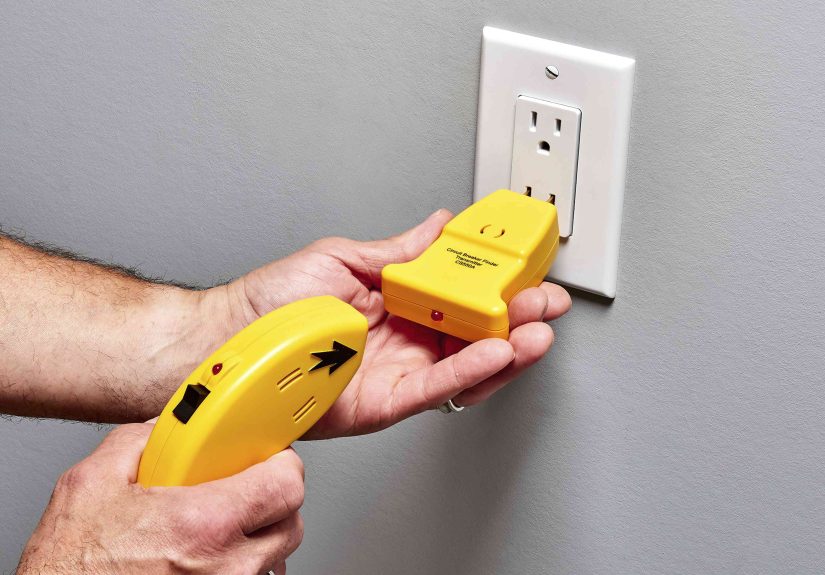
A circuit breaker finder is an electrical testing tool that identifies which breaker in your electrical panel powers a particular outlet, receptacle, light fixture, or section of wiring. Most homeowner-friendly models are made of two parts: a transmitter and a receiver.
How It Works
The transmitter plugs into the outlet or connects to the circuit you want to trace. It sends a signal through that live branch circuit. The receiver is then used at the breaker panel to scan each breaker. When the receiver detects the strongest matching signal, it indicates the breaker controlling that circuit through a beep, a light, or both.
That simple setup is the whole magic trick. The tool does not “see through walls” in some sci-fi way. It follows the signal path through the wiring and helps you pinpoint the correct breaker.
What a Circuit Breaker Finder Is Used For
A circuit breaker finder is useful when you need to:
- Replace an outlet, switch, ceiling light, or fan
- Label an unlabeled or poorly labeled breaker panel
- Troubleshoot a tripping breaker or dead outlet
- Map circuits during a renovation
- Identify which rooms, outlets, or fixtures share a branch circuit
- Work alone without needing someone to shout “try it now!” from across the house
Many modern models also include outlet wiring indicators and GFCI testing features, which can help you catch common issues such as open ground, open neutral, reversed polarity, or incorrectly wired receptacles.
Why Homeowners Like This Tool So Much
A circuit breaker finder saves time, but the bigger win is safety. Electrical work should never begin until you know the correct circuit is off. Guessing is risky. Turning off random breakers and hoping for the best is not much better. A breaker finder gives you a much cleaner process.
It also helps you create a properly labeled breaker panel. That matters more than most homeowners realize. In an emergency, in a renovation, or even during routine maintenance, a well-labeled panel saves time and reduces mistakes. Future you will be deeply impressed with present you. Your electrician will probably be impressed too, which is harder to achieve.
Another reason this tool is handy is that modern homes are rarely wired in the neat, intuitive way people imagine. One breaker may feed part of a bedroom, an adjacent hallway receptacle, and a mystery outlet in the garage that has apparently been freeloading for years. A circuit breaker finder helps expose those surprises before they expose you to an energized circuit.
Main Features to Look For
Not all circuit breaker finders are identical, but most fall into the same general family. If you are shopping for one, these are the features worth understanding.
Transmitter and Receiver Design
The basic setup is standard, but some receivers are automatic and some are manual. Automatic models calibrate themselves as you scan the panel, which is easier for beginners. Manual models may offer sensitivity control, which can be useful in crowded panels or for experienced users who want more control.
120-Volt Household Compatibility
Many consumer models are designed primarily for standard 120-volt household circuits. That makes them great for general outlet and lighting work, but not automatically ideal for every 240-volt appliance circuit or specialty setup. Always check the tool’s voltage rating and included accessories before assuming it can do everything.
Outlet Wiring and GFCI Testing
Some breaker finders double as outlet testers. That means they can tell you whether a receptacle appears wired correctly and, on certain models, test GFCI protection as well. This is helpful because finding the right breaker is only part of the job. Knowing the receptacle itself is wired properly is another important piece of the puzzle.
Adapters for Light Fixtures or Bare Wires
Some kits include adapters for screw-in light sockets or leads for tracing other live circuits. These accessories expand what the tool can do, but they also raise the safety stakes. If your tracing job involves bare conductors or fixture wiring, you need to slow down, follow the manufacturer’s instructions exactly, and be honest about your comfort level.
How to Use a Circuit Breaker Finder
Using a circuit breaker finder is not difficult, but it does require a careful process. Below is the most practical way to use one safely and accurately.
Step 1: Prepare the Circuit You Want to Identify
Start at the outlet or fixture you want to trace. If you are using a standard outlet-style transmitter, plug it into the receptacle. If the tool has outlet wiring lights, check what they say before you move on. If the outlet is dead, the tool may not work there because most basic breaker finders need an energized circuit to send a signal.
For the best accuracy, unplug appliances and electronics on that circuit if possible. Heavy loads, power strips, chargers, and certain electronics can sometimes create noise or confusion. Think of this as asking the circuit to quiet down so the tool can hear itself think.
Step 2: Turn On the Receiver and Go to the Panel
Take the receiver to the breaker box. Open the panel door, but do not remove the panel cover unless you are qualified to do so. Your goal is to scan the breakers, not explore the live interior of the panel like it is an archaeological site.
Turn on the receiver according to the manufacturer’s instructions. Some tools need to be started away from the panel so they can self-test or calibrate properly.
Step 3: Scan the Breakers Slowly
Hold the receiver the way the manufacturer recommends, usually with the sensing surface flat against or very close to each breaker. Move slowly across the breakers one by one. On many models, the first pass is a calibration pass. That means the receiver is comparing signal strength across the panel and may beep at multiple breakers during the first scan.
Do a second pass. This is when the tool usually narrows in on the strongest signal and points to the most likely breaker. If your model requires multiple passes, do not rush it. Speed is the enemy of accuracy here.
Step 4: Confirm the Suspected Breaker
Once the receiver identifies the likely breaker, switch that breaker off. Then go back to the outlet or fixture and verify that power is actually off. This confirmation matters. The breaker finder is a locating tool, not permission to skip verification.
If the transmitter light goes out, the outlet tester goes dark, or a separate voltage test confirms the circuit is de-energized, you have likely found the correct breaker. If the circuit is still live, turn that breaker back on and repeat the process more carefully.
Step 5: Label the Panel
Once you have confirmed the correct breaker, label it clearly. Do not write something vague like “room” or “stuff.” Be specific. Good labels look like this:
- Kitchen counter outlets – east wall
- Primary bedroom receptacles and closet light
- Garage freezer outlet and workbench receptacles
- Upstairs hall bath GFCI and vanity lights
A good label turns a future headache into a 10-second task.
Safety Tips You Really Should Not Ignore
Electricity is not forgiving, even when the task seems simple. A circuit breaker finder makes identification easier, but it does not eliminate electrical hazards.
- Always verify that the circuit is de-energized before touching wires or terminals.
- Never assume a label in an old panel is correct.
- Do not remove the dead front cover of a panel unless you are trained and comfortable doing so.
- Do not use damaged test equipment, cracked adapters, or frayed leads.
- Keep the work area dry and avoid using the tool in wet conditions.
- If the job involves bare conductors, aluminum wiring, a crowded service panel, or signs of overheating, stop and call an electrician.
If you see scorch marks, smell burning, notice a breaker that feels loose, or find evidence of double-tapped breakers or sloppy wiring, your project just graduated from “weekend DIY” to “professional inspection recommended.”
Common Mistakes When Using a Circuit Breaker Finder
Scanning Too Fast
A fast scan can cause weak or misleading readings. Slow, steady passes work better.
Skipping the Calibration Pass
Some tools need an initial pass to compare signal strength. If you skip that step, you may get false positives.
Ignoring Outlet Wiring Problems
If the receptacle has an open ground, open neutral, or reversed wiring, that can affect what the tool tells you. Check the transmitter lights if your model provides them.
Failing to Confirm the Breaker
The receiver can point you to the most likely breaker, but you still need to verify the circuit is dead before doing any work.
Using the Wrong Tool for the Job
A simple 120-volt breaker finder may not be the right choice for every 240-volt appliance circuit, complex multiwire branch circuit, or commercial tracing task. Read the manual, not your optimism.
Can You Use It on Light Fixtures and Switches?
Yes, sometimes. Many circuit breaker finders can trace light fixtures if you use the proper socket adapter or accessory kit. That can be helpful for ceiling lights, porch lights, or fixtures controlled by wall switches. The exact method depends on the tool. In many cases, the fixture must be energized and the wall switch position matters.
Switches are a bit trickier because the tool is usually tracing the circuit feeding the device, not diagnosing every possible switching arrangement. If you are dealing with three-way switches, smart switches, dimmers, or old wiring, the job may be more complicated than a basic breaker finder was designed to solve.
When a Circuit Breaker Finder May Not Work Well
Even good tools have limits. Accuracy can drop when:
- The panel is crowded and circuits are close together
- The circuit has unusual wiring issues
- The receptacle is dead and the transmitter cannot send a signal
- There is interference from plugged-in equipment
- You are tracing specialty circuits beyond the tool’s rating
- The home has subpanels or complicated remodel-era wiring
That does not make the tool useless. It just means you should treat it as part of a process, not an infallible oracle in plastic housing.
When to Call an Electrician
A circuit breaker finder is perfect for identifying breakers, labeling panels, and supporting basic maintenance. It is not a substitute for electrical training. Call a licensed electrician if:
- You need to open the panel beyond the front door
- You are working on the main breaker or service conductors
- You find damaged, overheated, or recalled components
- You suspect a bad breaker, failing panel, or dangerous wiring defect
- You are dealing with 240-volt appliance circuits and are unsure how they are configured
- You simply do not feel confident performing the work
That last reason is enough on its own. Confidence is helpful. Overconfidence is how people end up telling alarming stories at the hardware store.
Final Thoughts
So, what is a circuit breaker finder? It is one of the smartest little tools a homeowner can keep on hand for electrical maintenance. It helps you identify the right breaker quickly, reduce guesswork, improve safety, and finally make sense of the cryptic labels in your breaker box. Used correctly, it turns a frustrating, two-person, trial-and-error process into a straightforward one-person task.
The best part is not just that it finds the breaker. It is that it helps you work more methodically. You prepare the circuit, trace it carefully, verify power is off, and label the panel properly. That is the kind of boring, responsible workflow that prevents very exciting problems later. And in electrical work, boring is beautiful.
Real-World Experiences Using a Circuit Breaker Finder
The first time many homeowners use a circuit breaker finder, it is usually because an “easy” project has already stopped being easy. A common example is replacing an old duplex outlet in a guest room. The panel says “bedrooms,” which sounds promising until you turn off that breaker and discover the lamp is still on, the hallway outlet is dead, and somehow the smoke detector now appears offended. A breaker finder cuts through that confusion. You plug in the transmitter, walk to the panel with the receiver, scan slowly, and suddenly the correct breaker reveals itself two rows away from where common sense swore it should be. The immediate reaction is usually a mix of relief and mild betrayal.
Another classic experience happens during kitchen upgrades. Someone wants to swap a worn outlet for a tamper-resistant one or install a new backsplash and remove outlet covers safely. Kitchens are often split across multiple small-appliance circuits, GFCI protection, lighting runs, and maybe a few mystery additions from past remodels. A circuit breaker finder helps separate those overlapping paths so you can stop guessing which receptacles share power. People often discover the coffee station and toaster corner are not on the same breaker after all, which explains years of random tripping and family debates about who used the air fryer at the wrong moment.
Breaker finders are also a huge help when labeling a panel after moving into an older house. This is where the tool becomes less about one repair and more about understanding the home itself. You go room by room, tracing outlets, jotting down notes, and realizing the panel directory was apparently written by someone with a deep commitment to vagueness. Labels like “lights,” “north wall,” or the timeless classic “misc.” are replaced with useful descriptions that actually mean something. It is not glamorous work, but it feels weirdly satisfying. By the end, the panel reads like a map instead of a crossword puzzle.
There are also moments when the tool teaches humility. Maybe the receiver points to one breaker, but after you switch it off, the outlet is still live. That usually means it is time to slow down, unplug more devices, rescan the panel, and confirm the outlet’s wiring condition. In other words, the tool works best when the user is patient. People who rush tend to get confusing results. People who follow the process tend to become enthusiastic evangelists for the process.
Professionals use circuit breaker finders differently too. For an electrician, the tool is not just about convenience. It saves labor, reduces unnecessary outages, and makes service calls more efficient. But even for homeowners, the real value is confidence. Once you have used one successfully a few times, electrical maintenance feels less mysterious. You still respect the risks, but you are no longer standing at the panel flipping breakers at random and hoping the right lamp goes dark. That alone makes the tool worth owning.





 Close
Close