
Table of Contents >> Show >> Hide
- Why Basement Floors Are a Different Beast
- Waterproof Flooring vs. Waterproofing Your Basement
- Signs You Need Moisture Work Before New Flooring
- Start With Waterproofing, Not Shopping
- Best Waterproof Basement Flooring Options
- Flooring Options to Approach Carefully
- Do Not Ignore the Layer Under the Floor
- If Your Basement Has Real Flood Risk, Your Plan Changes
- Common Basement Flooring Mistakes
- A Smart Buying Checklist
- Conclusion
- Real-World Basement Experiences and Lessons Learned
Basements are the overachievers of the house. They hold holiday decorations, workout gear, mystery bins labeled “misc.,” and sometimes an entire extra living room. But they also have one job description that no upstairs space has to deal with: surviving life below grade. That means cool concrete, hidden moisture, humidity swings, the occasional leak, and the kind of floor drama that can turn a weekend makeover into a soggy regret.
If you are shopping for waterproof basement flooring, here is the big truth upfront: a floor can be waterproof, but your basement may still not be. That is the difference between a smart upgrade and a very expensive lesson. The best basement floor is not just stylish and durable. It is also matched to the moisture reality of the space.
In other words, do not let a box labeled “waterproof” sweet-talk you into skipping the boring stuff. The boring stuff is what keeps your new floor from becoming a cautionary tale.
Why Basement Floors Are a Different Beast
Basement floors live on top of concrete, and concrete is not some magical, waterproof superhero. It is porous. Moisture can move through it, around it, and underneath it. Even in a basement that never fully floods, you may still be dealing with dampness, condensation, minor seepage, or humidity that feels like your floor is quietly exhaling.
That is why the flooring rules downstairs are different from the rules in a bedroom or dining room. A basement floor has to handle more than foot traffic and furniture legs. It has to deal with moisture pressure, cooler temperatures, and the possibility that one day a heavy rainstorm will decide to become part of your remodeling budget.
So when homeowners ask, “What is the best waterproof basement flooring?” the better question is often, “How dry is my basement really?”
Waterproof Flooring vs. Waterproofing Your Basement
What Waterproof Flooring Actually Means
Waterproof flooring is designed so the flooring material itself resists water damage. That is great. If a basement kid spills grape juice, a dog runs in with wet paws, or a washing machine nearby has a small tantrum, the floor has a much better chance of surviving. Waterproof products are made to tolerate moisture on the surface better than traditional wood or standard carpet.
What It Does Not Mean
It does not mean the floor can solve foundation leaks, stop water from entering through the walls, fix poor grading outside, or prevent moisture vapor from moving up through the slab. Waterproof flooring is a finish material. Waterproofing is a moisture-control strategy. Those are cousins, not twins.
If water is coming in from the outside or through the slab, installing a new floor without fixing the cause is like putting fancy shoes on before walking into a swamp. Stylish? Maybe. Dry? Not for long.
Signs You Need Moisture Work Before New Flooring
Before you buy a single plank, tile, or bucket of epoxy, check for warning signs that your basement has a moisture problem:
- A musty smell that hits you before you reach the bottom step
- White chalky residue on concrete or masonry
- Peeling paint or stained walls
- Condensation on pipes, windows, or floor surfaces
- Damp cardboard boxes or warped stored items
- Puddles, seepage, or damp spots after rain
- Old carpet or trim that feels suspiciously soft
Any of those signs mean the space needs diagnosis first and decorating second. It may still end with beautiful flooring, but moisture gets the first vote.
Start With Waterproofing, Not Shopping
Step 1: Control Water Outside the House
The first line of defense is usually outside. If rainwater collects next to the house, your basement often finds out about it. Make sure the ground slopes away from the foundation, gutters are clean, downspouts send water well away from the house, and window wells are not behaving like tiny decorative ponds.
This step is not glamorous, but it is one of the most effective. A basement often gets wetter not because the floor is weak, but because the yard is funneling water exactly where it should not go.
Step 2: Address Interior Moisture
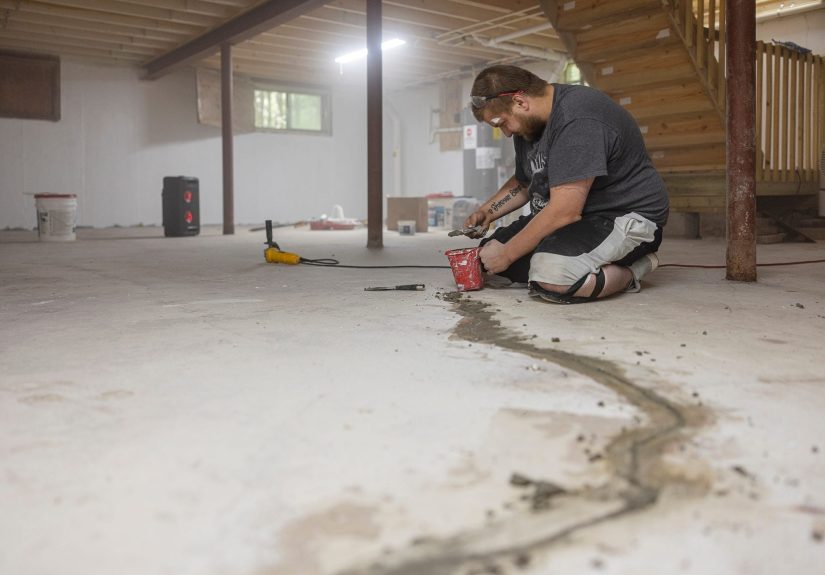
Once exterior drainage is improved, look inside. Some basements need crack repair. Others need a sump pump, an interior drainage channel, a dehumidifier, or a better way to manage condensation and humidity. In certain cases, a sealer or vapor-management coating on the slab may also make sense as part of a larger system.
The keyword there is system. Basement waterproofing works best when it is layered. No single product fixes every kind of moisture issue.
Step 3: Know When to Call a Pro
If you have repeated seepage, standing water, visible mold, foundation cracks that seem active, or a history of flooding, call a qualified basement waterproofing professional. A basement that gets wet often does not need optimism. It needs diagnosis.
Best Waterproof Basement Flooring Options
Luxury Vinyl Plank or Tile
Luxury vinyl plank, often called LVP, is one of the most popular basement flooring choices for good reason. It gives homeowners the wood-look style they want without asking them to pretend their basement is a desert. It is comfortable underfoot compared with tile, easier to replace in sections than sheet goods, and widely available in waterproof versions.
For a finished basement family room, game room, or office, vinyl plank is often the sweet spot between style, practicality, and moisture resistance. It also plays nicely with many basement design styles, from modern to farmhouse to “we had one coupon and a dream.”
Porcelain or Ceramic Tile
Tile is a classic choice when moisture resistance matters most. It handles water well, cleans up easily, and works especially well in laundry corners, basement bathrooms, mudroom-style entries, and utility-heavy spaces. If your basement tends to run cool, though, tile will not exactly greet your bare feet with a warm hug.
That said, if your main goal is durability and water tolerance, tile is hard to argue with. Just remember that the installation underneath matters. A tile floor is only as dependable as the surface prep and moisture strategy below it.
Epoxy-Coated Concrete
Epoxy is a strong choice for unfinished or semi-finished basements, workshops, storage spaces, and home gyms. It can help seal and protect the concrete surface while creating a clean, durable finish. It is also good for homeowners who want the lowest-profile option and do not want to build up floor height.
The catch is prep. Epoxy rewards patience and punishes shortcuts. If the slab is dirty, damp, or cracked without proper prep, the finish may fail. Epoxy is not magic paint. It is a system that likes clean, dry conditions and careful installation.
Sheet Vinyl
Sheet vinyl is often overlooked because it does not have the trendy reputation of plank flooring, but it can be a smart basement choice. It offers strong surface water resistance and fewer seams, which can be helpful in spaces where spills or minor moisture are concerns. It works well in playrooms, craft rooms, and utility zones where practicality wins over flooring bragging rights.
Rubber Flooring or Interlocking Tiles
For a gym, hobby room, or workshop, rubber flooring can be a champion. It is durable, easy on the body, and not bothered by the occasional basement mood swing. It may not be the right look for a cozy guest suite, but for exercise equipment and practical use, it earns its square footage.
Flooring Options to Approach Carefully
Solid Hardwood
Solid hardwood and basements are not a great love story. Real wood is beautiful, but it is vulnerable to moisture movement, swelling, warping, and general unhappiness below grade. If your basement has even mild dampness, hardwood will likely let you know in dramatic fashion.
Laminate
Some newer laminate products are better around water than older versions, but performance varies a lot. In a truly dry basement, some homeowners use waterproof-rated laminate successfully. In a basement with even occasional seepage, it is a bigger gamble than vinyl or tile.
Traditional Wall-to-Wall Carpet
Carpet feels warm and cozy, which is why people keep trying to convince themselves it belongs in every basement. In a reliably dry basement, carpet tiles with moisture-friendly backing can work better than broadloom carpet because damaged sections are easier to replace. But traditional carpet over a damp slab is basically an invitation for odor, staining, and future annoyance.
Do Not Ignore the Layer Under the Floor
A beautiful finish floor gets all the attention, but the underlayment, subfloor system, and vapor control details often determine whether the installation lasts. Some products need a moisture barrier. Some require a specific underlayment. Some should not be installed over an uneven slab. Others work best with a raised subfloor panel that adds separation from cool concrete.
This is where manufacturer instructions matter more than internet confidence. Always check the moisture limits, slab requirements, adhesive rules, and underlayment recommendations for the exact product you plan to install. The basement is not the place for freestyle interpretation.
If Your Basement Has Real Flood Risk, Your Plan Changes
A damp basement and a flood-prone basement are not the same thing. If your home is in a flood-risk area or your basement has taken on water more than once, your flooring decision should be much stricter. In that case, favor materials that are more flood-damage-resistant and less absorbent. That usually means avoiding finishes that trap water, grow mold easily, or become unsalvageable after a single event.
In practical terms, this pushes many homeowners toward tile, sealed concrete, certain resin finishes, or other materials that can better tolerate getting wet. It may also mean rethinking how “finished” the basement should be in the first place. Sometimes the smartest design choice is the one that admits reality.
Common Basement Flooring Mistakes
- Installing new flooring before solving drainage or seepage problems
- Assuming “waterproof” means “safe for a wet basement”
- Skipping slab prep and moisture testing
- Using moisture-sensitive adhesives or wrong underlayment
- Choosing flooring based only on looks
- Finishing a flood-prone basement like it is a second living room above grade
- Forgetting that humidity, not just puddles, can damage materials over time
A Smart Buying Checklist
Before you commit to a basement floor, ask these questions:
- Has the basement ever leaked, seeped, or flooded?
- Did I fix outside drainage first?
- Is the slab dry enough for this exact product?
- Will this material survive humidity, not just spills?
- How easy will it be to repair if one section is damaged?
- Is comfort, warmth, or flood tolerance my top priority?
If you can answer those honestly, your flooring decision gets much easier. Waterproof basement flooring is not about picking the trendiest plank. It is about matching the product to the basement you actually have, not the one you wish you had.
Conclusion
The best waterproof basement flooring starts with a dry-basement strategy, not a shopping cart. When water is controlled outside, humidity is managed inside, and the slab is properly prepared, flooring choices like vinyl, tile, and epoxy can perform beautifully for years. When moisture problems are ignored, even a waterproof product can become part of a bigger mess.
So yes, choose a floor that can handle basement life. But first, make sure your basement is not secretly trying to be a cave. That one decision can save you money, frustration, and at least three future arguments that begin with, “I thought this stuff was waterproof.”
Real-World Basement Experiences and Lessons Learned
One of the most common basement experiences homeowners talk about goes something like this: the floor looked fine during the tour, fine during the move-in, and fine for months. Then the first stretch of hard rain arrives, and suddenly there is a damp line near one wall, a little musty smell near the stairs, or a mysterious cold patch under the area rug. That is often the moment people realize the basement was not exactly dry. It was just dry enough until the weather started asking tougher questions.
Another familiar experience is the quick cosmetic fix. A homeowner paints the concrete, adds a few rugs, brings in a sofa, and declares the basement finished. It works beautifully right up until summer humidity rises or winter thaw sends extra groundwater toward the foundation. Then the rugs start smelling weird, the paint begins to fail, and the room feels less like a bonus living space and more like a mildly polite swamp. The lesson here is simple: basements rarely reward shortcuts for long.
People who have better results usually share a different story. They start by watching how the basement behaves over time. They check after heavy rain. They pay attention to the corners. They improve drainage outside, extend downspouts, clean gutters, and run a dehumidifier before spending money on finish materials. These homeowners may not get the instant gratification of a one-weekend makeover, but they usually end up with floors that still look good years later.
There is also the comfort lesson. Some homeowners install tile or sealed concrete because it is highly practical, only to realize the basement now feels colder than expected. Others choose plush flooring for comfort and later discover that comfort means very little when a damp subfloor starts creating odor problems. The best experiences tend to come from balancing water resistance with how the space will actually be used. A gym, workshop, laundry zone, playroom, and guest room do not all need the same floor.
Then there is the replacement lesson, which many people learn the hard way. When damage happens, modular materials are easier to live with. A few replaceable vinyl planks or carpet tiles are much less stressful than a single continuous surface that has to be torn out wall to wall. Homeowners who plan for the possibility of future repairs often spend less, panic less, and recover faster if moisture sneaks back in.
Perhaps the biggest real-world takeaway is that waterproofing is not one dramatic moment. It is a chain of decisions. The yard slope matters. The gutters matter. The humidity level matters. The slab prep matters. The flooring product matters. Ignore one link and the whole system gets weaker. Get the chain right, though, and a basement can become one of the most useful rooms in the house instead of the room everyone quietly blames when it rains.







 Close
Close