
Table of Contents >> Show >> Hide
- What Exactly Did Walmart Buy?
- Meet Brain Corp: The Company Behind the “Robot Janitors”
- How the Aisle-Cleaning Robots Actually Work
- Why Walmart Wanted Cleaning Robots in the First Place
- What About the Human Workers?
- Part of a Bigger Automation Strategy
- What This Means for the Future of Retail Cleaning
- 8 Practical Takeaways for Retailers Considering Cleaning Robots
- Real-World Experiences and Lessons from Walmart’s Robot Rollout
- Conclusion
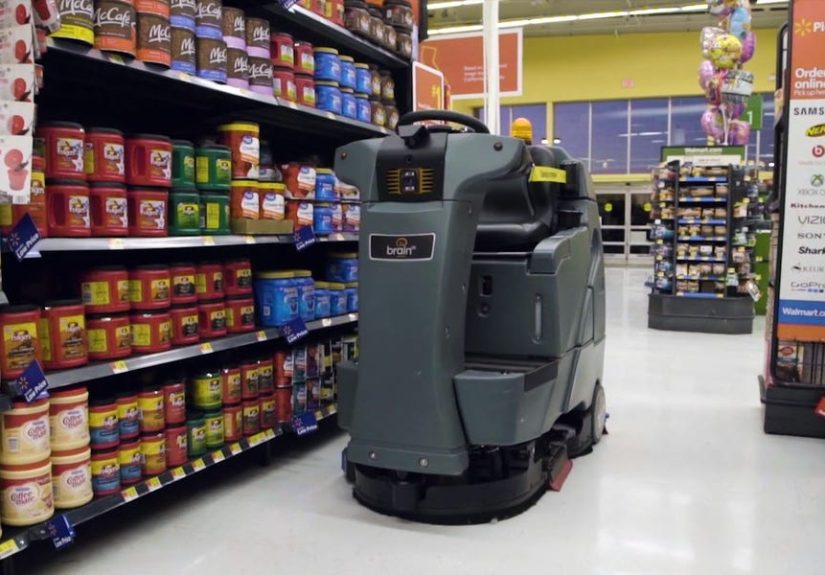
Picture this: You’re strolling through Walmart, comparing cereal prices, when a squat little machine
cruises past, quietly scrubbing the floor like it owns the aisle. No cord. No grumpy janitor. Just a
glowing button, some sensors, and a mission to keep the store spotless. That’s not sci-fi anymore –
that’s Walmart’s fleet of aisle-cleaning robots, powered by Brain Corp.
When Walmart decided to buy around 300–plus autonomous floor-scrubbing robots from Brain Corp, it
wasn’t just buying fancy cleaning equipment. It was betting big on automation, data, and a new way of
running a massive brick-and-mortar empire. In this deep dive, we’ll unpack what the deal actually
means, how these robots work, what changes for employees and shoppers, and what every retailer can
learn from Walmart’s robot janitors.
What Exactly Did Walmart Buy?
Back in 2018, Walmart announced it was rolling out hundreds of autonomous floor-scrubbing machines
built on Brain Corp’s BrainOS platform. Headlines often rounded the number to “300 aisle-cleaning
robots,” but Walmart’s own expectations were even higher – about 360 robots in U.S. stores by the end
of its 2019 fiscal year.
These aren’t cute vacuum bots like the one in your living room. They’re full-size commercial scrubbers
– industrial machines made by manufacturers like Tennant and then “given a brain” by Brain Corp’s
software. Think of them as the upgraded version of the ride-on scrubbers you’ve seen in big-box
stores, but now they can:
- Drive themselves along pre-mapped routes
- Avoid people, carts, and surprise pallet drops
- Collect data about how often and how thoroughly floors are cleaned
- Send reports to managers through a cloud dashboard
For Walmart, the purchase was about a lot more than shinier floors. It was about freeing up employees
from repetitive, low-value work and standardizing cleanliness across thousands of stores.
Meet Brain Corp: The Company Behind the “Robot Janitors”
Brain Corp is a San Diego–based AI and robotics company that doesn’t actually build physical robots.
Instead, it builds BrainOS, a software and hardware platform that turns ordinary
cleaning machines into autonomous mobile robots (AMRs).
Over the last few years, BrainOS has quietly spread across retail and commercial spaces around the
world. By 2019, Brain Corp reported thousands of robots in service, with deployments growing several
hundred percent year-over-year as retailers leaned hard into automation. A few years later, the number
of BrainOS-powered machines ballooned to tens of thousands globally, operating in supermarkets, big-box
stores, airports, warehouses, and malls.
Walmart is one of Brain Corp’s flagship customers in the United States. The partnership started with
a few hundred automated scrubbers and scaled into one of the largest fleets of autonomous cleaning
robots operating in public commercial spaces. For Brain Corp, Walmart was proof that large-scale
robotic automation in everyday retail wasn’t just possible – it could be routine.
How the Aisle-Cleaning Robots Actually Work
So how does one of these robots learn to clean a 180,000-square-foot supercenter without destroying a
display of potato chips? The secret is in the training ride.
Step 1: The Human “Teaches” the Route
A Walmart associate drives the scrubber once along the path they want cleaned. While the employee
drives, BrainOS records the route, maps the environment, and learns the turns, edges, and “do not
go there unless you want trouble” zones. This process is usually quick and doesn’t require a PhD in
robotics – the interface is designed so non-technical workers can handle it.
Step 2: Press a Button, Let It Roll
After the route is recorded, the associate can activate autonomous mode with a single button. The
scrubber then follows the path on its own, constantly scanning for people, carts, and obstacles using
a combination of cameras, lidar, and other sensors. If someone walks in front of it, it slows or
stops. If a pallet appears in the middle of the aisle, it reroutes.
Step 3: Data, Reports, and Accountability
Each cleaning run is logged in the cloud. Managers can see:
- Which routes were completed
- How long cleaning took
- How often specific areas are cleaned
- Whether any runs were interrupted or aborted
That reporting has real value. Instead of “I think we cleaned that aisle yesterday,” managers get
time-stamped proof. For a retailer that lives and dies by consistency and brand standards, automated
documentation is almost as important as the robots themselves.
Why Walmart Wanted Cleaning Robots in the First Place
On the surface, adding robot janitors looks like a simple cost-cutting move. But the reality is more
nuanced and, frankly, more interesting.
1. Labor Pressures and High Turnover
Retail has long struggled with high turnover and difficulty filling overnight or early-morning
cleaning shifts. At the same time, wages for janitorial and building cleaning roles in the U.S. have
been climbing steadily. For a retailer that operates thousands of large stores, even small changes in
labor efficiency can translate into millions of dollars a year.
Autonomous scrubbers don’t replace the entire cleaning staff, but they do take over long, monotonous
“drive the scrubber for hours” tasks. That lets managers schedule people for jobs that genuinely need
human judgment: restroom cleaning, spill response, stocking, customer service, and curbside pickup.
2. The Demand for “Always Clean” Stores
Before 2020, most shoppers noticed dirty floors only if things were obviously bad. The pandemic raised
everyone’s expectations. Cleanliness – or at least the appearance of it – turned into part of a
retailer’s value proposition and brand promise.
Robots help ensure stores are cleaned on a predictable schedule, even during busy hours. Because they
can operate while stores are open and navigate around customers, Walmart doesn’t have to rely on
middle-of-the-night cleaning windows. That “constant state of clean” supports both customer trust and
regulatory expectations.
3. Data-Driven Operations
A human pushing a scrubber is just cleaning. A robot pushing a scrubber is cleaning and
generating data. For a company like Walmart, which increasingly sees itself as a data-driven tech
company as much as a retailer, that matters.
Over time, BrainOS data can help answer questions like:
- Which stores need more cleaning coverage and which are over-serviced?
- How does floor cleaning correlate with customer satisfaction scores?
- Do certain departments (like grocery) need more frequent passes?
When you manage thousands of locations, having standardized, comparable data is gold.
What About the Human Workers?
Any time robots roll into a workplace, people understandably worry about jobs. Walmart’s line has been
consistent: the goal is not to fire associates, but to move them to higher-value tasks. And there is
some truth to that.
Floor scrubbing is physically tiring, repetitive, and, frankly, boring. Offloading that job to a
robot means associates can:
- Restock fast-moving items so shelves aren’t empty
- Handle online order picking and curbside pickup
- Spend more time answering questions and helping customers
- Do detailed, manual cleaning in corners and tight spaces robots can’t reach
But the worker experience isn’t purely rosy. Some employees worry that once robots prove they can do
a task reliably, management will quietly reduce staffing in the background. Others feel pressured to
manage both their usual workload and oversee the robots. And a few simply don’t like sharing
the floor with a machine that never gets tired or asks for a raise.
In practice, how it plays out depends heavily on store leadership. In stores where managers treat
robots as tools to support staff, employees often describe them as helpful coworkers with quirky
personalities. In places where staffing is already tight and communication is poor, robots can feel
like another stressor, not a relief.
Part of a Bigger Automation Strategy
Walmart’s 300-plus aisle-cleaning robots were just the opening act. After the initial rollout, the
company expanded its BrainOS-powered scrubber fleet to well over 1,800 units across U.S. stores.
Meanwhile, Walmart and its Sam’s Club division started bolting additional capabilities onto the same
base machines. One of the most interesting add-ons is the Inventory Scan tower used
at Sam’s Club, which mounts a scanning unit on top of an autonomous scrubber. As the robot cleans, it
also collects inventory data – checking shelf stock, prices, and planogram compliance.
That’s the bigger vision: floor-cleaning robots as mobile data platforms. Once you have a self-driving
machine calmly roaming the store every day, you can add sensors and software to turn it into a rolling
analytics tool:
- Scanning barcodes and price labels
- Detecting out-of-stock items or misplaced products
- Capturing shelf images for AI-driven analysis
- Monitoring traffic patterns and congestion points in the store
The humble “robot janitor” is quietly becoming a Swiss Army knife for in-store automation.
What This Means for the Future of Retail Cleaning
Walmart’s move signaled to the rest of the industry that autonomous cleaning wasn’t a niche experiment
anymore. It was ready for prime time – and for big-box scale.
Since then, retailers, airports, and logistics facilities across the U.S. have accelerated adoption of
cleaning robots. Industry reports show the U.S. commercial cleaning robots market growing at a healthy
double-digit pace as businesses try to control labor costs and raise cleanliness standards at the same
time.
For shoppers, this shift is subtle but real. You’re more likely to see a robotic scrubber gliding past
while you browse. For workers, it means fewer hours spent behind a slow-moving machine and more time
on tasks that either require a human touch or directly drive revenue.
For retailers, it’s a strategic choice: use robots not just to “cut costs,” but to build more
resilient operations, gather better data, and make stores feel clean and well-run even during labor
shortages and unexpected surges in traffic.
8 Practical Takeaways for Retailers Considering Cleaning Robots
Whether you run a 20-store regional grocery chain or a single big warehouse club, Walmart’s robot
experience offers some practical lessons:
-
Start with a high-pain, low-complexity task. Floor cleaning is ideal: repetitive,
predictable routes, and clear ROI. -
Choose a platform, not just a machine. A scrubber with an AI OS like BrainOS can
be upgraded with new features over time, instead of becoming obsolete. -
Invest in change management. Communicate early and often with employees. Make it
clear how robots will support their work – and then actually follow through. -
Redesign roles, don’t just “free up” hours. Be explicit about what humans will do
with time saved: more stocking, better customer service, more detailed cleaning. -
Use the data. Downloading cleaning logs but never looking at them is a waste.
Build simple dashboards and KPIs around coverage and frequency. -
Think about customer perception. Most shoppers are curious, not scared. Simple
signage and friendly messaging (“This robot helps keep our store clean for you”) go a long way. -
Plan for scaling. If the pilot works, do you have the support structure – training,
maintenance, IT – to deploy robots across more locations? -
Look beyond cleaning. Once robots are roaming your spaces reliably, you can explore
add-ons like inventory scanning, temperature monitoring, or safety inspections.
Real-World Experiences and Lessons from Walmart’s Robot Rollout
Numbers and corporate press releases tell one story. The day-to-day reality in the aisles tells
another. Since Walmart and Brain Corp started this partnership, a few recurring themes have emerged
from on-the-ground experiences.
Robots as “Coworkers,” Not Just Machines
In many stores, associates end up giving the cleaning robots nicknames: “Freddy,” “Rosie,” or
“Wall-E.” That might sound silly, but it’s a sign of something important – humans relate better to
technology when it feels approachable. When a robot is seen as a teammate that “takes the boring
shift,” employees are more likely to accept it and take ownership of keeping it running smoothly.
Some associates even treat the robot as a sort of mobile billboard. They’ll decorate it for the
holidays, or use it as a conversation starter when customers ask, “Is that thing going to run me
over?” (Short answer: no – the robots are designed to be cautious to a fault.)
Where Robots Shine – and Where They Don’t
The robots are excellent at broad, repetitive coverage: long main aisles, perimeter runs around the
store, and consistent nightly cleaning. They’re less effective in:
- Tight or cluttered spaces with lots of small obstacles
- Areas where displays move constantly
- Spill emergencies that require immediate, targeted cleanup
That’s why even in highly automated stores, you’ll still see humans with mops and spot-cleaning
equipment. Robots handle the “baseline clean,” while people handle the edge cases and the
“oh-no-someone-dropped-a-jar-of-pickles” situations.
Training and Trust Are Make-or-Break
One of the biggest lessons from Walmart’s rollout is that technology alone doesn’t guarantee success.
Stores that invest time in training get much more out of their robots. That means:
- Training multiple associates to map routes and troubleshoot basic errors
- Building robot tasks into daily routines and checklists
- Explaining to new hires how the robots fit into the overall workflow
In stores where only one person really knows how the robot works, every vacation or shift change can
derail usage. In stores where robot training is part of the standard playbook, uptime and coverage are
significantly higher.
Customer Reactions: From Selfies to Shrugs
For customers, the novelty factor is highest early in a rollout. People stop to stare, record videos,
or even pose for pictures next to the robot. Kids follow it down the aisle like it’s a slow-moving
parade float. Some shoppers ask questions; others make jokes about “the robot uprising.”
But something interesting happens over time: the robot becomes part of the background. Once shoppers
see it a few times and realize it’s safe and predictable, it just blends into the rhythm of the store,
like the beeping of checkout scanners or the hum of the refrigeration units. That’s exactly what
retailers want – technology that quietly supports operations without getting in the way.
Strategic Payoff Over the Long Term
The real payoff of Walmart’s “300 robots” moment isn’t just in labor hours avoided or gallons of water
used more efficiently. It’s in the foundation it laid for a more automated, data-rich store
environment.
By proving that autonomous robots can safely operate in crowded, real-world retail spaces at scale,
Walmart and Brain Corp opened the door to a wave of follow-on innovations – not only more cleaning
automation, but also integrated inventory scanning, analytics, and smarter facility management.
For other retailers watching from the sidelines, the lesson is clear: you don’t need to be Walmart to
start experimenting. Begin with one or two stores, focus on a high-impact, low-risk task like floor
cleaning, involve your employees early, and treat robots as a long-term strategic platform, not a
one-off gadget.
In that sense, “Walmart buys 300 aisle-cleaning robots” isn’t just a quirky headline about robot
janitors – it’s an early chapter in how everyday retail spaces are quietly becoming smarter, more
automated, and more data-driven, one scrubbed aisle at a time.
Conclusion
Walmart’s decision to deploy hundreds of BrainOS-powered aisle-cleaning robots was more than a
high-tech PR stunt. It was a calculated move to solve real operational problems: labor constraints,
rising cleanliness expectations, and the need for better in-store data.
For shoppers, it means cleaner, more consistent stores. For employees, it can mean less tedious work
and more time spent on tasks that matter. For Walmart and other retailers, it marks a shift toward
seeing robots not as distant, futuristic gadgets, but as everyday tools that help keep the world’s
busiest aisles running smoothly.
The retail world is still figuring out the right balance between humans and machines. But if one
thing is clear from Walmart’s experiment, it’s this: the floor-cleaning robot quietly humming past the
cereal aisle isn’t just washing away scuff marks – it’s clearing a path for the next wave of retail
innovation.







 Close
Close