
Table of Contents >> Show >> Hide
- Why Val Kilmer’s Last Post Hits Differently Now
- The Final Posts: Batman, Art, and a Quiet Kind of Grace
- More Than a Batman Headline
- How Illness Changed His Public Image, But Not His Creative Drive
- The Extra Layer of Meaning in 2026
- Why the Batman Mask Became the Image People Held Onto
- A Legacy Built on Contradictions
- Shared Experiences: Why Stories Like This Stay With Us
- Final Thoughts
There are celebrity deaths that feel like a headline, and then there are celebrity deaths that feel like someone quietly closed the cover on a very strange, very beautiful book. Val Kilmer’s passing landed firmly in the second category. For movie fans, he was never just one thing. He was Iceman’s cool stare, Jim Morrison’s haunted swagger, Doc Holliday’s dry-fire brilliance, and yes, one very memorable Batman with cheekbones that deserved their own billing. But after the actor’s death, it wasn’t only his filmography that came rushing back into public view. Fans also returned to his final social media posts, and what they found felt unexpectedly emotional.
That is why the story of Val Kilmer’s last post has resonated so widely. A final post is rarely meaningful because it predicts anything. It matters because hindsight is a ruthless editor. Once a person is gone, every casual caption, every old photo, every offhand quote starts to glow a little brighter. In Kilmer’s case, the glow feels especially strong because his last public posts were not polished publicity beats. They were personal, artistic, and unmistakably him.
That is what gives this moment its weight. As fans revisit the actor’s final Instagram activity after the Batman star’s passing, they are not just seeing nostalgia. They are seeing a condensed version of Val Kilmer’s late-life identity: actor, painter, survivor, eccentric, and artist to the end.
Why Val Kilmer’s Last Post Hits Differently Now
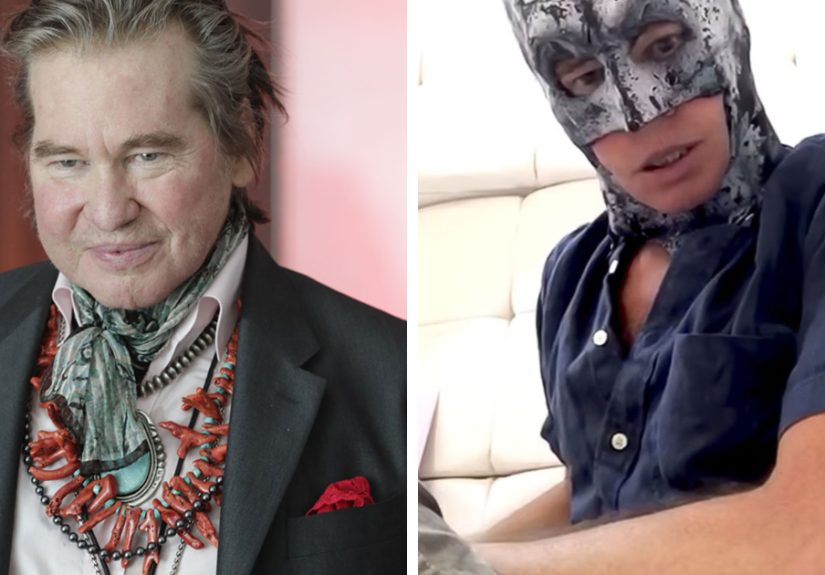
When a major celebrity dies, the internet does what the internet always does: it rewinds. Fans search for the last interview, the last red carpet, the last message, the last photo. In Kilmer’s case, that rewind landed on two especially moving pieces of content. One was a February video in which he put on a Batman mask with a playful, understated confidence that immediately made fans smile. The other was a later art-focused post from March showing one of his paintings, accompanied by a caption describing its moody color and “late-night glow.”
Before his death, those posts read like the work of a veteran actor turned multidisciplinary creative. After his death, they began to feel like something more intimate: a final snapshot of a man who had spent years adapting, reinventing, and refusing to be reduced to his illness. That does not make the posts prophetic. It makes them human. And human, in moments like this, is often more powerful than dramatic.
The renewed attention also reflects the peculiar way public grief works now. In an earlier era, fans might have returned to magazine covers or old VHS copies. Today, they return to feeds. Instagram has become part scrapbook, part shrine, part time capsule. So when Val Kilmer’s final post resurfaces, people are not only processing his death. They are processing the modern ritual of mourning through digital fragments.
The Final Posts: Batman, Art, and a Quiet Kind of Grace
The post that has been shared most widely is the Batman-themed clip. In it, Kilmer, who played Bruce Wayne in Batman Forever, slips on the mask and says, “I’m ready.” It is brief, casual, and even funny. There is no swelling soundtrack, no self-conscious attempt at legacy-building, no big farewell speech. Just Kilmer being Kilmer: wry, game, and somehow capable of turning a small gesture into something memorable.
Viewed before his passing, the video was a charming throwback. Viewed afterward, it became something else. Fans read tenderness into it. Some saw courage. Others saw a man revisiting one of his most famous roles with a sense of warmth and mischief. The moment now feels larger than its runtime because it carries multiple layers at once. It is a nod to Batman Forever. It is a wink to the fans who kept that performance alive long after release. And it is an example of Kilmer’s willingness to keep performing, even in altered form, even after years of health challenges.
Then there is the March post featuring his artwork. That one may be even more revealing. Instead of feeding the machinery of celebrity, it offered a glimpse into Kilmer’s other identity: painter, maker, and observer of mood. The caption described the piece with the kind of textured, visual language you would expect from someone who truly saw the world as color and atmosphere, not just content. In retrospect, the tone of that post has struck many fans as deeply moving. Not because it was sad, but because it was still full of perception. It suggested an artist whose eye remained alive and searching.
Together, these posts tell a fuller story than a single “last post” headline can capture. One looks backward through Batman. The other looks inward through art. Put them side by side, and you get something close to a self-portrait.
More Than a Batman Headline
Of course, reducing Kilmer to “Batman star” would be like describing the Grand Canyon as “a pretty ditch.” Accurate enough to be technically defensible, wildly insufficient in every other way. His career was too varied, too strange, and too alive for a single role to define it.
He arrived in the 1980s with the kind of presence that made casting directors and audiences look twice. Top Secret! showed that he could do absurdist comedy without losing his cool. Real Genius proved that his intelligence onscreen had a spark, not just a smirk. Then came Top Gun, where his Iceman became one of the great movie rivals: icy, competitive, and magnetic in equal measure.
From there, Kilmer built the kind of filmography that actors spend careers chasing. His performance as Jim Morrison in The Doors was committed to the point of near-possession. In Tombstone, he delivered a Doc Holliday so quotable and charismatic that many viewers walked away feeling the movie belonged to him. In Heat, surrounded by giants, he still managed to carve out a distinct emotional silhouette. Even in projects that divided critics, Kilmer rarely disappeared into blandness. He was too idiosyncratic for that. He left fingerprints on everything.
That is why the resurfacing of his last posts matters beyond simple celebrity curiosity. The reaction is not only about loss. It is about scale. People are measuring the intimacy of a final Instagram moment against the vastness of a career, and the contrast is affecting. Here was a man who once filled giant movie screens now leaving behind a quiet image, a short caption, a playful mask, and a lingering mood.
How Illness Changed His Public Image, But Not His Creative Drive
Any honest article about Val Kilmer’s passing has to acknowledge the long health struggle that shaped his later years. After a throat cancer diagnosis in the mid-2010s, Kilmer underwent treatment that left his voice severely altered. It was a profound change for any person, and an especially cruel one for a performer known for verbal precision, musicality, and dramatic force. He spoke openly about the difficulty of being understood and the practical challenge of continuing life and work with a transformed voice.
But what stands out in hindsight is not only the hardship. It is the adaptation. Kilmer turned more deeply toward art. He leaned into visual expression. He documented his life with unusual candor. The 2021 documentary Val reinforced this image of a performer who had spent decades recording pieces of himself, almost as if he understood that one day the archive would need to speak where he could not.
That documentary also sharpened public understanding of Kilmer as more than a difficult genius or faded star. It revealed vulnerability, humor, stubbornness, and devotion to craft. So when fans see the final posts now, they are not seeing random leftovers from a celebrity account. They are seeing the final digital traces of someone who had already spent years transforming life into art.
The Extra Layer of Meaning in 2026
There is another reason this story has remained relevant: Kilmer’s creative presence has not entirely faded from public conversation. In March 2026, reports about his posthumous appearance in the film As Deep as the Grave brought renewed attention to his final years, his artistic values, and his openness to new technology. That reporting highlighted something striking about Kilmer’s legacy. Even after illness changed his voice and limited his physical participation, he remained connected to storytelling through innovation, collaboration, and a willingness to experiment.
That context makes the resurfaced final posts feel even more poignant. They no longer look like isolated fragments from a fading celebrity feed. They look like extensions of a larger late-career pattern: Kilmer continuing to create, continuing to engage, and continuing to reshape what performance could look like when the old rules no longer fit. It is hard not to admire that kind of persistence. Hollywood loves a comeback, but Kilmer’s later-life story was not really about returning to a former version of himself. It was about inventing a new one.
And that may be the most meaningful part of all. Fans are not reacting only because he is gone. They are reacting because the posts remind them that he was still making things. Still joking. Still painting. Still finding ways to leave a mark. There is something deeply moving about an artist whose final public gestures were acts of creation rather than retreat.
Why the Batman Mask Became the Image People Held Onto
It makes sense that the Batman mask clip became the viral centerpiece. Batman is one of those pop-culture roles that never really leaves the actor or the audience. Once you wear the cowl, the internet keeps receipts forever. But in Kilmer’s case, the renewed love for that image is also about contrast. Batman is armor. Batman is myth. Batman is the fantasy of control. Kilmer, by then, had already lived through very human fragility. To see him revisit that symbol, lightly and without pretension, feels almost poetic.
There is also an emotional efficiency to the image. Fans do not need a long explanation to understand why it hits. The man once known for one of the world’s most iconic cinematic costumes puts the mask back on late in life and says, “I’m ready.” After his death, people cannot help hearing the line differently. It lands like a farewell even if it was never meant as one.
Still, the healthiest reading is not the most melodramatic one. The power of the clip is not that Kilmer was somehow sending a coded goodbye. The power is that he was still capable of play. Still capable of iconography. Still capable of stepping into a legend and making it feel personal. That is a much richer interpretation than simple sadness.
A Legacy Built on Contradictions
Part of what has always made Kilmer fascinating is that he did not fit neatly into Hollywood’s preferred packaging. He was famous and elusive, admired and criticized, intensely gifted and sometimes intensely difficult. That contradiction gave him a strange staying power. He was never bland enough to be forgettable, and never tidy enough to be fully domesticated by the celebrity machine.
That tension also shaped the reaction to his death. Fans were not mourning a polished brand. They were mourning a singular presence. The word that keeps attaching itself to Kilmer in tributes is not “perfect.” It is “magnetic.” And magnetic is exactly right. You could look away from a Val Kilmer performance, but you usually regretted it.
His final social posts fit that legacy perfectly. They are not slick. They are not over-managed. They are curious, personal, and slightly off-center in the best way. In other words, they feel like him.
Shared Experiences: Why Stories Like This Stay With Us
There is a reason so many people linger on stories about a celebrity’s final post, especially when that celebrity is someone they grew up watching. It taps into a very ordinary human experience: the shock of realizing that the last time is usually invisible while it is happening. The last performance. The last joke. The last photo. The last time someone revisits an old role just for fun. We almost never know in the moment that we are looking at the final page.
For many fans, Val Kilmer belongs to a specific kind of movie memory. He is the actor people met on cable reruns, on scratched DVDs, in late-night rewatches, in family quotes repeated for years. Somebody remembers him as Iceman because their dad loved Top Gun. Somebody else remembers Tombstone because a friend insisted Doc Holliday was the coolest character ever put on film. Another person remembers Batman Forever because it was the version of Batman that belonged to their childhood, neon weirdness and all. That is what makes the resurfaced post land with such force: it plugs directly into memory that was already personal before the news broke.
There is also something deeply recognizable about the way Kilmer’s last posts mix art and humor. Most people do not leave behind grand statements. They leave behind ordinary expressions of what they were doing, making, noticing, or laughing at. A picture of a painting. A playful costume moment. A caption about color and light. That feels familiar. It reminds us that even legendary people exit the stage through everyday details.
And maybe that is why this story feels bigger than gossip. It invites people to think about the traces they value in their own lives. Not the polished résumé version, but the real one. The inside jokes. The creative scraps. The side projects. The small things that reveal who a person was when no formal spotlight was required. Kilmer’s final posts have become meaningful because they contain exactly that kind of evidence. They do not scream importance. They whisper identity.
Fans also seem to connect with the resilience embedded in those posts. By the end of his life, Kilmer had already endured years of medical struggle and public speculation. Yet what remained visible in his final online presence was not surrender. It was participation. He was still showing up in his own style. Still making art. Still engaging with symbols from his career. Still letting people see a version of him that was alive with wit and imagination. There is something quietly encouraging about that. It suggests that creativity can remain intact even when life gets brutally complicated.
In that sense, the experience of revisiting Val Kilmer’s last post is not only about mourning him. It is about recognizing something true about all public memory now. We do not just remember stars through their greatest hits. We remember them through fragments. Through feeds. Through one odd little video that suddenly becomes priceless. Through one caption that sounds ordinary until it is all we have left. That is sad, yes, but it is also strangely beautiful. It means a final post can become a final handshake.
Final Thoughts
The renewed attention on Val Kilmer’s last post after his passing says as much about Kilmer as it does about the audience he leaves behind. Fans are not clinging to the post because it offers easy closure. They are clinging to it because it feels authentic. It captures the qualities that made him memorable in the first place: artistry, unpredictability, humor, vulnerability, and a refusal to become one-dimensional.
In the end, the new meaning people find in those final posts is not mystical. It is emotional. The Batman mask recalls the icon. The painting reveals the artist. Together, they preserve the person. And for an actor as magnetic and complicated as Val Kilmer, that may be the most fitting farewell possible.






 Close
Close