
Table of Contents >> Show >> Hide
- Why Your Yard Looks Bare, Patchy, And Slightly Betrayed
- Start With A Soil Test Before You Start Buying Everything
- Choose The Right Grass Seed For Your Climate And Yard
- Prepare Bare Spots Like You Mean It
- Overseed Thin Grass To Build A Dense Lawn
- Water New Grass Seed The Right Way
- Mow High, Mow Sharp, And Stop Scalping Your Grass
- Control Weeds Without Declaring War On The Whole Yard
- Fix Compaction, Drainage, And Traffic Problems
- Fertilize Carefully, Not Aggressively
- Protect New Grass While It Establishes
- Common Mistakes That Keep A Lawn Patchy
- A Simple Weekend Plan For Repairing A Bare Patchy Yard
- Experience Notes: What Really Helps A Patchy Lawn Bounce Back
- Conclusion: From Patchy Yard To Lush Lawn
A bare patchy yard has a special talent for making a home look unfinished. One day you are imagining a soft green lawn where kids can play, guests can admire your curb appeal, and your dog can dramatically roll around like it just won a championship. The next day, you are staring at dirt patches, weeds, thin grass, and one mysterious brown spot that seems to have a personal grudge against you.
The good news is that a rough-looking yard is not a life sentence. In most cases, a patchy lawn can be repaired with a smart mix of soil preparation, grass seed, watering, mowing habits, and patience. The even better news? You do not need to be a turf scientist, own a golf course, or whisper motivational quotes to your grass at sunrise. You simply need to understand what your lawn is missing and give it the right conditions to recover.
This guide breaks down how to turn a bare patchy yard into a lush lawn using practical, homeowner-friendly lawn renovation tips. We will cover why grass becomes thin, how to repair bare spots in a lawn, when to overseed, how to water new grass seed, and which mistakes can turn a simple weekend project into a muddy backyard soap opera.
Why Your Yard Looks Bare, Patchy, And Slightly Betrayed
Before tossing grass seed around like confetti, take a moment to figure out why the lawn failed in the first place. Bare spots are symptoms. The real problem could be compacted soil, poor drainage, heavy foot traffic, shade, drought stress, insects, pet damage, disease, low fertility, or the wrong grass type for your region.
If you repair the patch without solving the cause, the new grass may sprout beautifully and then disappear faster than snacks at a backyard barbecue. For example, grass seed will struggle in hard, compacted soil because roots cannot spread easily. A shady area under a dense tree may never support sun-loving grass, no matter how much seed you add. A low spot that stays wet after rain can cause roots to decline. A high, hot slope may dry out before seedlings have a chance.
Walk your yard and observe it like a detective with muddy shoes. Where are the bare patches? Are they near walkways, play areas, fences, dog paths, tree roots, downspouts, or slopes? Is the soil hard as concrete or soft and spongy? Are weeds taking over because the grass is thin? These clues help you choose the right repair strategy instead of guessing and hoping the lawn fairy clocks in.
Start With A Soil Test Before You Start Buying Everything
A soil test is one of the smartest first steps in patchy lawn repair. It tells you the soil pH and nutrient levels, which helps you avoid wasting money on fertilizer or lime your yard may not need. Many homeowners skip this step because it feels less exciting than spreading seed. Understandable. Soil testing does not have the glamour of a fresh green lawn. But it is the difference between feeding your grass and randomly throwing lawn products at dirt.
Most turfgrasses prefer soil that is slightly acidic to neutral. If the pH is far outside the ideal range, nutrients may be present but unavailable to the grass. That means your lawn can look hungry even after fertilizer applications. A soil test can also show whether phosphorus, potassium, or organic matter needs attention.
Once you have test results, follow the recommendations carefully. Apply lime only if the soil test calls for it. Use fertilizer based on actual needs rather than guesswork. This approach saves money, reduces runoff, and gives new grass a healthier start.
Choose The Right Grass Seed For Your Climate And Yard
Not all grass seed is created equal. Some grass types love cool weather. Others thrive in heat. Some tolerate shade, while others act offended if they do not get full sun. Choosing the wrong grass seed is like wearing snow boots to the beach: technically possible, but nobody is going to have a good time.
Cool-Season Lawns
Cool-season grasses, such as tall fescue, fine fescue, Kentucky bluegrass, and perennial ryegrass, grow best in spring and fall. They are common in many northern and transition-zone areas. For cool-season lawns, late summer to early fall is often the best time to overseed because soil is warm, temperatures are cooler, and weed pressure is usually lower. Spring can work for small repairs, but young grass may face summer heat before it has deep roots.
Warm-Season Lawns
Warm-season grasses, such as bermudagrass, zoysiagrass, centipedegrass, and St. Augustinegrass, grow most actively in late spring and summer. These lawns are common in warmer regions. Repair methods may involve seed, plugs, sprigs, or sod depending on the grass type. Timing is important because warm-season grasses need warm soil and active growth to establish well.
Match Seed To The Site
Look for a high-quality seed blend suited to your sun exposure, traffic level, and maintenance goals. For shady areas, choose shade-tolerant mixes. For busy family yards, select durable turf-type tall fescue or another wear-tolerant option appropriate for your region. For low-maintenance areas, fine fescues may be useful where they are regionally recommended.
Read the seed label. Avoid bargain bags packed with weed seed, filler, or varieties not suited to your lawn. Cheap seed can become expensive when you have to repair the repair.
Prepare Bare Spots Like You Mean It
The secret to fixing bare spots in a lawn is seed-to-soil contact. Grass seed cannot grow well if it is sitting on top of dead grass, thatch, leaves, or compacted dirt. It needs to touch loose soil, stay moist, and receive enough light.
For small bare patches, rake away dead grass, weeds, rocks, and debris. Scratch the soil surface with a garden rake or hand cultivator until the top half inch is loose. If the soil is poor, mix in a thin layer of quality topsoil and compost. Do not bury the area under a mountain of compost like you are tucking it into bed for the winter. A light amendment is helpful; too much can create a raised bump that scalps when you mow.
Spread grass seed evenly over the loosened soil. A simple trick is to mix seed with a small amount of compost or topsoil so it distributes more evenly. Press the seed into the soil with your hand, foot, or the back of a rake. The goal is firm contact, not deep burial. Most lawn seed should be lightly covered, not hidden like treasure.
For larger thin areas, mow the existing grass short before overseeding, rake out debris, and consider core aeration if the soil is compacted. Core aeration removes small plugs of soil and opens channels for air, water, and roots. Overseeding after aeration can improve germination because seed falls into the holes and reaches soil more easily.
Overseed Thin Grass To Build A Dense Lawn
Overseeding is the process of spreading grass seed over an existing lawn to improve thickness. It is one of the best ways to turn a patchy yard into a lush lawn because dense turf naturally helps crowd out weeds. A thick lawn shades the soil, reduces open space for weed seeds, and looks more uniform.
Before overseeding, mow the lawn lower than usual, remove clippings if they would block seed contact, and rake matted areas. If you have more than a half inch of thatch, dethatching may be needed. If the soil is compacted, aerate first. Then spread seed at the recommended overseeding rate on the label. More seed is not always better. Overcrowded seedlings compete with each other and may become weak.
After seeding, apply a starter fertilizer only if recommended by your soil test or local guidelines. Some areas restrict phosphorus use unless a soil test shows a deficiency, so read labels and follow local rules. Lightly topdress with compost if needed, then water gently.
Water New Grass Seed The Right Way
Watering is where many lawn repairs either become a success story or a crunchy tragedy. New grass seed needs consistent moisture until it germinates and begins rooting. The seedbed should stay moist but not soggy. Think damp sponge, not backyard rice paddy.
During the first couple of weeks, you may need to water lightly once or several times per day depending on heat, wind, soil type, and rainfall. Sandy soil dries faster than clay. Hot, breezy weather can dry a patch before lunch. Use a gentle spray so you do not wash seed away. If water puddles or runs off, stop and let it soak in.
Once seedlings appear and begin to grow, gradually water less often but more deeply. This encourages roots to grow downward instead of staying shallow. As the lawn matures, most established lawns do better with deeper, less frequent watering than daily sprinkles. A common goal for actively growing turf is about one inch of water per week from rain or irrigation, adjusted for local climate and grass type.
Avoid watering late in the evening when grass blades may stay wet overnight. Morning watering is usually better because it gives foliage time to dry and reduces disease pressure.
Mow High, Mow Sharp, And Stop Scalping Your Grass
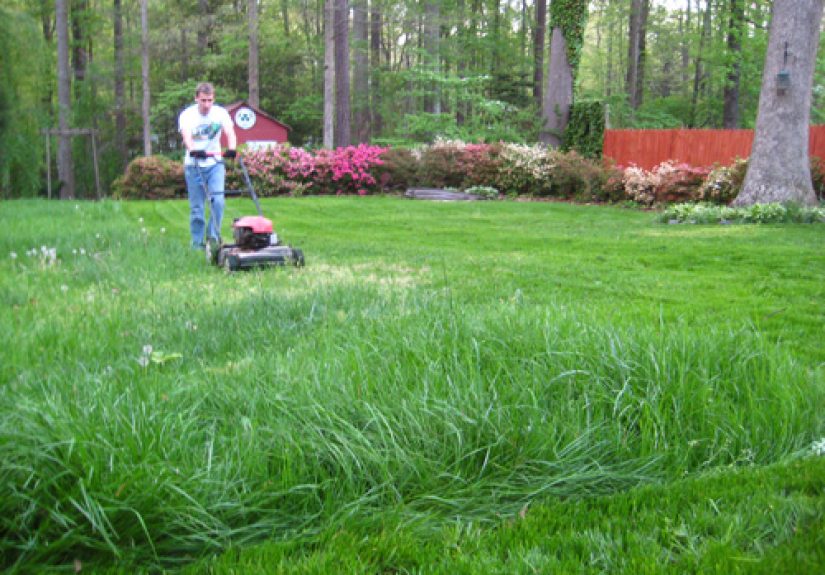
Mowing seems simple until it quietly ruins the lawn. Cutting grass too short weakens the plant, exposes soil to sunlight, encourages weeds, and increases drought stress. A higher mowing height generally supports deeper roots and better turf density. For many home lawns, mowing around three inches is a healthy target, though the ideal height depends on grass species and region.
Follow the one-third rule: never remove more than one-third of the grass blade at one mowing. If your lawn gets too tall, lower it gradually over multiple cuts. Scalping the lawn because you missed a week is like skipping breakfast and then trying to eat a couch. It is not a balanced solution.
Keep mower blades sharp. Dull blades tear grass instead of cutting it cleanly, leaving ragged tips that brown quickly and invite stress. Mulch clippings when possible. Grass clippings break down and return nutrients to the soil, reducing the need for fertilizer. Just avoid leaving heavy clumps that smother seedlings or existing turf.
Control Weeds Without Declaring War On The Whole Yard
Weeds love bare soil. Crabgrass, dandelions, plantain, clover, and other opportunists move in when turf is thin. The best long-term weed control is a dense, healthy lawn. Still, during renovation, you may need to remove existing weeds before seeding.
For small patches, hand-pulling weeds is often enough, especially when the soil is moist. Remove roots when possible. For larger infestations, targeted herbicide may be considered, but always read and follow the label. Some weed control products can prevent grass seed from germinating, so timing matters. Do not apply a pre-emergent herbicide and then expect new seed to sprout politely through it.
If weeds cover a large percentage of the lawn, full or partial renovation may be more effective than spot repair. Kill or remove the weeds, prepare the soil, and reseed at the right time for your grass type. It is more work up front, but it can save you from endless patching.
Fix Compaction, Drainage, And Traffic Problems
If your yard has paths worn into it by kids, pets, delivery routes, or your own daily shortcut to the grill, grass may struggle no matter how well you seed. Turf is tough, but it is not a sidewalk with chlorophyll.
For compacted areas, core aeration can help. It improves air movement, water infiltration, and root growth. For chronically wet areas, inspect drainage. Redirect downspouts, fill low spots carefully, or consider whether that section would be better as a rain garden, mulch bed, stepping-stone path, or groundcover area. Not every square foot of a yard has to be lawn.
In deep shade, grass may always be thin. You can prune trees selectively to increase light, choose shade-tolerant seed, or convert the area to mulch, native plants, or a woodland-style bed. The smartest lawn renovation sometimes means admitting grass is not the best plant for that spot.
Fertilize Carefully, Not Aggressively
Fertilizer can help a patchy lawn recover, but more is not better. Too much nitrogen can burn grass, stimulate excessive top growth, and increase disease risk. It can also wash into waterways. Use soil test recommendations and local extension guidance to decide what your lawn needs.
For cool-season lawns, fall fertilization is often valuable because grass is actively growing and building roots. For warm-season lawns, fertilization usually lines up with active warm-weather growth. Avoid fertilizing dormant or drought-stressed grass. When grass is brown from summer dormancy, feeding it is like giving coffee to someone who is asleep and sunburned. Water and timing matter first.
Choose slow-release fertilizer when appropriate, apply evenly, and sweep granules off sidewalks and driveways back onto the lawn. This prevents staining and keeps nutrients out of storm drains.
Protect New Grass While It Establishes
New seedlings are delicate. Keep foot traffic, pets, bikes, and lawn games off repaired areas until the grass has been mowed a few times and feels rooted. If you repaired a dog path, use temporary fencing or a new walking route. If you repaired a play area, set expectations early unless you enjoy watching your hard work become a soccer field before breakfast.
Wait to mow new grass until it reaches the recommended height for its type, usually around three to four inches for many cool-season grasses. Use a sharp blade and avoid mowing when the soil is wet. The first mow should be gentle. Do not turn the mower sharply on tender seedlings, and do not remove too much at once.
Common Mistakes That Keep A Lawn Patchy
Many patchy lawn problems come from a few repeat mistakes. One is seeding at the wrong time. Seed planted during extreme heat, drought, or cold may germinate poorly. Another mistake is skipping soil preparation. Seed thrown onto hard dirt rarely becomes a lush lawn. A third mistake is inconsistent watering. If seed dries out after germination starts, the seedlings may die.
Other common problems include mowing too short, using the wrong seed, over-fertilizing, ignoring shade, and applying weed control products too close to seeding. Homeowners also sometimes expect instant results. Grass needs time. Seedlings may appear in one to three weeks depending on species and conditions, but a truly thick lawn can take a full growing season or more.
A Simple Weekend Plan For Repairing A Bare Patchy Yard
If you want a practical action plan, start with this sequence. First, identify the cause of the bare spots. Second, test the soil or at least plan to do so before major renovation. Third, remove weeds, dead grass, rocks, and debris. Fourth, loosen the soil and add a light layer of compost or topsoil if needed. Fifth, choose the right grass seed for your region and site conditions. Sixth, spread seed evenly and press it into the soil. Seventh, water lightly and consistently. Eighth, protect the area until the grass is established.
For larger areas, add mowing, dethatching, and core aeration before overseeding. For major renovation, plan around the best season for your grass type. This may feel like more effort than simply throwing seed down, but the results are far better. Your lawn does not need magic. It needs preparation, timing, and a little less chaos.
Experience Notes: What Really Helps A Patchy Lawn Bounce Back
After working through patchy lawn repairs, one lesson becomes obvious: the boring steps are usually the powerful ones. Everyone wants the miracle bag of seed. Everyone wants the “green in seven days” moment. But the real transformation usually comes from raking, loosening soil, watering consistently, mowing correctly, and choosing grass that actually belongs in that yard. Not glamorous, yes. Effective, absolutely.
One practical experience is that small bare spots are easier to fix when treated like tiny planting beds. Instead of casually sprinkling seed and walking away, clean the area carefully. Scratch up the soil. Add a modest amount of compost. Spread the seed evenly. Press it down. Water it gently. Check it every day. This takes only a few minutes, but the difference is huge. Seed that touches soil and stays moist behaves very differently from seed scattered over dry thatch and abandoned like a New Year’s resolution in February.
Another useful lesson is that watering must be adjusted to weather, not the calendar. A patch seeded during mild, cloudy weather may need much less water than one seeded during a windy, sunny week. The top layer of soil dries quickly, and that is exactly where the seed is trying to wake up. A light morning watering and another light watering later in the day can make the difference during dry spells. But puddles are not helpful. If seed starts floating away, the hose has become too enthusiastic.
It also helps to manage expectations. A repaired patch may look fuzzy and uneven at first. That is normal. Young grass is not instantly carpet-thick. It needs several mowings and continued care before it blends with the existing lawn. The first few weeks are about establishment. The next few months are about thickening. By the next growing season, a well-repaired area can look dramatically better.
One of the biggest surprises for many homeowners is how much mowing height affects lawn health. Raising the mower can make a thin lawn look better almost immediately and perform better over time. Taller grass shades soil, protects roots, and helps reduce weed pressure. Cutting low may look tidy for a day, but it often makes the lawn weaker. The lawn version of a buzz cut is rarely the best strategy unless you are preparing for renovation.
Finally, not every patch should become grass again. Some areas fail repeatedly because they are too shady, too wet, too steep, or too heavily used. In those spaces, the best “lawn tip” may be to stop fighting nature and redesign the area. A mulch path, stepping stones, native planting bed, or groundcover can look intentional and reduce maintenance. A lush yard is not always 100 percent turf. Sometimes the most beautiful lawn is the one that knows where grass belongs and where it can gracefully retire.
Conclusion: From Patchy Yard To Lush Lawn
Turning a bare patchy yard into a lush lawn is not about one magic product. It is about creating the right environment for grass to grow. Start with the soil, choose the right seed, prepare bare spots properly, overseed thin areas, water new seed consistently, mow high, and fix the underlying causes of damage. When you do those things together, your yard has a real chance to become thick, green, and healthy.
A lush lawn takes patience, but every small repair adds up. Today’s bare patch can become tomorrow’s soft green corner. Today’s thin turf can become next season’s backyard bragging point. And yes, you may eventually become the kind of person who admires seed germination with suspicious enthusiasm. That is not a problem. That is lawn progress.
Note: Lawn timing, grass selection, fertilizer rules, and watering needs vary by region. Use this guide as a general U.S. lawn-care resource and adjust recommendations based on your local climate, soil test, grass type, and extension guidance.







 Close
Close