
Table of Contents >> Show >> Hide
- What the Turboprop Christmas Tree Stand Actually Is
- Why This Stand Gets So Much Attention
- What to Check Before Buying It for a Real Tree
- Who the Turboprop Christmas Tree Stand Is Best For
- Turboprop vs. a Standard Christmas Tree Stand
- Styling Tips for a Stand This Distinctive
- Real-World Experiences Related to the Turboprop Christmas Tree Stand
- Final Thoughts
If most Christmas tree stands are the holiday equivalent of sensible walking shoes, the Turboprop Christmas Tree Stand is the sleek Scandinavian boot that turns heads in the hallway. It exists to do a practical job, sure, but it also seems deeply committed to looking cool while doing it. And honestly, that is a very respectable life choice.
Known in some published listings as the Turboprop Christmas Tree Stand and by the maker as the Turbin Christmas tree stand, this modern holiday base has earned attention for doing something rare in seasonal décor: making the part you usually hide look like the part you want people to notice. Instead of begging for a tree skirt to cover it up, this stand leans into its sculptural shape and clean lines.
So what should shoppers actually know before falling for its modern charm? Quite a bit, especially if you plan to use it with a real tree. A beautiful stand still has to do the unglamorous work of stability, sizing, watering, and safety. In other words, holiday magic is wonderful, but gravity and dry needles remain undefeated.
What the Turboprop Christmas Tree Stand Actually Is
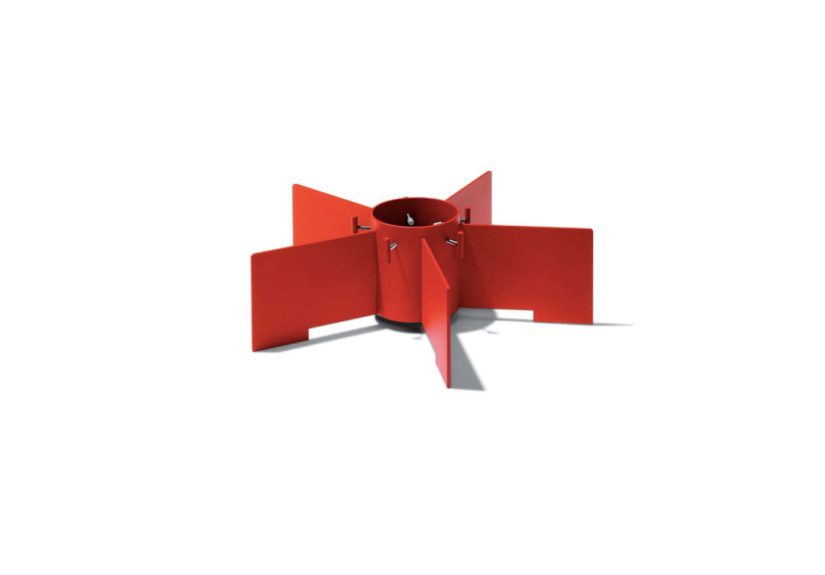
The Turboprop Christmas Tree Stand is a modern metal tree stand associated with Swedish brand SMD Design and designer Stina Sandwall. In official manufacturer materials, it appears as the Turbin Christmas tree stand. In design coverage, particularly in English-language editorial roundups, it has also been labeled the Turboprop Christmas Tree Stand. Same design family, same modern attitude, slightly different naming path.
Published descriptions consistently present it as a metal stand with a lacquered or powder-coated finish rather than a rustic, hide-it-under-fabric kind of base. That matters because it changes the role of the stand entirely. Instead of acting like a backstage crew member dressed in black, it becomes part of the set design.
Official specs also show that it comes in two sizes, which is a major plus for shoppers who hate buying décor based on optimistic guesswork. Published listings show a smaller version at roughly 480 mm in diameter and 145 mm in height, and a larger one at about 600 mm in diameter and 190 mm in height. Color listings vary a little by source, but white, red, and darker neutral shades such as gray, anthracite, or dark gray show up regularly. The manufacturer also lists green, which feels extremely on-brand for Christmas.
Why This Stand Gets So Much Attention
The short answer is simple: it looks intentional. A lot of tree stands are built to disappear. The Turboprop is built to participate. Its shape feels graphic and dynamic, with a silhouette that looks more like a design object than a hardware necessity. That makes it especially appealing in homes where the tree is part of an overall interior story instead of just a temporary glitter explosion in the corner.
It also fits neatly into the larger appeal of Scandinavian holiday decorating. Think fewer fussy details, better materials, cleaner shapes, and a stronger focus on form. If your taste leans more “calm winter living room with candlelight and wool throws” than “every ornament I’ve owned since third grade plus a dancing snowman,” this stand makes immediate sense.
There is also a practical visual advantage here: because the stand itself is attractive, you may not feel pressured to cover it with a bulky skirt or oversized collar. That can make the whole tree setup look lighter, cleaner, and more architectural. In smaller apartments or modern homes, that difference is bigger than it sounds.
What to Check Before Buying It for a Real Tree
This is where stylish shopping needs a quick cup of strong coffee and some realism. If you plan to use the Turboprop Christmas Tree Stand with a fresh-cut tree, you should evaluate it the same way you would evaluate any serious live-tree stand: for fit, stability, water needs, and day-to-day usability.
1. Match the stand to the trunk diameter
Experts consistently recommend choosing a stand that fits the tree you actually bought, not the tree you wish you had bought. A too-small stand is not a personality test. It is just a problem. Published Christmas tree care guidance also warns against whittling down the sides of the trunk to force a fit, because the outer layers of wood are important for water absorption. If the tree and the stand are a mismatch, the answer is a different stand, not holiday carpentry panic.
2. Make a fresh cut before setup
Tree care guidance from U.S. experts repeats this point for good reason: before placing a real tree in the stand, cut a fresh slice from the base of the trunk. That helps reopen the wood so the tree can absorb water more effectively. Waiting too long after the cut can reduce water uptake, which is bad news for freshness, needle retention, and overall holiday survival.
3. Water capacity matters more than your tree topper
A real Christmas tree stand should provide enough water for the trunk size. A widely repeated rule of thumb is about 1 quart of water capacity per inch of trunk diameter. That guideline matters because a fresh tree can drink a surprising amount, especially in the first days indoors. Some home-care sources note that trees may consume up to a gallon a day depending on size and conditions. Translation: if your stand makes watering annoying, you will eventually start avoiding it, and your tree will absolutely notice.
4. Keep the water level above the base
Letting the water drop below the trunk base can allow a new sap seal to form, which reduces absorption. This is one of the easiest mistakes to make during a busy holiday week. You get distracted by wrapping paper, cookies, guests, and the annual debate over whether white lights are elegant or emotionally repressive. Meanwhile, the tree is quietly dehydrating. Daily checks are not overkill. They are basic maintenance.
5. Think about stability, especially with pets or kids
Even a beautiful stand must do the boring hero work of holding the tree upright. Testing and buying guides from major home publications repeatedly emphasize sturdiness, ease of setup, and resistance to tipping. If your household includes a large dog, a climbing toddler, or one determined cat with a side hustle in chaos management, prioritize stability with zero apology.
6. Keep the tree away from heat sources
Holiday safety guidance is consistent here too: keep a real tree at least 3 feet away from fireplaces, radiators, candles, heat vents, and other heat sources. A well-watered tree is safer than a dry one, and placement matters almost as much as watering. A stunning stand does not cancel out physics, open flame, or overheated living rooms.
Who the Turboprop Christmas Tree Stand Is Best For
This stand makes the most sense for shoppers who care deeply about design and want the base of the tree to look as considered as the ornaments. It is especially well suited to modern, minimalist, Scandinavian, or design-forward interiors where every visible object has to earn its place.
It is also a smart fit for people who dislike the typical visual bulk around a tree base. Traditional stands often need extra help from a skirt, collar, basket, or DIY disguise. The Turboprop’s whole charm is that it may eliminate some of that decorating labor. You set the tree up, step back, and the base already looks like part of the composition.
For artificial trees, the appeal is slightly different. Many artificial trees come with their own stand, so buyers are not always shopping for a replacement. But for those styling a decorative tree, staging a holiday display, or using a smaller specialty tree in a modern room, a sculptural stand like this can elevate the setup quickly.
It may be less ideal for shoppers whose top priorities are maximum reservoir size, ultra-fast setup, or rugged utility above all else. In mainstream testing roundups, the most praised real-tree stands tend to win on easy locking systems, generous water basins, and no-fuss filling access. If your dream holiday begins with “I want the least annoying setup possible,” a more utility-driven stand may serve you better.
Turboprop vs. a Standard Christmas Tree Stand
The easiest way to think about the difference is this: a standard stand is a tool, while the Turboprop is a tool wearing good tailoring. Both can support a tree, but they create different experiences in the room.
A conventional stand usually focuses on function first. It may have eye bolts, a deep basin, a broad footprint, and all the visual charm of garage equipment. That is not an insult; it is a job description. These stands are often the best choice for large fresh trees, busy family homes, and anyone who wants obvious practicality.
The Turboprop Christmas Tree Stand offers something else: visual value. It turns the base into part of the holiday display. That does not make it automatically better. It makes it better for a certain kind of buyer. If you are curating a room, photographing your setup, or simply tired of pretending the lower 18 inches of every Christmas tree do not exist, the design appeal is significant.
There is also the long-term angle. A stand like this is not just seasonal storage hardware. It is a recurring décor object. The more your taste leans toward timeless modern design, the easier it is to justify a stand that still looks good before the presents arrive and after the ornaments come down.
Styling Tips for a Stand This Distinctive
If you buy a statement stand, let it make a statement. That does not mean turning your living room into a showroom. It just means resisting the urge to bury the best part under yards of fabric and tinsel.
First, keep the lower branches a touch lighter so the stand remains visible. Second, choose a restrained palette if you want the form to shine. White lights, paper ornaments, matte baubles, wood accents, and natural garland all play nicely with a modern metal base. Third, keep cords tidy. Nothing undermines Scandinavian elegance faster than a power strip that looks like it lost a fight.
If the stand is in a bold color like red, let it carry some of the holiday energy. You do not need to repeat that color seventeen more times like you are being graded on enthusiasm. A few coordinated accents are enough. If it is white or dark gray, you have more freedom to lean warm, minimal, rustic, or even a little dramatic.
Real-World Experiences Related to the Turboprop Christmas Tree Stand
One of the most interesting things about the Turboprop Christmas Tree Stand is the kind of holiday experience it encourages. It is not just about holding a tree upright. It changes how people think about the whole setup ritual.
In a small apartment, for example, a stand like this can make the tree feel less cluttered and more integrated with the room. Instead of adding a huge tree skirt, a chunky collar, and a bunch of visual filler to hide the base, you get a cleaner footprint. That matters when every square foot is doing overtime. In a tighter living room, the stand can help the tree feel more polished and less like it landed there by emergency festive deployment.
For design-conscious homeowners, the experience is often emotional as much as practical. Many people spend the rest of the year choosing furniture, lighting, textiles, and accessories carefully, only to let the Christmas tree base look like a last-minute afterthought. A sculptural stand fixes that mismatch. It lets the holiday setup feel intentional from top to bottom. You are no longer decorating around an eyesore. You are decorating with a complete object.
Hosting is another area where this kind of stand changes the vibe. Guests notice it. Not everyone will walk in and identify the designer, of course, because most people wisely reserve that energy for cheese boards and vacation photos. But they do notice when the tree looks unusually clean, balanced, and well finished. The stand contributes to that reaction. It subtly tells the room, “Yes, someone thought this through.”
There is also a practical experience difference during setup. With ordinary stands, the process can feel purely mechanical: loosen bolts, adjust trunk, crouch on floor, mutter seasonal words that are not in any carolbook, then throw fabric over the evidence. With the Turboprop, the setup has a stronger decorative payoff because the stand itself remains visible. That can make the whole ritual feel a little less like assembly and a little more like styling.
For families, the experience depends on priorities. If your holiday season is loud, busy, and gloriously chaotic, the stand may feel like a beautiful extra rather than the main event. Kids generally do not gather around to admire powder-coated geometry. They care about ornaments, lights, cookies, and whether the star gets put on crooked again. But adults still benefit from a base that looks good in the background of all those memories and photos.
There is even a storage experience to consider. A well-designed stand tends to feel worth unpacking year after year. That may sound minor, but holiday décor has a lot of items that age poorly, look cheap after two seasons, or feel like they belong to a past version of your taste. A cleaner, better-designed stand has a stronger chance of surviving those aesthetic mood swings. It can become part of your annual tradition without becoming part of your annual decorating regret.
In the end, the experience of owning a Turboprop Christmas Tree Stand is less about extravagance and more about coherence. It helps the tree base match the rest of the room. It makes setup feel more intentional. It adds style without demanding a huge amount of extra decorating work. And during a season that can quickly become visually noisy, that kind of calm confidence is a gift in itself.
Final Thoughts
The Turboprop Christmas Tree Stand is not the right choice for every household, and that is perfectly fine. It is not trying to be the most rugged, the cheapest, or the most aggressively utilitarian option on the market. Its strength is that it makes an ordinary holiday necessity look remarkably refined.
If you want a Christmas tree stand that pulls visual weight, complements a modern interior, and turns the base of the tree into part of the décor, this one is easy to understand. Just remember the golden rules if you are pairing it with a real tree: get the sizing right, avoid trimming the trunk to force a fit, make a fresh cut, keep the water topped off, and keep the whole setup safely away from heat. Style is lovely. A well-watered tree that stays upright is lovelier.
Note: This article is based on published product information and established U.S. guidance for live-tree stand sizing, watering, freshness, and holiday fire safety.






 Close
Close