
Table of Contents >> Show >> Hide
- Broadmoor Hospital: Britain’s Most Famous Secure Hospital
- The Top 10 Notable Residents of Broadmoor Hospital
- 10. Peter Bryan – The Cannibal Whose Case Exposed System Failures
- 9. Graham Young – The “Teacup Poisoner” Who Turned Science into Horror
- 8. Kenneth Erskine – The “Stockwell Strangler” and the Question of Capacity
- 7. David Copeland – The London Nail Bomber and Violent Extremism
- 6. Peter Sutcliffe – The “Yorkshire Ripper” and a Nation’s Trauma
- 5. John Straffen – The Escape That Changed Broadmoor Forever
- 4. Charles Bronson – Britain’s “Most Violent Prisoner” and the Cult of Notoriety
- 3. Richard Dadd – A Gifted Artist in the Grip of Psychosis
- 2. Daniel M’Naghten – The Man Behind the Insanity Defense
- 1. Ronald Kray – Gangster, Patient, and Pop-Culture Legend
- Broadmoor, True Crime, and the Ethics of Fascination
- Experiences and Reflections on Exploring Broadmoor’s Dark History
- Conclusion: Why These Residents Still Matter
Broadmoor Hospital has the kind of reputation that makes even true-crime fans sit up a little straighter.
This high-security psychiatric hospital in Berkshire, England, has housed some of the most notorious and
complex figures in British criminal history. It’s not a prison, but it might be the one place in the UK
that unsettles people even more than a maximum-security jail.
The original “Top 10 Notable Residents of Broadmoor Hospital” list on Listverse helped cement
the institution in internet lore, but there’s a deeper, more nuanced story behind those names. Below, we
revisit those ten residents through a modern lens: combining history, mental health context, and a
healthy respect for victims, while still keeping the engaging, list-style energy readers love.
Broadmoor Hospital: Britain’s Most Famous Secure Hospital
Opened in the 1860s, Broadmoor began life as the “Broadmoor Criminal Lunatic Asylum,” built to hold
people whose serious mental illness and dangerous behavior made them unsuitable for ordinary prisons or
hospitals. Over time, it evolved into a specialist high-security psychiatric hospital within England’s
National Health Service, treating people with conditions such as schizophrenia, severe personality
disorders, and other complex diagnoses under strict security measures.
Many Broadmoor patients are there under “hospital orders” rather than standard prison sentences, meaning
courts determined that mental illness played a significant role in their crimes. The result is a place
where the line between “patient” and “offender” is constantly examined, and where legal history, forensic
psychiatry, and public fear all collide.
The Top 10 Notable Residents of Broadmoor Hospital
Let’s walk through the ten figures popularized by the Listverse rankingfocusing not on glorifying their
crimes, but on what their cases reveal about law, mental health, and the darker side of human behavior.
10. Peter Bryan – The Cannibal Whose Case Exposed System Failures
Peter Bryan is often cited as one of Broadmoor’s most disturbing modern patients. After early warning
signs of violence, he was eventually detained in a psychiatric facility for a brutal killing. Years later,
he was considered well enough for conditional release. That decision proved catastrophic: he went on to
kill again, dismembering a victim and partially cooking human flesh in a London flat.
Bryan’s subsequent transfer to Broadmoor highlighted serious questions about risk assessment, supervision,
and how “recovery” is evaluated in forensic psychiatry. His case is frequently used in discussions about
how health services balance rehabilitation ideals with the reality of extreme violence and chronic mental
illness.
9. Graham Young – The “Teacup Poisoner” Who Turned Science into Horror
Graham Young was fascinated by chemistry and poisons long before he became infamous. As a teenager, he
began secretly dosing family members and acquaintances with toxic substances, turning everyday meals into
lethal experiments. The death of his stepmother and the mysterious illnesses of others led to his arrest
and confinement at Broadmoor as a young man.
After several years, he was judged “recovered” and releasedonly to poison colleagues at a new job,
causing severe sickness and several deaths. Young’s case raised uncomfortable questions about how well
early forensic-psychiatric assessments could predict future behavior, and it contributed to tighter
controls on the sale of certain poisons. He remains a chilling example of how intelligence and obsession
can combine in destructive ways when empathy is absent.
8. Kenneth Erskine – The “Stockwell Strangler” and the Question of Capacity
Kenneth Erskine, nicknamed the “Stockwell Strangler,” targeted elderly residents living alone in London
during the mid-1980s. Several victims were strangled in a series of night-time attacks that terrified
communities. Erskine was eventually convicted and initially sent to prison with a lengthy minimum term.
Later, psychiatric evaluations concluded that he had a significant mental disorder and the cognitive
level of a child, and he was transferred to Broadmoor. His case sits at the uncomfortable intersection of
extreme violence, limited mental capacity, substance misuse, and a system that initially treated him more
like a conventional serial offender than a seriously ill, highly dangerous individual.
7. David Copeland – The London Nail Bomber and Violent Extremism
David Copeland is remembered not just as a violent offender, but as a far-right terrorist. In 1999, he
carried out a series of nail bomb attacks targeting London’s Black, Bangladeshi, and LGBTQ+ communities,
killing three people and injuring well over a hundred others. His bombs were designed to maim and terrify,
not to issue warnings.
Copeland had documented extremist views and a history of disturbing fantasies. Multiple psychiatrists
diagnosed serious mental illness, but the jury still convicted him of murder rather than accepting a
diminished responsibility argument. His eventual detention in Broadmoor underscores how the UK handles
offenders whose crimes are both ideologically motivated and shaped by complex psychiatric conditions.
He represents the uneasy overlap between terrorism, hate, and mental illnessone that authorities remain
deeply cautious about interpreting.
6. Peter Sutcliffe – The “Yorkshire Ripper” and a Nation’s Trauma
Peter Sutcliffe, dubbed the “Yorkshire Ripper” by the press, is one of the most infamous serial killers in
British history. In the 1970s and early 1980s, he murdered multiple women across northern England and
attacked others, leaving a lasting scar on public trust, policing, and debates about how society views
womenespecially women working in or near sex work.
After his conviction, Sutcliffe was later transferred to Broadmoor following psychiatric evaluations that
found significant mental illness. Life at Broadmoor for Sutcliffe was anything but calm: he was attacked
multiple times by other inmates, including an incident that left him blind in one eye. His presence at the
hospital became a symbol of both institutional containment and public anger. Even decades later, his case
drives conversations about misogyny, media framing, and the limits of “understanding” people who commit
such acts.
5. John Straffen – The Escape That Changed Broadmoor Forever
John Straffen was a child killer whose crimes in the early 1950s led to one of Broadmoor’s most infamous
security incidents. Initially deemed unfit to plead and sent to Broadmoor, Straffen escaped while working
in the hospital grounds. During the brief time he was at large, another child was murdered.
The outrage that followed reshaped Broadmoor’s security culture. Sirens and alarm systems were installed
and tested regularly, and the story became something of local folklore: when the alarms sounded, people
miles away knew that something serious was happening at Broadmoor. Straffen’s case is a sobering reminder
that, in high-security mental health care, one failure can have irreversible consequences.
4. Charles Bronson – Britain’s “Most Violent Prisoner” and the Cult of Notoriety
Charles Bronson (born Michael Gordon Peterson) may be Broadmoor’s most famous resident in terms of sheer
media coverage. Starting as a petty criminal and armed robber, he gained notoriety in prison for
unpredictable, often explosive violence, rooftop protests, and hostage incidents. Over the years, he
spent time in multiple high-security hospitals, including Broadmoor, often in near-constant segregation.
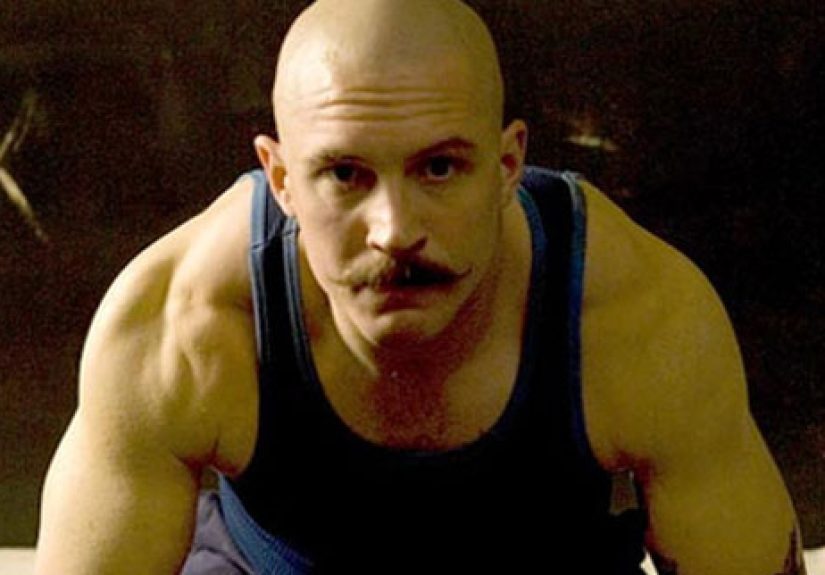
Bronson has written books, given interviews, and even inspired a stylized biographical film, feeding a
strange mini-industry of fascination around him. Critics argue that this “cult anti-hero” image risks
romanticizing violence and ignoring the harm done to staff, prisoners, and families. His time at Broadmoor
underscores how public curiosity can turn a dangerous, mentally ill man into a pop-cultural figurewhether
that’s healthy or not is another debate entirely.
3. Richard Dadd – A Gifted Artist in the Grip of Psychosis
Not every notable Broadmoor patient is known primarily for their crimes. Victorian painter Richard Dadd
is remembered today as a brilliant, if deeply troubled, artist. After a transformative journey through
the Middle East and North Africa, Dadd developed severe delusions and paranoia. In a psychotic state, he
killed his father and later attacked another man, leading to his long-term confinement in psychiatric
institutions, including Broadmoor.
Remarkably, Dadd produced some of his most intricate and celebrated works while in custody, including
fairy and fantasy scenes painted with astonishing detail. His life raises ongoing questions about how
creativity and severe mental illness intersectand whether society would treat someone like him
differently with today’s medications and support systems.
2. Daniel M’Naghten – The Man Behind the Insanity Defense
Daniel M’Naghten is less famous as a personality and more as a legal landmark. In the 1840s, under the
grip of paranoid delusions that he was being persecuted by political enemies, he shot and killed Edward
Drummond, a senior civil servant he mistook for the British Prime Minister. His trial led to a verdict of
not guilty by reason of insanity, which infuriated segments of the public and political establishment.
The legal fallout produced the “M’Naghten Rules,” which shaped insanity defenses across many common-law
countries. These rules tried to formalize when someone is so mentally disordered that they cannot be held
fully responsible for their acts. M’Naghten’s eventual confinement, which included time in institutions
leading up to Broadmoor, is a powerful reminder that some of the hospital’s most famous residents didn’t
just fill headlinesthey rewrote legal history.
1. Ronald Kray – Gangster, Patient, and Pop-Culture Legend
At the top of the Listverse ranking is Ronald “Ronnie” Kray, one half of the notorious Kray twins who
dominated organized crime in London’s East End in the 1950s and 1960s. The twins mixed brutal violence
with a surprising amount of celebrity glamour, rubbing shoulders with entertainers and politicians while
running protection rackets and nightclubs.
Ronnie Kray’s documented struggles with paranoid schizophrenia, combined with his role in high-profile
murders and violent offenses, eventually led to detention in Broadmoor instead of an ordinary prison
setting. There, he reportedly maintained a strange kind of influence and status among some other patients
and visitors. His story blends crime history, mental illness, and media myth-making into one complicated
legacypart cautionary tale, part uncomfortable British folklore.
Broadmoor, True Crime, and the Ethics of Fascination
Lists like “Top 10 Notable Residents of Broadmoor Hospital” feed into our obsession with extreme stories:
serial killers, terrorists, gangsters, and tragic geniuses. It’s human to be curious about people who
sit at the far edges of what we think humans are capable ofbut it’s equally important to keep perspective.
Broadmoor is not a haunted castle built for thrill-seeking tourists. It’s a working hospital with
clinicians, nurses, and staff trying to treat individuals who are both dangerous and unwell. Behind every
famous name on a list, there are victims, grieving families, and communities that lived through fear and
loss. Responsible coverage acknowledges that reality while still exploring the complex psychology and
legal history involved.
Experiences and Reflections on Exploring Broadmoor’s Dark History
Reading about Broadmoor’s residents is a strangely layered experience. On one level, it feels like
scrolling through a darker, real-world version of a thriller series: each name carries its own backstory,
motives, and shocking twists. On another level, you realize that this isn’t fiction. People really died.
Families really broke apart. Professionals really had to make life-or-death decisions about treatment and
securityand sometimes got them wrong.
Many readers first encounter Broadmoor through list-style articles, true-crime podcasts, or sensational
headlines. You start with curiosity: “Who could possibly be locked up there?” As you dig into the stories,
that curiosity usually shifts into something more uneasy. It’s one thing to read about a clever bank
robber; it’s quite another to confront cases of child murder, cannibalism, and ideologically driven
bombings. The further you go, the more you feel the weight of real-world consequences.
Another common experience is realizing how often the system missed warning signs. Peter Bryan was released
and killed again. Graham Young was declared “fully recovered” before returning to poisoning. Kenneth
Erskine’s cognitive impairments and mental health issues were not properly addressed until after his
crimes. These stories can be deeply frustrating: readers naturally ask why risk assessments failed, whether
underfunded mental health systems played a role, and how many tragedies might have been preventable with
earlier interventions or better support.
At the same time, Broadmoor challenges simplistic narratives about “evil.” Some patients, like Richard
Dadd or Daniel M’Naghten, clearly acted under the influence of severe psychosis. Their stories reflect
just how fragile perception and judgment can become when the brain misfires. For many people, learning
about these cases is the first time they confront the idea that someone can simultaneously be genuinely
ill and genuinely dangerous.
There’s also the uneasy way fame creeps in. Figures like Charles Bronson and the Kray twins have fan
followings, biographies, films, and even artwork circulating online. It can feel surreal to realize that
the same person who terrorized a neighborhood or assaulted countless people later sells signed prints or
becomes a pop-culture reference. For thoughtful readers, that contrast tends to spark self-reflection:
Why do we remember criminals by name more often than their victims? When does curiosity turn into
glorification? And how should media, writers, and audiences draw that line?
Exploring Broadmoor’s historyespecially through curated listscan therefore be a meaningful exercise if
approached with the right mindset. Instead of treating the hospital like a horror-movie setting, you can
see it as a case study in the limits of human behavior, the evolution of the insanity defense, the
pressures faced by forensic psychiatrists, and the enormous challenge of balancing individual rights with
public safety.
Ultimately, the most responsible way to engage with a “Top 10 Notable Residents of Broadmoor Hospital”
list is to keep three ideas in mind: first, that mental illness is real and often treatable; second, that
not all people with mental illness are dangerousin fact, the vast majority are not; and third, that the
rare overlap between severe illness and extreme violence requires careful, well-funded systems, not just
alarmist headlines. If a list like this nudges readers to think more deeply about those issues, it has
done something more valuable than simply entertain.
Conclusion: Why These Residents Still Matter
Broadmoor Hospital’s story is really a story about how a society deals with its most challenging
citizensthose whose actions are horrifying, whose mental states are complicated, and whose cases reshape
law, medicine, and public policy. From Ronnie Kray’s underworld empire to Daniel M’Naghten’s legal legacy,
from Peter Sutcliffe’s national trauma to Richard Dadd’s haunting art, each Broadmoor resident on this
list leaves behind more than headlines.
As readers, we can learn from these histories without glamorizing them. We can recognize the human cost
of violent crime while still asking hard questions about how institutions like Broadmoor operate and
improve. And if nothing else, this list is a reminder that behind every sensational headline lies a dense,
complicated tangle of mental health, social failure, law, and the enduring struggle to keep both patients
and the public safe.







 Close
Close