
Table of Contents >> Show >> Hide
- What “breaking the bank” really means (and why casinos don’t panic)
- The top 10 high-stakes “break the bank” stories
- 10) Joseph Jagger: the working-class engineer who treated roulette like a machine
- 9) Don Johnson: the “blackjack whale” who won with negotiation as much as cards
- 8) The MIT blackjack teams: when math majors treated Vegas like a group project
- 7) Charles M. Schwab: industrial tycoon, roulette tourist, and a cautionary headline
- 6) Paul Newey: the roulette night that reportedly triggered a profits warning
- 5) Archie Karas: the legendary “Run” that turned a tiny stake into a mountain
- 4) Charles De Ville Wells: the original “Man Who Broke the Bank at Monte Carlo”
- 3) Edward O. Thorp: the professor who made blackjack feel less like fate
- 2) Akio Kashiwagi: the baccarat whale who turned casino publicity into a weapon
- 1) Nick Leeson: the gambler who didn’t need a casino to break a bank
- So what do these “break the bank” stories have in common?
- High-stakes gambling experiences (the extra they don’t show on the casino billboard)
- Final takeaway
“Breaking the bank” is one of those phrases that sounds like it should come with a slow-motion walk, a dramatic coat flip,
and a casino manager fainting into a velvet chair. In real life, it’s less Hollywood and more math, leverage, nerves, and
the occasional person who stares at risk the way a cat stares at gravity: with total disrespect.
This list isn’t about casual weekend gambling or the guy who “almost won big” before the buffet closed. These are the
high-stakes players (and one infamous non-casino “gambler”) whose wins were so outsized that they strained the system:
the table’s reserve, the casino’s monthly numbers, or an institution’s balance sheet.
What “breaking the bank” really means (and why casinos don’t panic)
Traditionally, “the bank” was the cash reserve assigned to a specific table. If a player won more than that reserve could
cover, play paused while the house brought more money. Symbolically, the table had been “broken.” The casino wasn’t
bankruptit just had to reload.
Modern casinos are built to survive variance (that’s the polite math word for “sometimes chaos happens”). They have
bankroll management, credit lines, and rules designed to keep the long game tilted toward the house. Still, every so often,
a gambler finds a crack: a biased wheel, a negotiable rule set, a statistical edge, or a once-in-a-generation heater. And
when that happens, it’s gloriousright up until it isn’t.
The top 10 high-stakes “break the bank” stories
You’ll notice a theme: huge wins often come from one of four ingredients(1) a real edge, (2) a special deal, (3) a freakish
run of luck, or (4) an even bigger willingness to keep playing after you should’ve left.
10) Joseph Jagger: the working-class engineer who treated roulette like a machine
Joseph Jagger wasn’t a romantic gambler chasing destinyhe was the type of person who could look at a roulette wheel and
think, “That’s probably not perfectly balanced.” In the late 1800s, he reportedly studied outcomes and noticed that certain
numbers hit more often than they “should,” suggesting tiny mechanical bias.
The legend goes that he won a fortuneenough to make a real-life reset button for his financesand then did the most
suspicious thing a gambler can do: he stopped. If you’ve ever wanted proof that discipline is supernatural, there it is.
Why it matters: Jagger’s story shows the purest form of advantage play: not magic, not vibes, not a lucky charm
shaped like a tiny raccoonjust observation and an exploitable imperfection. Casinos learned the same lesson engineers do:
if something can drift, someone will measure it.
9) Don Johnson: the “blackjack whale” who won with negotiation as much as cards
Don Johnson didn’t walk into Atlantic City to “beat blackjack” in the usual sense. He approached the game like a business
deal. At a time when casinos were hungry for big action, he reportedly negotiated unusually player-friendly termsloss
rebates and rule tweaksthen played enormous stakes.
The headline number that made the industry gulp: roughly $15 million in winnings across multiple Atlantic City casinos,
including a night that reportedly reached nearly $6 million at one property. The story isn’t “he got lucky” so much as
“he got terms.” When you’re betting six figures a hand, a small shift in conditions stops being “small” and starts being
“oh no, our quarterly report.”
Why it matters: High-stakes gambling isn’t always about beating the house edge; sometimes it’s about changing the
deal. Casinos will bend for whalesuntil the whale swims away with the aquarium.
8) The MIT blackjack teams: when math majors treated Vegas like a group project
Some students sell plasma. Some tutor. And somelegend has itformed coordinated blackjack teams built around probability,
discipline, and rotating players. The concept wasn’t “individual genius,” but orchestration: multiple trained players,
controlled exposure, and team bankroll.
Their popularized story includes big weekends, big winnings, and eventual heat from casinos that don’t appreciate being used
as a scholarship fund. The lasting cultural footprint is huge (hello, movie adaptations and endless internet retellings),
but the real point is simpler: a small edge, repeated with discipline and enough capital, can turn into serious money
until the environment adapts.
Why it matters: Casinos don’t fear one lucky player; they fear repeatable processes. Once the house identifies a
process, the house changes the conditions.
7) Charles M. Schwab: industrial tycoon, roulette tourist, and a cautionary headline
Charles M. Schwab (the steel magnate, not the brokerage brand mascot of your retirement dreams) reportedly made headlines
in the early 1900s for breaking the bank at Monte Carlo roulettean episode that reads like a reminder that wealth doesn’t
automatically come with a “risk off” switch.
The image is almost too perfect: a titan of industry in Europe’s playground, placing maximum bets, drawing a crowd, and
leaving the table with the kind of win that becomes gossip before it becomes history.
Why it matters: Schwab’s story sits at the intersection of status and volatility. High rollers can win loudlybut
lifestyle, leverage, and time can erase fortunes quietly.
6) Paul Newey: the roulette night that reportedly triggered a profits warning
Paul Newey’s most famous gambling headline is a very modern kind of “break the bank” moment: a casino’s finances looking
wobbly because one person hit a huge win. Reports describe a night in Birmingham, England, where he won around £3 million
playing roulette at extreme stakes.
The win was so large it reportedly rippled into corporate consequencessomething most gamblers never get to experience
unless they count “I got charged for guac” as corporate fallout.
Why it matters: Roulette is designed to be a long-run advantage for the house. Big short-run wins can still happen,
especially at massive bet sizes. The real question is always: what happened after? Because roulette doesn’t care about your
highlight reel.
5) Archie Karas: the legendary “Run” that turned a tiny stake into a mountain
Archie Karas is casino folklore with a heartbeat. The core story: he arrived in Las Vegas with very little money, ran it up
through high-stakes gambling into tens of millions, and then lost it in a brutal reversal. The heater was so famous it got a
nickname: “The Run.”
What makes Karas different from a simple lucky streak is the scale and the venues: poker, then dice, then other games, with
amounts that made even Vegas pause. One of the most repeated details is the visual dramatowers of high-denomination chips
that turned a person into a moving balance sheet.
Why it matters: Karas is the ultimate reminder that “breaking the bank” is not the same thing as “becoming
financially safe.” A big win changes your story. It doesn’t automatically change your habits.
4) Charles De Ville Wells: the original “Man Who Broke the Bank at Monte Carlo”
Before the phrase became a catchy legend, Charles De Ville Wells was one of the names attached to it. In the late 1800s, he
reportedly won so much at Monte Carlo that the casino performed the famous ritual: stop play, cover the table, and bring in
more money. That spectacle helped turn a gambling episode into pop culture.
Wells also illustrates how gambling fame can be… complicated. Some accounts cast him as bold and brilliant, others note a
history that included fraud and reinvention. Either way, the “broke the bank” moment stuck, and the story outlived the man.
Why it matters: Casinos don’t just sell gamesthey sell mythology. Wells helped write one of the biggest myths of
them all: the outsider who walks in, wins too much, and makes the house blink.
3) Edward O. Thorp: the professor who made blackjack feel less like fate
Edward O. Thorp didn’t “break the bank” by having the luckiest night ever. He did it by changing how people understood
blackjack. His work brought probability and strategy into a public conversation that had mostly been superstition and
cigarette smoke.
When a credible mathematician demonstrates that a game can be approached with disciplined advantage, two things happen:
(1) skilled players quietly try to replicate it, and (2) casinos adaptrules, procedures, and countermeasures. The tug-of-war
that followed is basically the modern casino ecosystem in miniature.
Why it matters: Thorp’s real “bank-breaking” impact is structural. He didn’t just winhe pushed casinos to evolve,
and he helped create an era where data could compete with the house (at least until the house bought better data).
2) Akio Kashiwagi: the baccarat whale who turned casino publicity into a weapon
Akio Kashiwagi was the kind of gambler casinos call a “whale”a player whose bets are so large that a single session can
reshape a month. In the early 1990s, he became widely known for high-stakes baccarat, including a much-publicized clash
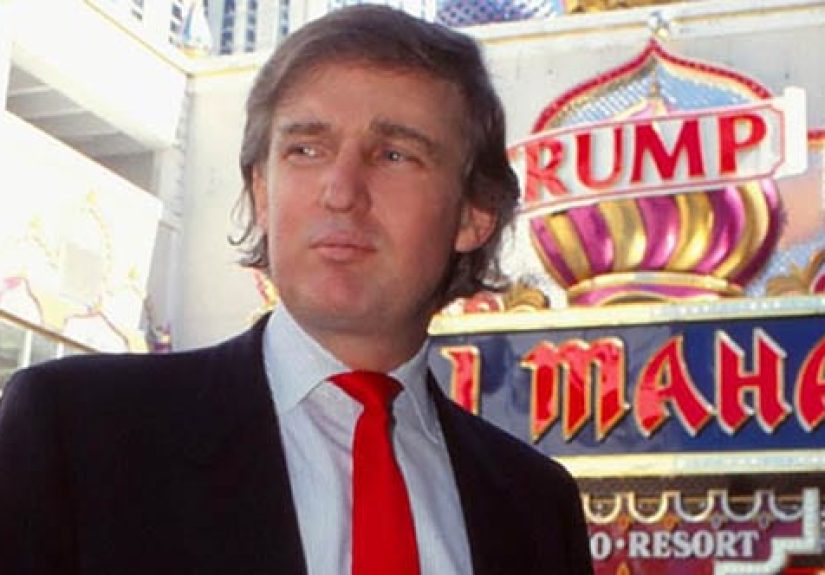
involving Donald Trump’s Atlantic City operations.
The saga has the ingredients casinos secretly love and openly fear: celebrity, a roped-off table, crowds watching, and
swings in the millions. Accounts of the results differ depending on who’s telling the story, but the shared reality is this:
Kashiwagi’s action was big enough to create headlines and big enough to create grudges.
Why it matters: At the whale level, the game is no longer just baccarat. It’s ego, branding, negotiated credit,
and a casino’s appetite for attentionsometimes bigger than its appetite for risk.
1) Nick Leeson: the gambler who didn’t need a casino to break a bank
If you want a literal “break the bank” story, Nick Leeson’s name shows up like a warning label. In the mid-1990s, Leeson was
a derivatives trader whose unauthorized positions and concealed losses contributed to the collapse of Barings Bank, one of
the oldest financial institutions in Britain.
This wasn’t a casino game, but the psychology reads familiar: doubling down, chasing losses, and believing the next move will
fix the last movewhile the numbers get too large to hide. When markets moved hard against him (including in the aftermath
of the Kobe earthquake), the damage surfaced, and the institution couldn’t absorb it.
Why it matters: This is the dark mirror of gambling: when the stakes aren’t your own money, and the “house” is a
global financial system, reckless risk isn’t just a personal tragedyit becomes a corporate catastrophe.
So what do these “break the bank” stories have in common?
- Scale changes everything: a tiny edge becomes enormous when bets are enormous.
- Short-run results are loud: variance can produce jaw-dropping wins that look like destiny.
- Rules are not fixed in practice: whales negotiate, casinos adapt, and “the game” shifts under your feet.
- Exit strategy is the real superpower: several legends win big; far fewer keep it.
High-stakes gambling experiences (the extra they don’t show on the casino billboard)
High-stakes gambling is less like a casual game night and more like stepping into a room where every decision is amplified.
The chips are heavier, the pauses feel longer, and the attention is constant. Even when you’re technically “just playing,”
the environment tells your nervous system it’s something else: a performance, a duel, a test of identity. A low-stakes
player loses a hundred bucks and sighs. A high-stakes player loses six figures and has to keep their face neutral because
the table is watching for cracks the way a shark watches for blood.
One of the strangest experiences high rollers describe is how quickly money becomes abstract. At first, it’s very real:
“That’s a car,” “that’s a year of rent,” “that’s my entire personality.” But once the numbers reach a certain height,
the brain protects itself by turning dollars into tokens, and tokens into mere outcomes. That mental shift can be useful
for disciplineyet it can also become dangerous, because the same detachment that lets you withstand variance can also let
you rationalize reckless continuation.
Then there’s the social side: casinos treat whales like royalty, but it’s a very specific kind of royalty. You’re pampered
because you’re valuable, not because you’re loved. Private rooms, complimentary suites, staff who remember your drinknone
of it is purely generosity. It’s an investment in your time-on-table. The experience can feel intoxicating, especially for
players who mistake attention for friendship. That’s when the casino stops being a place and starts becoming a storyline:
“This is where I belong.” And storylines are expensive.
The emotional whiplash is another shared experience. Big wins come with adrenaline spikes that don’t always feel like joy;
sometimes they feel like reliefrelief that the risk didn’t bite you this time. Big losses can trigger a different kind of
tunnel vision where “getting even” feels like a moral obligation rather than a financial decision. That’s why so many of the
most famous “broke the bank” stories end with the same plot twist: the win wasn’t the ending, it was the beginning of a
longer session.
Finally, there’s the quiet reality: the rarest high-stakes experience isn’t winningit’s walking away. Leaving while you’re
ahead means accepting that your best night might already be behind you, and that nothing you do next will feel as thrilling
as the peak you just touched. That’s a hard psychological trade. But if there’s one lesson hidden inside every legendary
bank-breaking tale, it’s this: the casino is open tomorrow, and tomorrow is exactly how the house gets its money back.
Final takeaway
“Breaking the bank” makes for irresistible stories because it flips the expected script: the house isn’t supposed to sweat.
But the deeper lesson isn’t that casinos are beatable on commandit’s that rare edges, rare deals, and rare streaks can
create spectacular outcomes… and that the real danger often starts right after the spectacular part ends.






 Close
Close