
Table of Contents >> Show >> Hide
- What Exactly Closed in 2019 (And What Didn’t)
- Why Three Mile Island Closed: The Economics Behind the Headlines
- The Pennsylvania Policy Fight: Subsidy Bills, Stalled Votes, and a Deadline
- Shutdown Day: How a Nuclear Plant “Turns Off” for the Last Time
- Decommissioning: The Long Goodbye (Measured in Decades, Not Months)
- What Replaced the Electricity (And Why Emissions Came Up Fast)
- Three Mile Island’s Reputation: The Name That Never Took a Day Off
- Lessons From Three Mile Island Closing 2019
- Epilogue: Why People Still Talk About Three Mile Island After 2019
- Conclusion
If you grew up anywhere near central Pennsylvania, the words “Three Mile Island” probably land with
the subtlety of a marching band in your living room. And in 2019, that famous name hit the news againthis time
not because of a dramatic accident, but because the last operating reactor on the site finally powered down.
The twist (because there’s always a twist): the 2019 shutdown was about money, markets, and policy,
not a sudden safety crisis. So let’s talk about what really happened with Three Mile Island closing in 2019,
why it mattered, and what the long goodbye looks like when a nuclear plant retires.
What Exactly Closed in 2019 (And What Didn’t)
The Three Mile Island site had two reactors. The one that suffered the famous 1979 accident was Unit 2.
Unit 2 never returned to producing electricity after the partial meltdown. The reactor that kept runningquietly,
reliably, and with a much lower drama budgetwas Unit 1.
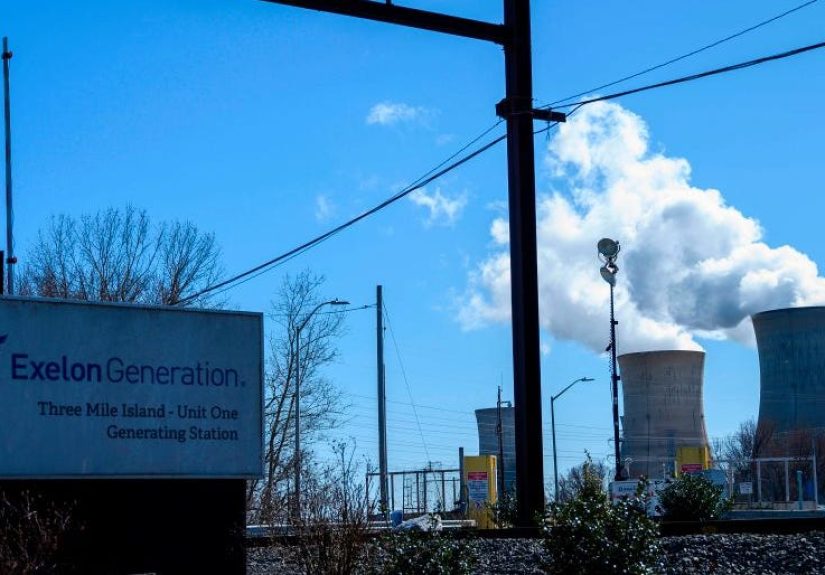
In September 2019, Unit 1 shut down for good, ending nuclear generation at the site after decades of
operation. So when you see headlines about “Three Mile Island shutting down,” it’s really shorthand for
Three Mile Island Unit 1 shutdownthe last working unit at that location.
Why Three Mile Island Closed: The Economics Behind the Headlines
The biggest reason the plant closed is also the least cinematic: wholesale electricity prices.
In many parts of the U.S., power plants don’t get paid for being beloved local landmarks. They get paid for
selling electricity into competitive markets. And by the late 2010s, those markets were tough on nuclear.
Cheap Natural Gas Changed the Game
Pennsylvania sits on the Marcellus Shale, and the boom in shale gas helped flood the region with low-cost natural gas.
Gas plants can ramp up quickly, often bid low, and undercut generators with higher fixed operating costs.
When gas is cheap, power prices falland nuclear plants, which carry big maintenance and staffing costs,
feel the squeeze.
Renewables Grew, Demand Stayed Flat-ish
Wind and solar expanded across the grid, and efficiency improvements slowed demand growth compared with earlier decades.
Nuclear plants are great at steady output, but in markets that reward the lowest-cost bid, “steady” doesn’t always mean
“profitable.”
“Clean” Didn’t Automatically Mean “Compensated”
Here’s the policy irony: nuclear power is carbon-free at the point of generation, but in many market structures
that benefit doesn’t come with a direct paycheck. Several states created programs (often called zero-emission credits)
to keep certain nuclear plants online for climate reasons. Pennsylvania debated similar ideas, but Three Mile Island
didn’t get a rescue in time.
The Pennsylvania Policy Fight: Subsidy Bills, Stalled Votes, and a Deadline
By 2017, the owner (Exelon at the time) warned that without a policy fix, Unit 1 would retire early. In 2019,
the conversation got serious: proposed legislation would have supported nuclear plants financially, but the votes
didn’t line up quickly enough.
Exelon publicly tied the plant’s future to state action and said it would shut down by late September 2019 without it.
When the bill effort stalled, the closure plan moved from “threat” to “calendar event.” Not a fun calendar event,
unless you’re a competing generatorthen it’s basically your birthday.
Shutdown Day: How a Nuclear Plant “Turns Off” for the Last Time
A nuclear plant retirement isn’t like flipping off a kitchen light. It’s a controlled sequence: lowering power,
shutting the reactor, and beginning long-term cooling and fuel handling procedures. When the plant stopped producing electricity,
the work didn’t endif anything, it shifted into a new, complicated chapter.
The plant also carried a public legacy heavier than its concrete containment dome. Even though Unit 1 wasn’t the unit
that had the 1979 accident, it shared the site name and the public memory. The 2019 closure was, for many locals,
both an economic story and an emotional punctuation mark.
Decommissioning: The Long Goodbye (Measured in Decades, Not Months)
Decommissioning is the process of safely taking a nuclear plant apart, managing contaminated components, and ultimately
restoring the site. It’s real engineering workmeticulous, regulated, and (sorry) not exactly binge-worthy television.
But it matters, because it’s how the plant transitions from “power station” to “former industrial site.”
Spent Fuel: Cooling Pools First, Dry Storage Later
After shutdown, used nuclear fuel assemblies are typically moved from the reactor to a spent fuel pool, where water
provides cooling and shielding. After sufficient cooling time, the fuel can be transferred to sealed dry storage
canisters on site. This is a common pathway across the U.S., especially since there is still no permanent federal repository
operating for commercial spent fuel.
SAFSTOR vs. “Hurry Up and Tear It Down”
Many decommissioning plans use a strategy known as SAFSTORsafe storage for a long period while radioactivity
naturally decays, followed by later dismantlement. Critics often dislike SAFSTOR because it leaves structures standing
for decades. Supporters point to reduced radiation exposure for workers and more time for planning and funding.
Jobs and the Community Impact
A large nuclear plant is a major employer. When it closes, it’s not just operators and engineers; it’s contractors,
local services, restaurants, hotels, and the tax base. Owners often try to place employees at other facilities, but relocation
is not a magic wandmoving a family is still moving a family.
What Replaced the Electricity (And Why Emissions Came Up Fast)
When a major nuclear unit leaves the grid, the replacement power tends to come from whatever the market dispatches next:
frequently natural gas, sometimes coal, sometimes renewables depending on time of day and season. That’s why nuclear retirements
often trigger climate arguments: you can lose a big chunk of carbon-free generation overnight, then backfill with fossil fuel.
In other U.S. closures, analysts observed that fossil generation frequently rose to cover the gap in the near term.
That doesn’t mean renewables can’t grow to replace it; it means the transition is messy in real lifeand “real life” has
winter peaks, heat waves, and the occasional “why is demand so high right now?” moment.
Three Mile Island’s Reputation: The Name That Never Took a Day Off
Three Mile Island is one of the most famous energy sites in America, largely because of 1979. That history shaped emergency planning,
nuclear regulation, and public perception nationwide. And even decades later, it shaped politics: it’s harder to sell “subsidize this plant”
when the plant’s name is essentially a cultural shorthand for nuclear fear.
At the same time, the closure reignited another reality: a nuclear plant can be both historically infamous and operationally high-performing.
Those two truths can sit in the same zip code. Sometimes they sit on the same island.
Lessons From Three Mile Island Closing 2019
1) Markets Pay for Energy, Not Always for Value
Competitive power markets are designed to find low-cost electricity. They don’t automatically price in carbon-free attributes,
fuel security, or long-term resilienceunless policies force those values into the math.
2) “Early Retirement” Has Real Climate and Reliability Tradeoffs
Retiring a big carbon-free generator can raise near-term emissions if fossil plants fill the gap. Whether that happens depends on the region’s
generation mix and how quickly replacement clean resources come online.
3) Decommissioning Is Part of the Nuclear Story, Not the Footnote
The end of operations is not the end of responsibility. Decommissioning is a multi-decade commitment involving engineering, regulation,
public communication, and funding discipline. It’s the “credits roll” that still requires a full crew on set.
Epilogue: Why People Still Talk About Three Mile Island After 2019
Even after the 2019 shutdown, Three Mile Island stayed in the national conversation. In the mid-2020s, rising electricity demandespecially
from data centers and new industrial loadshelped revive interest in nuclear power as a steady, carbon-free option. The site’s story became
a symbol in two directions at once: a warning about nuclear fear and an argument about keeping carbon-free generation alive.
Conclusion
Three Mile Island closing in 2019 was not a sudden collapseit was a slow-motion collision between economics and public policy.
Unit 1 shut down because it couldn’t compete in a market shaped by cheap natural gas and limited credit for carbon-free power. The result
wasn’t just a plant closure; it was a case study in how America values reliability, jobs, emissions, and historysometimes all at the same time,
sometimes in the opposite order.
And if you’re looking for a moral: energy systems don’t change with one big dramatic moment. They change through a thousand smaller decisions,
made in boardrooms, legislatures, and living rooms where the cooling towers are visible from the back porch.
Experiences Around the Three Mile Island Closing (A Human-Sized Add-On)
The technical story of a nuclear shutdown is all procedures and checklists, but the lived experience in 2019 was more like a town-wide group text.
For longtime residents near Middletown and Harrisburg, the towers had become part of the landscapegiant concrete weather makers puffing harmless
water vapor into the sky, like the world’s most recognizable humidifiers. People joked about them, used them as directions (“turn left after the towers”),
and occasionally forgot they were thereuntil a headline reminded everyone that the place was famous for reasons nobody asked for.
For plant workers, the closure felt less like a surprise and more like a slow countdown clock hanging over the break room. Many employees had spent
years hearing the same argument: the plant was safe, reliable, and carbon-free, but the market didn’t care enough to pay for those virtues.
The hardest part wasn’t only the shutdown itselfit was the uncertainty beforehand. Families had to weigh “Do we relocate?” against
“Do we wait and see?” Knowing you may have a job offer elsewhere is helpful; deciding whether you can uproot your life is a different kind of math.
Local businesses felt the shift in smaller ways that rarely make national coverage. Fewer contractors in town can mean fewer hotel bookings.
Fewer shift workers buying lunch can mean a quieter diner at noon. Community leaders talked about tax revenue and long-term economic development,
while residents talked about something more immediate: “What happens to this place now?” Because a closed plant is still a presencesecurity gates,
warning signs, and a constant reminder that the site’s biggest job is no longer producing power. It’s managing the aftermath responsibly.
Then there was the emotional layer that only Three Mile Island seems to carry. Some locals described a strange mix of relief and nostalgia:
relief that the name might finally fade from the spotlight, and nostalgia for the stability that a major employer brings. Others felt frustrationat
politics, at the energy market, or at the idea that losing a carbon-free plant could push the region toward more fossil generation. In 2019, you could
hear all sides in the same grocery-store line: one person worried about climate, another about bills, another about safety, and someone else just
wondering why their kid’s school fundraiser might get harder without big local donors.
Visiting the riverfront after the shutdown, people talked about how the site looked the same and yet felt different. The Susquehanna still moved along,
fishermen still cast lines, and the towers still dominated the horizonbut the sense of “working machine” was gone. In its place was something quieter:
a facility moving into stewardship mode, where success is measured not in megawatt-hours but in safe handling, careful dismantling, and patience measured
in decades. For a community used to the plant as a symbolwhether of fear, pride, or boththe 2019 closure turned the symbol into a long, ongoing project.







 Close
Close