
Table of Contents >> Show >> Hide
- The best time to stain your deck is a “weather window,” not a specific day
- So… what season is best? Usually late spring or early fall
- New deck vs. old deck: timing rules change
- The “48-hour plan” for choosing the perfect staining day
- Choosing stain can change your “best time”
- Timing mistakes that ruin deck stain (and how to avoid them)
- Quick FAQs
- Real-world experiences homeowners share (the “learned it the hard way” edition)
- Final thoughts
If you’ve ever tried to stain a deck, you already know the secret truth: the hardest part isn’t rolling on stainit’s
convincing the weather to behave like an adult for more than five minutes.
The good news is you don’t need a magical calendar date. You need a weather window: the right temperature,
the right humidity, dry wood, and enough rain-free time for your stain to bond instead of turning into a blotchy
science experiment. Let’s break down the best time to stain your deck so your finish looks great and actually lasts.
The best time to stain your deck is a “weather window,” not a specific day
People love asking, “Should I stain my deck in April or May?” But the better question is:
“Do I have the right conditions for staining todayand for the next couple of days?”
1) Temperature: aim for mild, boring weather (the dream)
Most brands and pros agree on a sweet spot: stain performs best when air and wood surface temperatures
are roughly in the 50°F–90°F range. That’s warm enough for good penetration and curing, but not so hot
the stain dries too quickly on the surface and leaves lap marks.
If you want an even safer “middle-of-the-road” target, many DIYers have great results when it’s around
60°F–80°F and the boards feel cool to the touch.
- Too cold (especially nights dipping low): drying slows down, and curing can suffer.
- Too hot (or direct sun baking the boards): stain can flash-dry before it levels and penetrates.
2) Sun and shade: follow the shadow like it’s your job
Direct sunlight is a common deck-staining villain. Even if the air temp is “fine,” sun can heat boards far above the
forecasted temperature. When that happens, stain may dry too fast, leaving uneven color and visible overlap marks.
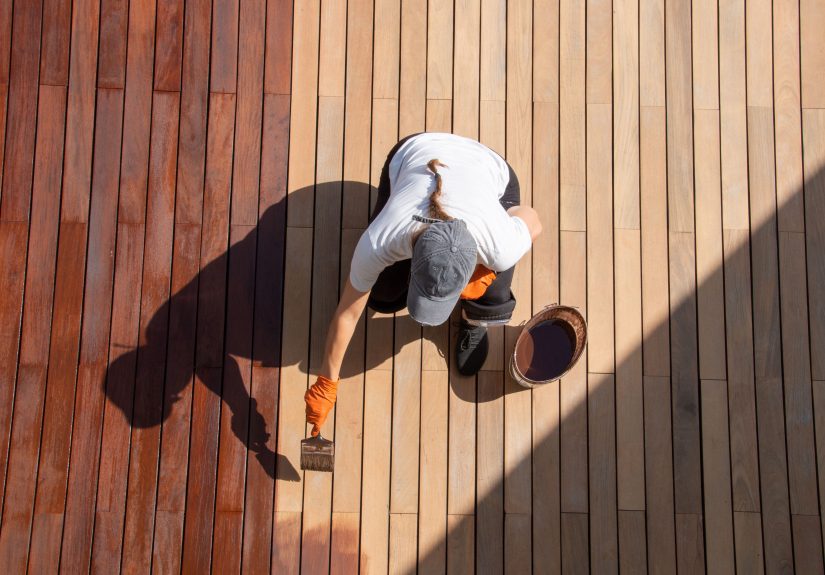
Practical tip: plan your staining route so you’re working in the shadeliterally chasing the shadow across the deck.
It’s the rare DIY project where being shady is a virtue.
3) Humidity: not too swampy, not too desert-dry
Humidity changes how stain dries and cures. High humidity can slow drying and increase tackiness; extremely low
humidity (paired with heat/wind) can speed drying so much you lose working time.
As a general guideline, many homeowners have the easiest time when humidity is in a moderate range (often around
40%–70%). If your area is humid, you’ll usually get better results in a dry spellespecially when nights
bring heavy dew.
4) Rain-free forecast: 24 hours is good; 48–72 hours is better
Many products say “don’t apply if rain is expected within 24 hours,” and that’s a minimum you should respect.
But real life decks (with shade, humidity, and thick boards) often benefit from a longer buffer.
A reliable rule of thumb: pick a stretch of at least 48 hours without rain, and lean toward
72 hours if humidity is high, your deck is shaded, or you’re using a slower-drying product.
So… what season is best? Usually late spring or early fall
Across much of the United States, the most consistently “deck-stain-friendly” seasons are
late spring and early fall. Why? Because they often bring the combo you want:
moderate temps, fewer extreme heat spikes, and less dramatic humidity than mid-summer.
Regional timing examples (because the U.S. is basically five climates in a trench coat)
- Northeast / Upper Midwest: Late spring after pollen season calms down, or early fall before nights get cold.
- Southeast: Spring and fall are typically better than the peak of summer humidity. Watch for afternoon storms.
- Southwest / Desert climates: Spring or fall is easiest, but summer can work if you stain early and avoid hot surfaces.
- Pacific Northwest: Late summer often offers the most reliable dry stretchgreat for staining if temps cooperate.
The takeaway: the “best time” is when your deck can stay dry, cool-ish, and stablenot when your calendar says it’s
time to be productive.
New deck vs. old deck: timing rules change
If your deck is new pressure-treated wood
New pressure-treated lumber is often damp from the treatment process, and stain won’t absorb properly if the boards
are still holding too much moisture. Staining too early can lead to poor penetration, uneven color, and early failure.
Instead of trusting a single wait-time (because climate varies wildly), use a readiness test:
-
Moisture meter method: Many staining guidelines recommend staining when the wood’s moisture content is
roughly 12%–15% or lower. (Some products specify their own thresholdalways check the label.) -
“Sprinkle test” method: Sprinkle a few drops of water on the boards.
If it beads up, the wood likely isn’t ready. If it soaks in within about 10 minutes, you’re much closer to stain-ready.
Also watch for special cases: some pressure-treated lumber is kiln-dried after treatment (often sold as KDAT),
which may be stain-ready sooner than standard boards.
If your deck already exists and you’re restaining
For an older deck, the big timing factor is prep and drying. Cleaning (especially washing) introduces moisture, and
stain needs dry wood to penetrate.
Common timing guidance after cleaning is 24–48 hours of drying in good weather, with
48 hours being a frequent “safe bet.” If the deck is shaded or conditions are humid, it can take longersometimes
72 hours isn’t overkill.
The “48-hour plan” for choosing the perfect staining day
Here’s a simple way to schedule your project so you’re not staining in a panic while dark clouds form a committee overhead.
Step 1: Pick a 2–3 day dry stretch
- Choose a day with mild temps and little wind.
- Check the overnight low, not just the daytime high.
- Make sure rain isn’t expected for at least the next day (and ideally the next two).
Step 2: Prep the deck, then let it dry
- Remove furniture, planters, and grills (yes, even the “light” one that is secretly made of pure gravity).
- Clean thoroughly and rinse well.
- Let the deck dry completelylonger if shaded or humid.
- Replace popped nails/screws, fix splinters, and sand rough patches as needed.
Step 3: Stain when the boards are dry and cool
- Start when surfaces are dry and not hot to the touch.
- Work in sections and keep a wet edge to avoid lap marks.
- Stain railings first, then floor boards, then steps (so you don’t trap yourself on an island of wet stain).
Choosing stain can change your “best time”
Not all stains behave the same. The type you pick affects drying time, curing time, and how picky the product is
about weather.
Water-based vs. oil-based (in human terms)
- Water-based stains often dry faster and may be easier for beginners to work withespecially for quick clean-up.
- Oil-based stains are often prized for penetration and rich appearance, but can be more sensitive to humidity and may take longer to cure.
Regardless of which you choose, always follow the manufacturer’s temperature and weather guidelines on the label.
Product-specific rules win over internet advice (yes, even this articlebecause the label is legally responsible and I am just responsibly opinionated).
Transparent, semi-transparent, semi-solid, solid: what it means for timing
More transparent stains show off wood grain but generally require more frequent maintenance. More opaque stains can
hide imperfections and last longer, but may be less forgiving if applied to damp wood or over failing finishes.
If your deck has lots of sun exposure and you want fewer redo cycles, a more protective finish can be worth itbut only
if you apply it under the right conditions.
Timing mistakes that ruin deck stain (and how to avoid them)
Mistake 1: Staining right after cleaning because “it looks dry”
Wood can look dry on top while still holding moisture inside, especially in shaded areas or thicker boards. If you’re not sure,
use a moisture meter and take readings in multiple spots.
Mistake 2: Staining in direct sun or on hot boards
Hot surfaces shorten working time, cause uneven absorption, and can leave visible overlap marks. Stain in shade when possible,
and avoid the hottest part of the day.
Mistake 3: Ignoring the overnight forecast
Even if daytime temps are perfect, a sharp temperature drop overnight can slow curing. Dew can also settle on a deck before it’s ready.
Plan so your stain has enough time to set up before evening moisture rolls in.
Mistake 4: Treating “no rain today” as a complete plan
Your deck doesn’t care that your weather app says “0%” for the next six hours. It cares about the next 24–72 hours.
Build a buffer so one surprise shower doesn’t undo hours of work.
Quick FAQs
How long after pressure washing can I stain a deck?
A common recommendation is 24–48 hours in good drying weather, often leaning toward
48 hours as a safer rule of thumb. Shaded decks or humid conditions may require closer to
72 hours.
How long should stain dry before rain?
Many labels call for no rain for at least 24 hours. In real-world conditions, a longer cushion (48 hours or more)
reduces riskespecially for slower-drying products, thick coats, or humid weather.
Can I stain my deck in summer?
Yesif you avoid extreme heat and hot surfaces. Early morning or late afternoon can be your friend. Work in shade,
keep a wet edge, and don’t stain if the boards are hot.
Real-world experiences homeowners share (the “learned it the hard way” edition)
If you ask a group of homeowners about deck staining, you’ll hear the same theme: the stain itself isn’t the bossweather is.
And weather doesn’t care about your long weekend, your motivational playlist, or the fact that you already promised your friends a barbecue.
The Sunny-Day Trap
One of the most common stories goes like this: a homeowner picks a gorgeous, sunny day, starts at noon (because coffee happened),
and wonders why the stain looks uneven by mid-afternoon. The problem usually isn’t “bad stain”it’s a hot surface. When boards heat up,
stain can dry before it has time to penetrate and level. The fix people wish they’d used from the start is simple: stain when the boards are cool,
follow the shade, and avoid working on the section of deck that’s basically acting like a solar panel.
The “It Looked Dry!” Illusion
Another classic: someone cleans the deck, waits until it looks dry, then stainsonly to find the finish doesn’t absorb evenly.
Later they discover shaded corners and board ends can hold moisture longer. Homeowners who get consistent results tend to take readings in multiple
spots with a moisture meter (or at least use a simple water-drop check). It’s not glamorous, but it’s cheaper than redoing an entire deck.
The Surprise Dew Situation
Dew is the sneaky villain nobody invited. People often plan around rain but forget that cool nights can leave moisture on the surface early in the morning.
If stain hasn’t had enough time to set up, dew can dull the finish or create inconsistent sheen. The “wish we’d done this” takeaway is to start earlier in the day
when conditions are stable, and to keep the schedule realistic: don’t apply a late-afternoon coat and expect the universe to stay dry all night out of kindness.
The New Pressure-Treated Deck That Wouldn’t Cooperate
New decks are exciting, and excitement makes people impatient. Many homeowners share the same frustration: they stain a brand-new pressure-treated deck and
the color looks light, patchy, or fails quickly. Later they learn the boards were still too wet to absorb stain properly. The folks who get better outcomes either
wait until the wood reaches a lower moisture level (often around 12%–15% or per product instructions), or they use the sprinkle test as a quick sanity check.
The biggest lesson: “new” doesn’t automatically mean “ready.”
The “One Extra Day” That Saved the Project
On the positive side, you’ll also hear success stories from people who simply waited one more day. They had everything ready, but humidity was high or a light
shower hit the night before. Instead of forcing it, they let the deck dry again, then stained during a calmer weather window. That extra patience often shows up
as a smoother finish, more even color, and fewer touch-ups. In deck-staining terms, waiting is not procrastinationit’s strategy.
What experienced DIYers tend to do differently
- They plan around the forecast, not the weekend.
- They check surface temperature (shade matters).
- They confirm the deck is dry enough (moisture meter or water-drop test).
- They keep coats thin and even, because “more” isn’t always “better.”
- They give the stain time to cure before dragging furniture back like a moving company on espresso.
Final thoughts
The best time to stain your deck is when the wood is dry, the temperatures are mild, humidity is reasonable, and you have a reliable rain-free stretch.
For many homeowners, late spring and early fall deliver the most dependable conditionsbut your local forecast gets the final vote.
If you remember only one thing, make it this: staining is less about being fast and more about being right. Your deck will reward you with a finish
that looks better, lasts longer, and won’t make you mutter at clouds like a confused movie villain.







 Close
Close