
Table of Contents >> Show >> Hide
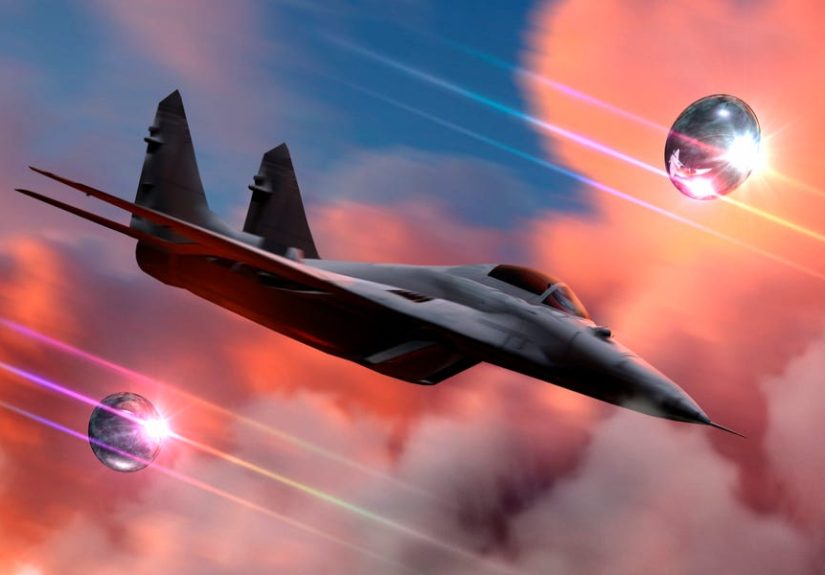
A grainy military clip, a glowing orb, a missile strike, and one very online audience ready to yell “aliens” before the buffering wheel even stopped spinning. That, in a nutshell, is why the viral mid-air missile video exploded across social media. The footage appeared to show a U.S. Hellfire missile slamming into a mysterious object off the coast of Yemen, only for the object to keep moving like it had somewhere better to be. Cue the dramatic music, the freeze-frames, and the inevitable “the government finally slipped up” posts.
But the most likely explanation is a lot less sci-fi and a lot more familiar to anyone who studies military footage, optical effects, or how the internet turns uncertainty into certainty in under five minutes. The clip may indeed show a real military engagement in a real conflict zone. What it probably does not show is proof of an alien craft shrugging off American firepower like it is swatting away a mosquito.
Instead, the smarter read is this: the viral “missile hits UFO” story is probably a mash-up of combat-zone ambiguity, long-range drone optics, missing metadata, motion parallax, and a target that may have been something far more ordinary, possibly even a balloon. That does not make the video boring. It makes it a textbook example of how modern UFO culture works: a blurry clip enters the chat, context leaves the room, and mystery does the rest.
Why This Video Blew Up So Fast
A congressional hearing gave it instant rocket fuel
The clip did not emerge from a random conspiracy forum buried somewhere between grainy Bigfoot posts and people arguing about moon bases. It was shown during a House hearing focused on UAP transparency and whistleblower protection, which gave it immediate political and cultural weight. When something is presented in an official-looking setting, people assume it has already passed a truth filter. Often, it has only passed a visibility filter.
That distinction matters. A video shown in Congress is not automatically verified, fully contextualized, or scientifically analyzed. It is simply elevated. Once that happens, the internet does what the internet does best: it fills in the gaps with the loudest theory available.
The visuals are weird enough to feel convincing
The object in the footage appears smooth, bright, and strangely calm. Then comes the missile. Then comes the part that launched a thousand alien memes: the object seems to survive. To a casual viewer, that looks impossible. And when a video looks impossible, people often skip past the hard questionwhat do we actually know?and sprint toward the fun onewhat if it is not human?
That leap is emotionally satisfying, but analytically shaky. Military sensor footage is famous for producing misleading impressions, especially when the viewer does not know the distance to the target, the precise angle of the camera, the nature of the background, the specific weapon variant used, or whether the camera platform itself is rotating, climbing, or zooming.
What the Clip Likely Showsand What It Probably Does Not
“Unidentified” does not mean “extraterrestrial”
This is the first place where many viral conversations skid off the runway. “UFO” and “UAP” mean the object is unidentified at the moment of observation. That is it. The term describes a knowledge gap, not an origin story. A light in the sky that has not yet been explained is not the same thing as a spaceship from another star system. It is just a thing we have not nailed down yet.
That may sound obvious, but official U.S. reporting has repeated the same basic point again and again. Many UAP cases end up being balloons, birds, drones, aircraft, satellites, or sensor-related confusion. Others remain unresolved because the data is incomplete, not because the laws of physics threw up their hands and went home early.
The balloon theory is not glamorous, but it is strong
One of the most persuasive public analyses of the viral Yemen clip argues that the target was likely a balloon drifting in the wind rather than a futuristic craft doing a casual durability demo. That may sound anticlimactic, but anticlimax is often where the truth lives. A balloon at altitude can look uncanny through a long-range imaging system, especially when viewed against a flat, low-detail background like sea or haze.
Why a balloon? Because the target’s apparent motion, shape, and post-impact behavior can fit that explanation surprisingly well. If a missile tears through a lightweight object, you might see fragments continue drifting. You might also see the main track continue in a way that looks dramatic on screen but says more about mass, momentum, and viewing angle than about invincible alien alloys.
In other words, the object may not have “absorbed” a strike. The footage may instead capture a very small, very light target being damaged in a way that does not translate into the cinematic explosion viewers expect.
The “bounce” may be more illusion than miracle
This is where optical effects crash the party. The apparent “bounce” of the missile is one of the clip’s most hypnotic details, but it may not mean the missile hit a solid, super-advanced shell and ricocheted away. Analysts looking at the geometry of such footage point out that without precise telemetry, what seems like contact in a two-dimensional video can be deceptive.
The camera compresses distance. The background offers few reliable depth cues. The observer platform is moving. The target may be moving with the wind. The missile’s path may only appear to align perfectly with the target from the camera’s perspective. And even if there is contact, the weapon’s behavior depends on the variant and fusing. Not every Hellfire strike produces the kind of fireball Hollywood has trained us to expect.
So the viral takeaway“the missile bounced off a UFO”is the boldest possible interpretation, not the best-supported one.
The Real Villain Here Is Missing Data
Metadata is boring, but it solves arguments
Here is the least viral sentence in this entire article: without full metadata, careful analysis is limited. That is exactly why these debates never die. Public clips are often detached from the technical details that matter most. You need range, angle, sensor specs, platform movement, environmental conditions, and ideally multiple sources of data collected at the same time. Without that, viewers are essentially solving a geometry problem using vibes.
NASA has been blunt about this broader issue. The agency’s independent UAP study emphasized that the biggest obstacle in this field is not a lack of imagination. It is a lack of high-quality, standardized, multi-sensor data. A dramatic clip may be fascinating, but fascination is not measurement.
Parallax is the sneaky magician behind many “impossible” clips
If there is one concept more people should know before posting “definitely alien tech,” it is parallax. AARO has publicly explained how motion parallax can make stationary or slow-moving objects appear to zip across a scene at incredible speed when viewed from a fast-moving aircraft or sensor platform. The faster the observer moves, the weirder the target can look.
This is not some obscure excuse pulled from a dusty physics drawer. It is a well-established optical effect, and AARO has used it in resolving earlier high-profile cases. The lesson is simple: when the camera is moving, your eyes are not getting a neutral truth machine. They are getting a perspective puzzle.
That is why the viral clip’s apparent speed and resilience should be treated cautiously. What looks like a craft racing over the ocean with supernatural composure may be a much slower object whose motion is being exaggerated by geometry and sensor perspective.
Why Yemen Matters More Than the Alien Angle
This was allegedly recorded in an active combat zone
One reason the video is so easy to misread is that people often watch it as if it were captured over a quiet suburb on a lazy afternoon. It was allegedly recorded near Yemen, where U.S. forces were operating in a region shaped by Houthi attacks on shipping and repeated military activity. In a place like that, commanders do not need an extraterrestrial threat to justify engaging an unknown airborne object. They only need uncertainty plus risk.
That context makes a balloon explanation more plausible, not less. In a conflict zone, even a mundane object can become operationally significant if it is unidentified, drifting near military activity, or suspected of being linked to surveillance or attack planning.
MQ-9 Reapers and Hellfires are made for messy real-world missions
The MQ-9 Reaper is not a science-fiction camera drone. It is a strike and surveillance platform built for long loiter times, detailed observation, and precision engagement. Hellfire missiles are likewise precision weapons with multiple variants. Some are designed to limit collateral damage. That matters because viewers often assume every missile impact should look like an action movie trailer. Real military systems are more varied, and their effects are more dependent on context than internet commentary suggests.
That does not prove the balloon theory. It does, however, weaken the argument that “no giant explosion” equals “indestructible craft.” Sometimes the simplest explanation is just that the weapon, angle, and target type were not what viewers assumed.
What the Viral Story Gets Wrong
First, it treats “unidentified” as if it were a synonym for “alien.” It is not.
Second, it assumes a public hearing equals public verification. It does not. Even reporting around the clip noted that important details remained unconfirmed and that officials were not publicly authenticating the event in full.
Third, it confuses apparent motion with actual motion. That is where parallax struts in wearing sunglasses and ruins everyone’s certainty.
Fourth, it assumes military sensors produce a godlike, foolproof view of reality. They do not. Sensors are tools, not magic crystal balls. They need context, calibration, and cross-checking.
Finally, it mistakes unresolved cases for proof of something extraordinary. Sometimes unresolved simply means the data is too thin to close the file. Mystery is not evidence. It is an invitation to gather better information.
The 500-Word Experience Section: Why Clips Like This Feel So Real
Part of the reason the “missile hits UFO” clip took off is that it perfectly matches how people experience mystery online now. You are scrolling at normal speed, half-looking at recipes, sports highlights, and somebody’s dog wearing sunglasses, and then suddenly there is a military video with crosshairs on a glowing object over the ocean. A missile appears. The object survives. Your brain does not begin with aerodynamics or sensor geometry. It begins with shock.
That reaction is human. In fact, it is almost built into the way modern media works. Grainy footage feels secretive. Infrared-style imagery feels official. A congressional setting feels important. The words “never-before-seen” do the rest. By the time a viewer reaches the comments, the emotional experience has already happened. The facts are now playing catch-up.
There is also a strange intimacy to these videos. Even when they are captured by drones or military systems, people watch them as if they were sharing the same moment. The screen becomes a cockpit window. The crosshair becomes your crosshair. You start narrating the event in your head: There it is. It is moving fast. Wait, did that missile really hit it? Why is it still going? That sense of participation makes the clip feel like direct evidence rather than partial evidence.
Then comes the replay loop. People watch once for surprise, twice for confirmation, and ten more times for a theory. Slow motion enters the scene like a very dramatic lawyer. Freeze-frames get circled. Tiny flashes become clues. Compression artifacts become “shape changes.” A piece of debris becomes either “fragmentation” or “proof of a force field,” depending on which side of the internet you wandered into by accident.
Another reason the experience is so powerful is that UFO footage lets viewers briefly escape the ordinary rules of the day. Bills are due, the inbox is on fire, and your coffee got cold three meetings agobut maybe, just maybe, a mysterious orb over Yemen has cracked open the biggest secret in human history. That is a hard fantasy to compete with. “It might be a balloon influenced by wind and parallax” is accurate, but it is not exactly the stuff of blockbuster trailers.
Still, there is something valuable in that experience, even when the alien theory falls apart. These clips remind us how quickly perception can become conviction. They show how little most people, including many smart people, know about long-range imaging, sensor distortion, or the weird visual tricks created by distance and motion. They also reveal how much the public wants serious, transparent answers instead of a shrug wrapped in bureaucracy.
So yes, the experience of watching the viral missile-and-UFO clip is thrilling. It feels like stumbling into the opening scene of a science-fiction movie. But the smarter experience comes afterward, when the adrenaline wears off and the questions get sharper. What was the source? What data is missing? What ordinary explanations fit the footage? What assumptions am I making because the video looks dramatic? Those questions may be less glamorous, but they are how mystery turns into understanding.
Conclusion
The viral mid-air missile hitting a UFO is probably not the smoking-gun alien footage the internet wanted. It is more likely a case study in how real military imagery, incomplete public context, and very human pattern-seeking can combine to create a spectacular misunderstanding. The object may have been unidentified in the moment, but unidentified is not the same as unknowable, and it definitely is not the same as extraterrestrial.
The most grounded reading is that viewers saw a genuine-looking combat-zone clip and rushed to the biggest possible conclusion before the hard technical questions were answered. That does not kill the mystery entirely. It just moves it out of science fiction and back into the realm of optics, sensors, weapons behavior, and battlefield uncertainty. Which, honestly, is still pretty interesting. Maybe not “aliens immune to missiles” interesting. But real-world, truth-is-weird-enough interesting.







 Close
Close