
Table of Contents >> Show >> Hide
- Why Whoopi Goldberg’s Oscars News Had Fans Celebrating
- Whoopi Goldberg’s Long History With the Academy Awards
- The EGOT Factor: Why “Icon” Is the Right Word
- How ‘The View’ Helped Keep Whoopi Goldberg at the Center of Pop Culture
- What Happened at the 2025 Oscars
- Why Fans Respond So Strongly to Whoopi Goldberg
- Why This Oscars News Was Smart for the Academy
- Experiences Related to Whoopi Goldberg’s Oscars Moment
- Conclusion: Whoopi Goldberg’s Oscars News Was Bigger Than a Presenter Slot
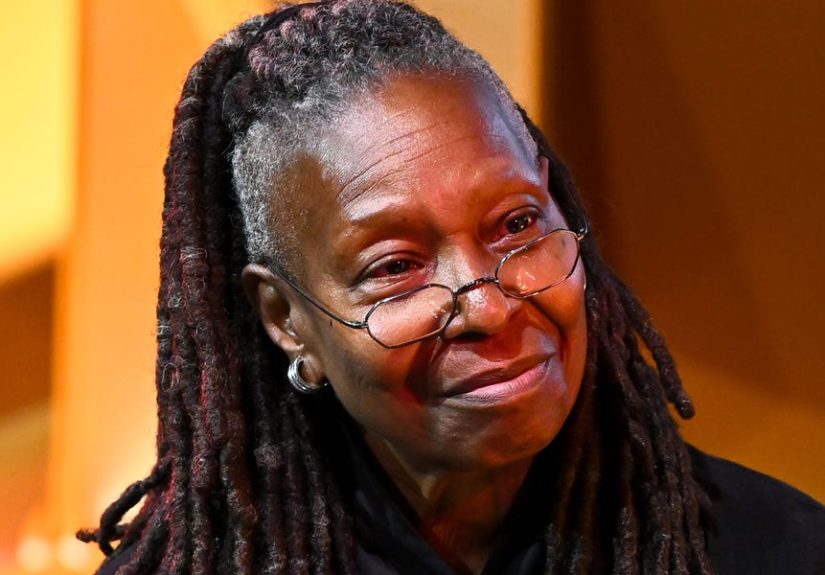
When Whoopi Goldberg’s name appears in the same sentence as the Oscars, entertainment fans tend to sit up a little straighter. And when news broke that the longtime moderator of The View would return to the Academy Awards stage as a presenter at the 2025 Oscars, fans did exactly what fans do best: they cheered, posted heart emojis, and reminded everyone that Whoopi is not simply a celebrity guest. She is an EGOT-winning performer, an Oscar winner, a four-time Oscars host, and, as many viewers put it, an icon.
The excitement made sense. Goldberg was announced among the presenters for the 97th Academy Awards, held on March 2, 2025, at the Dolby Theatre in Hollywood and broadcast live on ABC and Hulu. The Academy’s presenter list also included names such as Halle Berry, Penélope Cruz, Scarlett Johansson, John Lithgow, Amy Poehler, June Squibb, Elle Fanning, and Bowen Yang. That is a very shiny lineup, but Whoopi’s name carried a special kind of nostalgia and authority. She has not merely attended Oscars history. She has helped shape it.
For fans of The View, the announcement felt like a full-circle television moment. Weekday viewers know Goldberg as the quick-witted, eyebrow-raising, sometimes blunt, often hilarious moderator who can shift from political debate to pop-culture commentary with the ease of someone who has survived every possible entertainment-industry weather pattern. For movie lovers, she remains the unforgettable Celie from The Color Purple, the scene-stealing Oda Mae Brown from Ghost, and the magnetic comedic force behind Sister Act. Put all that together, and you get a star whose Oscars news felt less like a routine presenter announcement and more like a cultural homecoming.
Why Whoopi Goldberg’s Oscars News Had Fans Celebrating
At first glance, an Oscars presenter announcement may sound like a standard awards-season update. Every year, the Academy reveals a parade of actors, comedians, past winners, current nominees, and beloved Hollywood personalities who will hand out trophies. But the reaction to Goldberg’s participation stood out because of her unique connection to the Academy Awards.
Whoopi Goldberg is not just someone invited to read a winner’s name from a fancy envelope. She has been nominated by the Academy, won an Oscar, hosted the ceremony, and returned to the broadcast across different eras of Hollywood. She belongs to a rare group of entertainers who can walk onto the Oscars stage and instantly make the room feel warmer, sharper, and slightly less terrified of its own formalwear.
Fans See More Than a Presenter
Fans calling Whoopi an “icon” is not internet exaggeration, although the internet does enjoy seasoning everything with drama. In this case, the label fits. Goldberg’s career covers film, television, theater, comedy, producing, voice acting, books, and talk-show hosting. She has built a public identity that is both glamorous and grounded. She can sit at a daytime TV table discussing headlines in the morning and step onto Hollywood’s most famous stage at night without seeming out of place in either setting.
That dual appeal explains why The View fans responded so warmly. For regular viewers, Goldberg’s Oscars return was not simply professional recognition. It felt personal. They watch her daily. They know her expressions, her timing, her pauses, and the way she can shut down chaos with one well-placed sentence. Seeing her recognized on the Oscars stage gave fans the satisfying feeling of watching someone from their living room claim her rightful place in Hollywood’s grand ballroom.
Whoopi Goldberg’s Long History With the Academy Awards
To understand the excitement, it helps to revisit Goldberg’s Academy Awards journey. Her first Oscar nomination came for her breakthrough role as Celie in Steven Spielberg’s 1985 film The Color Purple. The performance introduced movie audiences to a dramatic depth that some viewers had not expected from a performer known primarily for comedy and stage work. It was vulnerable, powerful, and unforgettable.
Six years later, Goldberg won the Academy Award for Best Supporting Actress for her performance as Oda Mae Brown in Ghost. The role could have been a simple comic side character in the hands of a less precise performer. Goldberg turned Oda Mae into the film’s emotional spark plug: funny, frightened, bold, tender, and completely human. Her Oscar win remains one of the defining moments of her career and a key part of why fans still associate her with awards-season greatness.
From Winner to Host to Oscars Favorite
Goldberg also hosted the Academy Awards multiple times, becoming one of the ceremony’s most memorable modern hosts. Hosting the Oscars is not for the delicate. It requires timing, confidence, diplomacy, and the ability to make jokes in front of people who may or may not enjoy being joked about. Goldberg handled the assignment with theatrical flair, sharp humor, and an unmistakable sense of command.
That history is why her 2025 presenter role felt meaningful. She returned not as a newcomer, not as a novelty booking, but as a veteran of the Oscars stage. For longtime fans, it was a reminder that Goldberg has been part of the Academy Awards story for decades. For younger viewers, it was a chance to see why older generations still speak about her with such respect.
The EGOT Factor: Why “Icon” Is the Right Word
One reason fans love celebrating Goldberg is her EGOT status. An EGOT refers to someone who has won an Emmy, Grammy, Oscar, and Tony. It is one of the rarest achievements in American entertainment. Goldberg’s EGOT status is not a decorative label; it is proof of her unusual range. She has succeeded in television, music or recorded performance, film, and theater. That is not a résumé. That is a trophy cabinet with a personality.
ABC’s official biography for Goldberg notes that she has been moderator and co-host of The View since 2007, adding another long-running chapter to a career already filled with major milestones. Her presence on the show has made her a daily voice in American pop culture. Unlike stars who appear only during movie releases or awards campaigns, Goldberg stays in conversation with audiences almost every weekday. That creates a stronger connection, especially when big career news arrives.
A Career That Crosses Generations
Goldberg’s appeal crosses generations because different audiences discovered her at different times. Some met her through The Color Purple. Others remember the supernatural romance of Ghost. A huge group grew up with Sister Act, where she turned a lounge singer hiding in a convent into one of the most beloved comedy characters of the 1990s. Science fiction fans know her as Guinan from Star Trek. Daytime TV viewers know her from The View. Children may recognize her voice before they fully understand her place in Hollywood history.
That kind of career creates layered fandom. When Whoopi Goldberg receives Oscars news, every era of her audience has a reason to care. The movie fans remember her Academy Award. The TV fans cheer for their moderator. The theater fans respect the Tony connection. Comedy fans remember the original spark. And everyone else recognizes that a performer with this much staying power does not happen by accident.
How ‘The View’ Helped Keep Whoopi Goldberg at the Center of Pop Culture
The View has been central to Goldberg’s modern public image. Since joining the show in 2007, she has become its steady center of gravity. The program is known for debate, disagreement, celebrity interviews, political commentary, and viral moments. In that environment, Goldberg often plays referee, comic relief, truth-teller, and panel captain, sometimes all before the first commercial break.
Her role on The View matters because it keeps her connected to current conversations. Awards shows often celebrate legacy figures, but Goldberg is not frozen in nostalgia. She is still working, still reacting, still making headlines, and still shaping the tone of a major daytime program. That is why fans felt proud rather than merely nostalgic when her Oscars presenter news spread.
Daytime TV Meets Hollywood Prestige
The bridge between The View and the Oscars is part of the story’s charm. Daytime television is intimate. Viewers watch while drinking coffee, folding laundry, answering emails, or pretending they are not eating lunch at 10:58 a.m. The Oscars, by contrast, are polished, formal, and covered in enough spotlights to make even confident actors remember their posture.
Goldberg moves between those worlds naturally. She can be relaxed and conversational at the Hot Topics table, then elegant and commanding on an awards stage. That flexibility is rare. It is also why fans see her as more than a talk-show host. She is a performer who understands show business from nearly every angle: the backstage nerves, the live-TV pressure, the comedy rhythm, the emotional weight of recognition, and the importance of showing up prepared.
What Happened at the 2025 Oscars
The 2025 Oscars gave Goldberg a moment that connected beautifully to her own film history. During the ceremony, she appeared with Oprah Winfrey to help honor the late Quincy Jones, the legendary producer, composer, and music visionary who played a major role in The Color Purple. The tribute continued with Queen Latifah performing “Ease on Down the Road” from The Wiz, another project associated with Jones’s extraordinary creative legacy.
That appearance added emotional depth to Goldberg’s Oscars return. It was not just a celebrity cameo. It linked Goldberg, Winfrey, Jones, The Color Purple, and Academy Awards history in one moment. For anyone who understands the cultural importance of The Color Purple, seeing Goldberg and Winfrey together on the Oscars stage was more than a nice reunion. It was a reminder of how certain films continue to echo through careers, communities, and generations.
Why the Quincy Jones Tribute Mattered
Quincy Jones was nominated for multiple Oscars during his career, including nominations connected to The Color Purple. His work helped expand the sound and emotional scale of American film music. By participating in the tribute, Goldberg honored not only a collaborator but also a figure who helped open doors for artists across music, film, and television.
For fans, this made Goldberg’s presence even more meaningful. The initial excitement may have started with presenter news, but the actual ceremony offered a richer payoff. She was not there simply to wave, smile, and keep the teleprompter company. She helped carry a tribute rooted in Hollywood history, Black artistic excellence, and personal memory.
Why Fans Respond So Strongly to Whoopi Goldberg
Whoopi Goldberg inspires strong reactions because she has never seemed manufactured. Even at the height of Hollywood glamour, she has maintained a personality that feels direct, quirky, and self-possessed. She is not a performer who disappears into a publicist-approved cloud of perfect answers. She is expressive. She is opinionated. She is funny in a way that can feel casual until you notice the precision behind it.
That authenticity makes fans protective of her. When positive news arrives, they celebrate it loudly. When she receives recognition, they treat it as overdue even if she already owns awards most performers only dream about. This is the funny thing about icons: the more they accomplish, the more fans believe they still deserve another standing ovation.
Her Humor Is Part of the Legacy
Goldberg’s humor has always been central to her appeal. She can make a facial expression do the work of an entire paragraph. On The View, she often uses humor to puncture tension. In films like Ghost and Sister Act, she blended comedy with sincerity so smoothly that audiences laughed without losing emotional investment.
That balance is important. Pure comedy can be forgettable if it has no heart. Pure drama can feel heavy if it has no air. Goldberg has spent much of her career proving that humor and emotional truth are not enemies. They are dance partners. Occasionally, one steps on the other’s foot, but with Whoopi, the routine usually works.
Why This Oscars News Was Smart for the Academy
From a programming perspective, inviting Goldberg as a presenter was a smart move. Awards shows need recognizable faces who appeal to multiple audiences. Goldberg brings classic Hollywood credibility, daytime television visibility, comedy instincts, and live-stage experience. She is familiar without being boring and respected without being stiff.
The Oscars also benefit from presenters who carry genuine history with the ceremony. When a past winner returns, especially someone with Goldberg’s range, the moment feels connected to the larger Academy Awards tradition. It reminds audiences that the Oscars are not only about one year’s nominees. They are also about the long story of film artists who return, reflect, and pass the spotlight forward.
Star Power With Substance
Celebrity bookings can sometimes feel random. A famous person appears, reads a scripted joke, opens an envelope, and vanishes into the glitter fog. Goldberg is different because her presence brings context. She knows what it means to be nominated. She knows what it means to win. She knows what it means to host. She knows what it means to become part of a film that remains culturally significant decades later.
That kind of substance is exactly what awards shows need, especially in an era when audiences are selective about live television. Viewers want glamour, yes. But they also want moments that feel earned. Goldberg’s return offered both.
Experiences Related to Whoopi Goldberg’s Oscars Moment
For many viewers, the news of Whoopi Goldberg’s Oscars return created the kind of entertainment experience that feels oddly personal. That is one of the special powers of daytime television. People who watch The View regularly do not experience Goldberg as a distant movie star who appears once a year in designer clothing and mysterious lighting. They experience her as a daily presence. She is there during breakfast, during work-from-home breaks, during heated political weeks, during celebrity interviews, and during those wonderfully chaotic live-TV moments when everyone at the table seems to talk at once.
That familiarity changes how fans respond to career milestones. When Goldberg appears at the Oscars, fans are not just watching “an Academy Award-winning actress.” They are watching Whoopi from the table. Whoopi who raises an eyebrow when a conversation gets ridiculous. Whoopi who can make a room laugh with one sentence. Whoopi who has been open about her long career, her mistakes, her memories, and her opinions. The Oscars stage may be grand, but the audience relationship behind her is intimate.
Imagine a longtime viewer watching the presenter announcement online. Maybe they first saw Goldberg in Sister Act as a child and later rediscovered her on The View as an adult. The reaction is not simply, “Nice booking.” It is closer to, “Of course she belongs there.” That feeling is powerful because it blends nostalgia with current relevance. Goldberg is part of the viewer’s past and present at the same time.
There is also a family-viewing element to her appeal. A parent may remember Ghost and her emotional Oscar win. A younger adult may know her from daytime television clips. A teenager may recognize her from memes, interviews, or pop-culture references. When she appears at the Oscars, several generations can point to the screen and say, for different reasons, “I know her.” That shared recognition is not easy to manufacture. It comes from decades of work across different platforms.
Goldberg’s Oscars moment also offers a lesson in career longevity. Many entertainers have one major chapter. Some have two. Goldberg has built a career that keeps reopening in new formats. Stand-up led to Broadway. Broadway helped lead to film. Film led to Oscar recognition. Television gave her a daily platform. Producing, voice acting, books, and guest roles added more layers. Her return to the Oscars reminded fans that longevity is not just about staying famous. It is about staying interesting.
For aspiring performers, writers, hosts, or creators, that is the most useful takeaway. Goldberg’s career shows that a distinctive voice can travel. You do not have to fit one neat box forever. You can be funny and serious, outspoken and warm, mainstream and unconventional. You can win trophies and still show up to work. You can become an icon without sanding off every sharp edge. In fact, the sharp edges may be part of why people remember you.
That is why fans calling Whoopi Goldberg an “icon” for her Oscars news felt so natural. The word was not only about awards. It was about recognition, endurance, personality, and the joy of seeing someone with real history return to a stage that helped define her legend.
Conclusion: Whoopi Goldberg’s Oscars News Was Bigger Than a Presenter Slot
Whoopi Goldberg’s 2025 Oscars news resonated because it touched several cultural nerves at once: nostalgia for her Oscar-winning film career, admiration for her EGOT achievement, affection from The View fans, and respect for her decades-long influence in entertainment. Her return to the Academy Awards stage reminded audiences that true star power is not only about red carpets and applause. It is about history, range, resilience, and the ability to remain unmistakably yourself in an industry that often rewards sameness.
Fans were right to call her an icon. Goldberg has earned that word through comedy, drama, hosting, producing, and daily television presence. Whether she is guiding a conversation on The View, stealing scenes in a beloved film, or standing on the Oscars stage to honor a legend like Quincy Jones, she brings the same essential quality: a presence that feels both larger than life and completely human.







 Close
Close