
Table of Contents >> Show >> Hide
- Why a Space-Saving Coffee Station Works So Well in Urban Homes
- Start With a Footprint Audit Before You Buy Anything
- The Best Locations for an Urban Coffee Station
- What to Keep at the Station and What to Store Elsewhere
- Use Vertical Space Like It Owes You Rent
- Choose Coffee Gear That Earns Its Counter Space
- Fresh Coffee, Better Storage, Less Countertop Drama
- How to Make the Station Look Stylish, Not Crowded
- Three Smart Coffee Station Layouts for Small Homes
- Cleaning and Maintenance: The Unsexy Secret to a Great Coffee Nook
- The Experience of Living With an Urban Coffee Station
- Conclusion
Note: This article is based on real, current information synthesized from multiple reputable U.S. sources and cleaned for web publishing.
If your kitchen is roughly the size of a determined shrug, you are not alone. Urban homes, apartments, condos, and studio spaces often ask us to perform tiny miracles with square footage. One of the greatest modern miracles, of course, is making room for coffee without turning the countertop into a caffeinated yard sale.
That is where the urban coffee station comes in. A smart, space-saving coffee station is not just a cute setup for mugs and beans. It is a small-system upgrade that makes mornings faster, kitchens calmer, and tiny spaces look a whole lot more intentional. Think of it as giving your coffee habit a studio apartment makeover: less chaos, better lighting, and one very efficient shelf.
The best part is that a small kitchen coffee bar does not require a sprawling butler’s pantry, a designer renovation, or a suspicious amount of reclaimed wood. It just needs strategy. With the right location, compact tools, vertical storage, and a little editing, you can create a coffee nook that feels polished, practical, and surprisingly luxurious.
Why a Space-Saving Coffee Station Works So Well in Urban Homes
In a small home, every item needs to earn its keep. That goes double for anything living on the counter. A coffee station works because it creates a dedicated zone for a repeated daily ritual. Instead of scattering beans in one cabinet, filters in another, mugs above the sink, and spoons wherever they last rolled, you bring the whole routine into one tidy footprint.
This kind of zoning is gold in compact kitchens. It reduces visual clutter, cuts down on unnecessary steps, and keeps the room from feeling like six people are cooking breakfast when really it is just you trying to function before 8 a.m. A well-planned apartment coffee station also helps preserve the rest of the kitchen for actual cooking, which is useful if your counter space currently measures “one cutting board and a dream.”
There is also a style benefit. A curated coffee bar for small spaces adds personality without demanding a full remodel. A tray, a slim machine, a stack of mugs, and a few matching containers can make even an ordinary corner feel deliberate. It is one of the easiest ways to get that cozy café feeling at home, minus the line and the six-dollar oat milk upcharge.
Start With a Footprint Audit Before You Buy Anything
The most common mistake people make is building the station backward. They buy the espresso machine first, then wonder why the toaster had to move out emotionally. Before you choose furniture, organizers, or decor, measure the space you actually have.
For a compact coffee setup, focus on four dimensions:
- Width: How much horizontal room can you dedicate without crowding prep space?
- Depth: Will the machine fit without jutting into a walkway?
- Height: Can you lift lids, refill water, or access beans under upper cabinets?
- Clearance: Is there enough room for cords, steam, and safe daily use?
That last detail matters more than people expect. Coffee makers need more than a place to sit; they need room to function. If the machine has a top-opening reservoir or bean hopper, a low shelf above it may be a daily annoyance disguised as a cute idea. Your future self, half awake and holding a scoop of grounds, would prefer not to wrestle cabinetry before caffeine.
The Best Locations for an Urban Coffee Station
1. The Countertop Corner
This is the simplest option and often the best one. A corner keeps the station visually contained and allows you to anchor it with a tray, stand, or small shelf. If you go this route, keep only the daily essentials out: machine, beans, mugs, and one container for sweeteners or stirrers.
2. A Pantry Niche or Cabinet Interior
If you want a cleaner look, a pantry shelf or cabinet nook can hide the station when not in use. This is especially effective in open-concept apartments where countertop clutter is visible from the living room, dining area, and possibly your entire life. A hidden coffee cabinet works beautifully for capsules, extra mugs, and bulk supplies.
3. A Rolling Cart
A slim cart is one of the smartest coffee station ideas for small kitchens. It adds storage without a full built-in and can move where you need it. Use the top for brewing, the middle shelf for cups and syrups, and the lower shelf for overflow items like filters, backup beans, or the fancy cocoa powder you bought during your “I make mochas now” phase.
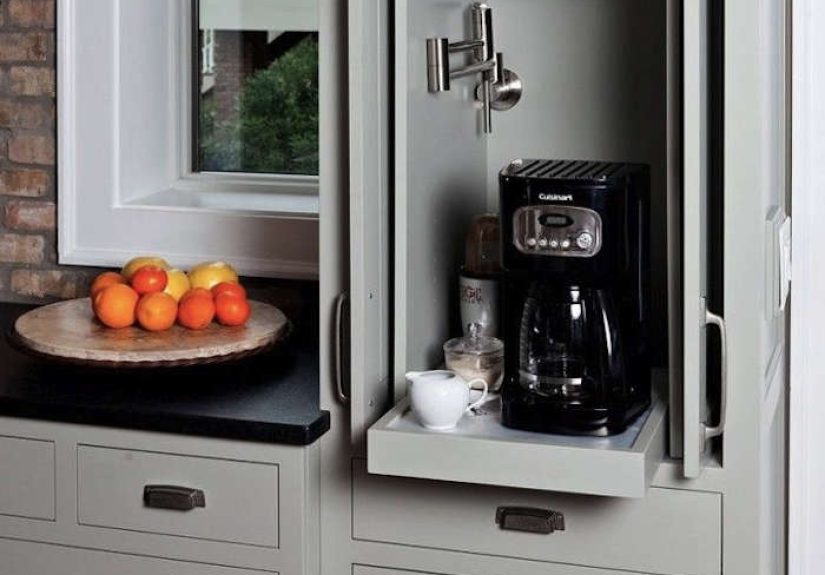
4. A Pull-Out Drawer or Appliance Garage
If minimalism is your love language, hide the whole setup. A pull-out drawer can organize pods, spoons, and accessories, while an appliance garage keeps the machine accessible but visually quiet. This option is particularly helpful if your kitchen is tiny and every inch of visible counter makes the room feel smaller.
5. A Breakfast Bar Edge or Narrow Console
If your kitchen spills into a dining nook, hallway, or living area, a narrow console can become a chic home coffee station. This works best when the setup feels furniture-like rather than utilitarian. Add a lamp, a framed print, or a plant so it blends into the room instead of shouting, “I contain twelve espresso accessories.”
What to Keep at the Station and What to Store Elsewhere
A good coffee station is edited. A great one is ruthlessly edited. The goal is convenience, not opening a tiny branch location of your favorite café.
Keep these items within arm’s reach:
- Your primary brewing machine
- One or two bags of coffee or a canister of beans
- Daily mugs or cups
- Filters, pods, or capsules
- A spoon or scoop
- Sugar or your most-used sweetener
- A small mat or tray for spills
Store these somewhere else:
- Backup beans and bulk refills
- Holiday mugs with emotional significance but zero stackability
- Specialty syrups used twice a month
- Oversized gadgets that duplicate what your machine already does
- Anything decorative that makes cleaning harder
The rule is simple: if you do not use it at least several times a week, it does not need front-row real estate.
Use Vertical Space Like It Owes You Rent
When square footage is limited, vertical storage stops being a nice idea and becomes a lifestyle. The smartest space-saving coffee station designs go upward, not outward.
Try these vertical moves:
- Wall-mounted mug racks: They free cabinet space and make mugs part of the decor.
- Floating shelves: Great for mugs, jars, and a small framed print, but keep them tidy so they do not become dust museums.
- Tiered risers: These help stack supplies without creating a visual pileup.
- Under-shelf baskets: Ideal for filters, napkins, or slim accessories.
- Hooks or rails: Perfect for cups, measuring spoons, or a small towel.
Vertical storage also helps balance function with style. A slim shelf above a coffee machine can make the setup feel finished, especially when the containers match and the palette stays tight. Think warm wood, matte black, brushed metal, or clean white, depending on your kitchen style. The station should look collected, not like you assembled it while trapped in a home organization aisle.
Choose Coffee Gear That Earns Its Counter Space
Not every coffee maker belongs in a small kitchen. Some machines are compact heroes. Others arrive like they expect their own zip code.
For urban homes, prioritize equipment that is:
- Compact in width and depth
- Easy to clean
- Simple to refill under cabinets
- Multi-functional when possible
If you drink one cup most mornings, a bulky twelve-cup machine may be overkill. A slim drip brewer, single-serve machine, French press, AeroPress, pour-over setup, or compact espresso maker may fit your routine better. Cold brew fans can also benefit from a smaller pitcher-style system designed for refrigerator storage.
The point is not to own the trendiest machine. It is to own the machine that matches your real habits. If your weekday coffee ritual takes six minutes and your patience runs out at minute three, the best gear is the kind you will actually use consistently.
Fresh Coffee, Better Storage, Less Countertop Drama
Beautiful stations are nice. Fresh coffee is nicer. To keep beans tasting their best, store coffee in an airtight container in a cool, dark place. Opaque storage is especially helpful because light can affect quality over time. Whole beans generally keep flavor better than pre-ground coffee, so grind only what you need when possible.
This is where design and function can cooperate for once. A good-looking canister is not just decor; it is part of the flavor strategy. The same goes for keeping coffee away from heat-heavy spots near ovens, dishwashers, or sunny windows. Yes, that adorable sunlit shelf may look like a lifestyle magazine moment, but your beans would prefer a darker, less dramatic life.
If you buy coffee in bulk, keep only a smaller working amount at the station and store the rest properly elsewhere. This prevents the coffee nook from becoming a storage dump while helping maintain freshness.
How to Make the Station Look Stylish, Not Crowded
Small spaces need visual breathing room. That means your station should be styled with intention, not over-decorated into exhaustion.
Here is a simple design formula:
- One machine
- One tray or mat
- One to two canisters
- Two to four favorite mugs
- One decorative accent, maximum
That accent could be a tiny plant, a framed print, a mini lamp, or a bowl of sugar packets if you are feeling practical and rebellious. Keep the color story tight. When every object is useful and visually related, the station feels calm rather than busy.
Closed storage usually reads cleaner than open shelving, but a little display can add charm. The trick is to show only the pretty things and hide the rest. Think of it like getting dressed: one statement piece is chic; seventeen are a cry for help.
Three Smart Coffee Station Layouts for Small Homes
The Minimalist Counter Corner
Best for: studio apartments and very small kitchens.
Use a compact machine, one airtight canister, two mugs on a small stand, and a narrow tray. Store refills in a cabinet. This layout keeps the footprint tiny while still feeling polished.
The Rolling Coffee Cart
Best for: renters and flexible spaces.
Top shelf for brewing, middle for cups and supplies, bottom for extras. Add hooks on the side for towels or mugs. This setup works especially well when the kitchen has limited built-in storage.
The Hidden Cabinet Café
Best for: open-plan homes and clutter-averse households.
Use a cabinet nook or pantry shelf with under-cabinet lighting, bins for pods, a drawer insert for tools, and a machine that fits the depth comfortably. Close the doors, and the kitchen instantly looks calmer.
Cleaning and Maintenance: The Unsexy Secret to a Great Coffee Nook
No one puts “descaling schedule” on a vision board, but maintenance matters. Coffee stations work best when they stay easy to wipe down, restock, and reset. Use a washable mat or tray under the machine, empty drip trays regularly, and clean the brewer according to the manufacturer’s instructions.
Weekly upkeep should take about ten minutes: wipe surfaces, toss stale filters, check bean levels, and return random items that wandered in from the rest of the kitchen. Because they will. Coffee stations, much like entry tables, are magnets for mystery clutter.
Keeping the area clean also reinforces the whole point of the station: making mornings smoother. When the setup is ready to go, your routine feels less like a scavenger hunt and more like a ritual.
The Experience of Living With an Urban Coffee Station
What changes when you build a thoughtful urban coffee station? On paper, not much. You are still making coffee. You are still standing in your kitchen, possibly wearing unmatched socks, wondering why time moves faster on weekdays. But the experience shifts in subtle ways that matter.
First, mornings stop feeling scattered. There is something deeply satisfying about walking to one small, organized zone and finding everything where it should be. Mug? There. Beans? There. Spoon? Miraculously also there. The tiny ritual starts to feel less like task management and more like a calm beginning. In a busy city home, that tiny pocket of order can feel weirdly luxurious.
There is also a psychological effect to giving coffee its own place. A dedicated station signals that this part of the day matters. It is not just fuel; it is a pause button. Even in a compact apartment, that little nook creates atmosphere. The lamp glows. The machine hums. The beans smell like ambition and roasted optimism. Suddenly your kitchen corner has the energy of a café without the distraction of someone loudly pitching a startup.
Guests notice it too. A tidy coffee setup makes a small home feel more hospitable because it shows intention. You may not have a giant kitchen island or a breakfast room with sunlight pouring in like a commercial, but you do have a stylish corner that says, “Yes, I thought this through, and yes, I can offer you coffee.” That is powerful urban hosting energy.
Over time, the station also teaches restraint. When your footprint is limited, you get better at choosing what deserves space. You stop buying giant novelty mugs that fit nowhere. You become suspicious of one-use gadgets. You learn that one excellent canister is better than five random bags clipped shut with hope. A small setup quietly sharpens your habits.
And then there is the aesthetic payoff. In many urban homes, storage has to work overtime, so every visible surface counts. A well-edited coffee station can make the entire kitchen look more organized, even if the cabinet below is hiding a heroic amount of chaos. It becomes a visual anchor, a small focal point, a reason the room feels pulled together. That matters when your kitchen is visible from your sofa, your desk, and probably half your life.
Most of all, a space-saving coffee station adds pleasure without demanding much room. It proves that comfort does not always come from going bigger. Sometimes it comes from going smarter: a narrow cart, a corner shelf, a hidden drawer, a better routine. In the city, where every inch has an opinion, that kind of efficiency feels almost glamorous.
So yes, the urban coffee station is about storage and layout. But it is also about creating one small daily experience that works beautifully. And in a world of crowded countertops, cramped apartments, and mornings that begin a little too abruptly, that is no small thing. It is design with a pulse. It is function with charm. It is your coffee finally getting the home base it deserves.
Conclusion
The best space-saving coffee station is not the biggest, fanciest, or most photogenic one. It is the one that fits your routine, respects your square footage, and makes daily life easier. In urban homes, good design is rarely about having more room. It is about using the room you have with intention.
Whether you claim a countertop corner, repurpose a pantry shelf, roll in a slim cart, or hide the whole setup behind cabinet doors, a smart small kitchen coffee bar can bring order, style, and a little joy to the everyday. And honestly, that is a lot of mileage from one humble cup of coffee.





 Close
Close