
Table of Contents >> Show >> Hide
- Where The “Men Get More Food” Theory Came From
- Why The Theory Feels So Believable
- What Research Says About Gender And Portion Size
- Is This Sexism, Shrinkflation, Or Just Spoon Chaos?
- Why Equal Portions Matter More Than People Think
- What Restaurants Can Learn From The Viral Backlash
- How Customers Can Test The Theory More Fairly
- Experience Notes: What This Trend Feels Like In Real Life
- Conclusion: The Real Conspiracy Is Inconsistency
Some internet theories arrive wearing a tinfoil hat. Others arrive in a Chipotle bag that feels suspiciously heavier when the name on the order is “Ryan.” Recently, women across social media began testing a strangely believable idea: when ordering delivery or pickup, do restaurants give more food to orders placed under male names?
The theory sounds like something your group chat would invent at midnight after receiving a burrito bowl with three heroic beans and a tablespoon of rice. But the conversation exploded because it touched a nerve. People are not just annoyed about food; they are annoyed about value, fairness, and the tiny everyday ways gender expectations sneak into places they were never invited. Apparently, even the salsa station may need unconscious-bias training.
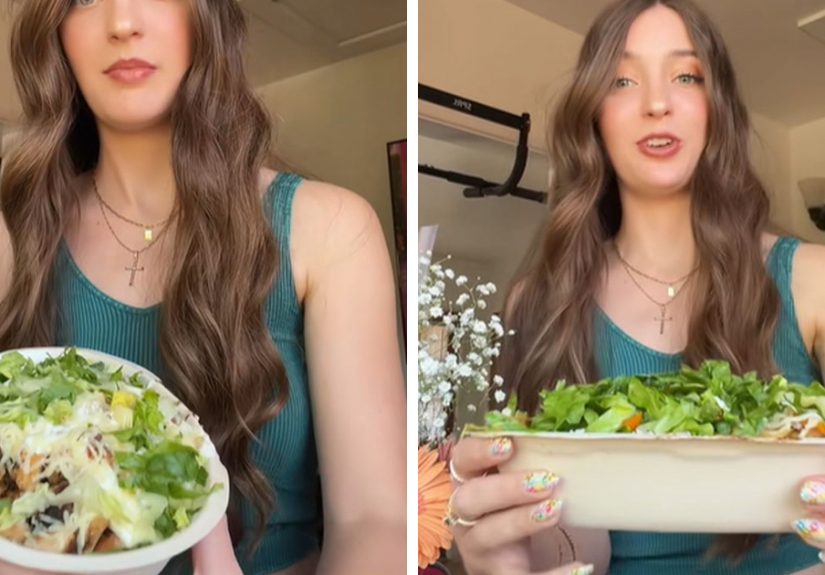
The trend became especially visible around fast-casual restaurants, where bowls, salads, and burritos are assembled by humans rather than measured by a machine. Women began changing their delivery app names to traditionally male names, placing nearly identical orders, and comparing the results. Some claimed the “male” order came with more rice, more meat, more sauce, or a generally fuller bowl. Others said the difference was inconsistent, which is exactly the kind of answer that makes the internet say, “Interesting,” while opening a spreadsheet.
So, is the conspiracy true? The honest answer is deliciously complicated. There is no solid proof that delivery workers or restaurant employees systematically give men more food across the board. However, there is enough real-world context to explain why people believe it: portion sizes can vary widely, social stereotypes often link men with bigger appetites, and delivery removes the customer from the line, making it harder to ask for “just a little more rice, please” without sounding like you are negotiating a treaty.
Where The “Men Get More Food” Theory Came From
The viral claim follows a simple formula: order the same meal twice, once under a woman’s name and once under a man’s name, then compare the results. The meal most often discussed online is a customizable bowl from a fast-casual restaurant. That makes sense because bowls are easy to compare visually. A pizza is a pizza, but a burrito bowl is a personality test conducted with a serving spoon.
In many of these informal experiments, women said the male-named order looked fuller or felt heavier. Some used kitchen scales. Others relied on the sacred scientific method known as “I have eyes.” The strongest reactions came from customers who already felt that app orders were smaller than in-person orders. When a woman changes her name to “Daniel” and suddenly receives what looks like a properly packed bowl, it feels less like a coincidence and more like the rice has been keeping secrets.
Still, it is important to separate viral observation from proven pattern. Social media experiments can be funny, revealing, and emotionally accurate, but they are not controlled studies. One order may be made by a generous employee; another may be made during a rush; one location may be low on steak; another may have a manager hovering nearby like the guardian of inventory costs. A single bowl cannot convict an entire industry, even if it looks suspiciously empty.
Why The Theory Feels So Believable
The reason this trend spread so quickly is not only because people love food drama, although yes, we absolutely do. It spread because customers already suspect portion inconsistency. In recent years, fast-casual chains have faced online complaints that bowls and burritos are smaller, especially for digital orders. Some companies have denied changing official portion standards while also acknowledging that certain locations needed more training to deliver consistent portions.
That combination creates the perfect internet storm. Customers are paying more for delivery, often adding service fees, delivery fees, tips, and menu markups. When the food arrives looking lighter than expected, it feels personal. If the same order under a male name appears bigger, the frustration doubles: not only did dinner disappoint you, but now dinner may have gender politics.
Delivery Makes Portion Problems Harder To Challenge
When ordering in person, customers can watch the bowl being built. If the rice scoop is sad, they can ask for more. If the chicken portion looks like it is hiding from taxes, they can request clarification. Digital ordering removes that moment of negotiation. The customer becomes a name on a screen, and the worker makes the meal without face-to-face feedback.
This matters because many fast-casual meals are not perfectly machine-measured. A “scoop” can vary depending on the employee, the tool, the ingredient, the angle, the rush, and whether the person on the line is having a great day or silently counting the minutes until break. Delivery turns all of that into a mystery box. Sometimes it is dinner. Sometimes it is a $19 trust exercise.
Gender Stereotypes About Appetite Are Very Real
The theory also feels believable because American culture has long treated men’s hunger as normal and women’s hunger as something to be edited, minimized, or made cute. Men are often marketed “hearty” meals, “loaded” platters, and “man-sized” portions. Women are more often shown salads, light bites, smoothies, and portions that look like they were plated for a decorative bird with Pilates at noon.
That does not mean every server is consciously thinking, “A woman ordered this, better reduce the beans.” But stereotypes do not need to be shouted to influence behavior. Sometimes they work quietly. If a worker unconsciously assumes a man expects a bigger meal, the scoop may become a little more enthusiastic. If they assume a woman wants a lighter meal, the portion may become more careful. Nobody needs to be cartoonishly sexist for bias to show up. Bias is often boring, automatic, and wearing a company visor.
What Research Says About Gender And Portion Size
Recent research on gender and portion-size stereotypes found that people do associate larger portions with men and smaller portions with women. That is not shocking, but it is useful because it confirms that the stereotype exists in people’s minds. Large portions can read as masculine; smaller portions can read as feminine. In other words, a burrito bowl can become gendered before anyone even adds guacamole.
However, research also complicates the viral claim. In a field setting where identical orders were prepared for men and women at fast-casual restaurants, researchers did not find strong evidence that men reliably received larger portions. That matters. It suggests the stereotype is real, but standardized restaurant processes may reduce how much it affects actual service.
The takeaway is not “the internet is lying.” It is more nuanced: people may notice real inconsistencies, and gender stereotypes may shape expectations, but the evidence does not prove that every woman ordering delivery is being systematically shorted. The truth may be less dramatic and more annoying: portion inconsistency is already a problem, and gender expectations make customers more alert to it.
Is This Sexism, Shrinkflation, Or Just Spoon Chaos?
The funniest answer is “yes.” The serious answer is that multiple factors can overlap. First, there is portion variability. If a restaurant relies on hand-scooping, different customers may receive different amounts even when they order the same thing. Second, there is cost pressure. Restaurants have been dealing with higher ingredient costs, labor costs, and delivery-platform economics. Even without an official policy to shrink portions, workers may be trained to control food costs more carefully.
Third, there is the psychology of the customer. When people already suspect unfairness, they pay closer attention. A bowl that once would have seemed “a little light” now becomes evidence in the People vs. Skimpy Chicken. Fourth, there are gender assumptions. Even if they do not determine every order, they are part of the cultural background noise.
This is why the theory resonates beyond one restaurant or one viral video. It is not just about whether “Emily” gets less rice than “Michael.” It is about whether customers can trust that the same item, at the same price, means the same value. If the menu says the meal costs $14.95, the portion should not depend on whether the name sounds like it owns a grill.
Why Equal Portions Matter More Than People Think
Some people respond to this trend by saying, “Men usually eat more, so who cares?” That argument misses the point. Customers are not ordering based on average calorie needs across the population. They are buying a specific menu item at a specific price. A petite woman may be very hungry. A tall man may want a light lunch. A nonbinary customer may simply want the bowl they paid for without being assigned a serving size by name psychology.
Equal portions are not about forcing everyone to eat the same amount. They are about equal value. If a customer wants a smaller size, restaurants can offer one at a lower price. If a customer wants double protein, they can pay for it. But quietly adjusting portions based on assumptions, whether intentional or accidental, creates distrust.
Food is emotional because it is both practical and personal. When people feel shorted, they do not just think, “This meal has fewer ounces.” They think, “I got less than someone else for the same money.” That feeling is powerful enough to turn a slightly underfilled burrito bowl into a viral civil rights hearing with sour cream on the side.
What Restaurants Can Learn From The Viral Backlash
Restaurants do not need to panic every time TikTok discovers a kitchen scale. But they should pay attention. Portion consistency is part of customer trust, especially in delivery and pickup, where the customer cannot see the food being assembled. If people believe ordering under a different name changes the outcome, the brand has a perception problem even before it has a proven discrimination problem.
Use Clear Portion Standards
Restaurants should train employees with visible, practical standards. “One scoop” is not enough if one employee’s scoop looks like a mountain and another’s looks like a polite apology. Using measured utensils, portion cups, or regular staff calibration can reduce inconsistency.
Make Digital Orders Feel Less Risky
Delivery customers often feel they get less control. Restaurants can improve trust by allowing clearer customization options, such as “extra rice,” “light beans,” or “sauce on the side,” without making customers feel like they need to hack the system using a fake male identity and the confidence of a man named Brad.
Audit Complaints Without Getting Defensive
When customers complain about portions, brands should not dismiss them as internet drama. Some complaints may be exaggerated, but repeated complaints usually point to a real customer-experience issue. A smart restaurant does not argue with the group chat; it checks the line.
How Customers Can Test The Theory More Fairly
If someone wants to run a more useful version of the male-name experiment, the key is consistency. Order the same item from the same location at similar times of day. Use the same customizations. Compare weight, not just photos, because a bowl can look bigger depending on how ingredients are spread. Repeat the test more than once. One giant “Jake” bowl and one sad “Sarah” bowl may feel convincing, but a pattern requires more data.
Also, compare digital orders with in-person orders. Some customers may discover the issue is not gender at all; it is the difference between being physically present and being a ticket in the online queue. Others may find that certain locations are generous while others serve like they are personally saving the company from bankruptcy.
Most importantly, customers should remember that frontline restaurant workers are usually not the villains. They are often underpaid, rushed, and working inside systems designed by management. The goal is not to harass workers over three ounces of rice. The goal is to push restaurants toward fair, consistent portions for everyone.
Experience Notes: What This Trend Feels Like In Real Life
Imagine ordering your usual bowl after a long day. You have already paid the delivery fee, tipped the driver, watched the little app map crawl through traffic, and emotionally committed to this meal as the highlight of your evening. Then the bag arrives. You open the lid. The contents look like they have been arranged by a minimalist architect. Technically, food is present. Spiritually, betrayal has occurred.
Now imagine your friend says, “Use a guy’s name next time.” You laugh because it sounds ridiculous. Then you try it because hunger is a powerful research sponsor. The next order arrives under “Chris,” and suddenly the bowl looks fuller. The rice has confidence. The beans have gathered in numbers. The protein is no longer playing hide-and-seek. You do not instantly become a conspiracy theorist, but you do start looking at your delivery app profile like it contains a secret economic lever.
That is why this topic became so sticky. It turns an everyday annoyance into a social experiment anyone can understand. No one needs a graduate degree to compare two burrito bowls on a kitchen counter. It is visual, relatable, and just petty enough to be entertaining. People love a mystery, especially when the evidence can be eaten afterward.
For many women, the trend also connects to older experiences: being told they “eat a lot for a girl,” being offered smaller portions at family dinners, being expected to order salad on dates, or feeling judged for wanting the same hearty meal everyone else gets. The delivery-name experiment may be about takeout, but the emotional reaction comes from years of small messages about appetite. Women are allowed to be hungry. Revolutionary concept, apparently.
There is also the money angle. Delivery is expensive. When a customer pays premium prices, the meal needs to feel worth it. A small portion is annoying at a restaurant; a small portion after taxes, fees, and tip feels like a personal attack from the modern economy. If changing one name in an app seems to produce more value, even inconsistently, people will try it. Not because they want to deceive anyone, but because they want the meal they thought they already purchased.
The most reasonable personal takeaway is not that every woman must now order as “Dave.” It is that customers should feel empowered to ask for fair value and restaurants should make that value clear. A good meal should not require strategy, code names, or a courtroom-level evidence folder. It should arrive hot, satisfying, and consistent enough that nobody feels tempted to cross-examine the beans.
Conclusion: The Real Conspiracy Is Inconsistency
The viral claim that men receive more food when ordering delivery is not fully proven, but it is not nonsense either. It sits at the intersection of real portion inconsistency, real gender stereotypes, and real customer frustration with delivery prices. Some women may genuinely receive bigger orders under male names. Others may be seeing normal variation through the lens of a believable cultural pattern. Either way, the trend reveals a simple truth: customers want fairness they can see.
Restaurants can solve much of the drama by making portion standards clearer and more consistent. Customers can protect themselves by ordering carefully, comparing fairly, and speaking up when portions are noticeably off. And the rest of us can appreciate that the internet has once again transformed dinner into sociology with guacamole.
So, is the conspiracy true? Maybe sometimes. Maybe not everywhere. But if a bowl named “Kevin” keeps showing up heavier than a bowl named “Jessica,” people are going to notice. The spoon may be small, but the conversation is huge.







 Close
Close