
Table of Contents >> Show >> Hide
- The Sketch That Started the Mayhem
- Amy Poehler’s Backstage Scare
- Jason Bateman’s Even Wilder Goodnights Story
- Why This Story Is Funny, and Why It Is Also Not Funny
- Studio 8H Was Already a Pressure Cooker
- The Chimp Became the Ultimate Symbol of Old-School SNL Risk
- What This Story Says About Comedy Now
- Conclusion
- More Experiences Related to the Story: What Backstage Chaos Really Feels Like at SNL
- SEO Tags
There are plenty of legendary Saturday Night Live stories. There are sketches that died in dress rehearsal, costumes held together by hope and Velcro, and last-second set changes executed with the panic level of a NASA launch and the budgetary vibe of a community theater miracle. But every so often, an SNL anecdote arrives that feels less like normal backstage chaos and more like the universe briefly deciding to prank Studio 8H.
Enter the chimp.
More specifically, enter the chimp that turned one silly 2005 sketch into one of those bizarre behind-the-scenes stories that keeps resurfacing because it is equal parts hilarious, stressful, and wildly revealing. What began as a juvenile comedy bit involving celebrities and flying primate poop ended up becoming a cautionary tale told years later by Amy Poehler and Jason Bateman, both of whom came away with a healthy respect for one simple truth: live television is already unpredictable enough before you invite a chimpanzee into the building.
This is the story of the chimp that caused backstage havoc at Saturday Night Live, why the story still fascinates comedy fans, and what it says about the strange intersection of live sketch comedy, animal performers, and the beautiful madness known as Studio 8H.
The Sketch That Started the Mayhem
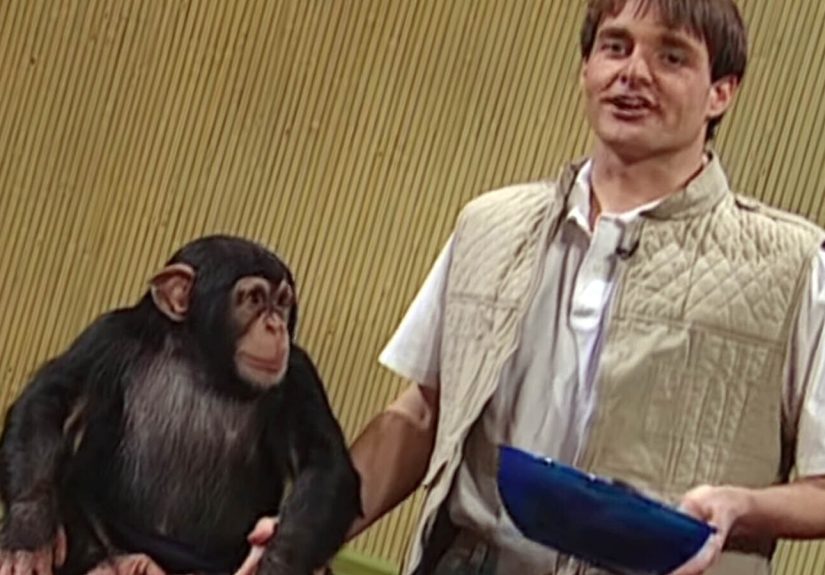
The now-infamous chimp incident traces back to the February 12, 2005 episode of Saturday Night Live, hosted by Jason Bateman with Kelly Clarkson as musical guest. Among the sketches that night was one with the delightfully refined title “Monkeys Throwing Poop at Celebrities.” That title does not exactly leave room for ambiguity. It is, in the grand tradition of sketch comedy, both deeply dumb and weirdly efficient.
The premise centered on Bateman as an overeager TV host who tricks Sean Connery, played by Darrell Hammond, into appearing on a program where a chimp flings poop at celebrities. Amy Poehler briefly appeared as Sharon Stone, which already tells you the sketch was operating on that particular mid-2000s SNL frequency: broad, ridiculous, and proud of it.
On camera, the bit was meant to be absurd. Off camera, however, the live animal at the center of the joke would become the real story. That is usually not ideal. When the joke is supposed to be fake feces and the lasting memory becomes “the chimp grabbed a cast member backstage and allegedly tried to bite the host’s face later,” your sketch has wandered into a very different genre.
Amy Poehler’s Backstage Scare
Years after the episode aired, Amy Poehler revisited the experience and made clear that working with animal actors was not her favorite part of the job. Her story was not framed like a cute showbiz memory. It was more like, “Here is why I do not find this relaxing.” Fair enough.
Poehler recalled that during a quick change, the young chimp reached out, grabbed her wrist, and would not let go. She later joked that maybe it was her blond hair or her vibe, but in the moment there was nothing glamorous about it. She said she started screaming, and she also emphasized something that tends to get lost whenever pop culture treats primates as fuzzy little sidekicks: chimpanzees are very strong.
That detail matters. The story is easy to laugh at from a safe distance because the words “Amy Poehler,” “quick change,” and “chimp” belong together only in the fever dream of a comedy writer who has not slept since Wednesday. But backstage, during a live broadcast, the situation would have been genuinely alarming. SNL quick changes are already frantic. There are seconds to spare, multiple people moving at once, wigs flying, shoes disappearing, jackets being yanked off like the building is on fire. Add an unpredictable animal grabbing a performer in that environment, and suddenly the sketch feels less like comedy and more like a bad management decision wearing stage makeup.
Jason Bateman’s Even Wilder Goodnights Story
If Poehler’s backstage scare was unnerving, Jason Bateman’s version of events pushed the story into full late-night folklore. When Bateman returned to host SNL in 2020, he used his monologue to revisit the 2005 episode and explain that the chimp had not limited its antics to the sketch itself.
Bateman told the audience that during the closing goodnights at the end of the 2005 show, the chimp was allowed onstage with the cast. He bent down to say something like “good job” to the animal, which is a very human mistake. The chimp, according to Bateman’s telling, responded by flashing its teeth and trying to bite his nose off.
It is one of those stories that sounds exaggerated until the show helpfully rolls footage and you realize Bateman was not inventing the basic shape of the chaos. He wrapped the whole thing in jokes, because that is what smart performers do when reliving a moment that was terrifying at the time and priceless in hindsight. But the humor also underscored the strangest part of the whole story: in 2005, this setup apparently seemed normal enough to make air.
Bateman even joked that if the show were doing that sketch today, they would probably use a puppet or a person in a furry suit. That punchline landed because it also sounded correct. The distance between 2005 and now is not just technological. It is cultural. There is much less appetite for casually building a live TV segment around a chimp and hoping everybody keeps their face.
Why This Story Is Funny, and Why It Is Also Not Funny
The reason this story endures is that it sits right on the line between comedy and cautionary tale. On one hand, it has all the ingredients of classic SNL absurdity: a ridiculous sketch title, a famous host, Amy Poehler in a Sharon Stone cameo, and an animal actor behaving like it never read the cue cards. On the other hand, the punchline is basically that the production brought chaos into an environment that was already maxed out on chaos.
That is the key difference. Audiences tend to think of live television unpredictability as charming. A cast member breaks character. A wig slips. A set piece moves too early. Someone misses a line and the whole scene gets funnier. Those are the happy accidents that make SNL feel alive. A chimp grabbing a cast member backstage is not that kind of accident. That is not “oops.” That is “maybe let’s never do this exact thing again.”
It also exposes a long-running entertainment habit of turning wild animals into comic props. For decades, primates were used in television, commercials, and films because they created instant novelty. A chimp in human situations was treated as inherently funny. But organizations focused on animal welfare and filmed-media standards have spent years arguing that the real-world costs are not funny at all. American Humane’s primate guidance urges producers to consider issues such as maternal separation, socialization, and the broader risks of using primates in filmed entertainment. Smithsonian Magazine has also highlighted research suggesting that pop-cultural portrayals of chimps as cheerful little human impersonators can distort how audiences think about the species.
So yes, the story is funny because it is weird. But it also lands harder today because we are much more aware of how thin the line is between a zany showbiz anecdote and an obvious “what were we thinking?” moment.
Studio 8H Was Already a Pressure Cooker
To understand why the chimp story sounds so bonkers, you have to appreciate what a normal SNL backstage environment looks like. And by “normal,” I mean “organized panic with excellent tailoring.”
SNL has always thrived on controlled chaos. The show moves at a ridiculous speed, and that speed is not just on camera. Behind the scenes, crews are changing sets, resetting props, adjusting microphones, moving costumes, and steering hosts through wardrobe changes that can happen in little more than a minute. Recent behind-the-scenes reporting on the show’s crew and wardrobe department makes it clear that the pace remains intense even today. Costume designer Tom Broecker has described the work as exhilarating and terrifying, and reports have noted that the wardrobe team may prepare looks for 12 to 15 sketches in a single week, with only 10 to 12 ultimately making it to air.
That is before you account for the quick-change ballet itself. People who have worked wardrobe on the show have described it as a choreographed sprint where clothes are literally peeled off one side while the next costume goes on from another angle. Hosts are pulled off set, spun around, handed off, reassembled, and returned to camera before their brain has finished processing what just happened. There are documented examples of hosts having only seconds to change. Jennifer Lopez once needed a piggyback ride because her heels slowed her down. Justin Timberlake reportedly had a 10-second change. Kim Kardashian was filmed sprinting off stage mid-show. This is not a relaxed environment. This is fashion NASCAR.
Now place a chimp into that ecosystem.
Suddenly Amy Poehler’s story makes even more sense. The problem was not just that a chimp grabbed her wrist. The problem was that it happened in one of the least forgiving spaces imaginable for delay, confusion, or surprise. A quick change already runs on pure adrenaline. The last thing anyone backstage needs is a strong animal deciding it has questions about your arm.
The Chimp Became the Ultimate Symbol of Old-School SNL Risk
Part of what makes the Bateman-Poehler story so sticky is that it feels like a time capsule from a looser television era. Not a better era. Just a looser one. Bateman himself joked that back in 2005, “things were loose.” That might be the most elegant summary ever given for a decision that now sounds unhinged.
SNL has always sold itself on danger, but the best version of that danger is creative danger. Will the sketch bomb? Will the host freeze? Will someone crack up and make the scene funnier? Those are the risks viewers tune in for. Physical unpredictability from a chimp is a completely different category. It turns the show’s trademark edge from artistic gamble into workplace roulette.
And yet that same mismatch is why the anecdote works so well in the mythology of SNL. It feels almost too perfect as a symbol of the show’s backstage identity. Here is a place where impossible wardrobe changes happen in under a minute, where ideas can be rewritten hours before air, where legends are made live, and where, apparently, there was once a brief period when a chimp could become the most chaotic cast member in the building.
What This Story Says About Comedy Now
There is another reason the story has legs: it reflects how comedy has changed. Modern audiences still love behind-the-scenes insanity, but there is less romanticism around recklessness for its own sake. We still want spontaneity. We still want the feeling that anything can happen. We just prefer that “anything” not include an animal attack in the closing credits.
That shift is healthy. It means the industry has become more conscious not just about performer safety but also about animal welfare and the ethical weirdness of treating highly intelligent primates like novelty co-stars. The old formula was simple: put a chimp in a human setting, and viewers will laugh. The newer view is more skeptical. Why is the chimp there? What stress does that create? What can go wrong? And why not just let a comedian in a costume do the bit instead?
Comedy loses absolutely nothing by making that trade. In fact, it probably gets better. A human performer can hit marks, read timing, and, most importantly, refrain from trying to re-sculpt the host’s face.
Conclusion
The chimp that caused backstage havoc at Saturday Night Live did more than derail a few calm nerves. It exposed the fault line between old-school TV bravado and the reality of what live comedy can safely handle. Amy Poehler’s backstage scare and Jason Bateman’s near-bite at goodnights are memorable not just because they are bizarre, but because they reveal how fragile live television really is. SNL succeeds every week because hundreds of tiny moving parts somehow align at the exact right second. A chimp does not care about that alignment. A chimp has its own notes.
That is why this story remains so irresistible. It has everything people love about SNL: a ridiculous sketch, famous comedians, backstage panic, and a punchline that only gets stranger with age. But it also carries a modern moral. Some chaos belongs in the writing room. Some belongs on camera. And some should never be given a dressing room at Studio 8H in the first place.
More Experiences Related to the Story: What Backstage Chaos Really Feels Like at SNL
If you want to understand why the chimp story still hits a nerve, imagine the sensory overload of an SNL backstage quick change. A sketch ends, the applause pops, and the whole machine immediately shifts into overdrive. Dressers grab sleeves. Shoes get kicked off. A wig team is waiting. Someone is tracking where the next prop lands. Someone else is already counting down seconds. It is not a glamorous “showbiz whirlwind” so much as a disciplined emergency that happens to involve sequins.
Now add one more variable: uncertainty with teeth.
That is the real experience hiding inside the Amy Poehler and Jason Bateman stories. What made the chimp memorable was not merely that it behaved unpredictably. SNL already runs on unpredictability. What made it unforgettable was that the unpredictability had a physical presence. It could grab. It could lunge. It could ignore the script because, unlike every cast member in the building, it did not care whether the cue cards were right side up.
The contrast is what makes the anecdote so vivid. On one side, you have the SNL crew, a group of specialists whose whole job is to make impossible timing look easy. These are people who can help a first-time host survive a terrifying first costume change, then do it again ten minutes later with less time and more sweat. On the other side, you have a chimp whose performance notes likely began and ended with “exist loudly.” That combination is comic in retrospect, but in the room it had to feel like trying to stage-manage a thunderstorm.
And that gets to the larger human experience of SNL. For all the polish viewers see on television, the show is fundamentally built by people adapting in real time. That is why the best backstage stories from Studio 8H are rarely about perfection. They are about recovery. The dresser who gets the host zipped up in seconds. The crew member who moves scenery before the camera finds the mistake. The cast member who keeps smiling while internally realizing that the nice little monkey from rehearsal has suddenly developed opinions about their wrist.
It is also why the chimp story works as more than just a funny headline. It captures the emotional weather of live comedy: adrenaline, absurdity, fear, speed, and the very strange professional requirement of acting normal while something objectively insane is happening nearby. Bateman smiling through goodnights after thinking a chimp just tried to bite his face is, in its own weird way, a perfect metaphor for SNL. The show teaches people to keep going. Keep smiling. Hit your mark. Trust the crew. Hope the sketch lands. And maybe do not crouch near the chimp.
That is the backstage experience this story preserves. It was not merely a prank gone wrong or a wild animal behaving like a wild animal. It was a collision between one of television’s most tightly coordinated live productions and one giant reminder that some forms of chaos cannot be choreographed. Which, honestly, is a pretty solid rule for comedy and life.







 Close
Close