
Table of Contents >> Show >> Hide
- What “core” really means (hint: it’s not just your abs)
- Safety first: quick rules that make core training feel better
- The Best Core Exercises for Older Adults: 9 to Try
- 1) Seated March (a.k.a. “core on, legs moving”)
- 2) Pelvic Tilt (small move, big payoff)
- 3) Glute Bridge (core + hips = stronger everything)
- 4) Dead Bug (spine-friendly core stability)
- 5) Bird Dog (Opposite Arm and Leg Raise)
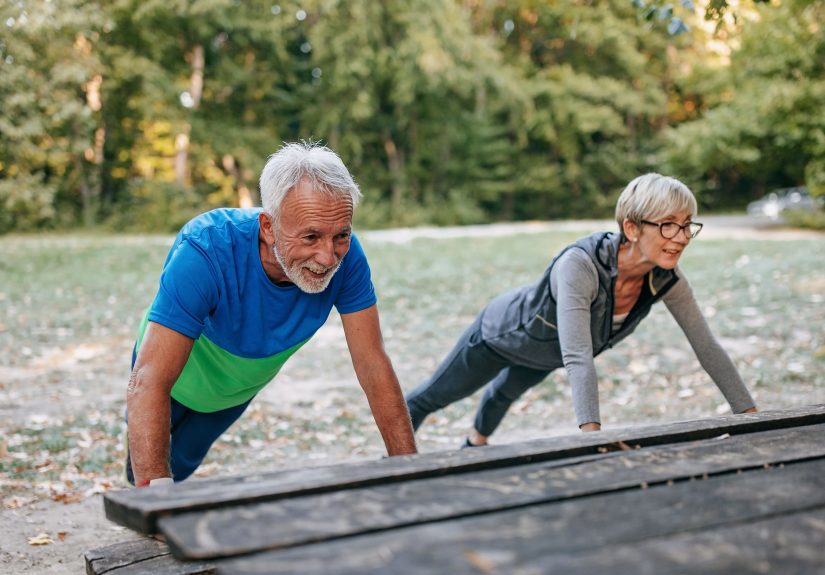
- 6) Incline Plank (counter or wall plank)
- 7) Side Plank (modified) for obliques and hip stability
- 8) Pallof Press (anti-rotation core exercise)
- 9) Suitcase Carry (one-hand carry)
- A simple weekly plan (so you don’t have to “wing it”)
- Common mistakes (and the quick fixes)
- of real-world experiences related to core training for older adults
- Conclusion
- SEO tags (JSON)
If you hear “core workout” and immediately picture punishing sit-ups from middle-school gym class, take a deep breath. (Not the dramatic kindjust a normal, adult, responsibility-filled breath.) A strong core isn’t about getting “six-pack” abs. For older adults, core strength is about staying steady on your feet, protecting your back, standing up tall, and making everyday thingslike carrying groceries or getting out of a chairfeel less like an extreme sport.
The good news: the best core exercises for older adults are usually low-impact, joint-friendly, and surprisingly practical. The better news: you don’t need to do a single full sit-up to get real results. Below are 9 core exercises you can try at home, with clear step-by-step instructions, easy modifications, and simple ways to progress safely.
What “core” really means (hint: it’s not just your abs)
Your core is a team effort, not a solo act. It includes muscles in your abdomen (front and sides), deep stabilizers that wrap around your midsection like a supportive belt, muscles along your spine, your glutes, and even muscles that help control your hips and pelvis. When this team works well, your body moves with more controlespecially during twisting, bending, reaching, walking, and balancing.
That’s why core training for seniors often focuses on stability (holding good posture while moving arms/legs) more than “crunching” your torso over and over.
Safety first: quick rules that make core training feel better
1) Get cleared if you need it
If you have osteoporosis, recent surgery, severe arthritis, dizziness, numbness/tingling, or persistent back pain, check with your healthcare provider or a physical therapist before starting a new routine. It’s not being “careful.” It’s being smart.
2) Keep a “quiet” spine
Most of the exercises below work best when you keep your spine neutralno extreme arching and no pushing your back aggressively into the floor. Think: long spine, ribs stacked over hips.
3) Breathe like a human
Don’t hold your breath. Exhale during the effort, inhale during the easier part. If you catch yourself turning red and bracing like you’re lifting a refrigerator… lighten the intensity.
4) Mild effort is the goal
For most older adults, core exercise should feel like a steady 5–7 out of 10 effortchallenging, but controlled. Stop if you feel sharp pain, dizziness, or pain that shoots down your leg.
The Best Core Exercises for Older Adults: 9 to Try
You can do these 2–4 times per week. Start with 1 set of each, then build toward 2–3 sets as it feels easier. Quality beats quantity every time.
1) Seated March (a.k.a. “core on, legs moving”)
Why it helps: Trains core stability while your hips movevery “real life,” very useful.
How to do it: Sit tall on a sturdy chair, feet flat. Gently tighten your midsection as if you’re zipping up snug jeans. Slowly lift one knee a few inches, lower, then switch. Move like you’re trying not to spill coffee in your lap.
Do: 8–12 marches per side.
Make it easier: Hold the chair seat for support.
Make it harder: Pause 2 seconds at the top of each lift or sit closer to the edge of the chair (safely).
2) Pelvic Tilt (small move, big payoff)
Why it helps: Teaches gentle abdominal engagement and better control of the pelvisgreat if your lower back feels “grumpy.”
How to do it: Lie on your back with knees bent, feet flat. Imagine you’re tipping a bowl of water in your pelvis toward your belly button, lightly flattening your low back. Then return to neutral.
Do: 10–15 slow reps.
Make it easier: Make the movement tinythis is not a drama club audition.
Make it harder: Hold the “tilt” for 3–5 seconds while breathing normally.
3) Glute Bridge (core + hips = stronger everything)
Why it helps: Strengthens glutes and the back side of your core, supporting posture and helping with walking and stairs.
How to do it: On your back with knees bent, feet hip-width apart. Tighten your stomach gently, squeeze your glutes, and lift hips until shoulders–hips–knees form a line. Hold briefly, then lower with control.
Do: 8–12 reps.
Make it easier: Lift only halfway.
Make it harder: Hold at the top for 2–3 breaths or try a slow 3-second lower.
4) Dead Bug (spine-friendly core stability)
Why it helps: Builds deep core control while arms and legs moveoften tolerated well by people who don’t love planks.
How to do it: Lie on your back. Bring knees up so hips and knees are bent (as comfortable). Arms point toward the ceiling. Brace your core gently. Slowly lower one heel toward the floor (or tap it), return, then switch. Keep your back from arching.
Do: 6–10 reps per side.
Make it easier: Only move legs (keep arms still), or limit the range.
Make it harder: Add opposite arm reach with the opposite leg.
5) Bird Dog (Opposite Arm and Leg Raise)
Why it helps: Challenges balance and core stability while strengthening muscles that support the spine and hips.
How to do it: Start on hands and knees, hands under shoulders, knees under hips. Brace gently. Reach one arm forward while extending the opposite leg back. Keep hips level (no twisting). Hold briefly, then return and switch sides.
Do: 6–10 reps per side.
Make it easier: Extend only the arm or only the leg.
Make it harder: Hold each rep for 3 slow breaths.
6) Incline Plank (counter or wall plank)
Why it helps: Trains full-body core stiffness (in a good way) with less strain than floor planks.
How to do it: Place hands on a sturdy counter, heavy table, or wall. Step feet back until your body forms a straight line from head to heels. Gently squeeze glutes and brace your core. Don’t let your low back sag.
Do: Hold 10–30 seconds, 2–4 times.
Make it easier: Use a wall (more upright).
Make it harder: Use a lower surface (more horizontal) or add a slow shoulder tap.
7) Side Plank (modified) for obliques and hip stability
Why it helps: Strengthens side-body muscles that help prevent “wobbling” and supports spine and hip alignment.
How to do it: Try a wall side plank first: stand sideways to a wall, forearm on the wall, elbow under shoulder. Step feet slightly away and brace, keeping your body in a straight line. Hold.
Do: Hold 10–20 seconds per side, 2–3 rounds.
Make it easier: Stand closer to the wall.
Make it harder: Progress to a side plank on the floor with knees bent (if comfortable).
8) Pallof Press (anti-rotation core exercise)
Why it helps: Trains your core to resist twistinguseful for carrying, turning, and everyday movements that challenge balance.
How to do it: Attach a resistance band to something sturdy at chest height. Stand sideways to the anchor, hold band at your chest with both hands. Brace your core and press hands straight out, resisting rotation. Return slowly.
Do: 8–12 reps per side.
Make it easier: Use a lighter band or stand closer to the anchor.
Make it harder: Pause 2 seconds with arms extended.
9) Suitcase Carry (one-hand carry)
Why it helps: A functional core stability move that trains posture, balance, and anti-lean strength (plus grip, which matters a lot for day-to-day tasks).
How to do it: Hold a light-to-moderate weight in one hand (dumbbell, kettlebell, or even a shopping bag with a few items). Stand tallno leaning to the side. Walk slowly for 20–40 steps, then switch hands.
Do: 2–3 carries per side.
Make it easier: Use a lighter weight and shorter distance.
Make it harder: Increase distance or slow your pace while staying perfectly upright.
A simple weekly plan (so you don’t have to “wing it”)
Try this routine 3 days per week on non-consecutive days:
- Seated March: 1–2 sets of 10 per side
- Pelvic Tilt: 1–2 sets of 12
- Glute Bridge: 1–2 sets of 10
- Bird Dog: 1–2 sets of 8 per side
- Incline Plank: 2 holds of 15–30 seconds
On a different day, add:
- Dead Bug: 1–2 sets of 8 per side
- Side Plank (wall): 2 holds of 10–20 seconds per side
- Pallof Press: 1–2 sets of 10 per side
- Suitcase Carry: 2 short walks per side
If that looks like a lot, pick 4–5 moves and rotate them. Consistency beats perfection. Always.
Common mistakes (and the quick fixes)
Going too hard, too soon
If your form falls apart by rep three, it’s not “working.” It’s negotiating. Reduce the range of motion, shorten holds, or use an incline/wall version.
Holding your breath
If you can’t breathe normally, your body is telling you it’s too intense. Exhale and scale back.
Rushing
Slow, controlled reps train stability better than speed. Think “smooth and steady,” not “fast and furious.”
of real-world experiences related to core training for older adults
Here’s something people don’t always expect: when older adults start doing core exercises, the first “results” often show up in ordinary moments, not in the mirror. Many people describe noticing small winslike feeling steadier when putting on shoes, less wobbly when stepping off a curb, or more confident carrying a bag of groceries without automatically hunching their shoulders.
A common early experience is realizing how much the core works during “simple” movements. For example, in the seated march, plenty of folks start out thinking, “This is easy.” Then they try to keep their chest tall and avoid leaning backsuddenly their midsection is awake and filing a formal complaint. That’s actually a good sign: your body is learning to stabilize while your hips move, which is exactly what you do when you walk, climb stairs, and get in and out of cars.
Another pattern many older adults report is that bridges feel weird at firstnot painful, just unfamiliar. People often discover their hamstrings want to do all the work, while the glutes try to “take the day off.” The fix is usually simple: place feet a bit closer to the body, squeeze glutes first, and lift only as high as you can while keeping control. After a couple of weeks, it’s common to feel bridges more in the hips (where you want it) and less in the low back (where you don’t).
Plank-style exercises come with a confidence curve. Many older adults prefer an incline plank because it feels more secure than getting down on the floor. At the beginning, even a 10-second hold can feel like a long timelike waiting for a microwave to finish when you’re hungry. But with steady practice, people frequently notice they can hold longer without shoulder tension, and their posture looks “taller” during the day. That posture shift is a big deal: it can make walking easier and help reduce that tired, collapsed feeling that shows up after errands.
Then there are the “coordination” exercisesbird dogs and dead bugs. These are famous for exposing sneaky habits like twisting, rushing, or holding the breath. Many people find it helpful to slow down, use smaller movements, and treat each rep like practice, not punishment. Over time, the experience often changes from “I’m trying not to tip over” to “I can control this,” which is exactly the kind of body confidence that supports independence.
Finally, the suitcase carry tends to deliver a very honest message: if the weight pulls you sideways, your core has work to do. A lot of older adults describe this as the most “real-life” exercise of the bunchbecause it resembles carrying groceries, a small suitcase, or a heavy purse. When it clicks, people often notice they’re less likely to lean or shuffle when carrying something heavy. That’s a practical win you can use immediatelyno gym required, no motivational quote posters necessary.







 Close
Close