
Table of Contents >> Show >> Hide
- Quick Picks: The Best Corded Drills of 2025 at a Glance
- Best Corded Drills of 2025: Detailed Reviews
- Best Overall: DEWALT DWD115K (3/8" VSR Mid-Handle Drill)
- Best Heavy-Duty: DEWALT DWD210G (1/2" VSR Pistol Grip Drill)
- Best Corded Hammer Drill: DEWALT DWD520 (1/2" VSR Hammer Drill)
- Best for Mixing: Bosch GBM9-16 (5/8" Drill/Mixer Style)
- Best Budget: BLACK+DECKER DR260C (3/8" Corded Drill/Driver)
- Best Value Starter Kit: RYOBI D43K (Variable Speed Drill)
- Best All-Around Hammer Option: Makita HP1641K (5/8" Hammer Drill)
- Best for Serious Concrete: Bosch 11255VSR Rotary Hammer (SDS-plus)
- How to Choose a Corded Drill in 2025
- Corded vs. Cordless: When the Cord Wins
- Practical Tips: Get Better Results (and Fewer “Oops” Moments)
- Safety and Maintenance (The “Keep Your Drill Alive” Section)
- of Real-World Experience With Corded Drills in 2025
Cordless tools get all the hype. They’re convenient, they’re powerful, and they make you feel like a DIY superhero
who can drill holes while riding a unicycle (please don’t). But in 2025, corded drills are still the quiet MVPs of
garages, workshops, and job sitesbecause the wall outlet never “needs 40 minutes to cool down before charging.”
A great corded drill gives you consistent power, unlimited runtime, and less long-term cost than a battery ecosystem
(especially if you only drill occasionally). They’re also hard to beat for demanding tasks like big hole saws, mixing
mud or thinset, drilling repeated holes in metal, and hammer-drilling into masonry. In this guide, we’ll break down
the best corded drills of 2025, who each one is for, what to look for, and how to avoid the classic “why is my drill
smoking?” moment.
Quick Picks: The Best Corded Drills of 2025 at a Glance
Below is a practical shortlist based on a blend of real-world usability, published testing roundups, and manufacturer
specsso you can match a drill to the kind of work you actually do (not the kind you imagine doing after watching one
home-reno show).
| Category | Top Pick | Why It’s Here | Best For |
|---|---|---|---|
| Best Overall | DEWALT DWD115K (3/8″) | Strong balance of speed, comfort, and everyday versatility | Home projects, metal/wood drilling, general use |
| Best Heavy-Duty | DEWALT DWD210G (1/2″) | High power, serious build, great for bigger bits and tougher jobs | Large holes, repeated drilling, demanding work |
| Best Corded Hammer Drill | DEWALT DWD520 (1/2″) | Drill + hammer modes, 2 speeds, strong for masonry anchors | Concrete/brick, Tapcon-style anchors, mixed materials |
| Best for Mixing | Bosch GBM9-16 (5/8″) | Low-speed, high-torque style that behaves like a mixer | Thinset, paint, mud, mortar, heavy mixing |
| Best Budget | BLACK+DECKER DR260C (3/8″) | Simple, affordable, and gets basic jobs done | Light DIY, occasional drilling, small repairs |
| Best Value Starter Kit | RYOBI D43K (3/8″) | Friendly price, practical features, homeowner-focused | New DIYers, small projects, around-the-house use |
| Best All-Around Hammer Option | Makita HP1641K (5/8″) | Solid hammer performance in a lighter package | Masonry drilling plus wood/metal versatility |
| Best for Serious Concrete (Different Tool Class) | Bosch 11255VSR Rotary Hammer (SDS-plus) | Rotary hammers crush masonry work that makes standard drills miserable | Concrete drilling day after day, bigger anchor holes |
Best Corded Drills of 2025: Detailed Reviews
Best Overall: DEWALT DWD115K (3/8″ VSR Mid-Handle Drill)
If you want a corded drill that feels like it was designed by someone who has actually drilled more than two holes,
the DEWALT DWD115K is a standout. It’s powered for real work with an 8-amp motor and reaches up to 2,500 RPM, which
is a sweet spot for common drilling and fastening tasks. The 3/8″ ratcheting keyless chuck is convenient, and the
mid-handle layout can feel steadier than a typical pistol gripespecially when you’re pushing into metal or driving
big fasteners.
- What you’ll love: fast enough for clean holes; strong motor; easy keyless chuck.
- Best for: homeowners, DIYers, and anyone who wants one corded drill that covers most needs.
- Watch-outs: 3/8″ chuck limits some larger bits compared with 1/2″ models.
Best Heavy-Duty: DEWALT DWD210G (1/2″ VSR Pistol Grip Drill)
When you step up to heavy-duty drilling, the drill’s “attitude” matters. The DWD210G brings a 10-amp motor and a 1/2″
keyed chuckmeaning it’s comfortable with bigger bits and the kind of torque that makes lightweight drills tap out.
It’s built for jobsite durability with features like a metal gear housing and a 360-degree side handle for control.
Manufacturer specs also highlight drilling capacity ranges for common bit types (spade bits, augers, hole saws),
which is exactly what you want when you’re not guessingyou’re working.
- What you’ll love: strong motor; 1/2″ keyed chuck grips big bits; side handle helps tame torque.
- Best for: repetitive drilling, larger diameter holes, tougher wood/metal jobs.
- Watch-outs: bigger drills can be tiring overhead; a keyed chuck is secure but slower to swap bits.
Best Corded Hammer Drill: DEWALT DWD520 (1/2″ VSR Hammer Drill)
If you drill into brick, block, or concrete even a few times a year, a hammer drill can save your sanity. The DWD520
pairs a 10-amp motor with dual-mode operation (drill/hammer drill) and a two-speed range (up to 0–1,200 or 0–3,500
RPM). It’s designed for masonry work like installing concrete screw anchors, while still being useful in wood and
steel. Think of it as the “I do what I want” drill: wood today, brick tomorrow, metal Fridaywithout acting dramatic.
- What you’ll love: hammer mode for masonry; 2 speeds; side handle and depth rod for cleaner anchor holes.
- Best for: homeowner masonry projects, light-to-moderate concrete anchoring, mixed-material jobs.
- Watch-outs: for lots of concrete holes, a rotary hammer is faster and less exhausting.
Best for Mixing: Bosch GBM9-16 (5/8″ Drill/Mixer Style)
Mixing is where many “normal” drills go to make bad life choices. High-speed drills can whip thinset into a dusty
tornado or overheat when mixing heavy material. The Bosch GBM9-16 is often recommended because it’s built around a
low-speed, high-torque approach that behaves more like a mixer. It’s a smart pick if your “drilling” routinely
includes paint, drywall mud, mortar, or tile adhesivebecause your wrists deserve happiness too.
- What you’ll love: calmer, controlled mixing; sturdy chuck capacity; good for thick material.
- Best for: tile work, drywall finishing, mixing compound, heavy-duty stirring tasks.
- Watch-outs: not the fastest for small drill-bit work; it’s a specialist with strong opinions.
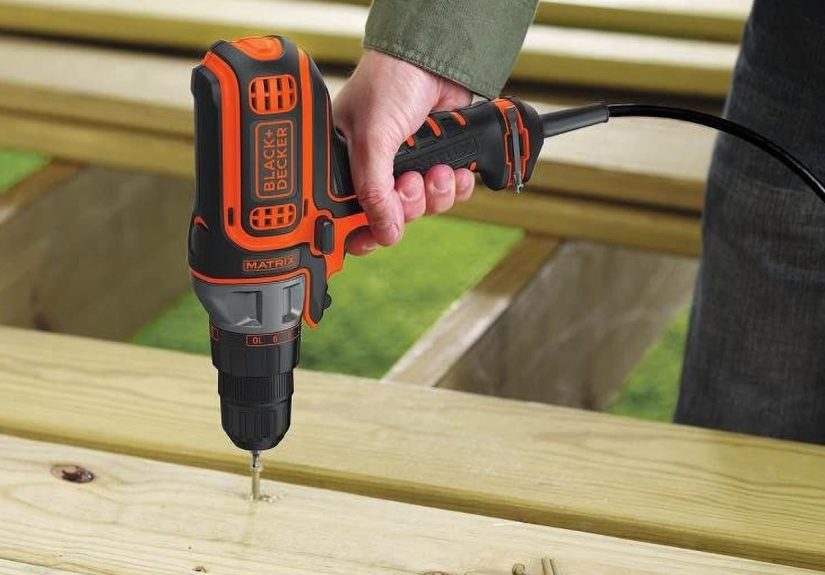
Best Budget: BLACK+DECKER DR260C (3/8″ Corded Drill/Driver)
Not everyone needs a drill that could survive a volcano. If your typical job is hanging curtain rods, assembling
furniture, drilling pilot holes, or doing quick repairs, the BLACK+DECKER DR260C is a straightforward budget-friendly
choice. It keeps things simple: corded power, homeowner features, and no pressure to “join an entire battery platform
like it’s a streaming subscription.”
- What you’ll love: affordable; easy for beginners; perfect for light DIY tasks.
- Best for: apartments, dorm move-ins, quick fixes, starter tool kits.
- Watch-outs: not ideal for large hole saws, thick steel, or masonry drilling marathons.
Best Value Starter Kit: RYOBI D43K (Variable Speed Drill)
RYOBI’s D43K is a friendly “first corded drill” option. It includes a 3/8″ keyless chuck for convenience and comes
with a cord and bag, which is exactly the kind of small practical detail that makes a tool feel easier to own. For
casual DIY and home maintenance, it’s a capable pick that keeps the learning curve low and the project momentum high.
- What you’ll love: simple to operate; keyless chuck; homeowner-focused package.
- Best for: new DIYers, renters, light drilling and fastening projects.
- Watch-outs: if you’re regularly drilling large holes or mixing heavy material, step up in power.
Best All-Around Hammer Option: Makita HP1641K (5/8″ Hammer Drill)
If you want a hammer drill that’s versatile without feeling like a cinder block with a trigger, the Makita HP1641K is
a popular pick. It’s commonly listed with a 6-amp motor, up to 2,800 RPM, and up to 44,800 BPM, with a two-mode setup
(rotation only or hammering with rotation). That makes it useful for drilling in wood and metal, while still giving
you the hammer action needed for masonry work like block and brick.
- What you’ll love: great “do-it-all” hammer drill behavior; solid speed range; practical for mixed jobs.
- Best for: homeowners who want one drill for wood/metal plus periodic masonry drilling.
- Watch-outs: still not the same as an SDS rotary hammer for heavy concrete drilling.
Best for Serious Concrete: Bosch 11255VSR Rotary Hammer (SDS-plus)
Let’s be honest: standard hammer drills can drill into concrete, but they can also make you question your life choices.
If you’re doing repeated concrete drilling (anchors, fasteners, mounting, remodel work), consider a rotary hammer.
The Bosch 11255VSR is an SDS-plus rotary hammer that’s widely used for masonry, designed to drill faster and with less
user fatigue than a conventional hammer drill. It’s not “just another drill,” but it often belongs in the same buying
conversation because it solves the concrete problem the right way.
- What you’ll love: dramatically easier concrete drilling; better performance on tough masonry.
- Best for: frequent concrete anchors, serious masonry work, renovation tasks involving block or slab.
- Watch-outs: SDS bits are different from standard drill bits; it’s purpose-built, not a general drill/driver.
How to Choose a Corded Drill in 2025
1) Power: Amps Matter (But So Does Design)
Corded drills are usually discussed in amps. More amps generally means more capacity for demanding jobs, but motor
design and gearing also play a role. As a simple guideline: light-duty homeowner drills often live around the 5–6 amp
range, while heavy-duty models push 8–10 amps. If you plan to drill larger holes (spade bits, hole saws) or mix thick
materials, leaning toward the higher end is usually worth it.
2) Chuck Size: 3/8″ vs. 1/2″ (Plus Keyless vs. Keyed)
A 3/8″ chuck is common for everyday drilling and driving. A 1/2″ chuck opens the door to larger shank bits and
heavier-duty accessories. Keyless chucks are faster and convenient; keyed chucks can grip very securelyhelpful when
you’re pushing big bits hard and don’t want slip.
3) Speed Range: Match RPM to Material
High RPM can be great for smaller bits in wood or metal, while lower RPM is safer and more effective for larger bits,
hole saws, and mixing. If you drill metal regularly, you’ll appreciate a trigger that gives you fine speed control
and a drill that doesn’t “jump” the moment it touches the work.
4) Ergonomics: Side Handles Aren’t Just Decoration
High-torque drills can twist hard when a bit binds. A side handle (or a more stable handle design) helps you control
the tool and reduces wrist strain. If your drill comes with a side handle and you ignore it, the drill may eventually
teach you a lessondirectly into your forearm.
5) Hammer Drill vs. Rotary Hammer: Know the Difference
Hammer drills are great for occasional masonry work and concrete anchors. Rotary hammers (SDS-plus) are for frequent
or tougher concrete drilling. If you’re doing a couple of small holes in brick, a hammer drill is fine. If you’re
drilling dozens of holes in concrete, a rotary hammer is a kindness to your shoulders.
Corded vs. Cordless: When the Cord Wins
Cordless tools are fantasticuntil you hit a long session or a high-load task. Corded drills shine when:
- You need consistent power for long periods (no battery fade).
- You do heavy drilling with larger bits or hole saws.
- You do mixing (mud, thinset, compound) that can roast lighter drills.
- You want a tool that’s ready anytime without maintaining batteries.
- You want value and don’t need the portability of cordless.
Practical Tips: Get Better Results (and Fewer “Oops” Moments)
Use the Right Bit for the Job
Bits matter as much as drills. Dull bits increase heat, reduce control, and make the drill work harder. For metal,
use quality twist bits and start with a smaller pilot hole. For masonry, use proper masonry bits and let the tool do
the workforcing it usually makes everything worse.
Match Speed to Bit Size
Big bits want slower speeds and steady pressure. Small bits can run faster. If you’ve ever watched a hole saw smoke,
you’ve already met this ruleprobably while yelling, “Why does it smell like regret?”
Clamp Your Work
Clamping isn’t just for perfectionists. It keeps the work stable and helps prevent binding, bit breakage, and ugly
holes. Your hands are not clamps. Your hands are valuable.
Safety and Maintenance (The “Keep Your Drill Alive” Section)
- Check the cord: Look for cuts, cracks, or loose strain relief before you start.
- Use GFCI protection in garages, basements, outdoors, and anywhere moisture is a possibility.
- Wear eye protection: Drilling throws chips and dustno one wants a souvenir in their eyelid.
- Mind the bind: If the bit catches, release the trigger and reset your stance and grip.
- Keep it clean: Blow out vents (gently) and keep the chuck free of debris for better bit retention.
of Real-World Experience With Corded Drills in 2025
The best thing about corded drills is also the most annoying thing about corded drills: the cord. It’s a constant
reminder that you are, in fact, living indoors near electricity like a modern person. But once you accept that the
cord will occasionally snag on a sawhorse like it’s auditioning for a slapstick comedy, corded drills become
ridiculously dependable.
One of the clearest “corded wins” moments happens during long, repetitive worklike drilling a line of holes for
shelf pins, predrilling for deck screws, or building storage racks. With cordless tools, you can feel the power fade
as the battery drops, especially under load. A corded drill just stays the same: pull the trigger, get consistent
speed, repeat. That consistency makes it easier to control the bit, avoid tear-out, and keep holes cleanerespecially
when you’re drilling into hardwood or metal where precision matters.
Corded drills also feel calmer when you step up bit size. For example, drilling a 2-inch hole saw through plywood for
a cable pass-through can make smaller drills struggle, heat up, or bog down. With a heavier corded drill, you can run
at a controlled speed and let the tool’s torque do the work. The side handle becomes your best friend here. It’s not
just “extra plastic”it’s what keeps the drill from twisting when the hole saw catches. If you’ve ever had a drill
try to rotate your entire body like a human compass, you understand why that handle is sacred.
Mixing is where corded drills earn a standing ovation. If you’ve ever tried to mix thinset with a general-purpose
drill at high speed, you know the outcome: a bucket of material that looks like it survived a blender, plus a cloud
of dust that settles on everything you own. A drill built for lower-speed, higher-torque mixing makes the job feel
controlled instead of chaotic. You can start slow, avoid splashing, and keep the material workable. Better mix, less
mess, fewer “why is the kitchen floor crunchy?” mysteries later.
And then there’s masonry: the project category where corded tools remind you they’re not here to play. A hammer drill
is great for occasional holes in brick or blockmounting a hose reel, installing a gate latch, hanging an exterior
light. But if you’re drilling concrete anchors for a series of brackets or mounting a heavy shelf system on a block
wall, you’ll feel the difference between “hammer drill” and “rotary hammer” fast. A rotary hammer doesn’t just make
the job quicker; it makes it less exhausting. That’s not lazinessit’s tool wisdom. Your shoulders will thank you,
and your holes will come out straighter because you’re not fighting the tool.
The big takeaway from real projects is simple: corded drills aren’t trendy, but they’re steady. They’re the tools you
reach for when you want predictable power, long runtime, and fewer interruptions. In 2025, the smartest toolbox isn’t
“corded or cordless.” It’s bothbecause sometimes you want freedom, and sometimes you want a drill that just shows up,
does the job, and doesn’t ask you where you left the charger.





 Close
Close