
Table of Contents >> Show >> Hide
- How We Chose the Best Comic Book Villain Performances
- The 25 Best Comic Book Villain Movie Performances
- Heath Ledger as the Joker – The Dark Knight (2008)
- Ian McKellen as Magneto – X-Men Series (2000–2014)
- Tom Hiddleston as Loki – Marvel Cinematic Universe (2011–2019)
- Willem Dafoe as Green Goblin – Spider-Man (2002)
- Josh Brolin as Thanos – Avengers: Infinity War & Endgame (2018–2019)
- Alfred Molina as Doctor Octopus – Spider-Man 2 (2004)
- Michael Fassbender as Magneto – X-Men: First Class and Sequels (2011–2019)
- Jack Nicholson as the Joker – Batman (1989)
- Danny DeVito as the Penguin – Batman Returns (1992)
- Aaron Eckhart as Two-Face – The Dark Knight (2008)
- Margot Robbie as Harley Quinn – DCEU Films (2016–2020)
- Cillian Murphy as Scarecrow – Batman Begins and the Dark Knight Trilogy
- Michael Keaton as the Vulture – Spider-Man: Homecoming (2017)
- Cate Blanchett as Hela – Thor: Ragnarok (2017)
- Michael B. Jordan as Erik Killmonger – Black Panther (2018)
- James Spader as Ultron – Avengers: Age of Ultron (2015)
- Liam Neeson as Ra’s al Ghul – Batman Begins (2005)
- Peter Stormare as Satan – Constantine (2005)
- Joaquin Phoenix as the Joker – Joker (2019)
- Andy Serkis as Ulysses Klaue – Avengers: Age of Ultron & Black Panther
- Jeff Bridges as Obadiah Stane – Iron Man (2008)
- Terence Stamp as General Zod – Superman & Superman II
- Matthew Goode as Adrian Veidt / Ozymandias – Watchmen (2009)
- Gene Hackman as Lex Luthor – Superman Series (1978–1987)
- Stephen Dorff as Deacon Frost – Blade (1998)
- Why Great Villains Matter in Comic Book Movies
- Experiences and Takeaways From Watching These Villain Performances
- Final Thoughts
Superheroes may get their names on the posters, but let’s be honest: it’s the villains who walk away with the movie.
From purple space warlords to cackling clowns in smeared lipstick, the best comic book movie villain performances are
the ones that hijack the story, stick in your brain, and make you secretly root for chaosjust a little.
This list of the 25 best comic book villain movie performances of all time pulls together fan rankings, critic roundups,
and industry commentary from major entertainment outlets across the United States. Instead of just ranking “who would win
in a fight,” we’re focusing on acting: nuance, presence, impact on the genre, and how completely the performer disappears
into the role.
How We Chose the Best Comic Book Villain Performances
To build this lineup, we looked at:
- Critical acclaim and awards – Oscar wins and nominations, critic lists, and long-term reputation.
- Fan reception – audience rankings, polls, and the way certain villains dominate online conversation years later.
- Influence on the genre – did this villain change how superhero movies are written, shot, or marketed?
- Rewatch value – if you put the movie on “just to watch the villain scenes,” that’s a big plus.
With that in mind, here are the 25 greatest comic book villain movie performances ever to grace the big screen.
The 25 Best Comic Book Villain Movie Performances
-
Heath Ledger as the Joker – The Dark Knight (2008)
Ledger’s Joker isn’t just a standout comic book villain performance; it’s one of the most celebrated screen
performances of the 21st century, full stop. His anarchic, unpredictable take transformed the Joker from a colorful
prankster into a terrifying force of nature. Every scene feels dangerous, like the movie itself might veer off the
rails at any moment. The posthumous Oscar for Best Supporting Actor only confirmed what audiences already knew: this
was a once-in-a-generation villain. -
Ian McKellen as Magneto – X-Men Series (2000–2014)
McKellen brings Shakespearean gravitas to Erik Lehnsherr, turning a comic book bad guy into a tragic revolutionary.
His Magneto isn’t evil for the sake of it; he’s a Holocaust survivor who refuses to see history repeat itself. The
moral complexityoften making his arguments disturbingly reasonablehelped set the template for sympathetic
superhero villains in the 2000s and beyond. -
Tom Hiddleston as Loki – Marvel Cinematic Universe (2011–2019)
Loki is proof that charisma is a superpower. Hiddleston plays him as part Shakespearean trickster, part petty
little brother, and part wounded child desperate for approval. Across multiple films, Loki slides from villain to
antihero to reluctant ally, all without losing his flair for mischief. It’s no accident he’s the rare villain who
earned his own TV series and a massive fanbase. -
Willem Dafoe as Green Goblin – Spider-Man (2002)
Dafoe’s Norman Osborn is a one-man acting masterclass in duality. One minute he’s a brilliant, wounded industrialist;
the next, he’s cackling behind a mask, taunting Spider-Man from his glider. Even under a rigid helmet, Dafoe uses his
voice and physicality to sell every unhinged moment. His return decades later only confirmed how definitive his
Green Goblin really is. -
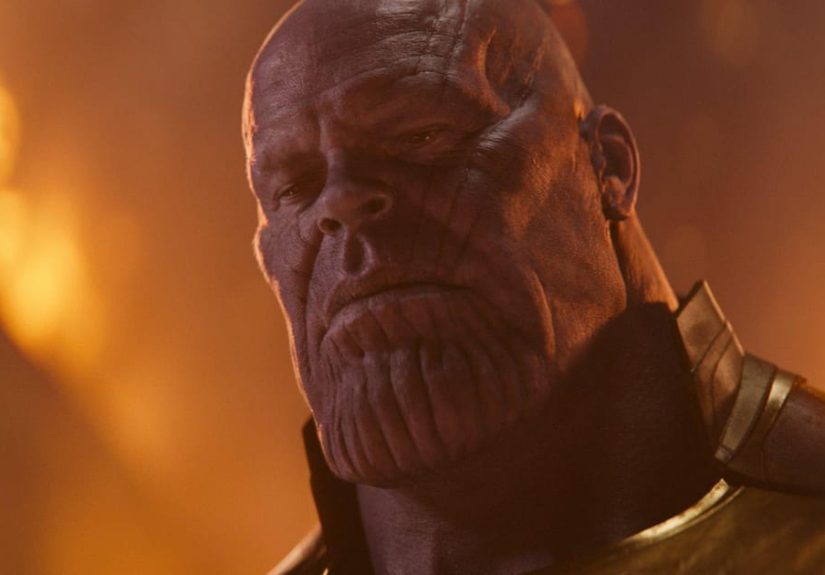
Josh Brolin as Thanos – Avengers: Infinity War & Endgame (2018–2019)
Brolin turns what could have been a generic CGI bruiser into a chillingly calm ideologue. Thanos genuinely believes
he’s saving the universe, and that conviction radiates through every quiet stare and measured line delivery. The
motion-capture performance captures subtle expressionsgrief, satisfaction, even a twisted tendernessthat make the
Mad Titan feel alarmingly real. -
Alfred Molina as Doctor Octopus – Spider-Man 2 (2004)
Molina’s Otto Octavius starts as a kind, slightly eccentric scientist and mentor before tragedy turns him into Doc Ock.
The performance works because he never loses the human being inside the monster. Even while tossing cars and climbing
skyscrapers with four murderous metal arms, his scenes are threaded with regret and wounded pride, making his eventual
redemption land beautifully. -
Michael Fassbender as Magneto – X-Men: First Class and Sequels (2011–2019)
Fassbender picks up the Magneto torch and runs with it, emphasizing Erik’s anger, trauma, and raw intensity. His
scenes hunting Nazis or wrestling with Xavier’s idealism feel like they’re from a serious historical drama that
just happens to feature telepaths and mutants. It’s a younger, more volatile Magneto, and it fits perfectly with the
prequel era. -
Jack Nicholson as the Joker – Batman (1989)
Before Ledger redefined the Joker, Nicholson set the bar. His version is gleefully theatricalequal parts mobster,
prankster, and horror villain. With that permanent grin and maniacal laugh, he dominates Tim Burton’s gothic Gotham.
Decades later, lines from his Joker still get quoted, proving just how deeply he imprinted on pop culture. -
Danny DeVito as the Penguin – Batman Returns (1992)
DeVito’s Oswald Cobblepot is grotesque, tragic, and weirdly tragicomic. Wrapped in Tim Burton’s dark fairy-tale
visuals, the Penguin becomes a symbol of abandonment and resentment. DeVito leans fully into the physicality of the
rolewaddling, snarling, and chewing scenery while still finding the sad little boy underneath the monster. -
Aaron Eckhart as Two-Face – The Dark Knight (2008)
Eckhart has one of the toughest tasks in the film: sell Harvey Dent as Gotham’s shining white knight and
make his fall into Two-Face feel horrifying but believable. He nails both. You feel the idealism, the romance, then
the grief and rage as the Joker systematically breaks him. By the time he’s flipping his coin with murder in his eyes,
the tragedy hits hard. -
Margot Robbie as Harley Quinn – DCEU Films (2016–2020)
Robbie’s Harley Quinn might be an antihero as often as a villain, but the performance is undeniably iconic. She brings
chaotic energy, physical comedy, and flashes of very real vulnerability. Whether she’s swinging a bat, breaking the
fourth wall, or walking away from an explosion in glitter and pigtails, Robbie makes Harley feel like a fully realized
person, not just a sidekick in hot pants. -
Cillian Murphy as Scarecrow – Batman Begins and the Dark Knight Trilogy
Murphy’s Dr. Jonathan Crane is unsettling precisely because he’s unassuming at first. Soft-spoken, clinical, and just a
little too interested in fear toxins, he morphs into Scarecrow with a simple burlap mask and a switch in mannerisms.
Even in brief later appearances, he feels like a lingering infection in Gotham’s bloodstream. -
Michael Keaton as the Vulture – Spider-Man: Homecoming (2017)
Keaton brings blue-collar resentment and real-world frustration to Adrian Toomes. He’s not trying to conquer the world;
he just wants to keep his family afloat after getting squeezed out by bigger forces. That grounded motivation, combined
with Keaton’s menacing calmespecially in that car scenemakes the Vulture feel uncomfortably plausible. -
Cate Blanchett as Hela – Thor: Ragnarok (2017)
Blanchett treats the Goddess of Death like a glam-rock apocalypse. From the moment she casually crushes Mjolnir, she
radiates effortless superiority. The arched eyebrows, purring line delivery, and casual slaughter of Asgard’s armies
create a villain who’s both hilarious and legitimately terrifyinga perfect fit for Taika Waititi’s wild tone. -
Michael B. Jordan as Erik Killmonger – Black Panther (2018)
Killmonger is one of the few comic book villains whose central argument is so strong it permanently changes the hero’s
worldview. Jordan plays him with coiled fury and heartbreaking clarity. His pain over abandonment and injustice shapes
every brutal choice he makes, giving the film its emotional and political spine. When he delivers his final line, it
lands like a gut punch. -
James Spader as Ultron – Avengers: Age of Ultron (2015)
Spader’s voice work and motion-capture performance give Ultron a sly, sardonic personalitya nightmare AI with dad
jokes and deep-seated resentment. He glides from casual banter to sudden violence in a way that keeps both the Avengers
and the audience on edge, making the idea of a robot uprising feel disturbingly personal. -
Liam Neeson as Ra’s al Ghul – Batman Begins (2005)
Neeson’s dignified gravitas is perfectly suited to Ra’s al Ghul, the mentor-turned-terrorist who wants to “save”
civilization by burning it down. He sells the philosophy behind the League of Shadows so convincingly that Bruce’s
refusal becomes a moral declaration, not just a plot point. It’s a performance that helped ground Nolan’s Gotham in a
(slightly) more realistic world. -
Peter Stormare as Satan – Constantine (2005)
Stormare is on screen for just a few minutes, but he steals the movie. His Lucifer is both repulsive and oddly playful,
showing up barefoot in a white suit spattered with tar. The lazy, amused cruelty in his performance makes it clear that
for this Devil, torment is a hobby, not a job requirement. -
Joaquin Phoenix as the Joker – Joker (2019)
Phoenix’s Arthur Fleck is less a traditional comic book villain and more a slow-motion psychological implosion. The
performance is physically committedthose contorted dances and starved, angular posesand emotionally raw. By the time
Arthur fully becomes the Joker, it feels both inevitable and horrifying, which is exactly the point. -
Andy Serkis as Ulysses Klaue – Avengers: Age of Ultron & Black Panther
Serkis turns what could have been a throwaway arms dealer into a wild-card scene-stealer. His Klaue is gleefully
unpredictable, swinging from goofy asides to sudden bursts of cruelty. It’s a perfect example of how a committed
performance can turn a minor villain into a fan favorite. -
Jeff Bridges as Obadiah Stane – Iron Man (2008)
In the very first MCU movie, Bridges sets the tone for corporate-style villainy. He starts as Tony Stark’s affable
business partner and mentor before letting the mask slip to reveal jealousy, greed, and a willingness to kill for
control. The shift from friendly boardroom banter to iron-suited rage feels shockingly believable. -
Terence Stamp as General Zod – Superman & Superman II
Stamp’s Zod is pure authoritarian arrogance. Cloaked in black and armed with that famous command“Kneel before Zod!”he
brings operatic menace to the early era of superhero cinema. His performance helped define what a superpowered tyrant
should feel like: regal, ruthless, and absolutely convinced of his own superiority. -
Matthew Goode as Adrian Veidt / Ozymandias – Watchmen (2009)
Goode plays Veidt as a disturbingly calm genius who has thought everything through, including mass murder. He presents
himself as the world’s smartest hero, but every polite smile hides the fact that he’s already decided who lives and who
dies. The performance captures the book’s uneasy question: what if the villain can make a terrifyingly logical case? -
Gene Hackman as Lex Luthor – Superman Series (1978–1987)
Hackman’s Luthor is a blend of camp and genuine threatpart con man, part mad genius. In the more earnest world of the
Christopher Reeve films, he brings sharp timing, ego, and delight in his own schemes. He made Lex Luthor into the
definitive “evil mastermind” for an entire generation of moviegoers. -
Stephen Dorff as Deacon Frost – Blade (1998)
Before the modern superhero boom, Dorff’s sleek, ambitious vampire in Blade showed how much fun a villain could
be. His Deacon Frost is young, hungry, and dangerously impatient with the old order. Dorff plays him with smirking
confidence, giving the film a stylish, club-lit antagonist who perfectly matches Wesley Snipes’ intensity.
Why Great Villains Matter in Comic Book Movies
A superhero story is only as good as the obstacle standing in the hero’s way. The best comic book villain movie performances
do more than cause trouble; they force heroes to question their beliefs, push their limits, or confront their own darkness.
Think about how Batman changes in response to the Joker, or how T’Challa rethinks Wakanda’s isolation because of Killmonger.
These villains don’t just “lose” at the endthey leave a mark that permanently reshapes the world of the film.
On top of that, great villain performances often become the cultural shorthand for the entire movie. Mention
The Dark Knight, and most people immediately picture Ledger’s Joker. Say “Green Goblin,” and Dafoe’s grin comes
to mind before any comic panel does. That kind of dominance is why casting and writing for villains has become such a high
priority in modern superhero franchises.
Experiences and Takeaways From Watching These Villain Performances
For a lot of movie fans, these performances aren’t just “good acting”they’re milestones in how we experienced comic book
stories growing up. Many people remember the exact moment they first watched Ledger’s Joker do his pencil “magic trick” in
a packed theater, feeling the entire audience recoil and then nervously laugh. It was one of those scenes that made you
think, “Oh, this isn’t just a superhero movie. This is something darker and sharper.”
The same goes for seeing Thanos snap his fingers for the first time. In crowded cinemas around the world, there was this
stunned silence as heroes crumbled into dust. You could hear people whispering, “They didn’t just do that, did they?” Brolin’s
calm expression as half the universe disappears captures something uniquely unsettlinga villain who truly believes he has
done the right thing, even as audiences are trying to process what they just saw.
On the more personal side, a lot of viewers connected with villains who carried real emotional wounds. Killmonger’s anger
and sense of abandonment hit differently for people who have felt excluded or overlooked. His final scene, staring at the
Wakandan sunset he was denied as a child, has sparked countless discussions about representation, colonialism, and what
justice looks like. It’s not just a “cool villain moment”; it’s a scene that encourages people to talk about real-world
issues long after the credits roll.
Then there’s the pure theatrical joy of performances like Blanchett’s Hela or Dafoe’s Green Goblin. These are the roles that
make fans rewatch entire films just to savor the villain’s entrance, speeches, and fights. People quote their lines with
friends, share GIFs, and debate who chewed the scenery in the most delightful way. In that sense, the best comic book
villains become a kind of shared language among fansshortcuts to a specific feeling or memory.
And some of these performances evolve as viewers grow older. A kid might watch Batman Returns and just think the
Penguin is gross and scary. As an adult, that same viewer might notice the loneliness behind his rage. Similarly,
Joker can feel radically different depending on where you are in lifedisturbing, painfully empathetic, or
uncomfortably familiar. These villains invite multiple interpretations, which is a big part of why they endure.
Ultimately, the experience of watching these 25 comic book villain performances is a reminder that “bad guys” are often the
ones carrying the most interesting questions. They test the limits of what audiences will sympathize with, laugh at, or
recoil from. They give heroes something worthy to fight against, and they give viewers a reason to return to these films
again and againnot just for the explosions or the costumes, but to revisit complex, layered characters who happen to be
on the wrong side of the moral line.
Final Thoughts
Comic book movies may be built around heroes, but it’s the villains who keep the genre evolving. From Oscar-winning turns
to fan-favorite scene stealers, these 25 performances prove that playing “the bad guy” can be the most challengingand most
rewardingjob on the call sheet. As superhero cinema continues to expand, one thing is certain: audiences will always show
up to see what unforgettable villain walks out of the shadows next.






 Close
Close