
Table of Contents >> Show >> Hide
- Build a Thanksgiving Menu That Actually Works
- The Turkey: Two Foolproof Paths to a Juicy Centerpiece
- Gravy That Tastes Like Thanksgiving (Not Panic)
- Stuffing vs. Dressing: The Cozy Carb Everyone Fights Over
- Thanksgiving Side Dishes: Classics with Smart Upgrades
- 1) Creamy Mashed Potatoes
- 2) Sweet Potato Casserole (Two Topping Routes)
- 3) Green Beans That Don’t Taste Like Beige
- 4) Roasted Brussels Sprouts (Crisp Edges, No Bitterness)
- 5) Mac and Cheese (Because Joy Is Allowed)
- 6) Cranberry Sauce (Fast, Bright, Make-Ahead)
- 7) Dinner Rolls or Cornbread (Pick Your Lane)
- Desserts: End on a Sweet Note (Without a Baking Crisis)
- Make It Friendly for Everyone
- Leftovers: The Sequel Everyone Actually Wants
- Conclusion: Your Thanksgiving Recipes Game Plan
- of Thanksgiving Recipe “Experience” (The Part Nobody Prints, But Everyone Remembers)
Thanksgiving recipes are basically a yearly group project where one person (you) does the work and everyone else does the
“Wow, this is amazing” part. The good news: you don’t need a culinary degree, a second oven, or a motivational speech from
a buttery pilgrim. You need a smart menu, a few reliable techniques, and recipes that taste like traditionwithout turning
your kitchen into a live-action stress documentary.
This guide is built for real Thanksgiving cooking: a juicy turkey (or a faster spatchcock option), gravy that doesn’t taste
like regret, classic sides with room for upgrades, and desserts that end the night on a high note. Along the way, you’ll get
make-ahead tricks, timing strategies, and “save it before it’s too late” fixes. Let’s cook.
Build a Thanksgiving Menu That Actually Works
The best Thanksgiving dinner menu isn’t the one with the most dishesit’s the one with the best balance. Aim for:
a centerpiece protein, 2–3 cozy starches, 2 vegetables (one fresh/bright), a sauce, bread, and dessert. That’s it. Anything
beyond that is optionaland should come with a volunteer’s name attached.
A simple, crowd-pleasing lineup
- Main: Classic roast turkey (or spatchcock turkey for speed)
- Sauce: Make-ahead gravy + cranberry sauce
- Sides: Stuffing/dressing, mashed potatoes, a green vegetable, sweet potatoes
- Bread: Dinner rolls or cornbread
- Dessert: Pumpkin pie + one “backup singer” dessert (pecan pie or apple crisp)
A low-drama make-ahead timeline
If Thanksgiving Day is Thursday, here’s the “calm host” approach:
- Monday–Tuesday: Shop, clear fridge space, make cranberry sauce, bake cornbread for dressing
- Wednesday: Prep stuffing/dressing (bake day-of), peel/cut veggies, make gravy base, set the table
- Thursday: Roast turkey, bake stuffing, reheat sides, finish gravy, enjoy the compliments
The Turkey: Two Foolproof Paths to a Juicy Centerpiece
Turkey has a reputation for being dry, but that’s mostly because turkeys keep getting overcooked in the name of “just to be safe.”
Safety mattersbut so does technique. The secret isn’t drowning the bird in liquid. It’s seasoning early and cooking to the right
temperature so the meat stays tender.
Option 1: Classic Roast Turkey with Herb Butter
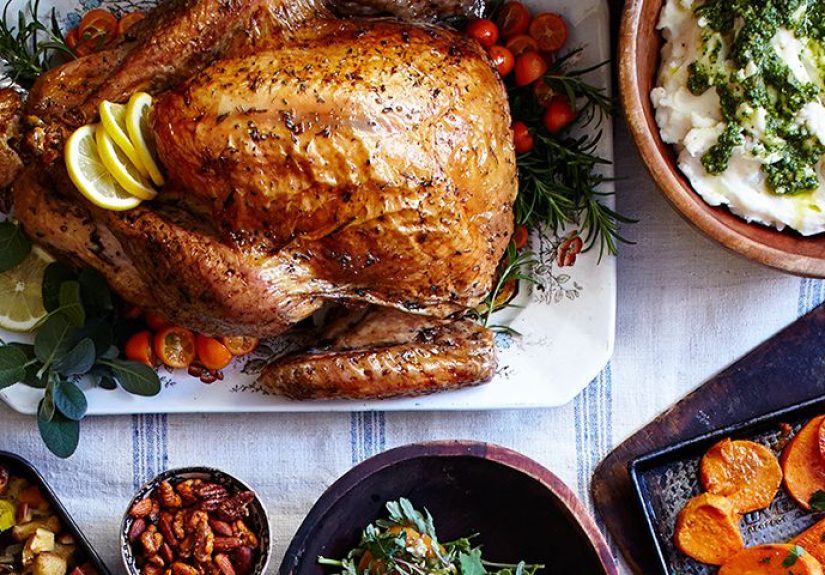
This is the traditional whole-bird roast with crisp skin and familiar flavor. Great for that “Thanksgiving postcard” moment.
Ingredients (classic, flexible)
- 1 whole turkey (size based on guests)
- Kosher salt and black pepper
- Butter, softened
- Fresh herbs (sage, thyme, rosemary, parsley) or a dried poultry blend
- Aromatics: onion, garlic, celery, lemon (optional but helpful)
- Broth or water for the roasting pan
Method (the “don’t overthink it” version)
- Season ahead: Salt the turkey 12–48 hours early (dry brine) and refrigerate uncovered for better skin.
- Herb butter: Mix butter with herbs, pepper, and a pinch of salt. Rub under the skin on the breast and over the legs.
- Roast: Start at a higher heat briefly for browning, then lower to cook evenly. Add broth to the pan to prevent burning.
- Check temperature: Use a thermometer. Pull when breast meat is done and thighs are tender.
- Rest: Rest 20–30 minutes before carving so juices redistribute (and you regain your personality).
Why dry brining works: Salt has time to dissolve, move inward, and season the meat beyond the surface. It also helps the skin dry out,
which improves browning and crispness. Think of it as flavor and texture insurancewithout hauling around a bucket of salty water.
Option 2: Spatchcock Turkey (Faster, Juicier, More Even)
Spatchcocking means removing the backbone and flattening the turkey. It cooks faster and more evenly because the bird becomes one level layer instead of a
thick, uneven dome. Translation: less time in the oven, less chance of dry breast meat, and more chance you’ll sit down before dessert.
- Flatten: Use sturdy kitchen shears to remove the backbone. Press down to flatten the breastbone.
- Dry brine: Salt and refrigerate uncovered overnight for maximum crisp skin.
- Roast hot: Roast on a sheet pan with a rack. The flatter shape loves higher heat.
- Gravy bonus: Roast the backbone/neck alongside for extra drippings and flavor.
Turkey safety, without fear
Use a food thermometer and aim for safe, reliable doneness. If you cook stuffing inside the turkey, the center of the stuffing also needs to reach a safe temperature.
For the easiest path, bake stuffing separately and keep the turkey focused on being delicious.
Gravy That Tastes Like Thanksgiving (Not Panic)
Great gravy is a simple formula: flavorful liquid + thickener + seasoning. You can do this with drippings, but you can also make a gravy base ahead of time so
Thanksgiving Day isn’t a high-speed whisking competition.
Make-ahead gravy strategy
- Build flavor: Simmer turkey neck/giblets (if included) with onion, celery, and herbs to make a quick stock.
- Make a roux: Cook butter and flour until it smells nutty (not burnt). This removes raw flour flavor.
- Whisk in stock: Add warm stock gradually, whisking until smooth.
- Finish day-of: Stir in pan drippings for that “holiday” taste and adjust salt/pepper.
Gravy fixes (because life happens)
- Lumpy? Whisk harder, then strain. Gravy doesn’t need to know you struggled.
- Too thin? Simmer longer. Or whisk in a small slurry (cornstarch + cold water) and simmer briefly.
- Too thick? Add warm stock a splash at a time.
- Too salty? Add unsalted stock or water, then balance with a squeeze of lemon or a pinch of sugar.
Stuffing vs. Dressing: The Cozy Carb Everyone Fights Over
Stuffing is traditionally cooked inside the bird. Dressing is baked in a dish. If you want a crisp top and simpler food-safety math, bake it separately.
The best versions have three things: dried bread (or cornbread), plenty of aromatics, and enough moisture to stay tender without becoming soggy.
Classic herb stuffing (baked)
- Base: dried bread cubes (or a mix of bread + cornbread)
- Aromatics: onion + celery sautéed in butter
- Flavor: sage, thyme, parsley, black pepper
- Moisture: broth + eggs (eggs help it set like a savory bread pudding)
Pro tip: Dry the bread overnight (or toast it in the oven) so it absorbs broth like a champ instead of turning into paste.
Thanksgiving Side Dishes: Classics with Smart Upgrades
1) Creamy Mashed Potatoes
Mashed potatoes are simple, but they’re also easy to accidentally turn into glue. The key is gentle handling and warm dairy.
- Choose Yukon Golds for a naturally creamy texture.
- Start potatoes in cold salted water, then simmer until tender.
- Drain well and let steam dry for a minute.
- Warm butter and milk/cream before adding (cold dairy can lead to overmixing).
- Mash by hand or use a ricer for extra smoothnessavoid aggressive stirring.
2) Sweet Potato Casserole (Two Topping Routes)
Sweet potato casserole is where your table quietly reveals its personality. Some people want marshmallows. Others want streusel. Some want both. Thanksgiving is big enough for everyone.
- Base: Roast sweet potatoes for deeper flavor, then mash with butter, salt, cinnamon, and a touch of brown sugar.
- Topping A (classic): marshmallows, toasted just until golden
- Topping B (crunch): buttery oat or cornflake crumble for crisp contrast
3) Green Beans That Don’t Taste Like Beige
Green bean casserole is iconic, but it’s not your only option. If you want something fresher, go stovetop with mushrooms and crispy onions/shallots.
- Fresh upgrade: Blanch green beans, sauté mushrooms until browned, toss with butter and top with crispy shallots.
- Casserole-style: Keep the creamy vibe, but use real sautéed mushrooms and a quick homemade sauce if you have time.
4) Roasted Brussels Sprouts (Crisp Edges, No Bitterness)
- Halve sprouts, toss with oil, salt, and pepper.
- Roast on a hot sheet pan cut-side down for caramelization.
- Finish with lemon or a drizzle of honey for balance.
5) Mac and Cheese (Because Joy Is Allowed)
A simple stovetop cheese sauce (butter + flour + milk) becomes holiday-ready with sharp cheddar plus a meltier cheese for smoothness. Bake with buttery crumbs if you want a crunchy top.
6) Cranberry Sauce (Fast, Bright, Make-Ahead)
Homemade cranberry sauce is a 15-minute upgrade that tastes like you tried harder than you did. Simmer cranberries with sugar and water (or orange juice), then cool. That’s the whole plot.
Add orange zest or cinnamon if you want it to smell like the holidays moved in and started paying rent.
7) Dinner Rolls or Cornbread (Pick Your Lane)
If you’re buying rolls, warm them and brush with butter. If you’re baking, keep it simple: a soft roll for gravy-sopping, or cornbread for dressing and leftover sandwiches.
Desserts: End on a Sweet Note (Without a Baking Crisis)
Pumpkin Pie That Slices Clean
Pumpkin pie is classic for a reason: warm spices, creamy filling, and the comforting certainty that someone will eat it for breakfast the next day “because it’s basically a smoothie.”
For the best crust, pre-bake it (a quick par-bake helps avoid a pale, soggy bottom). Bake until the edges are set and the center still has a gentle jiggle.
Pecan Pie for the “I Like Caramel” Crowd
Pecan pie is the sweet, sticky closer that makes people suddenly believe in seconds. Serve small slices. It’s powerful.
Apple Crisp (The Low-Stress Backup Dessert)
Apple crisp is forgiving and makes your house smell like you lit a “Fall Memories” candlebut actually earned it. Slice apples, toss with sugar and spices, top with an oat-butter crumble, bake.
Vanilla ice cream optional, but strongly recommended by the Department of Happiness.
Make It Friendly for Everyone
Vegetarian and vegan swaps
- Centerpiece: roast a big sheet pan of vegetables, or serve a hearty lentil-and-mushroom loaf
- Stuffing: use vegetable broth and add mushrooms for savory depth
- Gravy: mushroom-onion gravy thickened with flour or cornstarch
- Mashed potatoes: use olive oil and warm plant milk for a dairy-free version
Gluten-free notes
- Use gluten-free bread for stuffing, and dry it well before baking.
- Thicken gravy with cornstarch instead of flour.
- Double-check labels on crunchy toppings (some cereals contain gluten-derived ingredients).
Leftovers: The Sequel Everyone Actually Wants
Leftovers are not an afterthoughtthey’re the official Friday plan. Store food promptly in shallow containers so it cools quickly, and reheat until steaming hot.
The best leftover ideas:
- Turkey sandwich MVP: turkey + cranberry sauce + stuffing + a swipe of mayo
- Leftover bowl: mashed potatoes + turkey + gravy + roasted veg
- Soup shortcut: simmer turkey bones with onions/celery/carrots for a quick broth
- Breakfast remix: stuffing waffles topped with a fried egg (if you’re feeling legendary)
Conclusion: Your Thanksgiving Recipes Game Plan
If you remember nothing else: salt early, use a thermometer, make gravy ahead, bake stuffing separately for simplicity, warm your dairy for mashed potatoes, and don’t be afraid of a make-ahead strategy.
Thanksgiving is supposed to taste like comfortnot like you sprinted a marathon while holding a whisk.
of Thanksgiving Recipe “Experience” (The Part Nobody Prints, But Everyone Remembers)
Every Thanksgiving has the same invisible ingredient: the moment you realize the kitchen is the real living room. People wander in “just to check,” which is a polite way of saying
they’re here to snack, hover, and offer opinions that would be more helpful if they came with clean hands and an apron. Somehow, the stove becomes a storytelling stationsomeone
remembers a grandparent’s stuffing, someone debates the correct cranberry-to-sugar ratio like it’s a constitutional issue, and someone inevitably asks, “Is the turkey supposed to be that color?”
(Yes. Probably. Please step away from the oven door.)
The funniest part is how traditions form. Sometimes it’s a carefully preserved family recipe. Other times it’s an accident that got promoted. Maybe the rolls burned once, so now you serve
store-bought rolls forever and call it “a modern twist.” Maybe you tried spatchcock turkey one year because you were short on time, and suddenly everyone insists it’s the only way because the
skin was crisp and dinner happened before sunset. Thanksgiving recipes are like that: one good outcome and the table votes to make it law.
There’s also the yearly side-dish personality test. The mashed potato person wants them silky, buttery, and borderline cloud-like. The sweet potato person believes marshmallows are essential
because it’s “not really Thanksgiving otherwise.” The green bean person just wants something that tastes like an actual vegetable. The stuffing person is the most serious of all, because stuffing
is the emotional backbone of the meal; it’s basically comfort you can scoop. And cranberry sauce? Cranberry sauce is the loud, tangy friend who shows up uninvited, fixes the conversation, and
makes everything else taste more interesting.
Then there’s timingthe great Thanksgiving puzzle. Someone always suggests eating “around 3,” as if dinner is a train that simply arrives when scheduled. In reality, dinner happens when the
turkey rests, the gravy behaves, and the oven stops being booked like a celebrity. That’s why make-ahead cooking feels like a magic trick: cranberry sauce made two days early, a gravy base waiting
patiently, bread cubed and dried, vegetables prepped and stacked in the fridge like organized little soldiers. It’s not about being fancy. It’s about giving yourself room to breatheand maybe even
sit down for five minutes before everyone starts circling the kitchen again.
And finally, leftovers. Leftovers are the reward for hosting. The day after Thanksgiving has its own rhythm: quiet house, comfy clothes, and a sandwich that tastes like the entire holiday got
folded into one bite. Turkey, stuffing, cranberry sauce, maybe a little gravysuddenly you’re convinced this is the best meal of the whole weekend. The truth is, Thanksgiving recipes aren’t just
instructions. They’re a yearly way of saying, “I made something warm for the people I care about.” Even if the pie cracks, the gravy needs a rescue whisk, or the turkey takes longer than planned,
the table still fills upand that’s the part people remember most.







 Close
Close