
Table of Contents >> Show >> Hide
- What Is Tom Ka Gai?
- Why This Tom Ka Gai Recipe Works
- Ingredients for Thai Chicken Soup With Coconut Milk
- How to Make Tom Ka Gai
- Best Tips for a Better Tom Ka Gai Recipe
- Easy Ingredient Swaps
- What to Serve With Thai Coconut Chicken Soup
- How to Store and Reheat It
- Common Mistakes to Avoid
- The Experience of Making and Eating Tom Ka Gai
- Final Thoughts
- SEO Tags
If chicken soup had a passport and a flair for drama, it might come back as Tom Ka Gai. This beloved Thai chicken soup with coconut milk is creamy without being heavy, bright without being bossy, and soothing in the way only a great bowl of soup can be. One spoonful gives you silky coconut milk, aromatic lemongrass, savory chicken, earthy mushrooms, and a pop of lime that basically says, “Hello, your week just improved.”
This version is designed for American home cooks who want a flavorful, reliable Thai Chicken Soup With Coconut Milk (Tom Ka Gai) recipe without turning dinner into a scavenger hunt. It stays true to the soup’s signature profile while offering practical swaps for ingredients that can be tricky to find. The result is a bowl that feels special enough for company and easy enough for a Tuesday when your energy level is somewhere between “let’s cook” and “where’s the takeout menu?”
What Is Tom Ka Gai?
Tom Ka Gai is a Thai coconut chicken soup known for its balance of creamy, savory, tangy, and lightly spicy flavors. The name is often explained this way: tom means boiled soup, kha refers to galangal, and gai means chicken. In other words, the title is refreshingly honest. No mystery. No marketing department. Just soup telling you exactly what it is.
At its best, Tom Ka Gai tastes layered rather than loud. Coconut milk gives the broth richness. Lemongrass and galangal add fragrance and depth. Fish sauce brings salty umami. Lime juice sharpens everything at the end. Mushrooms add earthiness, and chicken makes it satisfying enough for a real meal. Some versions also include Thai chiles, cilantro, scallions, or a touch of sugar to round out the broth.
Why This Tom Ka Gai Recipe Works
This recipe works because it respects the soup’s essential flavor architecture: creamy coconut milk, aromatic herbs, tender chicken, and a final balance of salty, sour, and heat. Instead of overcomplicating the process, it focuses on a simple method that lets the ingredients do the heavy lifting.
It also uses smart, realistic strategy. Fresh galangal is wonderful, but fresh ginger can stand in if needed. Makrut lime leaves are ideal, but lime zest and extra lime juice can help when your local store acts like Southeast Asian ingredients are part of a witness protection program. The point is not perfection theater. The point is making a truly delicious pot of soup.
Ingredients for Thai Chicken Soup With Coconut Milk
For the broth
- 1 tablespoon neutral oil
- 2 stalks lemongrass, trimmed, bruised, and cut into 2-inch pieces
- 1 tablespoon thinly sliced fresh galangal or fresh ginger
- 3 to 4 makrut lime leaves, torn, or 1 teaspoon lime zest
- 3 cups chicken stock
- 1 can (13.5 ounces) full-fat coconut milk
For the soup
- 1 pound boneless, skinless chicken thighs or chicken breast, thinly sliced
- 8 ounces mushrooms, sliced
- 1 to 2 Thai chiles, sliced, or 1 teaspoon chile paste
- 2 to 3 tablespoons fish sauce
- 1 to 2 teaspoons sugar, optional
- 2 to 3 tablespoons fresh lime juice
- Fresh cilantro and scallions for serving
Optional for serving
- Steamed jasmine rice
- Lime wedges
- Extra sliced chiles
Ingredient note: Use canned coconut milk, not refrigerated coconut beverage. They are not the same thing, and your soup deserves the rich one. This is not the moment for watery compromise.
How to Make Tom Ka Gai
1. Build the aromatic base
Heat the oil in a soup pot over medium heat. Add the lemongrass, galangal or ginger, and lime leaves. Stir for 30 to 60 seconds, just until fragrant. You are not browning them; you are waking them up.
2. Add stock and simmer
Pour in the chicken stock and bring it to a gentle simmer. Let it cook for 10 to 15 minutes so the broth can absorb all those citrusy, spicy, slightly piney flavors. This short simmer is where the soup starts tasting like more than “chicken in coconut milk.”
3. Add coconut milk
Lower the heat and stir in the coconut milk. Keep the soup at a gentle simmer, not a hard boil. Coconut milk can separate if you get too aggressive with the heat, and nobody wants a soup that looks like it had an emotional breakdown.
4. Cook the chicken and mushrooms
Add the sliced chicken, mushrooms, and chiles. Simmer for about 8 to 10 minutes, or until the chicken is cooked through and the mushrooms are tender. Thin slices of chicken work best because they cook quickly and stay tender in the broth.
5. Season for balance
Stir in the fish sauce, sugar if using, and lime juice. Taste. Then taste again. Great Tom Ka Gai should hit creamy, savory, sour, and spicy in one sip. Add more fish sauce if it needs depth, more lime if it feels flat, or a bit more chile if you want a stronger kick.
6. Serve hot
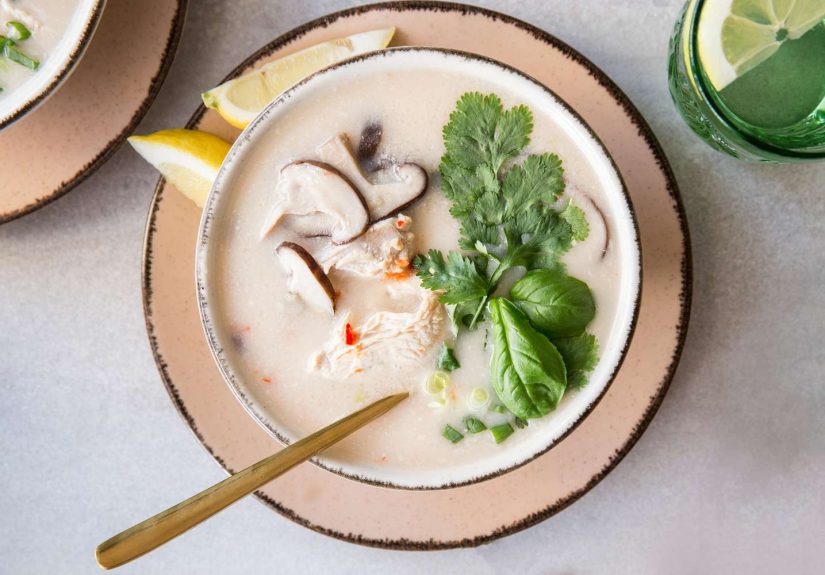
Remove the tough lemongrass pieces and lime leaves if you like, or simply warn people not to chew them. Ladle the soup into bowls and top with cilantro, scallions, and extra lime wedges. Serve on its own or with jasmine rice for a fuller meal.
Best Tips for a Better Tom Ka Gai Recipe
Use chicken thighs for extra flavor. Chicken breast is leaner and works fine, but thighs stay juicier and give the soup a slightly richer finish.
Bruise the lemongrass. Smashing the stalks with the side of a knife helps release the oils. If you skip this, the flavor stays trapped, and the soup misses some of its signature perfume.
Slice ingredients thinly. Tom Ka Gai is not stew. You want spoon-friendly bites of chicken and mushrooms, not pieces that require negotiations.
Add lime juice at the end. Fresh lime keeps the broth lively. Add it too early, and some of that brightness fades during cooking.
Season gradually. Fish sauce varies by brand, so start small and build. A great broth tastes balanced, not aggressively salty.
Easy Ingredient Swaps
If you cannot find galangal, use fresh ginger. The flavor is not identical, but it still creates a delicious, warmly aromatic soup. If makrut lime leaves are missing in action, substitute a little lime zest and finish with extra lime juice. If Thai chiles are too spicy, use a milder red chile or a spoonful of chile paste. And if straw mushrooms are unavailable, shiitake, oyster, or even button mushrooms work well.
Need a dairy-free, gluten-aware comfort meal? Good news: Tom Ka Gai is naturally creamy from coconut milk, and many versions are easily gluten-free as long as your fish sauce and stock fit your needs. It is one of those rare soups that feels indulgent and practical at the same time.
What to Serve With Thai Coconut Chicken Soup
This Thai coconut chicken soup can be served as a starter, but it is hearty enough to be dinner. Jasmine rice is the easiest companion and does a great job soaking up the broth. Rice noodles also work if you want a more filling bowl. For contrast, pair it with a crisp cucumber salad, fresh herbs, or simple stir-fried vegetables.
If you are entertaining, Tom Ka Gai plays well with spring rolls, grilled chicken skewers, or a bright Thai-style salad. It looks elegant, smells incredible, and gives strong “I absolutely know what I’m doing” energy, even if you are still reading the recipe with one eye while stirring with the other hand.
How to Store and Reheat It
Store leftover soup in an airtight container in the refrigerator for up to 3 days. Reheat gently over low to medium heat until warmed through. Avoid boiling it hard, especially after it has already been cooked once, because coconut milk can separate and chicken can turn rubbery.
If you know you will have leftovers, consider keeping the lime juice slightly lighter in the pot and adding a fresh squeeze to each reheated bowl. That little trick helps the soup taste revived rather than tired.
Common Mistakes to Avoid
Using the wrong coconut milk: canned coconut milk is the move. Thin carton-style coconut drink will not give you the same body or flavor.
Boiling too hard: Tom Ka Gai likes a gentle simmer. High heat can make the broth separate and toughen the chicken.
Under-seasoning: creamy soups need acid and salt to come alive. If the soup tastes dull, it probably needs lime juice, fish sauce, or both.
Skipping the aromatics: lemongrass, galangal, and lime are not background extras. They are the soul of the soup.
The Experience of Making and Eating Tom Ka Gai
There is something oddly comforting about making Tom Ka Gai that goes beyond the recipe itself. It is not just dinner; it is an experience built in layers. First comes the scent of bruised lemongrass, sharp and citrusy, the kind of smell that instantly makes your kitchen feel more awake. Then the galangal or ginger hits the pot, followed by coconut milk, and suddenly the whole room smells like you have done something far more impressive than “made soup.” Tom Ka Gai has that effect. It turns an ordinary evening into a small event.
Part of the charm is that this soup feels both cozy and lively at the same time. A lot of comfort foods lean heavy. They wrap you in a blanket and politely ask you not to move for the next two hours. Tom Ka Gai is different. It is soothing, yes, but it also sparkles. The lime keeps it bright. The chiles keep it interesting. The herbs keep every bite from fading into creamy sameness. It is the rare soup that can warm you up on a cold day and still taste exactly right when the weather is mild.
It is also a great recipe for people who like food with personality. The broth is rich, but not sleepy. The chicken is familiar, but the aromatics give it an edge. The mushrooms bring in an earthy note that grounds all the brighter flavors. When you get the balance right, every spoonful feels complete. You taste coconut first, then savory stock, then the lift of lime, then the lingering warmth of chile. It is like a little sequence of flavor plot twists, except this is the kind of drama you actually want in your life.
Another reason Tom Ka Gai stands out is that it invites attention without demanding perfection. You do not need knife skills worthy of a cooking competition. You do not need a pantry full of obscure ingredients. Even when you use a few substitutions, the soup still feels special. That makes it a wonderful confidence-building recipe for home cooks. It teaches you how much difference small adjustments can make. A little more lime, and the broth brightens. A dash more fish sauce, and everything deepens. It rewards tasting, noticing, and trusting your palate.
From a hosting perspective, this soup is a quiet superstar. It looks elegant in a bowl, especially with cilantro, scallions, and a wedge of lime on top. It smells amazing before anyone even takes a bite. And because it is naturally rich and aromatic, people tend to assume it took much more effort than it actually did. That is the kind of culinary illusion worth keeping.
But honestly, Tom Ka Gai may be at its best when you make it for yourself on a regular night. No dinner party. No audience. Just a pot on the stove and a bowl in your hands. Maybe you are tired, maybe the weather is terrible, maybe you are simply bored with your usual rotation. This soup interrupts that routine in the best way. It reminds you that dinner can still surprise you. It can still smell incredible, taste layered, and make the whole kitchen feel a little more alive. And for a recipe that comes together without too much fuss, that is a pretty great return on investment.
Final Thoughts
If you are looking for a soup that is comforting, fragrant, and just interesting enough to feel like a small culinary victory, this Thai Chicken Soup With Coconut Milk (Tom Ka Gai) recipe is worth making. It delivers creamy broth, tender chicken, fresh herbs, and that signature Thai balance of salty, sour, and heat. It is fast enough for a weeknight, good enough for guests, and flexible enough to adapt to whatever your grocery store actually had in stock.
In other words, this is not just another chicken soup. This is chicken soup with charisma.







 Close
Close