
Table of Contents >> Show >> Hide
- What Exactly Is the Tara xTool Thermostatic Module with Three Valves?
- Why Thermostatic Control Feels So Much Better Than “Regular” Shower Valves
- Safety and Code Reality: Anti-Scald Isn’t a “Nice-to-Have”
- What You’re Actually Buying: Trim vs Rough-In
- Behind the Wall: The xTool Rough Module and Why It Matters
- The Tara Look: Why Designers Keep Specifying It
- Designing a Three-Outlet Shower: Specific, Practical Examples
- Flow, Pressure, and Why 3/4" Connections Can Be Your Friend
- Installation and Coordination Tips That Save Projects
- Maintenance: Keep It Smooth for the Long Haul
- Is the Tara xTool Thermostatic Module with Three Valves Worth It?
- Conclusion
- Field Notes: of Real-World Experience with Tara xTool Thermostatic Systems
Your shower should not have a personality. It should not “run hot,” “run cold,” or “run dramatic” because someone
flushed a toilet three rooms away. And yet… here we are. If you’re building a high-end shower where temperature
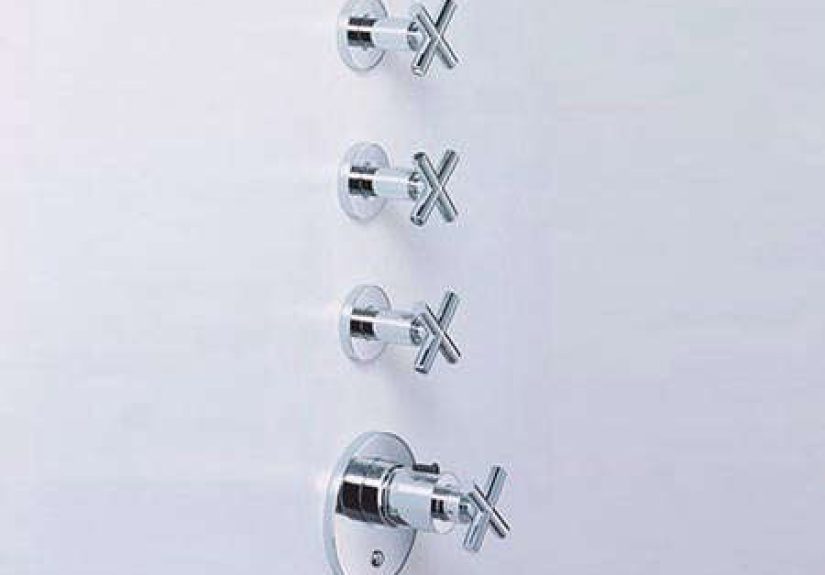
stability and multi-outlet control actually matter, the Tara xTool Thermostatic module with Three Valves
is one of those behind-the-wall decisions that quietly separates “nice bathroom” from “why does this feel like a spa?”
This guide breaks down what the Tara xTool system is, what “three valves” really means in practice, why thermostatic
control is different from pressure-balance, what you’ll need in the wall, and how to plan a shower layout that won’t
make your plumber age five years overnight. We’ll keep it practical, code-aware, and just funny enough to make the
spec sheet crowd uneasy.
What Exactly Is the Tara xTool Thermostatic Module with Three Valves?
Think of it as a concealed (in-wall) thermostatic shower control system paired with three dedicated
on/off (and typically volume) controls for multiple shower outlets. “Tara” refers to the trim styleDornbracht’s
classic, architectural lookwhile “xTool” refers to the modular concealed valve platform that makes the magic happen
behind the tile.
The Big Idea: Temperature + Outlet Control, Separated
Many basic shower valves combine temperature and flow in one handle. The Tara xTool approach typically separates
them: one control is focused on setting and maintaining water temperature, while additional controls
manage which outlets run (rain head, hand shower, body sprays, tub spout, etc.) and how much flow
each gets. That separation is why high-end showers feel “dialed in” instead of “close enough.”
What “Three Valves” Usually Means
In real-life shower design, “three valves” generally maps to three independently controlled outlets
(or three functions). For example:
- Outlet 1: Overhead rain shower
- Outlet 2: Hand shower on a bar or wall elbow
- Outlet 3: Body sprays (often grouped as one “zone”)
You can also mix-and-match for tub/shower combos, steam showers, or future expansions. The point is that you’re no
longer choosing between “rain head OR hand shower.” You’re choosing “both, and maybe the body sprays too… if the water
heater behaves.”
Why Thermostatic Control Feels So Much Better Than “Regular” Shower Valves
Thermostatic valves are designed to maintain a set temperature even when incoming hot/cold conditions
change. Pressure-balance valves, by contrast, are primarily designed to protect you from sudden pressure changes (the
infamous toilet flush) by balancing pressure, but they’re not always as precise for holding an exact temperature.
Thermostatic vs Pressure-Balance: The Practical Difference
If you’ve ever tried to set your shower to that perfect “I can’t feel my student loans” warmth, you know how annoying
micro-adjustments can be. A thermostatic system lets you set temperature once, then adjust volume or
outlets without wrecking the temperature setting every time.
Translation: your shower becomes a controlled environment instead of a tiny weather system.
Safety and Code Reality: Anti-Scald Isn’t a “Nice-to-Have”
High-end shouldn’t mean high-risk. A major reason thermostatic systems are popular is that they support
scald protection and help reduce thermal shockthose surprise temperature swings that make you
audition for a cartoon.
The Safety Stop (a.k.a. “The Handle Won’t Let You Ruin Your Day”)
Tara/xTool trims commonly include a safety limit stop around 38°C (about 100°F). That means the
control resists going past a comfortable temperature unless you intentionally override the stop. It’s an especially
big deal for households with kids, older adults, or guests who don’t know your home’s hot-water system is basically a
dragon.
Standards You’ll Hear Mentioned by Pros
In the U.S., point-of-use shower controls are often discussed alongside standards like ASSE 1016
(for individual showers and tub/shower combinations) and code language calling for valves that provide scald and
thermal shock protection at the point of use. You don’t need to memorize the acronyms, but you do want your chosen
valve platform and trim to make your inspector and plumber feel calm, rested, and emotionally stable.
Also: many manufacturers recommend not setting bathing fixtures beyond about 120°F, and often lower
targets (like 110°F) are suggested for comfort and safety. Your shower should not double as a sous-vide station.
What You’re Actually Buying: Trim vs Rough-In
Here’s where people get tripped up: with concealed systems, the beautiful visible pieces (the “trim”) are only half
the story. The in-wall “rough” valve body (or thermostat module) is what actually mixes and distributes water. Many
Tara xTool listings clearly separate “exposed trim parts” from “rough to be ordered separately.”
Typical Set Components in the Tara xTool + Three Valves Configuration
Depending on the exact package and finish, a Tara xTool “thermostatic module with three valves” setup often includes:
- Thermostatic control trim (temperature handle + cover plate/rosette)
- Three valve trims (often matching Tara style)
- In-wall rough module (purchased separately in many configurations)
- Optional accessories: installation tracks, extension kits, service stops (depending on the build)
Behind the Wall: The xTool Rough Module and Why It Matters
The concealed xTool thermostat module (the rough) is built for multi-outlet performance. In many configurations,
it’s designed with 3/4-inch connections, includes features like backflow prevention, and is built
from lead-free brass. This is the part you want chosen earlybefore framing is closed and tile is already ordered.
Key Rough-In Features to Understand
-
3/4-inch hot/cold inlets and multiple outlets: Great for higher-flow shower setups and multi-outlet
configurations where smaller valves can become the bottleneck. -
Backflow preventers and seals: Helpful for system integrity and meeting typical expectations in
modern plumbing installs. - Soundproofing and protective covers: Less “wall rattle,” more “quiet competence.”
-
Installation-system compatibility: Some versions are designed to work with installation grids/tracks
for alignment and serviceability.
Recess Depth and Planning: Tile Is Not Forgiving
Concealed valves need proper wall depth. Depending on the specific in-wall valve and accessories, you’ll see minimum
and maximum recess depth ranges. If your wall is too shallow, you end up redesigning (or crying). If it’s too deep,
your trim might not sit correctly without extensions.
Pro tip: finalize wall build-up early (stud + blocking + backer board + waterproofing + tile thickness) and confirm
rough-in depth before the plumber closes the wall. Tile installers love surprises about as much as cats love baths.
The Tara Look: Why Designers Keep Specifying It
Tara is one of those designs that quietly refuses to look dated. It’s architectural, crisp, and recognizable without
shouting. The trim geometry tends to be clean and deliberatemore “modern classic” than “trend-of-the-week.”
Finish Strategy: Match the Hardware, Not the Panic
Tara/xTool systems are often offered in finishes that range from traditional chrome to matte black to more luxurious
PVD and plated looks. If you’re mixing metals, do it intentionally (for example: matte black trim with warm brass
lighting). If you’re matching finishes, order everything togetheror at least verify availability and lead times so
your project doesn’t stall waiting for one missing handle.
Designing a Three-Outlet Shower: Specific, Practical Examples
Example 1: “Everyday Spa” (Rain + Hand + Body Sprays)
A very common high-end layout uses three outlets:
- Rain head for a relaxing full-body rinse
- Hand shower for practical tasks (rinsing, cleaning, shaving legs, washing dogs who regret everything)
- Body sprays for targeted hydrotherapy
With the Tara xTool approach, you set temperature once, then decide which of these you want running. Many homeowners
end up using rain + hand shower as the daily combo and save body sprays for “I survived Monday” evenings.
Example 2: Tub/Shower Combo with Future-Proofing
If you have a tub and shower in one space, three controlled outlets can cover:
- Tub spout (fast fill)
- Main shower head
- Hand shower (or future body sprays)
That third outlet is your flexibility card. Even if you don’t install body sprays today, the rough-in can make
tomorrow’s upgrade less invasivebecause breaking tile later feels like paying the same bill twice.
Flow, Pressure, and Why 3/4" Connections Can Be Your Friend
Multi-outlet showers can demand more flow than a basic 1/2-inch setup comfortably provides, especially when users want
simultaneous functions. A 3/4-inch valve platform can support higher flow potential, which matters when you’re feeding
several outletsor larger fixtureswithout turning your shower into a sad drizzle.
Two realities to keep in mind:
-
Fixture flow restrictions exist. Many showerheads are regulated (often 2.5 GPM federally, with
stricter state rules in some places). So even if your valve can move water, your trim pieces may cap it. -
Your home’s hot water capacity is the final boss. Running multiple outlets at once can drain a tank
quicklyor push a tankless into performance limits if it isn’t sized for the load.
In other words: don’t spec a “three-zone spa shower” on the same water-heater setup that struggled through one
teenager’s 45-minute shower. That’s not “luxury.” That’s “family meeting.”
Installation and Coordination Tips That Save Projects
1) Choose the Rough-In Early
Trim can be swapped late. Rough-in cannot. Select the xTool concealed thermostat module and confirm outlet mapping
while walls are open. Decide where each outlet goes and label lines like you’re preparing for a future you who has
forgotten everything.
2) Confirm Service Access and Shutoffs
Thermostatic cartridges are reliable, but anything mechanical can eventually need serviceespecially in hard-water
areas. Make sure your setup supports serviceability and consider integrated supply stops or accessible shutoffs so
maintenance doesn’t require shutting down half the house.
3) Align Trim on a Clean Grid
A thermostatic control plus three valves means multiple trim points. Alignment matters aesthetically. If your trim is
crooked or inconsistent in spacing, your brain will notice every single day, forever. Use an installation grid/track
if your system supports it, and coordinate with tile layout.
Maintenance: Keep It Smooth for the Long Haul
A few habits help thermostatic systems stay dialed in:
-
Address hard water: If you have mineral-heavy water, consider whole-house conditioning or at least
routine cleaning of shower fixtures. Mineral buildup can affect cartridges and outlets over time. -
Don’t ignore temperature drift: If temperature starts wandering, it can be a sign the cartridge
needs cleaning, recalibration, or replacement. - Keep documentation: Save model numbers and finish codes. Future you will thank present you.
Is the Tara xTool Thermostatic Module with Three Valves Worth It?
It’s worth it if:
- You want a stable, precise shower temperature without constant fiddling.
- You’re building a multi-outlet shower and want each outlet controlled cleanly.
- You care about design consistency and long-term serviceability.
- You’re working with a plumber comfortable with concealed valve systems (or willing to learn carefully).
It might not be worth it if:
- You only need a basic single-head shower and don’t plan to expand.
- Your project timeline/budget can’t support concealed rough-in planning and premium trim.
- Your walls are already closed and tile is set (unless you enjoy expensive hobbies).
Conclusion
The Tara xTool Thermostatic module with Three Valves is a grown-up solution for showers that do more
than one thing. It’s designed for people who want temperature stability, outlet flexibility, and a clean, timeless
trim style that doesn’t scream for attention. The biggest win is how it makes daily routines feel effortless: set your
temperature, choose your outlets, and get on with your lifewithout surprise heat waves.
The key is planning: choose the rough-in early, map outlets clearly, confirm wall depth, coordinate trim placement
with tile layout, and size your water-heating system realistically. Do that, and the Tara xTool setup becomes one of
those invisible upgrades that you feel every dayand almost never have to think about.
Field Notes: of Real-World Experience with Tara xTool Thermostatic Systems
In real projects, thermostatic systems like Tara xTool tend to reveal their value in small momentsespecially the ones
you don’t post on Instagram. One homeowner described it perfectly: “The shower stopped being a negotiation.” That’s
not marketing poetry; it’s what happens when temperature and outlet control are separated. You can run the hand shower
to rinse shampoo without the overhead head suddenly turning into a lava faucet. You can shut off body sprays without
re-dialing the temperature. Your shower becomes predictable, and predictable is oddly luxurious.
Designers also appreciate how multi-control layouts force better decisions. When you have three outlets, you have to
decide what matters: do you actually want body sprays, or would you rather invest in a better rain head and a more
ergonomic hand shower placement? In more than a few builds, body sprays get “value engineered” out, but the rough-in
layout remains future-ready. That’s not a compromiseit’s a strategy. Many people don’t miss body sprays until winter
hits, and suddenly “warm water from multiple angles” becomes a personality trait.
Plumbers will tell you the main success factor is coordination. The rough-in has to land at the right depth and
alignment. When tile thickness is underestimated, trims can sit awkwardly or require extension parts. When tile
thickness is overestimated, you can end up with proud trim or odd gaps. The best teams treat the valve rough-in like a
“critical dimension,” not a casual suggestion. A quick mock-up board showing backer + waterproofing + tile can prevent
expensive do-overs later.
Another recurring lesson: label everything. In a three-outlet shower, it’s surprisingly easy for Outlet #2 and Outlet
#3 to get swapped during rough-in, especially when the shower wall is open and everyone is thinking in abstract lines
and future tile grids. A simple label“RAIN,” “HAND,” “SPRAYS”on the pipe stubs saves confusion and avoids the
awkward moment when the homeowner turns on the “hand shower” and gets blasted in the chest by body sprays like they’re
being interrogated by water.
Finally, thermostatic systems tend to be more sensitive to water quality and debris than people expectnot fragile,
just precise. If a home has new plumbing work, flushing the lines properly matters. In hard-water regions, routine
fixture maintenance helps the whole system feel consistent over time. The payoff is worth it: once a thermostatic
system is dialed in, most homeowners stop thinking about itwhich is the highest compliment you can give something
hidden behind tile.






 Close
Close