
Table of Contents >> Show >> Hide
- Why Superheroes Keep Fighting Evil Versions of Themselves
- Superman vs. Bizarro: The Backward Man of Steel
- Spider-Man vs. the Spider-Doppelganger: Nightmarish Wall-Crawler
- Batman vs. The Batman Who Laughs: When the Dark Knight Breaks
- Captain America vs. Hydra Cap: America’s Conscience, Split in Two
- Hulk vs. Maestro: Future You, But Tyrannical
- The Flash vs. Reverse-Flash: When Your Biggest Fan Hates You
- Iron Man vs. Superior Iron Man and Evil Armors
- Why Evil Doppelgängers Work So Well
- Experiences and Takeaways: Living With Your Inner Doppelgänger
- Conclusion: The Real Superpower Behind Beating Your Evil Twin
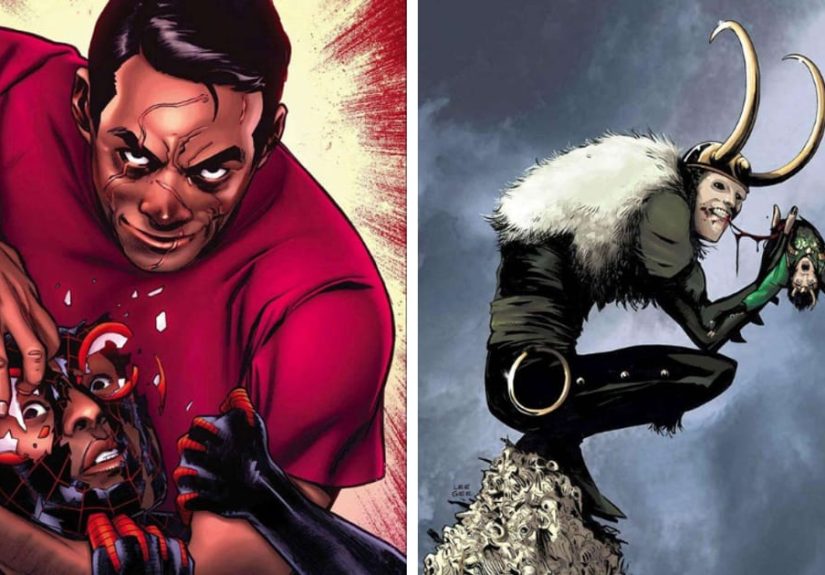
Few comic book moments are as deliciously weird as a superhero punching their own face literally.
From Superman throwing down with a backward-talking clone to Captain America fighting a fascist
version of himself, evil doppelgängers are one of the most enduring superhero tropes. They let us
ask the big questions: “What if the hero made different choices?” and, more importantly, “Could I
beat my own evil twin in a fistfight?”
In this deep dive into superheroes who fought their evil doppelgängers, we’ll look
at iconic matchups from Marvel and DC, what makes these mirror battles so compelling, and what they
reveal about identity, morality, and the thin line between hero and villain.
Why Superheroes Keep Fighting Evil Versions of Themselves
The evil doppelgänger trope is basically a comic book cheat code. Instead of inventing a brand-new
villain, writers flip the hero: same powers, same face, totally different choices. It’s storytelling
shorthand for “this could have been you.” Sometimes it’s a literal clone, sometimes an alternate
timeline, and sometimes a corrupted version of the hero after one really bad day and zero therapy.
These mirror matches work because they’re personal. You can’t just punch your double into submission
and walk away; you’re also fighting your own doubts, your worst impulses, and the fear that maybe,
under the right circumstances, you would be that monster. That’s why so many of these stories end
not just with a victory, but with the hero walking away a little more self-aware and usually a lot
more traumatized.
Superman vs. Bizarro: The Backward Man of Steel
One of the earliest and most famous evil doppelgängers is
Bizarro, a distorted mirror of Superman. Originally introduced as a flawed duplicate,
Bizarro is often portrayed as a twisted reflection of everything Superman stands for: where Superman
brings order, Bizarro brings chaos; where Superman speaks clearly, Bizarro talks in backwards logic;
where Superman protects, Bizarro “helps” in ways that endanger everyone around him.
In many stories, Bizarro isn’t purely evil he’s more like a broken mirror. Modern interpretations
lean into the idea that he’s a flawed Superman, not just “bad Superman.” His immense power
shows how terrifying Superman could be if he lacked Clark Kent’s empathy and self-control. Those
clashes between Superman and Bizarro aren’t just spectacle; they underline how much of Superman’s
heroism comes from his choices, not just his Kryptonian biology.
For readers, the Superman vs. Bizarro dynamic is a reminder: power without understanding is dangerous.
Superman wins not just because he’s stronger, but because he’s wiser and a lot better at not
accidentally throwing cars into buildings.
Spider-Man vs. the Spider-Doppelganger: Nightmarish Wall-Crawler
If Bizarro is unsettling, Spider-Man’s evil doppelgänger is outright nightmare fuel. The
Spider-Doppelganger, usually just called Doppelganger, is a
near-mindless, six-armed monster created during the Infinity War event as a dark reflection
of Peter Parker. This creature has Spider-Man’s agility and wall-crawling abilities, but none of his
conscience, humor, or sense of restraint.
Where Peter pulls his punches to avoid killing, the Doppelganger slashes with claws and teeth,
operating more like a rabid animal than a hero. That contrast is the whole point: same basic
abilities, radically different moral compass. The Doppelganger often ends up serving other villains
like Carnage, becoming a living symbol of what happens when Spider-Man’s power is completely
disconnected from responsibility.
These battles highlight why Peter’s nervous jokes and constant guilt actually matter. Without his
humanity, Spider-Man wouldn’t be a neighborhood hero he’d be a horror movie.
Batman vs. The Batman Who Laughs: When the Dark Knight Breaks
Only Batman could have an evil alternate self that’s somehow even scarier than his enemies.
The Batman Who Laughs is a Bruce Wayne from an alternate universe who was infected by
the Joker’s toxin, merging Batman’s intelligence and strategic brilliance with Joker’s murderous
insanity. The result is a multiverse-level threat who knows every trick Batman has ever used and
has no problem using them to destroy entire worlds.
When our Batman faces this grinning nightmare, it’s not just detective vs. monster; it’s a showdown
between two versions of the same obsessive drive. Both are strategists, both are prepared for every
scenario, but only one of them still believes in rules, limits, and the value of a single human life.
These stories ask a brutal question: if Batman ever truly snapped, how bad could he get? The Batman
Who Laughs is the answer and that’s exactly why their battles hit so hard. They prove that Gotham’s
greatest protector is always one tragedy away from becoming its worst nightmare.
Captain America vs. Hydra Cap: America’s Conscience, Split in Two
One of the most controversial modern “evil doppelgänger” stories is
Hydra Cap, introduced in the run that led to Marvel’s
Secret Empire event. Thanks to reality-warping Cosmic Cube shenanigans, an alternate Steve
Rogers is created one who has secretly been a Hydra agent his entire life. This Hydra Supreme
version of Cap manipulates events from the shadows, eventually leading a Hydra takeover of the United
States.
In the climax of the story, the “real” Steve Rogers restored by the Cosmic Cube confronts his
Hydra self in a showdown that plays out on live global television. You literally have Captain America
fighting Captain America: one stands for freedom and accountability, the other for authoritarian
control disguised as security.
It’s more than just a cool visual. Hydra Cap forces readers to confront how symbols can be twisted.
The evil doppelgänger doesn’t just punch people he hijacks a legacy. When Steve defeats Hydra Cap,
it’s not just a victory of fists; it’s a reclamation of what Captain America is supposed to mean.
Hulk vs. Maestro: Future You, But Tyrannical
The Maestro is one of the darkest possible futures for Bruce Banner: a Hulk who has
survived nuclear war, absorbed massive amounts of radiation, and gained not only additional strength
but also a cruel, tyrannical mindset. This evil future Hulk rules over a devastated world as a
dictator, combining Banner’s intelligence with the Hulk’s power and almost none of their usual
restraint.
In the classic story Future Imperfect, a younger Hulk is pulled forward in time and forced
to confront the Maestro essentially fighting the worst version of himself. Their rivalry has since
been revisited in modern comics that flesh out how this monstrous ruler came to be, including stories
that chart his rise and his battles against various heroes trying to stop his reign.
Unlike many doppelgänger stories, Maestro isn’t some alternate reality stranger. He’s Hulk, just
older, angrier, and done pretending to play nice. The message is chilling: if the Hulk ever stopped
caring about people, the world wouldn’t survive him.
The Flash vs. Reverse-Flash: When Your Biggest Fan Hates You
If you’ve ever worried about parasocial relationships, Reverse-Flash is your worst
nightmare. Eobard Thawne is a speedster from the future who idolized the Flash so much that he tried
to become him only to discover that he was destined to be Barry Allen’s greatest enemy instead.
Driven mad by obsession and resentment, he turns his powers into a weapon dedicated to ruining Barry’s
life across time.
Reverse-Flash isn’t a simple “evil twin,” but he functions as a dark reflection of Barry. Where Barry
uses the Speed Force to save people, Thawne weaponizes it to prove he’s better than his idol, killing
people Barry loves and rewriting timelines in the pettiest ways possible. Their battles are less
about physical speed and more about emotional endurance: How much tragedy can a hero withstand and
stay a hero?
In many adaptations, Reverse-Flash even frames himself as the “true creator” of the Flash, arguing
that without his cruelty, Barry wouldn’t be the hero he is. That’s an evil-doppelgänger move if there
ever was one: taking credit for the hero’s pain as if it’s some twisted gift.
Iron Man vs. Superior Iron Man and Evil Armors
Tony Stark doesn’t really need an evil twin he can be his own worst enemy. But comics being comics,
we’ve still gotten corrupt variants like Superior Iron Man, a version of Tony whose
personality was altered into a more selfish, ruthless form. This Tony uses advanced tech and even a
city-wide app to manipulate people, prioritizing profit and control over ethics.
In various stories, Tony ends up battling his own past decisions embodied in rogue AIs, weaponized
armors, or alternate versions of himself including future Iron Men with more brutal philosophies.
These conflicts pit Stark’s conscience against his ego, forcing him to confront whether his genius is
truly in service of humanity or just a sophisticated way to satisfy his need for control.
When Iron Man throws down with an evil Iron Man, it’s basically a board meeting where the agenda is:
“Are we still the good guy, or did we quietly pivot to villain a few updates ago?”
Why Evil Doppelgängers Work So Well
Across all these stories, a few patterns stand out:
- Same powers, different values: The evil double usually has similar or greater
power than the hero, so the real difference isn’t strength it’s ethics. - Moral stress test: These battles force heroes to reaffirm what they believe,
often in the face of someone who knows all their weaknesses. - Symbol hijacking: Hydra Cap, Batman Who Laughs, and Maestro aren’t just threats;
they’re corrupted versions of symbols that once inspired hope. - Built-in drama: You don’t need to convince the audience this villain matters
it’s literally the hero’s face on the other side of the punch.
Evil doppelgängers make it clear that being a hero isn’t about the costume or the power set. It’s a
daily, often painful decision to do the right thing when it would be so much easier and sometimes
more rewarding to embrace the dark.
Experiences and Takeaways: Living With Your Inner Doppelgänger
You don’t need to fly, time-travel, or bench-press a tank to relate to
superheroes who fought their evil doppelgängers. On a smaller, much less
world-ending scale, most of us have had “evil twin” moments: the version of you that almost fires off
that angry email, posts that petty clapback, or makes a decision you know you’ll regret five minutes
later.
Think about those internal arguments you have with yourself:
- One side wants the short-term win; the other cares about long-term consequences.
- One voice says, “No one will know”; the other asks, “But will you be okay with it?”
- One side wants to give up; the other keeps pushing forward.
That push-and-pull is basically your own personal doppelgänger battle just with fewer capes and
more coffee. When fans connect with stories like Hydra Cap vs. Steve Rogers or Hulk vs. Maestro,
they’re not just enjoying big, explosive fights. They’re watching physical versions of the same
internal struggles they feel in their own lives: fear vs. courage, selfishness vs. responsibility,
bitterness vs. growth.
Readers often share how these arcs hit them during tough chapters of their own journeys. For someone
who’s gone through burnout, Maestro can feel like the version of themselves that stopped caring and
just bulldozed everything. For people dealing with identity or ideology shifts, the Hydra Cap story
can echo what it feels like when a trusted institution or person suddenly shows a darker side. And
Batman Who Laughs? He’s practically a walking warning about what happens when you bottle everything
up and never process your trauma.
Creatively, these stories are also incredible prompts. Writers, role-playing fans, and gamers
regularly spin their own “evil twin” scenarios:
- What would your powers look like if they were driven by fear instead of hope?
- If you met a version of you who took the opposite path at a key moment, what would you say to them?
- Could you actually “defeat” that version of yourself or would you try to redeem them?
Even outside fandom, the idea of an evil doppelgänger can be a helpful mental model. When you catch
yourself about to act out of spite, envy, or exhaustion, you can literally ask: “Is this me, or is
this my inner Hydra Cap talking?” That tiny moment of awareness can be enough to steer you toward a
better choice the kind of choice Superman, Spider-Man, or the Flash would make on their best day.
Ultimately, that’s why these stories stick. The evil double almost never wins in the long run not
because the hero is invincible, but because they refuse to let their worst self be the one in charge.
And that’s an arc we can all try to copy, no multiverse required.
Conclusion: The Real Superpower Behind Beating Your Evil Twin
From Bizarro crashing into Superman’s orderly world, to Hydra Cap rewriting what Captain America
stands for, to Maestro turning the Hulk into a tyrant, evil doppelgängers give us some of the most
intense, memorable battles in superhero history. They show that the scariest enemy isn’t the alien
warlord or cosmic demon it’s the version of the hero who stops caring, stops questioning, and stops
choosing the hard, right thing over the easy, wrong one.
In the end, superheroes who fought their evil doppelgängers remind us that being a
hero is less about superpowers and more about daily decisions. The cape, the shield, the armor, the
ring those are tools. The real superpower is choosing, over and over, not to become your own worst
version, even when it would be simpler, safer, or more satisfying in the moment.
evil doppelgängers and what these mirror matches reveal about true heroism.
sapo: Evil Superman. Hydra Captain America. A future Hulk tyrant. Some of the most
unforgettable comic book stories happen when heroes throw down with twisted versions of themselves.
This in-depth guide breaks down the biggest superhero vs. evil doppelgänger battles, explains why
this trope is so powerful, and shows how these mirror matchups reveal what truly separates hero from
villain on the page and in real life.





 Close
Close