
Table of Contents >> Show >> Hide
- Quick facts (so you can sound confident at the garden center)
- What star jasmine really is (and what it isn’t)
- Where star jasmine grows best in the U.S.
- How to plant star jasmine (step-by-step)
- Training it to climb (without a wrestling match)
- Watering: the secret is what you do in year one
- Fertilizing and soil care
- Pruning star jasmine (aka: how to keep it from eating your mailbox)
- Growing star jasmine in pots (and overwintering in colder zones)
- Propagation: how to make more star jasmine for free
- Pests, diseases, and troubleshooting
- Landscape uses and design ideas
- Safety notes (pets, kids, and the sticky sap situation)
- Conclusion
- Real-world experiences: what gardeners learn after growing star jasmine
- 1) The fragrance is realand it changes how you use your outdoor space
- 2) It grows politely… until it suddenly doesn’t
- 3) The support structure matters more than people expect
- 4) Pruning isn’t hardbut timing makes a big difference
- 5) The sticky sap is the one surprise nobody brags about
- 6) The biggest “health” problems are usually water and light, not mystery diseases
- 7) It’s a long-term plant that rewards patience
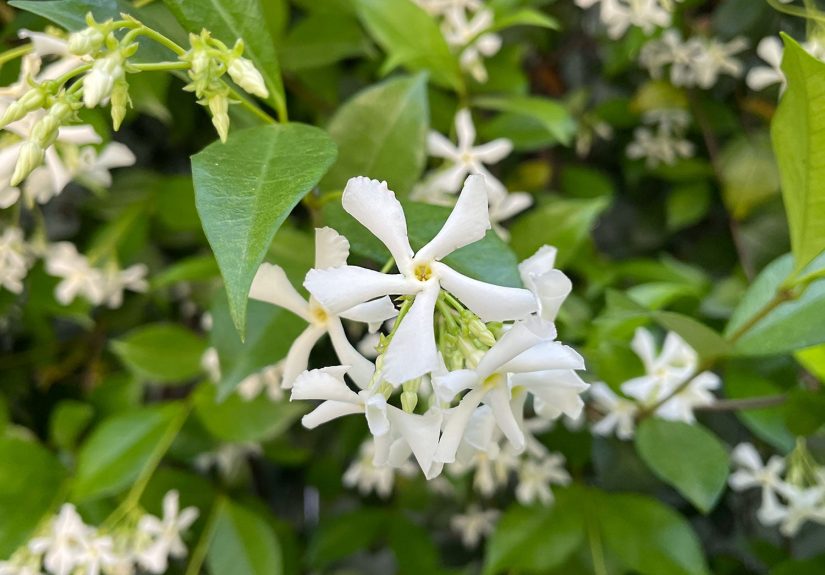
Star jasmine is the plant equivalent of walking past a bakery: you don’t have to see it to know it’s there.
When it’s in bloom, those tiny white pinwheel flowers can perfume an entire patio, porch, or side yardsometimes
before you even spot the vine. And while it’s commonly called “jasmine,” it’s not a true jasmine at all.
(It’s more like the fun cousin who shows up with snacks and stays a little too long.)
This guide covers how to grow star jasmine successfully in the U.S.from picking the right spot and planting it
correctly to pruning, fertilizing, troubleshooting, and keeping it happy as a groundcover or a climbing screen.
You’ll also find a longer “real-world experiences” section at the end with practical, lived-in lessons gardeners
regularly share after growing it for a few seasons.
Quick facts (so you can sound confident at the garden center)
- Botanical name: Trachelospermum jasminoides
- Common names: Star jasmine, Confederate jasmine, Chinese star jasmine
- Plant type: Evergreen twining vine (can also be used as a groundcover)
- Flowers: White, star/pinwheel-shaped, strongly fragrant (late spring into summer)
- USDA zones: Often grown in Zones 8–10; can succeed in parts of Zone 7 with protection/microclimates
- Light: Full sun to partial shade (more sun = more flowers)
- Soil: Fertile, well-draining; slightly acidic to neutral is ideal
- Water: Regular water while establishing; drought-tolerant once established
- Pet safety: Generally considered non-toxic to dogs and cats, but chewing any plant may cause mild stomach upset
What star jasmine really is (and what it isn’t)
Star jasmine is an evergreen vine in the dogbane family (Apocynaceae). It’s famous for glossy leaves and clusters of
intensely fragrant blooms that show up in late spring and can repeat lightly later in the warm season.
Despite the nickname, it’s not a “true jasmine” (those are usually in the genus Jasminum).
The growth habit is “twining,” meaning it wraps and winds around supports. That’s great news for trellises, chain-link fences,
pergolas, and arborsbut it won’t magically cling to brick like ivy. If you want it on a wall, you’ll need a support structure
(wire, lattice, or a trellis system).
Where star jasmine grows best in the U.S.
Pick a spot based on your winters, not your optimism
In warm regions (especially much of the South and coastal areas), star jasmine is a dependable evergreen that can grow vigorously.
In colder regions, winter is the boss. Star jasmine may die back or suffer leaf damage during freezes, so gardeners in borderline areas
often plant it in protected microclimates (near a warm wall, out of wind) or grow it in containers they can shelter.
Sunlight: the “more flowers” lever you can actually control
Star jasmine tolerates partial shade, but flowering is typically best with plenty of light. Aim for at least 6 hours of sun
if you want that “perfume commercial” bloom show. In very hot climates, some afternoon shade can prevent leaf scorch and reduce stress.
If it’s too shady, the plant may still look green and healthybut bloom like it’s on a personal strike.
How to plant star jasmine (step-by-step)
When to plant
Spring is a classic planting window because soil is warming and the vine has a long season to establish roots.
Fall can also work in warmer climates where winters are mild.
Soil prep
Star jasmine isn’t picky about soil type as long as it drains well. If your soil is heavy clay, improve drainage with compost
and consider planting slightly high (a gentle mound) to keep roots from sitting in soggy conditions.
A slightly acidic-to-neutral range is often ideal, but the big issue is drainagenot perfection.
Planting steps
- Dig a hole about as deep as the root ball and a bit wider.
- Loosen circling roots if the plant is pot-bound (gentle teasing helps prevent future “root traffic jams”).
- Place the plant so the crown sits at the same level it was growing in the pot.
- Backfill, firm the soil lightly, and water deeply to settle everything in.
- Add 2 inches of mulch around (not piled against the stem) to help conserve moisture and reduce weed competition.
Spacing guidelines
For a climbing vine, spacing depends on your goal: one plant can cover a surprising amount of fence if you give it time.
For groundcover use, wider spacing is common (several feet apart), with patience while it fills in.
Remember: “vigorous grower” is polite garden-speak for “I will absolutely take that space if you don’t negotiate.”
Training it to climb (without a wrestling match)
Young star jasmine usually needs help getting started. Gently wrap stems around a trellis or tie them loosely with soft garden ties.
Once the stems find their rhythm, they’ll twine on their own. For chain-link fences, it often threads through naturally.
Want a fragrant “roof” over a pergola? Plant at the base, guide new shoots upward, and keep tying until it’s established.
Want a dense privacy screen? Start with a trellis or fence and pinch growing tips occasionally to encourage branching
(more branches = more coverage and often more flowers).
Watering: the secret is what you do in year one
During establishment
For the first growing season, water consistently so the root system expands. A good rule of thumb: water deeply when the top
inch or two of soil feels dry. Avoid frequent light sprinkles that only wet the surfaceroots stay shallow, and the plant becomes
more heat-sensitive later.
Once established
Established star jasmine is generally drought-tolerant, especially in the ground. That said, prolonged heat waves can still stress it.
If leaves look dull, crispy at edges, or drop during extreme heat, it’s asking for a deep drink (and possibly some afternoon shade).
Container watering
Pots dry out fast. In summer, container-grown star jasmine may need watering multiple times a week (sometimes daily in heat),
while winter watering is usually much lighter. The goal is moist-but-not-soggy soilbecause root rot is one of the few things that can
truly ruin this plant’s mood.
Fertilizing and soil care
Star jasmine does best when soil is moderately fertile. Compost as a top-dressing in spring is a gentle, effective approach.
If you prefer fertilizer, a balanced slow-release feeding in spring can help support growth and blooming.
Avoid going overboard with high-nitrogen fertilizer: it can push lots of leafy growth at the expense of flowers.
A simple feeding schedule
- In-ground: Compost in spring; optional balanced fertilizer in spring (and possibly again after bloom if growth is weak).
- Container: Light, regular feeding during the growing season (follow label directions), because nutrients wash out faster in pots.
Pruning star jasmine (aka: how to keep it from eating your mailbox)
Best time to prune
Prune after the main bloom flush finishes. This timing helps you shape the plant without sacrificing a big chunk of next season’s flowers.
If you prune very late in the season in many climates, you can reduce bloom the following year because you’re removing the growth that would
carry flower buds.
How to prune
- For tidying: Trim wandering shoots and thin congested areas for airflow and light.
- For density: Pinch or lightly tip-prune new growth to encourage branching.
- For a hard reset: You can cut back more firmly if it’s outgrown the spacejust do it at a smart time and keep aftercare consistent.
Practical warning: stems can release a sticky, milky sap when cut. Wear gloves if you’re sensitive, and don’t wear your favorite shirt
unless you enjoy “abstract sap art.”
Growing star jasmine in pots (and overwintering in colder zones)
Star jasmine can be a fantastic container plant if you give it two things: drainage and support. Choose a pot with drainage holes,
use a quality potting mix, and add a trellis. Place it where it gets bright light outdoors during the growing season.
In colder climates, many gardeners bring the pot into a sheltered spot for winter (garage with light, sunroom, bright window).
Don’t expect heavy indoor bloomingmany vines behave like they’re “on hold” indoorsbut you can keep it alive and thriving
until spring returns.
Propagation: how to make more star jasmine for free
The most common home method is propagation by stem cuttings. Semi-hardwood cuttings (stems that are starting to firm up but aren’t
old and woody) often root reliably when kept warm and humid.
Simple cutting method
- Cut a 4–6 inch healthy stem section (preferably not flowering).
- Remove lower leaves so you have a bare stem section to insert into the mix.
- Dip the cut end in rooting hormone (optional but helpful).
- Plant in moist, well-draining mix; cover loosely with a clear bag to hold humidity.
- Keep in bright, indirect light; keep the mix lightly moist (not soaked) until roots form.
Layering is another easy option: bend a flexible stem to the ground, lightly wound the underside, pin it in place, and keep the area moist.
Once it roots, you can cut it free and replant.
Pests, diseases, and troubleshooting
Star jasmine is often described as “low maintenance,” which is garden code for: it usually behaves… until it doesn’t.
Most problems come from water stress, low light, or crowded growth.
Common pests
- Scale: Looks like tiny bumps on stems/leaves. Manage with horticultural oils/soaps and by encouraging beneficial insects.
- Aphids: Cluster on tender new growth; rinse off with water or treat with insecticidal soap if needed.
- Spider mites: More common in hot, dry conditions; look for stippled leaves and fine webbing.
- Mealybugs: White, cottony pests in leaf joints; treat with targeted soap or alcohol swabs on small infestations.
Common diseases and disorders
- Root and crown rot: Usually from poor drainage or overwatering. Fix the cause (drainage) or it keeps coming back.
- Frost damage: Leaf burn or dieback after freezes; prune damaged growth when the worst cold has passed.
- Nutrient issues: Pale leaves can indicate mineral imbalanceespecially in containers. Consider a balanced feeding and check watering habits.
Why it’s not blooming (most common reasons)
- Not enough sun: It grows, but flowers are sparse. Move it or increase light exposure if possible.
- Pruned at the wrong time: Late pruning can remove growth that would have carried buds.
- Too much nitrogen: Beautiful leaves, minimal bloomsclassic.
- Stress from drought/heat or soggy roots: Fix the water routine, and blooms often improve next season.
Landscape uses and design ideas
Star jasmine is a multi-tool plant. Train it up a fence for privacy. Run it over an arbor for fragrance overhead.
Let it spill from a large container as a “green waterfall.” Or use it as a groundcover on slopes where you want evergreen coverage.
Best places to plant for maximum enjoyment
- Near patios, porches, and outdoor seating (where the fragrance matters most)
- Along walkways (you’ll catch the scent as you pass)
- On fences or trellises near property lines (privacy + perfume)
- At pergola posts (eventually becomes a fragrant canopy)
Safety notes (pets, kids, and the sticky sap situation)
Star jasmine is widely considered non-toxic to dogs and cats. Still, “non-toxic” doesn’t mean “edible salad,” and pets that chew
plants may get mild digestive upset. The bigger practical issue for humans is the sticky, milky sap released when stems are cut.
It can irritate sensitive skin and stain fabric, so gloves and quick tool cleanup are smart.
Conclusion
If you want a fragrant, evergreen vine that can climb, screen, spill, and generally make a yard feel more “finished,” star jasmine
is a strong contender. Give it well-draining soil, enough light, steady water in the first year, and a pruning routine that respects
its bloom cycle. After that, it’s mostly about guiding its enthusiasm so it beautifies your space instead of launching a takeover.
Real-world experiences: what gardeners learn after growing star jasmine
The care instructions are helpful, but the best lessons often come from the “ohhh, now I get it” momentsusually right after a vine
does something dramatic. Here are common experiences gardeners share when star jasmine becomes part of daily life (and occasionally,
part of the neighbor’s fence).
1) The fragrance is realand it changes how you use your outdoor space
Many gardeners report that star jasmine turns a regular patio into the place everyone magically wants to sit. During peak bloom,
the scent can drift across a yard, especially in the evening when air cools and fragrance seems to hang longer. A common “wish I knew”
is placement: planting it at the far back corner of the lot is like buying concert tickets and listening from the parking lot.
People who love it most usually position it near a walkway, porch steps, or a seating area so the scent becomes part of everyday routines.
2) It grows politely… until it suddenly doesn’t
A frequent pattern is slow-ish growth at first (while roots establish), then a burst of long shoots once it’s comfortable.
Gardeners often describe it as a “year-two surprise.” The vine will send out runners looking for somethinganythingto wrap around.
That can be great on a trellis, but it also means it may discover nearby shrubs, small trees, downspouts, or porch railings.
The most satisfied growers tend to do quick monthly check-ins during the growing season: redirect, tie, and trim a little,
rather than letting it become a weekend-long pruning marathon later.
3) The support structure matters more than people expect
One of the most common frustrations is expecting star jasmine to “stick” to a wall. It’s a twiner, not a clinger. In real gardens,
success often comes down to giving it the right structurelattice, wire panels, a trellis with gaps it can wrap.
Once the stems can twine, the plant usually takes it from there. Gardeners who install support early (before the vine is large)
often say training becomes dramatically easier, and the plant looks more intentional instead of “escaped.”
4) Pruning isn’t hardbut timing makes a big difference
People who prune right after flowering often report better shape control and fewer regrets. The plant responds with fresh growth,
and you can keep it within bounds without sacrificing a full season of blooms. Meanwhile, gardeners who prune very late sometimes notice
lighter flowering the next spring and learn the lesson the hard way: star jasmine loves to bloom, but it also loves to be left with enough
time to set itself up for that bloom. A helpful real-life trick is “two-stage pruning” for vigorous plants: do your main shaping after bloom,
then do lighter touch-ups later rather than another major haircut.
5) The sticky sap is the one surprise nobody brags about
Many gardeners mention the sap the first time they prune: it’s milky, sticky, and enthusiastic about attaching to gloves, pruners, and sleeves.
The practical advice that shows up repeatedly is simple: wear gloves, keep a rag handy, and clean tools promptly.
It’s not a deal-breakermore like a reminder that this plant is in the dogbane family and comes with its own tiny personality quirk.
6) The biggest “health” problems are usually water and light, not mystery diseases
When star jasmine looks roughyellow leaves, fewer blooms, dull growthgardeners often find the cause is either too much water (poor drainage)
or not enough light. Container growers, in particular, learn that pots swing between “bone dry” and “oops, swamp” much faster than in-ground beds.
A popular routine is checking moisture with a finger test and watering deeply when the top layer dries out, instead of watering on a strict calendar.
Over time, people get better at reading the plant’s signals: droop and crisp edges often mean thirsty; limp growth and leaf drop after watering
can hint at overwatering or root stress.
7) It’s a long-term plant that rewards patience
The most positive experiences usually come from gardeners who treat star jasmine like a living feature, not a one-season decoration.
The first year is about roots and training. The second year is often when coverage and bloom intensity noticeably improve.
By the third season, many vines become a defining part of the landscapeespecially when trained on a pergola or fence line.
If you’re deciding whether it’s “worth it,” the consensus from many growers is yesif you give it the right start and accept that
an enthusiastic vine will always require a little guiding. It’s not high-maintenance, but it is high-ambition.





 Close
Close