
Table of Contents >> Show >> Hide
- Why the North Fork Changes the Way a Kitchen Should Feel
- What “Simple Farmhouse Kitchen” Actually Means
- A Real-Life North Fork Example: The Greenport Farmhouse Kitchen
- Layout: Make It Open, But Not Echo-y
- The Farmhouse Palette: White + Wood, With Depth (Not Blandness)
- Cabinetry: Why Shaker Works So Well Here
- Countertops and Work Surfaces: The “Cook Here” Materials
- Backsplash Choices: Farmhouse Texture That Won’t Get Old Fast
- The Sink: The Farmhouse Icon That’s Also Just… Useful
- Open Shelving: Charming, Functional, and Slightly Dangerous
- Industrial Touches: Add Edge Without Going Full Warehouse
- Lighting: The Secret Ingredient in a White-and-Wood Kitchen
- Durability for Real Life: Sand, Steam, and Tomato Juice
- Common Mistakes That Make “Farmhouse” Feel Fake
- A Simple Checklist for Your Own North Fork Farmhouse Kitchen
- Conclusion: Simple Wins (Especially on the North Fork)
- North Fork Kitchen Moments: of Real-Life Experience
The North Fork of Long Island has a particular talent: it makes you believe you could live slower, cook fresher, and finally stop storing random takeout menus in a drawer “for emergencies.” Locals call it “NOFO,” and the region’s whole personality is farm stands, salt air, and wine country energy without the need to perform for anyone. Translation: it’s the perfect setting for a simple farmhouse kitchenone that feels honest, useful, and a little bit romantic, but not in a “candles next to the toaster” way.
This article breaks down what “simple farmhouse” actually means in 2026 (spoiler: it’s not a theme, it’s a strategy), then zooms in on a real North Fork-inspired example: a farmhouse kitchen in a circa-1868 historic home in Greenport. The goal is a kitchen that works hard, looks calm, and lets the good stuffwide-plank floors, a cozy fireplace, fresh producedo most of the talking.
Why the North Fork Changes the Way a Kitchen Should Feel
A kitchen isn’t just a room; it’s a reflection of what you do all day. On the North Fork, what you do is: buy tomatoes you can smell from three feet away, come home sandy, and cook something that didn’t need a delivery app. The area is known for vineyards and farm stands, and it’s the kind of place where “quick dinner” can still involve a cutting board and a little pride.
North Fork cues that naturally fit farmhouse design
- Farm-to-table living: you want counter space, a real prep zone, and storage that doesn’t fight you.
- Coastal practicality: durable finishes matter when the air is humid and the floors see boots, sand, and grocery bags.
- Low-key charm: the best rooms feel collected, not “staged for a listing photo.”
What “Simple Farmhouse Kitchen” Actually Means
“Farmhouse” gets misunderstood because the internet turned it into a costume. A simple farmhouse kitchen is not required to own a sign that says Gather. Instead, it’s built around a few timeless ideas: clean lines, hardworking materials, and a warm balance of white and wood. If your kitchen feels like it could host a pie cooling on the counter and handle a weeknight pile of dishes without drama, you’re doing it right.
Core design principles
- Simplicity over fuss: cabinetry and trim that feel calm (Shaker-style is the usual MVP).
- Function is the aesthetic: cookware can be visible if it’s organized; storage must be intentional.
- Honest materials: wood, stone, brick, tiletextures that look better with age.
- Warmth in a white kitchen: white isn’t cold when it’s paired with natural wood and lived-in details.
A Real-Life North Fork Example: The Greenport Farmhouse Kitchen
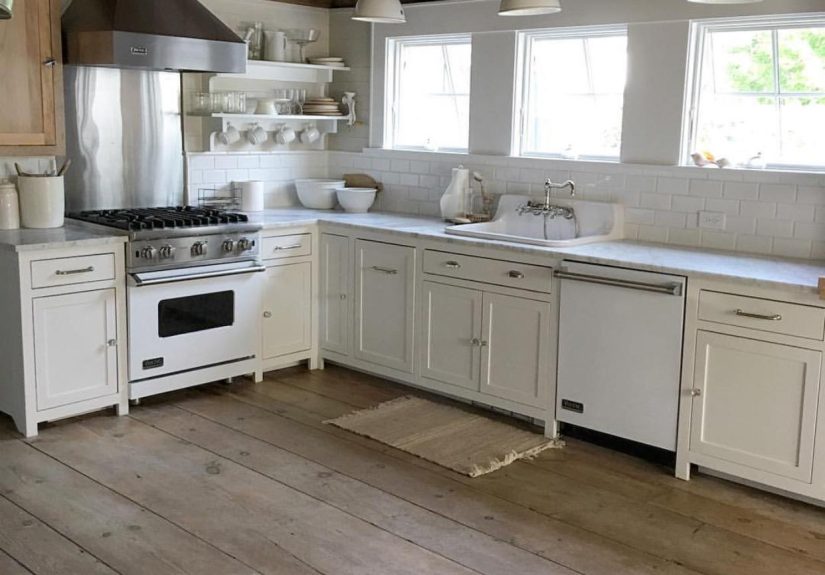
In Greenport, a simple farmhouse kitchen was designed for a circa-1868 historic home with a clear mission: keep the space open so the original wide-plank floorboards and a cozy fireplace stay in view. The kitchen measures about 20 feet long by 14 feet widelarge enough to be generous, small enough to stay intimateand the owner’s palette leans into white tones, natural wood, and a touch of industrial edge.
That mixwhite + wood + industrial accentsis a sweet spot for the North Fork. It nods to farm utility, respects old architecture, and still feels fresh. The trick is restraint: just enough metal and black hardware to sharpen the room, but not so much that it starts resembling a charming wrench collection.
Layout: Make It Open, But Not Echo-y
“Open” is not the same as “empty.” In a 20-by-14-foot kitchen, you can create openness while still giving the room structure. Think of the space as a set of zonesprep, cooking, cleanup, storage, and “someone is leaning here talking while you pretend you’re not hungry yet.”
A practical zone plan for a 20′ x 14′ farmhouse kitchen
- Prep zone: the longest uninterrupted counter run (ideally near the fridge and pantry).
- Cook zone: range + landing space on both sides (because hot pans need parking).
- Cleanup zone: sink + dishwasher + trash in a tight triangle that keeps mess contained.
- Social zone: a table or island edge where people can sit without standing in your chopping path.
If the room includes a fireplace, treat it like a featurenot an obstacle. Let it be visual warmth while your kitchen layout does the functional warming (stove, oven, soup, repeat). Keeping the plan open helps the fireplace read as part of the home’s story instead of a random architectural surprise.
The Farmhouse Palette: White + Wood, With Depth (Not Blandness)
White tones are a farmhouse classic for a reason: they bounce light, make rooms feel clean, and let natural materials take center stage. But white can look flat if everything is the same temperature and sheen. The easy fix is to add depth through wood, stone, and textureand to mix finishes that look “collected” rather than matched.
Ways to keep white from feeling sterile
- Natural wood accents: shelves, an island top, stools, or a simple beam if the architecture supports it.
- Texture on the walls: shiplap, beadboard, brick, or tile that adds shadow and variation.
- Soft contrast: aged brass, matte black, or oil-rubbed bronze hardware to outline shapes without shouting.
Cabinetry: Why Shaker Works So Well Here
Shaker cabinets are popular because they don’t pick fights with anything. Their clean frame-and-panel look feels traditional, but it also behaves in modern kitchensespecially farmhouse and modern farmhouse spaces. In a North Fork setting, Shaker-style cabinetry fits the historic vibe without becoming precious. It reads “simple craftsmanship,” not “look at me, I’m trending.”
Keep cabinet fronts straightforward, then spend your “personality budget” on hardware, lighting, and materials. That way, the kitchen stays flexible as your tastes evolve (and as someone in your household inevitably decides they love neon-green espresso machines).
Countertops and Work Surfaces: The “Cook Here” Materials
A farmhouse kitchen should invite use. That usually means at least one surface that’s forgiving and warm. Many people love butcher block for islands or prep areas because it feels approachable and pairs naturally with white cabinetry. Stone (like marble-look quartz or soapstone-style surfaces) can add durability and a calmer, heavier visual anchor.
A simple pairing that looks expensive without trying too hard
- Perimeter: a stone-like counter for easy cleanup and water resistance.
- Island or work table: butcher block or a solid wood top that softens the room.
If your kitchen is the “wash-and-repeat” heart of the home, prioritize comfort: rounded edges, enough landing space, and a layout that keeps the prep area from becoming a traffic intersection.
Backsplash Choices: Farmhouse Texture That Won’t Get Old Fast
The farmhouse backsplash sweet spot is simple, textured, and timeless. Classic subway tile is popular because it plays well with almost everything. Painted shiplap or beadboard can look authentic and warmespecially when your goal is a calm wall plane, not a busy pattern.
Timeless farmhouse backsplash options
- White subway tile: clean, classic, and easy to style.
- Shiplap: adds texture and a soft “coastal farmhouse” nod.
- Beadboard: charming and cottage-friendly, especially around sink areas.
- Brick (or brick tile): perfect if your home has historic elements like a fireplace nearby.
The Sink: The Farmhouse Icon That’s Also Just… Useful
If farmhouse design had a mascot, it would be the apron-front sink. Beyond the look, it’s practical: deep basin, easy to fill, and ready for the kind of cooking that produces real mess. On the North Fork, where seafood dinners and farm-stand produce can make your kitchen feel like a delicious storm system, a hardworking sink is not a luxuryit’s self-preservation.
Open Shelving: Charming, Functional, and Slightly Dangerous
Open shelving is a farmhouse favorite because it makes a kitchen feel airy and lived-in. It also forces you to be honest about how many mismatched mugs you own. Used well, shelves are both practical and beautiful: everyday dishes, glassware, a few jars, and a small rotation of “pretty things” that don’t collect dust forever.
Open-shelf rules that keep it simple
- Limit the palette: white dishes and clear glass look calm and cohesive.
- Keep it shallow: shallower shelves reduce visual clutter and make cleaning easier.
- Mix closed and open storage: hide the chaos; display the useful.
Industrial Touches: Add Edge Without Going Full Warehouse
The Greenport example includes industrial elements alongside white and wood. That blend works best when industrial details behave like punctuation marksnot full paragraphs. A pair of metal pendants, a utilitarian faucet, or simple bracketed shelves can add crispness. The key is to keep shapes simple and finishes consistent, so the room still reads as warm and farmhouse-forward.
Easy industrial accents that still feel homey
- Matte black or aged metal hardware
- Simple metal pendant lights over an island or table
- A sturdy stool with a wood seat (comfort matters; martyrdom is not required)
Lighting: The Secret Ingredient in a White-and-Wood Kitchen
Farmhouse kitchens look best with layered lighting: ambient (overall), task (where you work), and accent (where you want mood). In a North Fork kitchen, natural light does a lot of the heavy liftingespecially if you’re lucky enough to have windows that catch late afternoon glow. But after sunset, you want warmth, not interrogation-room brightness.
Simple lighting plan
- Ceiling fixture: soft ambient light, ideally dimmable.
- Pendants: over the island or table for focus and style.
- Under-cabinet lighting: makes prep safer and the kitchen feel polished at night.
Durability for Real Life: Sand, Steam, and Tomato Juice
A farmhouse kitchen should age gracefully. That’s not just romanticit’s practical. Choose finishes that can handle humidity, cooking steam, and the occasional “how did that berry get on the ceiling?” moment. If you’re preserving original wide-plank floors, protect them with the right sealant and use washable rugs in high-traffic zones.
Low-drama durability upgrades
- Washable paint on walls and trim (especially near cooking zones).
- Ventilation that actually vents outside.
- Rugs that can be cleaned without a ritual sacrifice to the laundry gods.
Common Mistakes That Make “Farmhouse” Feel Fake
- Too many themed props: one vintage piece is charming; seven are a gift shop.
- All-white everything with no texture: it can look unfinished instead of intentional.
- Open shelving everywhere: you’ll regret it when life gets busy.
- Ignoring workflow: a pretty kitchen that’s annoying to cook in is just an expensive photo backdrop.
A Simple Checklist for Your Own North Fork Farmhouse Kitchen
- Shaker-style cabinetry in a soft white or warm neutral
- Natural wood element (shelves, island, or a work table)
- Textured backsplash (subway tile, shiplap, beadboard, or brick)
- Apron-front sink or deep single-bowl sink for real cooking
- Consistent hardware finish (matte black, aged brass, or brushed nickel)
- Layered lighting with dimmers
- A layout built on zones, not vibes
Conclusion: Simple Wins (Especially on the North Fork)
A simple farmhouse kitchen on the North Fork is less about chasing a look and more about supporting a lifestyle: fresh food, relaxed hospitality, and rooms that feel welcoming without trying too hard. The best version keeps historic character visiblelike wide plank floors and a fireplacewhile using a calm palette, practical storage, and durable materials that can handle everyday life. When it’s done right, the kitchen doesn’t demand attention. It earns it, quietly, every single day.
North Fork Kitchen Moments: of Real-Life Experience
Spend a weekend on the North Fork and you’ll notice something funny: your phone starts feeling less essential, and your kitchen starts feeling more important. Not in a dramatic, makeover-show waymore like a gentle realization that the best meals don’t need a lot of gadgets. They need space to work, a sharp knife, and ingredients that weren’t bred to survive cross-country shipping.
The day often begins the same way: coffee first, then “just a quick stop” at a farm stand that turns into a trunk full of vegetables. You come home with corn, tomatoes, maybe peaches, and that one item you didn’t plan for but now cannot live without (today it’s homemade jam; tomorrow it’s five pounds of potatoes). A simple farmhouse kitchen makes this routine feel effortless because it’s built for the rhythm: a clear counter for sorting produce, a deep sink for rinsing, and enough breathing room that you’re not balancing cucumbers on top of the toaster.
Afternoon cooking on the North Fork has its own soundtrackscreen door, seagulls in the distance, and someone inevitably asking, “Do we have more butter?” In a white-and-wood kitchen, the light does most of the decorating. The room looks good even while it’s messy, which is the highest compliment you can give a working kitchen. Wide-plank floors (especially original ones) add a softness underfoot that makes you linger. A nearby fireplace, even unlit, gives the room a grounded feelinglike it has been feeding people for a long time and plans to keep doing so.
Dinner tends to be simple but smugly satisfying: roasted vegetables, seafood, something grilled, maybe bread warmed in the oven. The apron-front sink earns its keep after the mealstockpot, sheet pan, colander, all handled without a splash war. Open shelves become surprisingly helpful when you’re cooking for friends: glasses and plates are easy to grab, and the kitchen feels open and social instead of “everyone out while I cook.” (It also motivates you to keep only what you use, because open shelving does not believe in your “mug collection era.”)
The best part happens late: the cleanup is faster than you expect because the kitchen was designed for real workflow. Trash is where you need it. The dishwasher doesn’t block traffic. There’s a landing spot for everything. You wipe down counters, turn down the lights, and the room still looks warmwood tones glowing, white surfaces calm, hardware quietly outlining the shapes. The kitchen doesn’t scream “style.” It whispers “you can live like this,” which is exactly why people fall for the North Fork in the first place.






 Close
Close