
Table of Contents >> Show >> Hide
- What Volatility Actually Measures (and What It Doesn’t)
- Asset Allocation: The Job Description (Spoiler: It’s Not “Chase Calm Markets”)
- When Volatility Can Help Asset Allocation Decisions
- Risk Parity: Using Volatility to Balance Risk (Not Dollars)
- Volatility Targeting: Adjusting Exposure to Keep Risk Steady
- Minimum Volatility and Low-Volatility Investing
- When Volatility Is a Bad Driver of Allocation Decisions
- A Smarter Framework: How to Use Volatility Without Letting It Use You
- Step 1: Start with a strategic allocation (the “default setting”)
- Step 2: Use volatility to pressure-test, not to panic-edit
- Step 3: Look at risk-adjusted measures (not just return or volatility alone)
- Step 4: Remember correlation is the sidekick that steals the show
- Step 5: If you use volatility-based strategies, define rules and guardrails
- Concrete Allocation Scenarios (Where Volatility Helps)
- Quick FAQ: Volatility and Asset Allocation
- So… Should You Use Volatility to Make Asset Allocation Decisions?
- Real-World Experiences and Lessons (500+ Words)
Volatility is one of those investing words that sounds like it should come with a seatbelt. Markets wobble, charts zigzag, your group chat starts saying “cash is king,” and suddenly you’re wondering: Should I change my asset allocation because volatility changed?
Answer: sometimesbut not in the dramatic, “sell everything and move to a cabin” way. Volatility can be a useful input for asset allocation, but it’s also famously easy to misuse. If you treat it like a smoke alarm (helpful signal) rather than a fire (the thing itself), you’ll make better decisions and keep your eyebrows.
This article breaks down what volatility really measures, when it can help guide allocation, where it can mislead you, and how professionals use (and limit) volatility in frameworks like risk parity, minimum-volatility strategies, and volatility targeting.
What Volatility Actually Measures (and What It Doesn’t)
Volatility is usually “standard deviation,” not “doom”
In most investing contexts, volatility means the standard deviation of returnshow widely returns tend to swing around an average. Big swings up and down = higher volatility. Smaller, steadier movements = lower volatility.
That definition matters because standard deviation treats upside and downside moves as equally “risky.” A stock that jumps +5% as often as it drops −5% can look very volatileeven if you’re not exactly crying into your cereal on the up days.
Why people criticize volatility as a risk measure
Investors typically care more about losses than surprises. Standard deviation doesn’t distinguish between “good volatility” (upside) and “bad volatility” (downside). That’s why many analysts pair volatility with other metrics like:
- Downside deviation / semideviation (focuses on negative outcomes)
- Max drawdown (peak-to-trough pain)
- Value at Risk (VaR) and Conditional VaR (CVaR) (tail risk tools)
- Sharpe and Sortino ratios (risk-adjusted return measures)
Volatility is not “bad,” but it’s incomplete. Think of it like using “how loud the music is” to judge whether the party is dangerous. Helpful clue. Not the whole story.
Asset Allocation: The Job Description (Spoiler: It’s Not “Chase Calm Markets”)
Asset allocation is the long-term decision of how you split your portfolio among broad asset classestypically stocks, bonds, and cash (plus optional slices like real estate, commodities, or alternatives). Done well, it’s meant to:
- Match your time horizon (when you need the money)
- Fit your risk tolerance (how much fluctuation you can emotionally and financially withstand)
- Support your goals (retirement income, house down payment, college funding, etc.)
- Balance risk and return through diversification
Notice what’s missing: “whatever the market did last week.” That doesn’t mean you ignore volatility. It means volatility should inform how you implement allocation, not replace why you have one.
When Volatility Can Help Asset Allocation Decisions
1) Setting expectations for “normal” portfolio behavior
Volatility helps you estimate what a portfolio might feel like in real life. If your mix has historically shown bigger swings, you can plan behaviorally and financially.
Practical use: If a portfolio’s typical volatility implies that a 15–25% temporary drawdown is plausible, and you know you’ll panic-sell at −10%, that’s not a volatility problemit’s an allocation mismatch problem.
2) Designing a rebalancing plan (without emotional improvisation)
Rebalancing is the habit of periodically bringing your portfolio back to target weights. Volatility can help set rebalancing rules that prevent you from “doing vibes-based finance.” For example:
- Calendar rebalancing: quarterly or annually
- Band rebalancing: rebalance when an asset class drifts, say, 5% from target
- Risk-based rebalancing: rebalance if a sleeve’s volatility (or risk contribution) rises meaningfully
Key point: volatility becomes a trigger for discipline, not an excuse for market timing.
3) Comparing “risk per dollar” across asset classes
A dollar in stocks does not behave like a dollar in bonds. Stocks often have higher volatility than high-quality bonds, so equal dollar weights can create unequal risk weights.
This insight is the foundation of risk parity and other risk-budgeting approaches. Which brings us to…
Risk Parity: Using Volatility to Balance Risk (Not Dollars)
Risk parity is an allocation approach that aims to distribute risk more evenly across asset classesoften using volatility (and correlations) to estimate how much each sleeve contributes to total portfolio risk.
A simple example (math-lite, not math-phobic)
Imagine:
- Stocks have ~15% volatility
- Bonds have ~5% volatility
If you put 60% in stocks and 40% in bonds, your portfolio might be capital-balanced, but often not risk-balancedstocks can dominate the overall risk.
A rough “equal-risk” idea would allocate more dollars to the lower-volatility asset (bonds) and fewer dollars to the higher-volatility asset (stocks). In practice, risk parity also accounts for correlation (how assets move together), not just volatility.
The controversial part: leverage
Because low-volatility assets may have lower expected returns, some risk parity implementations use leverage to raise expected return while keeping risk balanced. That can work, but it introduces leverage-specific risks (financing costs, sudden correlation shifts, liquidity stress). Risk parity isn’t automatically “safer”it’s safer in some regimes and awkward in others.
Volatility Targeting: Adjusting Exposure to Keep Risk Steady
Volatility targeting (sometimes called “target volatility” or “risk control”) is a dynamic approach that adjusts exposure based on recent or forecast volatility, aiming to keep the portfolio’s volatility near a chosen target.
Conceptually:
- If volatility rises above target, exposure is reduced (de-risk).
- If volatility falls below target, exposure is increased (re-risk).
Why it appeals to humans (and committees)
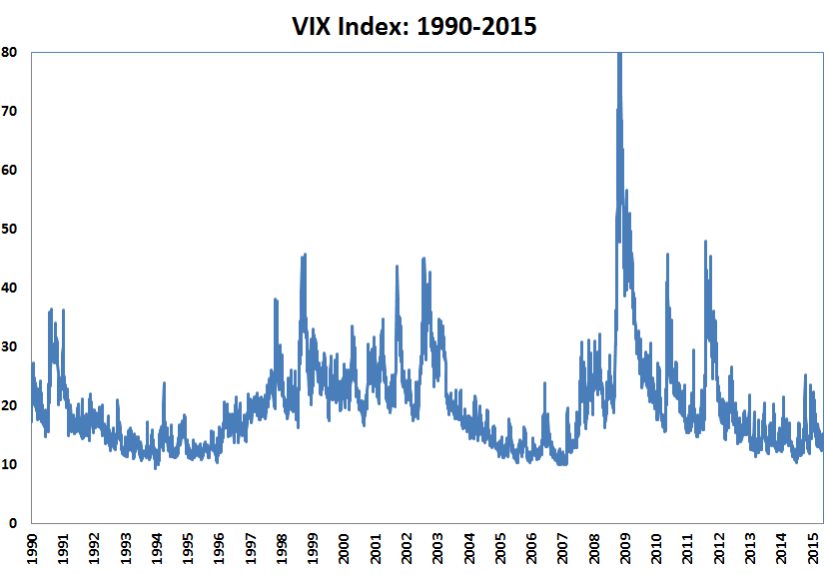
Volatility tends to clusterhigh-volatility periods often follow high-volatility periods. Volatility targeting tries to respond to that persistence and deliver a smoother ride, which can reduce the odds that investors bail out at the worst time.
But it has trade-offs
- Whipsaw risk: if volatility spikes briefly and then falls, the strategy may sell low and re-buy higher.
- Turnover and costs: frequent adjustments can increase trading costs and (in taxable accounts) taxes.
- Model risk: volatility estimates can be wrong, especially during fast regime changes.
- Correlation surprises: diversification can weaken when you need it most.
Used thoughtfully, volatility targeting can be a tool. Used blindly, it can become an expensive way to chase yesterday’s weather report.
Minimum Volatility and Low-Volatility Investing
Another volatility-based approach is minimum-volatility (or low-volatility) equity investing, which builds an equity portfolio designed to be less volatile than the broader market. These strategies typically use volatility and correlations among stocks to try to reduce overall portfolio swings.
Two things to know:
- Lower volatility doesn’t guarantee lower drawdowns in every market environment, but it can change the ride quality.
- Factor tilts happen: low-vol portfolios often lean toward defensive sectors and may lag sharply in strong risk-on rallies.
These strategies can be useful inside an allocation, but they’re still equitiesand equities can still bite.
When Volatility Is a Bad Driver of Allocation Decisions
1) When it turns into “sell because it’s scary”
If higher volatility automatically makes you reduce risk, you may end up systematically selling after markets have already dropped and volatility has already risen. That’s the classic “buy high, sell low” in a tuxedo.
2) When it ignores time horizon
A 25-year retirement investor and a 2-year house-down-payment investor should not react the same way to volatility. Your horizon determines whether volatility is a nuisance or a mission-threatening risk.
3) When it replaces goal-based planning
Volatility is a portfolio statistic. Your goals are life statistics. If you change allocation because volatility changedbut your goals, timeline, and cash needs didn’tyou’re letting the market run your plan.
4) When it confuses volatility with permanent loss
Volatility is movement. Permanent loss is damage. They overlap sometimes, but not always. A high-quality bond might be low volatility but still face inflation risk. A stock might be volatile but deliver strong long-term compounding if you can hold through drawdowns.
A Smarter Framework: How to Use Volatility Without Letting It Use You
Step 1: Start with a strategic allocation (the “default setting”)
Build your baseline allocation around goals, time horizon, and risk capacity. This is the portfolio you own on days when the news is boringwhich, historically speaking, is most days even when it feels like none of them are.
Step 2: Use volatility to pressure-test, not to panic-edit
Ask:
- “If my portfolio drops 20%, can I still meet near-term cash needs?”
- “Will I stay invested, or will I do something creative and unhelpful?”
- “Do I have enough safer assets to rebalance into risk when opportunities appear?”
Step 3: Look at risk-adjusted measures (not just return or volatility alone)
Two portfolios can have the same return with different volatility. Or the same volatility with different returns. Metrics like the Sharpe ratio (return per unit of total volatility) and Sortino ratio (return per unit of downside volatility) can help you compare efficiencyespecially when evaluating funds or strategies.
Step 4: Remember correlation is the sidekick that steals the show
Volatility tells you how much assets wiggle. Correlation tells you whether they wiggle togetherespecially in stress. In crises, correlations often rise, diversification can weaken, and portfolios can behave very differently than a calm-period spreadsheet suggests.
Step 5: If you use volatility-based strategies, define rules and guardrails
If you’re considering risk parity, volatility targeting, or minimum-volatility sleeves, set up:
- Clear targets (e.g., risk level, volatility target range)
- Rebalance frequency (monthly, quarterly)
- Cost awareness (expense ratios, transaction costs, taxes)
- Behavioral plan (“I will not turn this into a daily mood ring.”)
Concrete Allocation Scenarios (Where Volatility Helps)
Scenario A: Pre-retiree managing sequence risk
If you’re within 5–10 years of retirement, volatility isn’t just uncomfortableit can amplify sequence-of-returns risk (bad early returns can harm sustainability). Using volatility-aware toolslike a slightly higher bond allocation, a cash buffer, or a structured rebalancing policycan help reduce the chance you’re forced to sell stocks after a drawdown.
Scenario B: A disciplined accumulator with a long horizon
If you’re decades from needing the money, higher volatility may be tolerableespecially if you’re consistently contributing. In that case, the bigger risk might be under-allocating to growth assets and missing long-term compounding. Volatility is information, not a command.
Scenario C: A committee-driven portfolio (endowment, nonprofit, family office)
Institutions often use volatility and risk contribution analytics to keep portfolios within mandated risk ranges. Here volatility is part of governance: a way to measure whether the portfolio still matches policy, not a reason to improvise.
Quick FAQ: Volatility and Asset Allocation
Is volatility the same as risk?
Not always. Volatility is a common proxy for risk, but it treats upside and downside the same and may miss tail risks, liquidity risk, and inflation risk.
Should I reduce stock allocation when volatility rises?
Only if the volatility reveals a mismatch with your time horizon, cash needs, or ability to stay invested. Otherwise, reacting mechanically can become market timing.
Is “low volatility” always better?
No. Lower volatility can mean lower drawdowns in some environments, but it can also lag during strong bull markets. “Better” depends on goals, horizon, and behavior.
What’s the best way to use volatility as a regular investor?
Use it to set expectations, build a rebalancing policy, compare risk-adjusted performance, and ensure your allocation matches your ability to hold through downturns.
So… Should You Use Volatility to Make Asset Allocation Decisions?
Use volatility as a tool, not a steering wheel. It’s valuable for understanding how your portfolio behaves, building risk-aware frameworks, and implementing disciplined rebalancing. It also underpins professional approaches like risk parity and volatility targetingstrategies that can work well when designed carefully and maintained with realistic assumptions about correlations, costs, and regime shifts.
But volatility is a noisy signal. If you let it dictate allocation changes without anchoring to goals and time horizon, you’ll likely make decisions that feel comforting in the moment and expensive later. The best portfolios aren’t the ones that never bouncethey’re the ones you can actually stick with.
Educational content only, not individualized investment advice.
Real-World Experiences and Lessons (500+ Words)
To make this practical, here are some common “investor experience” patterns that show up again and againshared as composite examples, not as one person’s exact story. If you’ve ever felt personally attacked by a market chart, congratulations: you’re human.
Experience 1: The “Volatility = Danger” reflex
A classic experience happens when someone checks their portfolio during a rough week. The headlines are loud, the market is louder, and their portfolio looks like it tripped down a staircase. Volatility spikes. The investor concludes: “This portfolio is too risky.” They sell stocks, increase cash, and promise themselves they’ll buy back “when things calm down.”
Here’s what often follows: markets stabilize before feelings do. By the time volatility falls, prices are already higher. The investor buys back later, but with fewer shares than beforeessentially paying an anxiety tax.
The lesson: volatility is often highest after markets drop. Treating volatility like a timing signal can push you into selling after damage is done. A better response is to ask, “Was my allocation appropriate in the first place?” If it wasn’t, adjust slowly and deliberately with a plan. If it was, rebalancing may be the grown-up move.
Experience 2: The “60/40 Surprise”
Another common experience: an investor thinks they’re conservative because they own a “balanced” 60/40 portfolio. Then a year arrives where both stocks and bonds struggle at the same time. The investor discovers that their mental model“bonds always cushion stocks”isn’t a law of physics.
The lesson: volatility is only one part of risk. Correlation shifts matter. If your plan assumes one asset will always diversify another, stress-testing is your friend. Many investors improve resilience by diversifying across more than two levers (for example, adding short-term Treasuries, inflation-linked bonds, or other diversifiers where appropriate), and by keeping an emergency fund separate from the portfolio. Volatility analysis can highlight when you’re relying on a single relationship that may break under pressure.
Experience 3: The “Risk Parity looks brilliant… until it doesn’t” phase
Some investors discover risk parity and love the logic: “Why would I put equal dollars into assets that have very different risk?” They rebalance based on volatility estimates, sometimes with leverage or a “risk control” sleeve. During certain market regimes, results look impressively smooth. Confidence rises. Then a correlation regime changes, leverage costs rise, or bonds stop acting as the portfolio’s shock absorber. The strategy underperforms expectationssometimes sharply.
The lesson: volatility-based allocation frameworks can be powerful, but they’re model-driven. Models can be useful and still be wrong in the moment that matters. If you use these approaches, you need governance: clear targets, realistic stress tests, and an understanding that “risk-balanced” isn’t the same thing as “loss-proof.”
Experience 4: The “I stopped checking every day and my returns improved” miracle
One of the most underappreciated experiences: investors who reduce how often they monitor short-term volatility often make fewer reactive changes. Their allocation stays aligned with goals. Rebalancing becomes systematic. The result is frequently not just emotional peace, but better implementation of the plan.
The lesson: volatility is a measurement. Your behavior is the outcome driver. The best use of volatility might be using it onceup frontto choose an allocation you can stick with, and then using it occasionally to rebalance, not to obsess.
If you want a simple rule that respects both math and human psychology, try this: set allocation based on life, use volatility to stay disciplined, and only change allocation when life changes.






 Close
Close