
Table of Contents >> Show >> Hide
- Why This TikTok Hit a Nerve
- The 3 “Red Flags,” Revisited (With Less Comment-Section Energy)
- A Quick “Red Flag vs. Normal Human Flaw” Checklist
- How to Respond Without Becoming the Relationship FBI
- What Healthy Looks Like (A Few Green Flags to Balance the Algorithm)
- Experience Corner (About ): Three “Real Life” Scenarios That Feel Like the TikTok
- Conclusion: Keep the Insight, Drop the Stereotypes
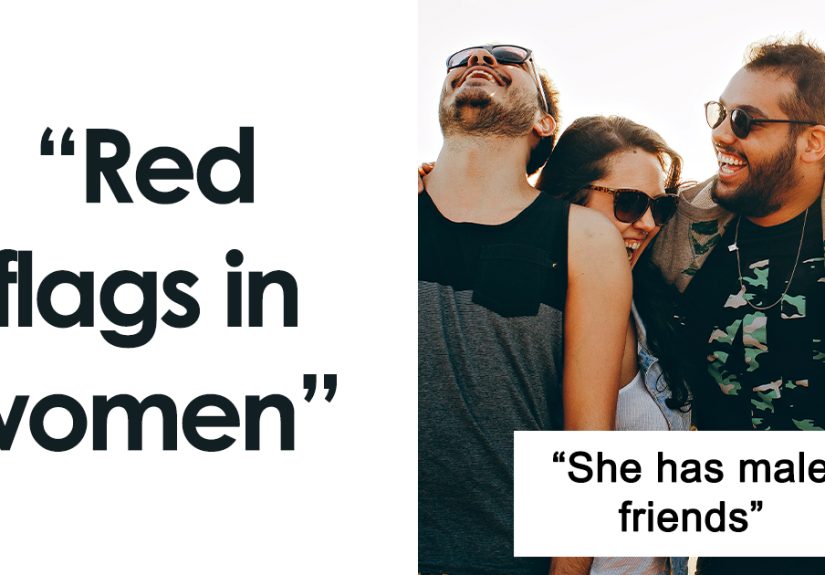
TikTok has a special talent: it can turn a 20-second hot take into a 20-day group chat debate. Case in point: a viral clip (later amplified by
reposts and commentary) that laid out three “major red flags in women”including the now-quoteable line, “She manipulates you in small ways.”
The internet promptly did what it does best: split into teams, argue in the comments, and invent three new types of “therapy-speak” along the way.
Here’s the tricky part: the video mixes a couple of reasonable relationship expectations (basic appreciation, honest communication) with at least one
claim that’s… let’s call it controversial and oversimplified (the “male friends” one). And because the original framing targets
“women,” the whole thing risks turning into gender stereotypes instead of a useful conversation about behaviors.
So let’s do the grown-up version (yes, even if you’re reading this while eating cereal at 2 p.m.): we’ll break down the three “red flags,” separate
legit concerns from insecure assumptions, and translate TikTok drama into practical, research-informed relationship advicewithout demonizing an entire
gender. Because manipulation is not a “women thing.” It’s a human thing.
Why This TikTok Hit a Nerve
Viral dating content spreads because it offers something that feels like clarity: a short list, a confident narrator, and the promise that you can
avoid heartbreak by spotting a “sign” early. That’s comforting. It’s also risky.
A “red flag” is supposed to be a warning about an unhealthy patternsomething that reliably predicts disrespect, coercion, or a relationship that
erodes your self-worth. But online, the term often gets used for anything from “won’t text back fast enough” to “doesn’t like my favorite movie.”
In other words: sometimes we confuse preferences with problems.
The smartest way to use TikTok dating advice is as a prompt, not a verdict. Ask: “Is there a pattern here?” “How does this affect me?” and “What’s
the healthiest response I can control?” If a clip makes you feel panicky, suspicious, or ready to interrogate your partner like a detective in a
trench coat, that’s your cue to slow down.
The 3 “Red Flags,” Revisited (With Less Comment-Section Energy)
Red Flag #1: “She Never Says Thank You” (a.k.a. The Gratitude Gap)
The first claim was basically: if you’re paying for things, doing favors, or showing up consistently and you never receive appreciation, you should
move on.
Stripped of the gendered framing, this becomes a solid point: relationships run on appreciation. Not performative “thank you” speeches,
but real recognition: “I see what you did, I value it, and I don’t assume you owe me.”
Research backs up the idea that gratitude isn’t just “nice”it can be a protective factor for relationship quality, satisfaction, and commitment.
Feeling appreciated tends to make people more generous, more patient, and more willing to work through conflict without keeping a scoreboard.
Translation: “Thanks” is not a magic spell, but it’s surprisingly close.
What this looks like in real life:
- They acknowledge effort: “I know you had a long daythanks for making time.”
- They reciprocate in their own way (money, time, acts of service, emotional support).
- They don’t treat kindness like your permanent job description.
When it’s a true red flag: you communicate that you feel taken for granted, and the response is dismissal (“You’re too sensitive”),
mockery, or entitlement (“Well, you should do that anyway”). That’s not a “manners issue.” That’s a respect issue.
When it’s a yellow flag (context matters): some people didn’t grow up expressing appreciation verbally. They might show gratitude
through actions instead of words. If everything else is healthy, this can be a fixable mismatchnot a villain origin story.
Try this script: “I really like doing things together, but I feel more connected when we acknowledge each other’s effort. It would mean
a lot to me if we both said thank you more.”
Red Flag #2: “She Has Male Friends” (The Claim That Lit the Comments on Fire)
This was the most divisive one: the idea that if a woman has male friendsespecially ones she texts or hangs out withshe’s “not really committed” or
she’s seeking validation.
Here’s why people pushed back: having friends is not a red flag. Full stop. Healthy partners don’t require social isolation as proof
of loyalty. In fact, attempts to isolate someone from friends can be a warning sign of unhealthy control.
Are cross-gender friendships always perfectly simple? Not always. Humans are complicated. But research and lived reality both show that friendships
between men and women can exist, can be meaningful, and can be completely appropriateespecially when boundaries and honesty are in place.
The real issue isn’t “male friends.” The real issue is boundary clarity and trustworthy behavior.
Green-flag version:
- They’re open about their friendships (not secretive, not vague).
- They respect your comfort without making you the “friend police.”
- They set reasonable boundaries (no flirty ambiguity, no emotional affairs, no hiding messages).
Red-flag version (regardless of gender):
- They keep someone “on standby” for attention or leverage.
- They hide interactions, delete messages, or lie about plans.
- They use a friend to provoke jealousy (“Relax, it’s just my friend… unless you don’t behave”).
If someone’s friendships make you uneasy, that’s not a license to control them. It’s a prompt to have a calm, specific conversation:
“I’m not asking you to drop friends. I’m asking for clear boundaries that protect our relationship.”
Red Flag #3: “She Manipulates You In Small Ways” (Tiny Power Plays That Add Up)
This one resonated because it describes something many people have felt but struggled to name: subtle behaviors that keep you off-balance, chasing
approval, or working harder than you should for basic effort.
The original example was along the lines of: she never texts first, so you’re always the one chasingcreating a dynamic where you have to “earn”
attention.
Let’s widen the lens. Small manipulation is rarely one dramatic moment. It’s a pattern of tiny moves that shift power and make you
doubt your needs. Some examples:
- Hot-and-cold attention: intense interest followed by long disappearances, then a flirty message that resets your hope.
- Selective responsiveness: they respond just enough to keep you invested, but avoid real follow-through.
- Guilt hooks: “If you cared about me, you’d do this,” said in a way that makes boundaries feel like betrayal.
- Reality-bending: insisting you’re “imagining things” when you bring up a valid concern.
- Power-by-confusion: unclear status, unclear expectations, unclear intentionsyet you’re expected to act like you’re committed.
In dating culture, one well-known version is often called breadcrumbing: giving small “crumbs” of attention that keep someone attached
without real investment. This can create a cycle of hope and disappointment that feels weirdly addictivebecause intermittent rewards are powerful.
But we also need nuance: not every awkward texting habit is manipulation. Some people are inconsistent communicators. Some are busy. Some are anxious.
The deciding factor is pattern + impact + response to feedback.
Ask yourself:
- Is this consistent over time, or a temporary phase?
- Do I feel more secure with themor more confused and anxious?
- When I speak up respectfully, do they adjust… or punish me for having needs?
A Quick “Red Flag vs. Normal Human Flaw” Checklist
Use this table when you’re tempted to label something a red flag just because TikTok said so.
| Situation | Normal / Fixable | Red Flag Pattern |
|---|---|---|
| They don’t say “thank you” often | They show appreciation in actions and respond well when you ask for more verbal gratitude | They act entitled, dismiss your feelings, or treat effort as something you owe |
| They have close friends of any gender | They’re transparent and maintain respectful boundaries | They hide messages, flirt, triangulate, or weaponize jealousy |
| They text inconsistently | They communicate openly and improve when expectations are discussed | They keep you in “maybe” land, pop in just enough to keep you hooked, and avoid clarity |
How to Respond Without Becoming the Relationship FBI
The healthiest response to a suspected red flag is not surveillance. It’s clarity.
1) Name the pattern (not the person)
Instead of: “You’re manipulative.”
Try: “I notice we only talk when I initiate, and I’m starting to feel like I’m chasing.”
2) Ask for a specific change
“If we’re both interested, I’d like us to initiate contact more evenly.”
“If we’re exclusive, I want boundaries with flirting to be clear.”
3) Watch what happens next
You don’t need a perfect response. You need a good-faith response. Do they listen? Do they take responsibility? Do they try? Or do they
twist it into your fault and keep doing the same thing?
4) Keep your support system
A relationship should add to your life, not shrink it. Staying connected to friends, family, and your goals makes you harder to manipulatebecause your
self-worth isn’t dependent on one person’s approval.
What Healthy Looks Like (A Few Green Flags to Balance the Algorithm)
- Consistency: you don’t have to decode them. Their actions match their words.
- Accountability: they can say, “You’re right, I messed up,” without turning it into a courtroom drama.
- Mutual effort: the relationship isn’t powered by one person’s anxiety and the other person’s mystery.
- Respect for boundaries: “no” doesn’t trigger guilt trips, silent treatment, or payback.
- Appreciation: they notice you, value you, and express itverbally or behaviorally.
Experience Corner (About ): Three “Real Life” Scenarios That Feel Like the TikTok
To make this topic feel less like theory and more like something you can recognize, here are three composite scenarioscommon experiences many people
describe when talking about subtle power dynamics. Think of them as “relationship flashcards,” not a diagnosis.
1) The Dinner Receipt That Became a Personality Test
Jamie always paid on dates at firstnot because anyone demanded it, but because it felt generous and easy. After a few weeks, Jamie noticed a pattern:
no “thanks,” no “I got it next time,” no acknowledgment at all. When Jamie brought it up gently (“Hey, I like treating sometimes, but I also want this
to feel mutual”), the response wasn’t curiosityit was contempt: “Wow, so you’re keeping score now?”
That’s the moment the “gratitude” issue stops being about etiquette and starts being about respect. Everyone forgets sometimes. But when someone turns a
reasonable need into a character flaw, they’re teaching you to stop speaking up. Jamie’s takeaway: appreciation isn’t about applauseit’s about not
taking your partner for granted.
2) The “Male Friend” Panic That Was Really a Trust Conversation
Taylor had a close friend group that included a longtime guy friend from school. When Taylor started dating Morgan, Morgan spiraled: “Why are you still
texting him?” Taylor felt accused for simply having a social life. The tension got worse until they finally talked specifics.
Here’s what changed everything: Taylor clarified boundaries (“No flirty texting, no private venting about our relationship to him, and I’ll be open about
plans”). Morgan clarified needs (“I’m not trying to control you. I just need transparency so my imagination doesn’t fill in the blanks”). The friend
stayed a friend. The relationship got calmer. The lesson: the red flag isn’t “friends.” The red flag is secrecy, triangulation, or using jealousy as a
weapon.
3) The Tiny Texting Game That Made Someone Feel Addicted
Alex dated someone who was charming in person but oddly absent in between. Days of silence would be followed by one perfectly timed message:
“Miss you :)” That little smiley face would spark hopeuntil nothing happened again. When Alex asked for clarity (“Are we actually building something?”),
the answer was always foggy: “Why do you need labels? Just vibe.”
Over time, Alex realized the relationship felt less like connection and more like a slot machine: pull the lever (send a text), maybe get a reward
(attention), repeat. The fix wasn’t a bigger emotional speech; it was a boundary: “I’m looking for consistent communication and real plans. If that’s not
what you want, no hard feelingsbut I’m stepping back.” Suddenly, the fog clearedbecause boundaries have a funny way of revealing intentions.
Conclusion: Keep the Insight, Drop the Stereotypes
The TikTok went viral because it touched on real fears: being taken for granted, being replaced, being played. But the most helpful takeaway isn’t “watch
out for women who do X.” It’s “watch out for patterns that erode respect and clarityno matter who does them.”
If your relationship requires constant guessing, constant chasing, or constant shrinking of your needs, that’s not romanceit’s emotional friction
disguised as “chemistry.” And you don’t have to accept it. Healthy love feels honest, mutual, and stable enough that you can be yourself without walking
on eggshells.






 Close
Close