
Table of Contents >> Show >> Hide
Editor’s note: This is a cultural analysis of Saturday Night Live, its cast cycle, and the tricky art of knowing when a great run should end.
For a show built on chaos, Saturday Night Live is weirdly dependable. Every fall, Studio 8H fills with fresh ambition, nervous laughter, and the kind of confidence that usually lasts right up until dress rehearsal. Then the machine starts humming again: cold open, monologue, “Weekend Update,” one sketch that kills, one that dies bravely, and a cast that looks slightly sleep-deprived but professionally cheerful during goodnights. It has worked for decades because the formula is sturdy, but the people inside it are not meant to be permanent furniture.
That is why the question never really goes away: when is it time to leave SNL? Not just for one cast member. Not just for an anchor or a breakout star. For anyone who has survived long enough to turn “featured player” jitters into “veteran cast” gravity, the question begins tapping them on the shoulder. Sometimes politely. Sometimes with a suitcase already packed.
In the show’s 50th-anniversary era, that question felt louder than usual. A milestone year naturally invites nostalgia, victory laps, and long looks in the mirror. But anniversaries also expose a truth that live TV would rather hide under pancake makeup: longevity is not the same thing as freshness. SNL stays alive because it keeps changing, and change almost always means someone leaves at exactly the moment fans start begging them to stay forever.
Why This Question Matters More Than Ever
The 50th-anniversary glow made it easy to celebrate everything SNL has been: a launching pad, a comedy laboratory, a national mood ring, and sometimes a weekly reminder that not every idea improves under fluorescent lighting. But milestone seasons also raise practical questions. Who still feels hungry? Who has already mastered the form? Who is now carrying the show, and who is being carried by familiarity?
This is the eternal balancing act of Saturday Night Live. The show needs stars, because stars draw viewers and create the sketches people remember ten years later. But it also needs turnover, because a cast that becomes too settled can start to feel like a family reunion that accidentally got renewed for another season. Viewers may still like everyone, but liking everyone is not the same as laughing at them with surprise.
The healthiest version of SNL has always been a little unstable. It should feel like a place where someone can explode into prominence on a random Saturday and, within a few seasons, become too large for the room. That is not a flaw in the system. That is the system working.
The Real SNL Career Arc
There is no single ideal number of seasons, but there is a pattern. For many performers, the first year is about survival. The second is about proving they belong. Years three through five are often the sweet spot, when the cast member has built confidence, relationships, recurring characters, and enough authority to turn a weird pitch into an actual airtime miracle. After that, the decision gets harder.
By years six through eight, a strong cast member has usually done the important things. They have shown range. They have landed on “Weekend Update.” They have probably played at least one politician, one unhinged suburban parent, one game-show host, and one person in a wig screaming in a fake accent for reasons the audience accepts without question. More importantly, they have likely developed a comic identity that can live outside SNL.
That is often the real dividing line. The best time to leave is usually when the audience can clearly imagine your career after the show. Once a performer is no longer defined by the platform, but instead seems bigger than it, leaving starts to look less like a risk and more like a graduation.
That is why so many beloved alumni seem to depart at roughly the point where they are peaking inside the format. Kristen Wiig left before overexposure made her feel routine. Bill Hader exited after turning versatility into a superpower. Pete Davidson, after an unusually young and unusual run, reached a point where his celebrity identity no longer fit neatly inside a once-a-week ensemble sketch show. In each case, the departure made emotional sense because the performer’s next chapter was already visible.
Of course, there are exceptions, and that is where the story gets interesting. Not every cast member is built to leave at the same moment. Some are utility players who improve every sketch simply by walking into frame. Some become institutional glue. Some are so adaptable that the show keeps finding new uses for them long after another performer might have hit creative cruise control.
So, When Is It Time to Leave?
1. Leave when your surprises start becoming habits
The first warning sign is repetition. Not repetition in the lazy internet sense, where fans complain the second a performer uses a familiar voice. Repetition in the deeper sense: the audience can now predict your rhythm before the joke lands. The eyebrow raise arrives on cue. The line reading hits the same beat. The sketch is still competent, but the risk has drained out of it.
SNL forgives a lot, but it should never feel overly comfortable. A cast member should leave when their strengths begin hardening into patterns that no longer feel electric. Better to walk out as a favorite than linger long enough to become an impression of yourself.
2. Leave when the show no longer teaches you anything
Studio 8H is a brutal teacher. It forces speed, collaboration, failure, revision, and the ability to recover in public. For a comedian or actor, that environment is priceless. But eventually, some cast members stop learning from the show because they have already mastered what it can teach them.
At that point, staying can become a form of artistic parking. Safe, familiar, occasionally flattering, and maybe a little too easy. If a performer has reached the stage where SNL is no longer sharpening them, leaving is not disloyal. It is logical.
3. Leave when outside opportunities match your voice
Not every movie offer or streaming deal is a sign from the comedy gods. Sometimes a cast member should ignore the noise and stay put. But when outside work actually aligns with the thing that makes them special, that is different. A skilled mimic who can carry a film, a writer-performer with a distinct worldview, or a surrealist who clearly needs a wider canvas should pay attention when the world starts opening doors.
SNL is powerful, but it is still a container. Some performers eventually outgrow the shape of the container. The right moment to leave often arrives when the talent has become too specific, too ambitious, or too expansive to fit into six live minutes between a fake commercial and a musical bump.
4. Leave when the pressure costs more than the thrill
This part gets less attention, but it matters. The mythology of SNL often celebrates the grind: no sleep, constant rewrites, adrenaline, panic, and the weekly miracle of getting a live show on the air. That mythology is entertaining from the couch. It is less glamorous when you are actually living it.
For some performers, the pressure remains energizing. For others, it becomes corrosive. When the stress begins swallowing the joy, leaving is not weakness. It is perspective. Comedy may thrive on tension, but careers do not have to be built on permanent exhaustion.
5. Leave when your absence would create opportunity, not collapse
One of the strongest reasons to leave is also the least sentimental: the show will be fine. In fact, it may be better for the next wave if a veteran steps aside. A healthy ensemble needs openings. New stars do not emerge because everyone politely waits their turn in a perfectly stable ecosystem. They emerge because time, space, and sketch oxygen suddenly become available.
That can be hard for fans to accept. We attach ourselves to cast members because they become part of our weekly routine. But the larger truth is simple: SNL has survived departures by Chevy Chase, Eddie Murphy, Mike Myers, Will Ferrell, Tina Fey, Amy Poehler, Kristen Wiig, Kate McKinnon, and plenty more. If the show can survive those exits, it can survive another one.
The Kenan Thompson Exception, and Why Exceptions Matter
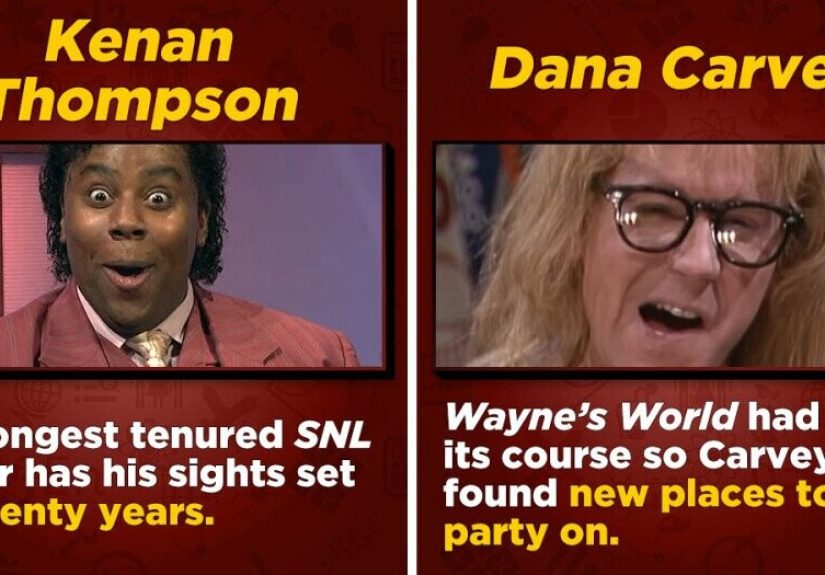
Every rule needs a comic loophole, and on SNL, that loophole is the long-haul veteran who still feels useful. Some performers are not merely staying; they are evolving. They shift from breakout energy to stabilizing force. They help younger cast members. They understand timing at the molecular level. They can rescue a weak sketch, anchor a weird one, and make a throwaway line land like it was destined for a clip package.
That kind of longevity is rare, and it only works when the veteran refuses self-parody. Staying longer is justified if a performer keeps adapting to the show’s changing voice instead of forcing the show to orbit around their old one. That is the difference between valuable continuity and creative stagnation.
In other words, there is no universal expiration date. The better question is not, “How many seasons have you done?” It is, “Are you still making the room better in a way nobody else can?” If the answer is yes, staying may be the right move. If the answer is mostly nostalgia, the exit music should probably start playing.
What About Lorne Michaels?
No conversation about leaving SNL is complete without Lorne Michaels, because his presence is part of the show’s internal weather system. For years, people have treated his eventual departure like a pop-culture eclipse: inevitable, fascinating, and impossible to stare at directly for too long. Yet the show’s history also suggests something important. SNL does not really function like a normal TV series. It functions like an institution, and institutions survive through succession, reinvention, and selective panic.
Michaels staying beyond the 50th season signaled continuity, but it did not erase the central truth that has always guided the show: people come, people go, and the format keeps moving. In fact, his greatest legacy may be that SNL was designed to endure departures, not avoid them.
The Audience Has to Know When to Let Go, Too
Fans are often the last to accept that a cast member should leave. We say we want fresh comedy, but we also want our favorites to remain immortal, available, and permanently 32. That is not how comedy careers work. Nor should it be. A great SNL run is not supposed to last forever. It is supposed to feel complete.
Sometimes the smartest thing a performer can do is leave just early enough that the audience argues it was too soon. That argument is the sound of good timing. No one reminisces passionately about an exit that came three seasons too late.
Experiences That Explain Why This Question Feels So Personal
Part of what makes the “when should they leave?” debate so emotionally sticky is that SNL does not feel like a normal cast machine to viewers. It feels like a ritual. You do not simply watch a performer develop; you build a small relationship with their rhythm. You learn who can save a weak sketch with one glance, who is funniest when barely holding it together, who becomes a secret weapon at 12:47 a.m., and who can take a line that looked dead on paper and suddenly make it walk.
That experience builds over years. A cast member arrives half-formed, grabs only a few moments in the first season, then slowly becomes part of the architecture of the show. One week they are the fourth person in a restaurant sketch. Two years later they are the reason you stay up for the last half hour. That transformation is one of the most satisfying things television can still offer, because it feels earned in real time.
It also explains why departures can feel surprisingly intimate. A farewell on SNL is rarely just about business strategy or contract timing. For viewers, it can feel like noticing a neighborhood landmark is closing down. You know, logically, that cities change. You know new places will open. You may even admit the old place was not as good during its final year. But the loss still registers because the place held a version of your routine, your memory, and your taste.
There is also a very specific SNL kind of sadness in realizing a cast member has entered the “I love them, but I think I’ve seen the complete set” phase. That is not dislike. It is a strange compliment. It means the performer gave the audience so much clarity that the next step now seems obvious. They have done the goofy recurring bit, the political impression, the emotional send-up, the game-show lunatic, the faux-ad, the weirdly moving final goodnights wave. At some point, you are no longer wondering whether they belong there. You are wondering what they could do with more room.
And then there is the opposite experience, which happens less often but matters just as much: watching a longtime veteran remain genuinely useful. That can reset the whole conversation. A performer who continues finding new angles, new chemistry, and new levels of control can make longevity look not stale, but masterful. In those cases, staying is its own performance. You are watching someone turn durability into craft.
Maybe that is why the best SNL exits, and the best decisions to stay, both feel right in the gut before they make sense on paper. The audience can usually sense when a run is complete. You feel it in the sketches, in the looseness of the performer, in the way they suddenly seem less like a cast member auditioning for the future and more like an artist already halfway into it. That is the experience at the center of this question. Not fear of change. Recognition of readiness.
So when is it time to leave Saturday Night Live? It is time when the performer has fully arrived, when the show has given them everything it reasonably can, and when departure feels less like abandonment than momentum. The sweetest spot is not staying until the audience begs for mercy. It is leaving when the audience is still greedy for more.
Conclusion
Saturday Night Live has lasted because it understands a lesson many institutions resist: reinvention is not a threat to legacy; it is the price of it. A cast member should leave when their voice is clear, their opportunities are real, and their continued presence risks comfort more than surprise. Some will stay longer and earn it. Some should go earlier and will be proven right. But the healthiest answer is rarely sentimental. On SNL, the right time to leave is usually the moment right before staying becomes the safer choice.







 Close
Close