
Table of Contents >> Show >> Hide
- What “Salsa Picante” Means (and Why Yours Should Have a Plan)
- The Flavor Blueprint: Heat + Acid + Salt + Texture
- Salsa Picante Roja: Roasted Tomato Spicy Salsa (Core Recipe)
- Handling Hot Peppers Without Regret
- Variations: Same Salsa Energy, Different Personalities
- How to Serve Salsa Picante (Beyond the Chip)
- Storage & Food Safety (So Your Salsa Stays a Hero)
- Troubleshooting: Fix Your Salsa Like You Meant to Do That
- FAQ
- Experiences With Salsa Picante: The Real-Life Side of Spicy Salsa (Extra 500+ Words)
- Conclusion
Salsa picante is proof that the universe loves balance: bright acid, juicy tomatoes, and just enough heat to make you feel alive
(not enough to make you see your ancestors). This in-depth guide gives you a go-to salsa picante recipe with
roasted flavor, flexible heat levels, and the kind of restaurant-style depth that makes people hover around the bowl like it’s
a campfire.
You’ll also get smart variations (hello, salsa de árbol vibes), troubleshooting, storage tips, andbecause you askeda big,
flavorful “experience” section at the end to make this article extra hearty.
What “Salsa Picante” Means (and Why Yours Should Have a Plan)
In Spanish, salsa simply means “sauce,” and picante means “spicy” or “hot.” So salsa picante
isn’t one single recipeit’s a category. Think of it like “action movie.” You can have a sleek spy thriller or a loud car chase,
but either way something’s getting spicy.
The best homemade spicy salsa has a plan for four things: heat, acid, salt,
and texture. Nail those, and you can freestyle without ending up with “tomato soup that bites back.”
The Flavor Blueprint: Heat + Acid + Salt + Texture
Heat: Choose your chili strategy
For a classic hot salsa recipe, fresh chiles like jalapeño and serrano bring crisp heat and a green snap. Dried chiles (like
chile de árbol) bring deeper, toastier heat that feels “serious” in a good way. You can use one or combine both.
Practical example: Want a salsa that’s hot but friendly? Use 1 jalapeño + 1 serrano and remove the seeds and
ribs. Want something that announces itself? Add a small handful of toasted dried chiles (or one extra serrano) and keep some ribs.
Acid: The “turn the lights on” ingredient
Lime juice is the classic move for homemade salsa roja and roasted tomato salsa. A tiny splash of vinegar can add extra brightness,
especially if your tomatoes are more “meh” than “marry me.”
Salt: The difference between “fine” and “why is this so good?”
Salt doesn’t just make salsa salty. It sharpens tomato flavor, lifts aromatics, and helps everything taste intentional. Start modest,
taste with a tortilla chip (important!), then adjust.
Texture: Chunky, smooth, or “somewhere in the middle like a sensible adult”
Picante salsa can be blended silky, pulsed chunky, or hand-chopped. Roasted salsas often taste best lightly blended because the char
creates a savory base that carries through even when smooth.
Salsa Picante Roja: Roasted Tomato Spicy Salsa (Core Recipe)
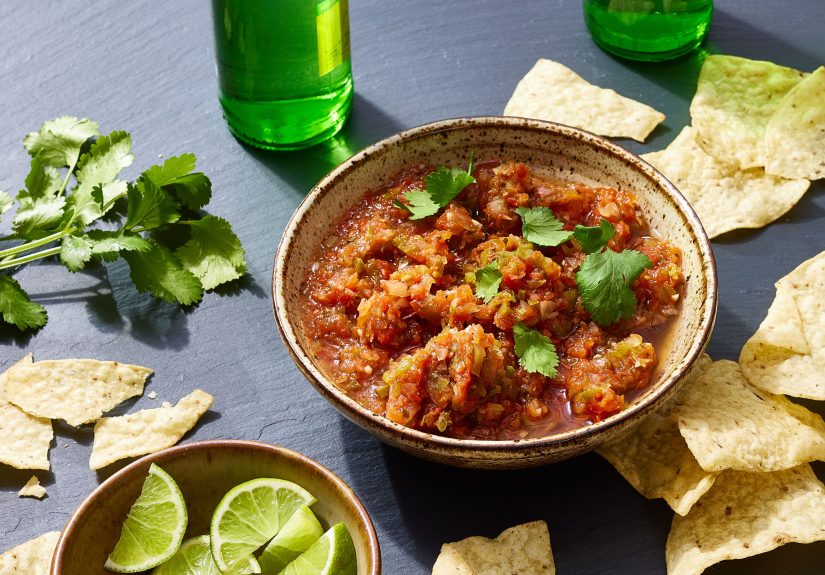
This is the workhorse: smoky-sweet tomatoes, charred onion and garlic, bright lime, and adjustable heat. It’s a
roasted tomato salsa style recipe that fits chips, tacos, eggs, grilled meats, and “standing at the fridge with a spoon.”
Ingredients (Makes about 2 to 2 1/2 cups)
- 2 lb Roma tomatoes (about 8–10), halved
- 1 small white onion, cut into thick wedges
- 3–4 garlic cloves, peeled
- 1–2 jalapeños (or swap 1 for a serrano for more heat)
- 1–3 dried chiles de árbol (optional, for deeper heat)
- 1/2 cup cilantro (leaves and tender stems), loosely packed
- 2 tbsp fresh lime juice (about 1 lime), plus more to taste
- 1/2 to 1 tsp kosher salt, to taste
- 1/4 tsp ground cumin (optional, “quietly amazing”)
- 1 tsp vinegar (optional; white or apple cider)
- Pinch of sugar (optional; helps if tomatoes aren’t sweet)
Equipment
- Sheet pan (or cast-iron skillet)
- Broiler or grill (oven works great)
- Blender or food processor
- Knife + cutting board
Step-by-step Instructions
-
Char the vegetables. Set your broiler to high. Place tomatoes (cut-side down), onion wedges, garlic, and jalapeños on a
sheet pan. Broil 6–10 minutes until tomatoes blister and blacken in spots. Flip onion/garlic if needed so they char a little too.
(No broiler? Grill everything until nicely charred.) -
Toast the dried chiles (optional but excellent). In a dry skillet over medium heat, toast dried chiles de árbol for
10–20 seconds per side until fragrant. Don’t walk awaydried chiles burn fast and turn bitter. -
Rest the roasted ingredients. Let everything cool 5 minutes. This also lets juices settle so your blender doesn’t
immediately redecorate your kitchen. -
Blend in stages for better texture. Add roasted tomatoes, onion, garlic, and jalapeños to a blender/food processor.
Add toasted chiles (if using), lime juice, cilantro, salt, and cumin. Pulse for chunky salsa, or blend longer for smoother salsa picante. -
Taste like a professional. Taste with a tortilla chip. Chips are salty, so they tell the truth. Adjust with more salt,
lime, or a tiny splash of vinegar. If the salsa tastes sharp, add a pinch of sugar. If it’s too thick, add 1–2 tbsp water and pulse. -
Let it “get to know itself.” Rest salsa 15–30 minutes before serving. The flavors meld, the heat rounds out, and suddenly
it tastes like you’ve been doing this your whole life.
Quick Heat Controls (So You Don’t Accidentally Summon Fire)
- Milder: Remove seeds and ribs from peppers; skip dried chiles; add extra tomato.
- Hotter: Add one more serrano, keep some ribs, or toast extra chile de árbol.
- Too hot after blending: Blend in more roasted tomato or a bit of roasted onion; add a touch more lime and salt.
- Heat feels “spiky”: Rest the salsa longer. Heat often smooths out after 30–60 minutes.
Handling Hot Peppers Without Regret
Hot pepper oils are clingy. They stick to your fingers, your cutting board, andif you make one bad decisionyour eyes. Wear gloves
if you’re sensitive, wash hands well after handling chiles, and avoid touching your face while prepping.
If you do get chile oils on your hands, soap and warm water help, and many cooks find that rubbing a little cooking oil on your hands
first can help lift the oils before washing. The goal is simple: keep the burn on the salsa, not on your eyelids.
Variations: Same Salsa Energy, Different Personalities
1) Salsa de Árbol–Style “Deep Heat”
For a bolder, darker spicy salsa, lean into dried chiles. Toast 6–10 chiles de árbol, then blend with roasted tomatoes (or even
good-quality canned fire-roasted tomatoes), garlic, lime, and salt. It’s punchy, smooth, and made for tacos.
2) Salsa Verde Picante (Tomatillo + Chile)
Swap tomatoes for tomatillos and roast them until they blister. Blend with serrano or jalapeño, garlic, cilantro, lime, and salt.
This one is bright, tangy, and dangerously snackable.
3) Smoky Chipotle Salsa Picante
Add 1 chopped chipotle pepper in adobo (plus 1–2 tsp adobo sauce) to the base recipe. Smoky, spicy, and fantastic on grilled chicken
or a burrito bowl.
4) Fresh Salsa Picante (No Roasting, All Snap)
Prefer crisp and fresh? Dice ripe tomatoes, onion, jalapeño/serrano, cilantro, lime, and salt. Let it sit 15 minutes. It’s bright,
crunchy, and perfect when it’s too hot outside to broil anything.
How to Serve Salsa Picante (Beyond the Chip)
- Taco upgrade: Spoon over carnitas, grilled chicken, shrimp, or roasted veggies.
- Eggs: Scrambled, fried, or breakfast tacossalsa picante makes mornings more interesting.
- Soup shortcut: Stir into tortilla soup or chili to add brightness and heat.
- Marinade assist: Mix with oil and a little extra lime for a quick marinade or finishing sauce.
- Nacho diplomacy: Serve on the side so everyone chooses their own heat adventure.
Storage & Food Safety (So Your Salsa Stays a Hero)
Fresh salsa should be refrigerated promptly and stored in a clean, airtight container. Use clean utensils when serving (double-dipping
is how salsa turns into a science experiment).
As a general home-kitchen guideline, homemade salsa is best within 3–5 days for peak flavor and freshness. If it smells
“off,” grows fuzz, or starts bubbling like it’s auditioning for a soda commercial, toss it.
Want to keep it longer? Freeze salsa in small containers or ice cube trays. Thawed salsa can be a little looser in texture, but it’s
still great in cooked dishes, eggs, soups, and marinades.
Important note: if you’re thinking about canning salsa, don’t improvise. Home canning requires tested recipes with
the right acidity and processing method. If you want a pantry-stable version, use a research-tested canning recipe from a trusted
extension or food safety authority rather than “vibes-based canning.”
Troubleshooting: Fix Your Salsa Like You Meant to Do That
My salsa is watery
Tomatoes vary a lot. Fix: drain off a little liquid, or roast a few minutes longer next time to evaporate moisture. You can also add
one more charred tomato or a small handful of cilantro stems to thicken slightly and boost flavor.
My salsa is too spicy
Fix: blend in more roasted tomato or onion, then add a touch more lime and salt. Dairy doesn’t belong in salsa, but serving
the salsa alongside sour cream, crema, or guacamole can mellow the experience on the plate.
My salsa tastes bitter
Over-toasted dried chiles or burned garlic can turn bitter. Fix: add an extra tomato, a pinch of sugar, and a little more lime.
Next time, toast chiles briefly and char garlic gently.
My salsa tastes flat
It probably needs one of the big three: salt, acid, or rest time. Add a pinch of salt, squeeze more lime, and let it sit 20 minutes.
Salsa is a relationship: it gets better once the ingredients communicate.
FAQ
Can I use canned tomatoes?
Yesespecially when tomatoes are out of season. Canned fire-roasted tomatoes can produce a surprisingly good spicy salsa. You may need
less roasting time (or none) and a little extra cilantro and lime to freshen it up.
Do I have to remove pepper seeds?
No, but seeds and ribs can increase perceived heat. If you want control, remove them. If you want chaos, leave them in.
(Responsible chaos. We’re still making salsa, not a dare.)
Why does salsa taste better after sitting?
Salt draws out juices, acids brighten, and aromatics mellow. Resting gives everything time to blend into one coherent flavor instead
of five separate ingredients yelling over each other.
Experiences With Salsa Picante: The Real-Life Side of Spicy Salsa (Extra 500+ Words)
Salsa picante has a funny way of turning regular moments into memorable onesmostly because heat is an opinionated guest. Bring a bowl
to a party and you’ll witness the entire spectrum of humanity in five minutes:
the brave soul who scoops a mountain of salsa like they’re fueling up for battle, the cautious taster who does the “one-chip sample”
with the seriousness of a lab technician, and the person who says, “I love spicy!” right before they start blinking like a strobe light.
One of the most common salsa experiences is the Great Pepper Debate. Someone always asks: jalapeño or serrano? Jalapeño is often seen as
friendly heatbright, familiar, and easy to control. Serrano is the cousin who shows up unannounced, moves your furniture around, and
somehow improves the vibe. Dried chile de árbol is the plot twist: it brings a deeper, toastier heat that feels “restaurant-y,” like your
salsa graduated from culinary school and now uses words like “complex.”
Then there’s the “tomato season” experience. In peak summer, a salsa picante recipe can feel effortless: ripe tomatoes, a quick char, a
squeeze of lime, and you’re basically a legend. In winter, tomatoes can taste like they’ve been emotionally distant for months. That’s
when roasting becomes a superpower. Charring concentrates sweetness and adds smoke, which makes your salsa taste like it had a planeven
if the plan started as “I’m hungry and I refuse to be bored.”
Home cooks also tend to have a memorable “cilantro moment.” Some people want cilantro in everything; others taste it and feel personally
betrayed. If you’re cooking for a crowd, it’s normal to serve cilantro on the side or blend in a moderate amount and keep the flavor
balanced with lime and roasted tomato. A small trick many salsa lovers swear by is using not just cilantro leaves but some tender stems
toomore flavor, less waste, and zero extra effort. That’s the kind of life upgrade salsa teaches you: tiny changes, big payoff.
And finally, salsa picante has a special relationship with confidence. The first time you make it, you measure everything carefully, you
taste timidly, you worry you’ve ruined it. The third or fourth time, you’re toasting chiles like a pro, adjusting salt by instinct, and
casually saying things like, “It needs a little more acid,” as if you’ve been doing this on a cooking show for years. Salsa is one of
those recipes that makes you feel more capable in the kitchen because it rewards attention, not perfection.
So if your first batch isn’t exactly what you imaginedgood. That means you’re now officially the kind of person who has “a preferred
salsa texture” and “an opinion about lime.” Welcome. Your next bowl will be even better, and your tortilla chips will never emotionally
recover from how well they’re being treated.
Conclusion
A great salsa picante recipe isn’t about sufferingit’s about balance. Roast for depth, use lime for brightness, salt like you mean it,
and build heat in a way you can control. Start with the roasted salsa roja base, then explore: dried chiles for deeper heat, tomatillos
for tang, chipotle for smoke, or a fresh chopped version when you want crisp and quick. Once you’ve made it a few times, you won’t be
following a recipeyou’ll be running your own salsa program.






 Close
Close