
Table of Contents >> Show >> Hide
- What Is a Salmon Sperm Facial?
- How Does a Salmon Sperm Facial Work?
- What Happens During the Treatment?
- Potential Benefits of a Salmon Sperm Facial
- What the Research Actually Says
- Salmon Sperm Facial Benefits vs. Risks
- Who Might Be a Good Candidate?
- Who Should Pause or Skip It?
- How It Compares With PRP, Hyaluronic Acid, and Traditional Facials
- Aftercare Tips
- What People Often Experience Before, During, and After a Salmon Sperm Facial
- Final Verdict
If you have spent even five minutes on beauty TikTok, celebrity skincare news, or the kind of med-spa menu that sounds like it was written after too much cold brew, you may have seen the phrase salmon sperm facial. It is memorable. It is weird. It is also one of those beauty terms that sounds more shocking than the science behind it actually is.
In most cases, a so-called salmon sperm facial refers to a treatment built around PDRN or polynucleotides, which are purified DNA fragments typically sourced from salmon. These ingredients are marketed as skin-repair boosters that may support hydration, texture, and overall skin rejuvenation. Depending on where you are and who is offering it, the treatment may involve a topical serum, a mask, microneedling, or a more aggressive injectable approach.
And that is where things get important. The catchy nickname makes it sound like one single facial. It is not. It is really a category of treatments wrapped in a viral headline. Some versions may be relatively gentle. Others may involve needles, downtime, and a level of risk that deserves more than a cute before-and-after video.
This guide breaks down what a salmon sperm facial actually is, how it may work, the potential benefits people chase, the risks that often get left out of the glow-up conversation, and what kind of real-world experience people can expect. Spoiler: it is not magic, it is not for everyone, and no, the fish does not personally attend your appointment.
What Is a Salmon Sperm Facial?
A salmon sperm facial is a consumer-friendly nickname for a skin treatment that uses polydeoxyribonucleotide (PDRN) or similar polynucleotide ingredients derived from salmon DNA. In aesthetic medicine, these compounds are promoted for their potential role in skin repair, hydration, and rejuvenation.
The name is dramatic, but the actual product is not raw salmon sperm being spread across your cheeks like some kind of luxury seafood disaster. The material is purified, processed, and turned into a cosmetic or medical-aesthetic ingredient. That matters because the treatment is about DNA-derived compounds, not the shock value of the source.
You may see the treatment marketed under names such as:
- Salmon DNA facial
- PDRN facial
- Polynucleotide facial
- Skin booster facial
- Regenerative facial
That last term is especially popular because it sounds futuristic and expensive, which in beauty marketing usually means somebody is about to hand you a mirror and a very large bill.
How Does a Salmon Sperm Facial Work?
The short version
The theory is that PDRN and polynucleotides may help support the skin’s natural repair processes. Researchers have studied these compounds for wound healing and tissue repair, and that early science is what helped push them into cosmetic dermatology and aesthetic medicine.
The less-short version
When skin is stressed by sun damage, irritation, aging, or procedures like microneedling, it has to repair itself. PDRN is thought to support that repair environment in a few ways:
- Encouraging tissue repair: It may help support cellular regeneration and healing.
- Helping with hydration: Many users and clinics report plumper, bouncier-looking skin after treatment.
- Supporting elasticity and texture: Some studies suggest improvements in fine lines, roughness, and overall skin quality.
- Calming inflammation signals: This is one reason the ingredient has attracted attention in regenerative skincare.
Some reviews also describe PDRN as working through pathways tied to tissue repair and anti-inflammatory activity. In plain English, the ingredient may act less like a traditional moisturizer and more like a “please repair this area” nudge to the skin.
Why it is often paired with microneedling
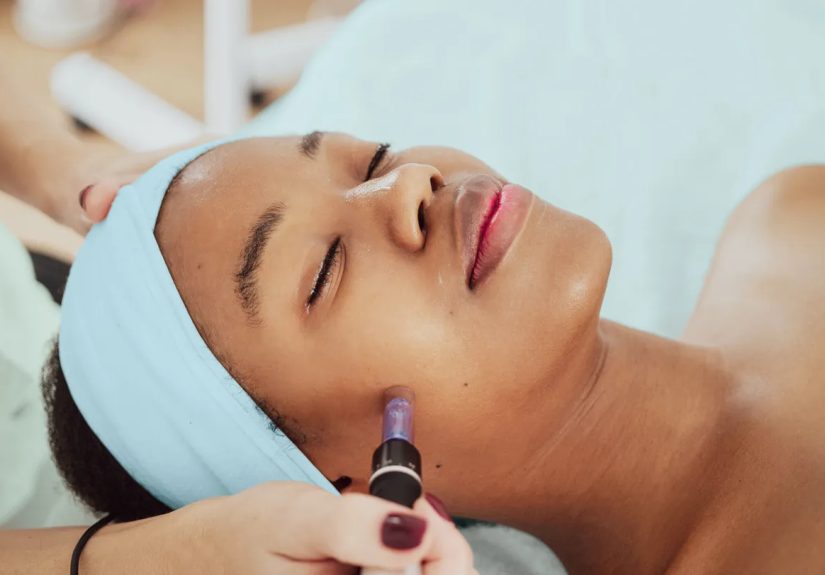
Many salmon DNA facials are combined with microneedling. That means a provider uses tiny needles to create controlled micro-injuries in the skin. These channels may help the product penetrate more effectively, while the microneedling itself can stimulate collagen production and renewal.
So if someone tells you their salmon sperm facial made their skin smoother, brighter, and more refined, part of that effect may be the PDRN, part may be the microneedling, and part may simply be the glow that happens after you invest serious money in your face and become emotionally committed to seeing results.
What Happens During the Treatment?
The exact steps depend on the version you are getting, but a typical in-office treatment may look something like this:
- A consultation to review your skin goals, medical history, allergies, and whether you are a good candidate.
- Cleansing and prep of the skin.
- Application of numbing cream if microneedling or injections are involved.
- Delivery of the PDRN or polynucleotide product through a serum, mask, microneedling, or another professional method.
- Post-treatment soothing products and aftercare instructions.
A gentle, spa-style version may feel like a treatment facial with upgraded skincare. A more aggressive version may leave the skin red, warm, or slightly swollen for a day or more. If injectables are involved in markets where they are offered, people can also experience tiny bumps, bruising, or a textured look right after the session.
Potential Benefits of a Salmon Sperm Facial
This is the part most people care about: will your face look better, or will you just leave with a hilarious sentence to tell your group chat?
Based on early studies, clinical interest, and how these treatments are commonly marketed, possible benefits may include:
1. Better hydration
Skin often looks fresher when it is well hydrated. One of the most commonly reported benefits of PDRN-based skincare is a more hydrated, dewy appearance.
2. Improved skin texture
People seeking treatment for roughness, dullness, or a tired-looking complexion often hope for smoother texture and a softer feel.
3. A subtle plumping effect
This is not the same as a filler, but skin may appear a little fuller or more elastic after a series of treatments, especially when hydration improves.
4. Support for post-procedure recovery
Because PDRN has been studied in tissue-repair settings, some providers use it after procedures intended to refresh the skin barrier and speed visible recovery.
5. Fine-line softening
Early research on polynucleotides has shown promising results in wrinkle depth, elasticity, and overall skin appearance. The keyword here is promising, not guaranteed.
What the Research Actually Says
The science is intriguing, but this is not one of those beauty topics where the evidence is already wearing a lab coat and carrying a trophy. Research on PDRN and polynucleotides suggests potential benefits in wound healing, inflammation control, hydration, elasticity, and facial rejuvenation. Some studies and reviews report improvements in fine lines, skin texture, and overall appearance.
That said, the research base is still developing. A lot of the available studies are relatively small, use different treatment methods, or focus on outcomes that are hard to compare head-to-head. Some look at injections, some at topical use, and some at treatment combinations rather than PDRN alone.
In other words, the evidence is encouraging, but it is not a permission slip to call this the fountain of youth with fins.
It is smarter to think of the salmon sperm facial as a promising but not fully settled treatment. It may help some people, especially as part of a broader skin-rejuvenation plan. But if someone markets it as an instant miracle, that is your cue to protect both your skin and your wallet.
Salmon Sperm Facial Benefits vs. Risks
The possible upside
If the treatment is done appropriately and you are a good candidate, the upside may include brighter-looking skin, better hydration, improved texture, and a mild rejuvenated effect. People who want a refreshed appearance without surgery are often drawn to that combination.
The possible downside
This is where reality politely enters the room.
Possible salmon sperm facial risks may include:
- Redness
- Swelling
- Bruising
- Temporary skin sensitivity
- Breakouts or irritation
- Infection, especially if needles are involved
- Scarring in rare cases
- Post-inflammatory pigment changes in some skin types
- Allergic reaction, especially in people sensitive to fish-derived products
The risk profile also depends heavily on how the treatment is delivered. A topical serum used in a facial is not the same as microneedling, and microneedling is not the same as injections. As the invasiveness goes up, the need for skilled technique, sterile handling, and proper aftercare goes up too.
Another major issue is product legitimacy. In the United States, consumers should never assume that a trendy injectable being offered at a med spa is automatically FDA-approved for the exact use being advertised. Cosmetic ingredients and medical devices are regulated differently, and not every product hyped online has the same safety review, approval status, or evidence behind it.
Who Might Be a Good Candidate?
You might be a reasonable candidate for a salmon DNA facial if you:
- Want mild to moderate skin rejuvenation rather than dramatic structural change
- Are concerned about dullness, rough texture, dehydration, or fine lines
- Prefer minimally invasive treatments over surgery
- Understand that results are usually subtle and may require multiple sessions
- Are willing to work with a qualified medical professional instead of trusting a suspiciously confident social media reel
Who Should Pause or Skip It?
You may need to avoid or delay treatment if you have:
- A known fish allergy or hypersensitivity to fish-derived ingredients
- Active acne or inflamed breakouts
- Rosacea, eczema, psoriasis, or contact dermatitis flares
- Frequent cold sores
- A tendency to form keloid scars
- Bleeding issues or use of blood thinners, especially if needles are involved
- An active skin infection or compromised skin barrier
If that list feels longer than expected, welcome to cosmetic dermatology, where the best treatment is often the one you wisely postpone.
How It Compares With PRP, Hyaluronic Acid, and Traditional Facials
Versus PRP
PRP facials use your own blood-derived platelet-rich plasma. Salmon sperm facials use fish-derived DNA fragments. PRP appeals to people who prefer an autologous approach, while PDRN appeals to people interested in regenerative ingredients without the blood-draw step. Both may be paired with microneedling. Neither should be treated like a casual lunchtime gamble.
Versus hyaluronic acid boosters
Hyaluronic acid is mainly about hydration and volume support. PDRN is marketed more around repair and regeneration. Some clinics position it as complementary rather than competitive.
Versus a regular facial
A standard spa facial usually focuses on cleansing, exfoliation, extractions, masks, and temporary glow. A salmon sperm facial is pitched as more treatment-driven and biologically active, especially when paired with microneedling or other in-office procedures.
Aftercare Tips
What you do after the appointment can influence how your skin feels and looks. Common aftercare advice may include:
- Use a gentle cleanser and moisturizer
- Wear broad-spectrum sunscreen every day
- Avoid harsh exfoliants, retinoids, and acids for a short period if your provider recommends it
- Skip intense workouts, saunas, or heat exposure immediately after more invasive treatments
- Do not use at-home dermarollers because your bathroom is not an operating suite, no matter how optimistic the lighting is
What People Often Experience Before, During, and After a Salmon Sperm Facial
One of the most useful ways to understand this treatment is not just through ingredient lists and clinical buzzwords, but through the actual experience people often report around it. Before the appointment, there is usually a mix of curiosity and disbelief. The curiosity comes from the promise of smoother, glowier, younger-looking skin. The disbelief comes from having to say the phrase “salmon sperm facial” out loud to another adult without laughing. Most people go in expecting either a miracle or a gimmick. In reality, the experience usually lands somewhere in the middle: it can feel advanced and exciting, but it is still a cosmetic treatment, not a fairy tale.
At the consultation stage, people often discover that the treatment is less bizarre than the nickname suggests. Once a provider explains that the active ingredient is a purified DNA-derived compound such as PDRN or polynucleotides, the whole thing sounds a lot more scientific and a lot less like a dare. This is also the point when expectations usually get recalibrated. Good providers tend to emphasize subtle improvements in hydration, texture, and skin quality rather than overnight transformation. That can be both reassuring and slightly humbling, especially if someone arrived mentally prepared to leave looking airbrushed.
During the procedure itself, the experience depends heavily on the method being used. If it is a topical facial or mask-based version, people often describe it as feeling fairly ordinary, just with a more high-tech sales pitch. If microneedling is involved, the experience becomes much more “serious skincare.” Numbing cream may reduce discomfort, but many people still notice scratching, pressure, heat, or a prickly sensation. It is usually tolerable, but not exactly nap-worthy. Some leave the office looking flushed and slightly puffy, like they just power-walked through a wind tunnel in a silk robe.
The first 24 to 72 hours after treatment can be the most psychologically dramatic. Skin may look red, tight, shiny, blotchy, or mildly swollen. This is the stage where people tend to alternate between “I trust the process” and “I have made a terrible mistake.” Then, once the irritation settles, many begin to notice what they were hoping for in the first place: skin that looks more hydrated, a little smoother, and generally more awake. Makeup may sit better. The face may reflect light more evenly. Fine lines may seem softer, not erased, but less bossy.
Over the following days or weeks, the reported experience is often subtle rather than cinematic. People may say their skin looks fresher, calmer, or more polished. Friends might comment that they look well-rested without being able to identify why. That tends to be the sweet spot for treatments like this. The most satisfied people are often the ones who wanted improvement, not reinvention. On the other hand, people hoping for major lifting, deep wrinkle correction, or dramatic contour changes may come away underwhelmed. A salmon sperm facial can potentially improve skin quality, but it is not going to replace surgery, fillers, or the basic life-changing power of decent sleep and sunscreen.
There is also the emotional experience of deciding whether it was worth it. Because these treatments can be expensive and sometimes require multiple sessions, people often judge them not only by what they see in the mirror, but by whether the results feel proportional to the price, downtime, and effort. Some decide it becomes a nice maintenance treatment. Others conclude that the weird name was the most dramatic part. Both reactions are understandable.
Final Verdict
The salmon sperm facial is one of those beauty trends that sounds like a joke, looks like luxury, and sits somewhere between real regenerative science and very modern marketing. The key ingredient, usually PDRN or related polynucleotides, does have promising research behind it, especially in tissue repair and skin-quality improvement. That makes the treatment more than pure hype.
Still, “promising” does not mean “proven miracle.” Benefits appear to be modest, technique matters, product quality matters, and the risks increase when the delivery method becomes more invasive. People with fish sensitivity, active inflammatory skin conditions, infection risk, or scarring tendencies should be especially careful.
If you are interested, the smartest move is simple: get evaluated by a qualified, licensed, preferably board-certified dermatologist or similarly trained medical professional who can explain exactly what product is being used, how it will be delivered, what approval or clearance status applies, and what realistic results you can expect.
Because when it comes to your face, “it was trending online” is not exactly the gold standard of medical evidence.







 Close
Close