
Table of Contents >> Show >> Hide
- Why a Rome Subway Dig Is Never Just Construction
- The Ancient Treasures Found Beneath Metro C
- What These Discoveries Reveal About Ancient Rome
- The Tug-of-War Between Progress and Preservation
- Why the World Keeps Paying Attention
- Conclusion
- What It Feels Like to Experience Rome’s Buried History in Real Life
In most cities, a subway extension means noise, orange barriers, and at least one local insisting the project will be done “by next summer,” which is usually a charming lie. In Rome, a subway dig means all of that plus the possibility of stumbling into a 2,000-year-old military barracks, a rare luxury glass fragment, or a stash of peach pits old enough to make your produce drawer feel wildly underachieving.
That is exactly what has made Rome’s Metro C project so fascinating to archaeologists, commuters, tourists, and anyone who enjoys the idea of public transit doubling as a time machine. As crews carved deeper into the Eternal City, they did not just move soil. They opened layer after layer of Roman life: imperial housing, workshops, wells, pottery, mosaics, human remains, household objects, and evidence of daily routines that once unfolded far above what is now a train platform.
The story of the Rome subway dig is not just about ancient treasures. It is about what happens when a modern city tries to improve transportation in a place where history is not tucked neatly inside museums. In Rome, history is under the sidewalk, under the road, under the basilica, under the office building, and apparently under the next escalator too. The result is one of the most remarkable urban archaeology stories in the world.
Why a Rome Subway Dig Is Never Just Construction
Rome is often described as a layered city, but that phrase barely does it justice. The city is more like a thousand-layer lasagna assembled over millennia by emperors, merchants, soldiers, clergy, laborers, and people who probably just wanted a decent place to buy olives. Ancient Romans built over earlier structures. Medieval builders reused Roman materials. Renaissance planners added palaces and roads. Modern engineers then arrived with drills and blueprints, only to discover that nearly every serious excavation risked colliding with another chapter of the city’s past.
That tension explains why Metro C has become far more than a transportation project. It is an engineering effort forced to negotiate with antiquity at every step. Instead of bulldozing through history, archaeologists and builders have increasingly worked together, documenting, preserving, and in some cases redesigning stations so the discoveries can remain visible. The result is something rare: infrastructure that does not merely coexist with heritage, but actually displays it.
That is why the phrase “Rome subway dig uncovers ancient treasures” is not a one-off headline. It is practically a recurring event. The project has produced a steady stream of discoveries over the years, and each one adds another clue to how ancient Rome worked as a living city rather than just a postcard of famous ruins.
The Ancient Treasures Found Beneath Metro C
San Giovanni: The Station That Turned Into a Museum
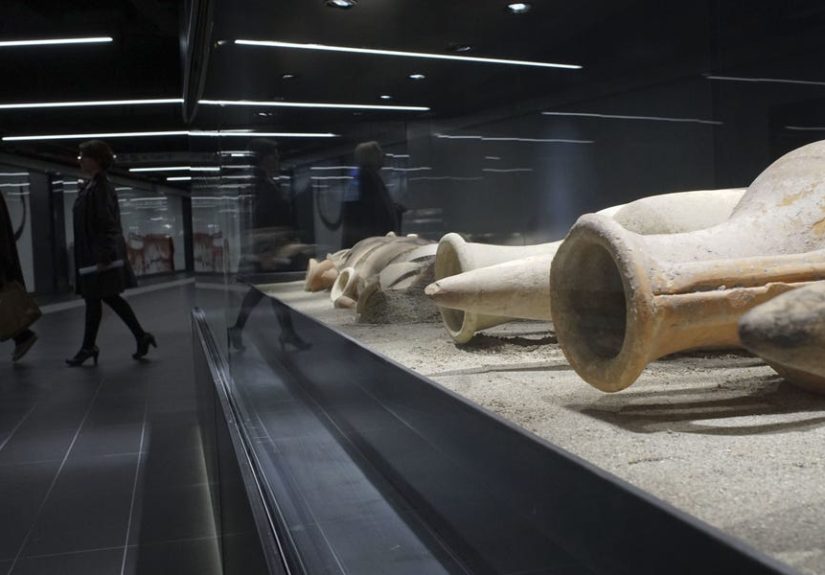
One of the most famous examples is San Giovanni station, which opened with an archaeological exhibit built right into the commuter experience. Instead of rushing passengers underground with nothing to look at but ad panels and a suspicious puddle, the station walks people through centuries of history as they descend. Artifacts found during excavation were displayed inside the station, effectively turning an ordinary ride into a crash course in Roman urban life.
The finds at San Giovanni included amphorae, marble fragments, coins, tools, organic remains, and even peach pits from the Roman era. Yes, peach pits. Nothing says “archaeology is real life” quite like discovering that ancient Romans also snacked, cooked, stored goods, and left behind the kind of everyday debris that helps historians reconstruct how neighborhoods actually functioned.
That matters because archaeology is not only about emperors and marble busts. Everyday objects often tell the better story. A coin can hint at trade. A storage jar can suggest supply networks. Seeds, pits, and food traces can reveal diet, agriculture, and local commerce. At San Giovanni, the station itself became a vertical timeline showing how one patch of Rome changed over centuries.
Military Barracks and a Commander’s Home
Near another Metro C stop, excavations revealed the remains of a second-century military barracks believed to be linked to soldiers from the imperial period. This was not a tiny fragment or a lonely wall pretending to be exciting. The remains included a long corridor and dozens of rooms, with traces of frescoes and black-and-white mosaic floors. In other words, the kind of discovery that makes an archaeologist forget lunch and an engineer immediately worry about the schedule.
Then came an even more dramatic find nearby: the residence of a military commander. Archaeologists uncovered a sizable house with multiple rooms, decorative mosaics, painted plaster, and features that suggested a fairly refined domestic space. This was not just evidence that soldiers existed in the area. It suggested an organized military environment with rank, status, and carefully planned living quarters.
The discovery expanded the story from “there was a barracks here” to “there was a whole functioning military complex here.” That is a huge difference. It allows historians to think more concretely about how security, administration, and elite military life were embedded inside the urban fabric of imperial Rome.
Rare Glass, Wells, and the Stuff of Daily Life
As work continued, more surprises appeared. Excavations associated with the Metro C project revealed a rare fourth-century golden glass fragment depicting Roma, the personification of the city. It was a small object, but a spectacular one. Fine decorative glass like this speaks to craftsmanship, symbolism, and social status. In a city overflowing with stone, bronze, and marble, delicate luxury glass has its own special kind of drama.
Later excavations near the Colosseum uncovered ancient wells and a wide assortment of ordinary objects: hairpins, oil lamps, irrigation pipes, knives, and statues. These are the finds that give texture to the past. A well tells us about water management. A lamp hints at domestic routines after dark. Hairpins whisper about grooming and fashion. A knife is never just a knife when it has survived the collapse of empires.
Together, these discoveries show that the Rome subway dig did not reveal one single treasure chest moment. It revealed a city in layers: military, domestic, agricultural, commercial, and symbolic. It is less like finding one hidden masterpiece and more like opening a filing cabinet stuffed by two thousand years of human activity.
What These Discoveries Reveal About Ancient Rome
The most valuable lesson from the Metro C excavation is that ancient Rome was not made only of monumental architecture. It was also made of systems. Water systems. Housing systems. Security systems. Food supply systems. Decorative cultures. Waste patterns. Traffic routes. Neighborhood habits. Once archaeologists find traces of these things in relation to one another, the city begins to feel less like a distant legend and more like a functioning metropolis full of regular people trying to get through the day.
Take the barracks and commander’s home. Those finds suggest not just military presence, but hierarchy. Take the wells and irrigation features. Those point to infrastructure and environmental management. Take the peach pits and containers. Those suggest trade, diet, and agriculture. Take the gold glass and mosaics. Those hint at taste, wealth, and visual culture. Each object does a small job, but together they build a big picture.
This is why archaeologists get excited about things the rest of us might accidentally sweep into a dustpan. A broken jar shard can place a site in time. A floor pattern can indicate status. Organic remains can reveal what people ate, stored, imported, or planted. Even a discarded object can be the ancient equivalent of a receipt, helping scholars understand how people lived rather than how later generations imagined they lived.
The Tug-of-War Between Progress and Preservation
Of course, all this buried wonder comes with a problem. Rome still needs transportation. It has residents, traffic, pollution concerns, and the practical needs of a major modern capital. A city cannot run entirely on postcards, Vespa photos, and dramatic hand gestures. It needs trains.
But every time crews dig, work can slow while archaeologists document and protect what they find. Plans may need revision. Costs climb. Timelines stretch. Some discoveries are preserved in place. Others are removed and displayed. Some may be reburied for protection. This is not simple, and it is definitely not cheap.
Yet the Metro C story suggests that the old debate between development and preservation may be too narrow. Rome has shown that a subway station can also be an exhibition space. A commuter corridor can also be an educational encounter. Infrastructure does not have to erase history if designers are willing to adapt.
In fact, the Rome subway dig may offer a model for heritage-rich cities around the world. Instead of treating archaeology as a construction headache, planners can treat it as a civic asset. That does not eliminate the headaches, but it does make the aspirin more meaningful.
Why the World Keeps Paying Attention
There is a reason this story keeps resurfacing in international coverage. It combines several irresistible ingredients: ancient Rome, modern engineering, surprise discoveries, museum-worthy artifacts, and the delightful absurdity of commuters encountering antiquity on the way to work. It is serious scholarship with just enough cinematic flair to make everyone picture a backhoe accidentally nudging history awake.
It also taps into a larger cultural hunger. People want cities to feel rooted, not disposable. They want evidence that the places they move through every day have memory. Rome offers that in abundance. The Metro C excavations show that history is not locked behind velvet ropes. Sometimes it emerges from a construction trench and politely delays the transit schedule.
For readers, that makes the story both practical and romantic. On one hand, it is about urban planning, archaeology, and preservation. On the other, it is about the thrill of realizing that beneath a modern metropolis lies another city, and beneath that perhaps another, and another still. Rome is not just old. It is stratified wonder.
Conclusion
The Rome subway dig uncovered ancient treasures, yes, but the bigger treasure may be perspective. Metro C has revealed barracks, homes, wells, mosaics, glass, tools, and traces of ordinary life that deepen our understanding of how ancient Rome actually worked. These discoveries remind us that history is not only built from grand monuments. It is also built from kitchens, corridors, gardens, pipes, pits, and personal objects dropped, lost, stored, or discarded by people who never imagined they would one day delay a train line.
That is what makes this story so memorable. In Rome, digging down does not simply create space for the future. It reintroduces the past. Every trench becomes a question. Every station becomes a potential museum. Every engineering challenge becomes a negotiation with memory. And somehow, against all odds, the city keeps moving forward while carrying its ancient layers with it.
Not bad for a subway project. Most transit systems are lucky if people praise the air-conditioning.
What It Feels Like to Experience Rome’s Buried History in Real Life
To understand why the Rome subway dig resonates so strongly, it helps to imagine the experience from ground level. You are in Rome, a city where even a casual walk can include a church façade, a ruined wall, a scooter zipping past your elbow, and a tourist holding gelato with the concentration of a bomb technician. Then you head toward a metro station expecting the usual routine: ticket, turnstile, escalator, platform, train.
But instead of descending into a bland transit cavity, you begin moving through layers of time. The station does not merely take you underground. It introduces you to the city underneath the city. Cases display artifacts found during excavation. Text and design cues guide you deeper. The mood shifts. You stop thinking like a commuter and start thinking like a witness.
That is part of the magic. The experience is not theatrical in a fake way. It is powerful because it is real. These are not props made to look Roman. They are actual objects pulled from the same ground now holding the station walls, escalators, and tracks. It becomes easier to grasp that Rome was never replaced by a new city. It was layered over, revised, crowded, repaired, and reused.
There is also something oddly intimate about the smaller finds. A grand ruin inspires awe, but a humble object creates connection. A hairpin makes you think of a person getting ready in the morning. A lamp suggests evening light. A storage vessel hints at shopping, cooking, and household routines. A peach pit feels almost comically ordinary until you remember it survived for centuries while your reusable grocery bag is already tearing at the seams.
For travelers, the emotional effect can be surprisingly strong. Rome’s famous landmarks already make the city feel layered with memory, but the subway discoveries add a more grounded sensation. They show that history was not limited to emperors, gladiators, and marble speeches. It belonged to workers, cooks, soldiers, children, merchants, and residents moving through neighborhoods that were once as practical and messy as any modern district.
For commuters, the meaning is different but just as striking. Imagine seeing physical evidence of ancient life during an ordinary weekday ride. That daily encounter turns heritage from a special outing into part of civic identity. It says the city’s past is not reserved for tourists with guidebooks. It belongs to everyone passing through.
And perhaps that is the deepest experience tied to the Rome subway dig: humility. You realize your route, your schedule, your errand, your train delay, and your phone battery crisis are all happening above or beside traces of lives lived long before your own. Instead of making the present feel small, it makes the city feel richer. Rome does not ask people to choose between history and modern life. It insists they travel together, sometimes on the same platform.






 Close
Close