
Table of Contents >> Show >> Hide
- The Sighting: A Murky-Gold Yellow in a Catskills Retreat
- Why This Yellow Works: It’s Not “Yellow Yellow”
- The Big Yellow Comeback: Butter, Nostalgia, and the “New Neutral”
- How to Find Your Perfect Yellow (Without Repainting Twice)
- 1) Start with a light map, not a paint chip
- 2) Decide what kind of yellow you actually want
- 3) Undertones are the difference between “golden” and “greenish”
- 4) Use LRV to avoid the “too much sun” effect
- 5) Test in the real room, at real times
- 6) Build a palette so your yellow has friends
- 7) Choose placement like a designer, not a daredevil
- Yellow Examples to Steal (Legally, Emotionally)
- Troubleshooting: When Yellow Goes Sideways
- Conclusion: The Perfect Yellow Is a Mood, Not a Number
- Experience Notes: 5 Real-World “Perfect Yellow” Moments (and What They Teach You)
- 1) The North-Facing Kitchen That Looked “Sunny” in the Store
- 2) The Sunny Room That Became a Banana Republic (Not the Store, the Fruit)
- 3) The Cabinet Interior That Made the Whole Kitchen Feel Expensive
- 4) The “Perfect Yellow” That Didn’t Match the Stone Countertop
- 5) The Yellow That Looked Different on Every Wall (Because It Did)
Some paint colors behave like polite guests: they show up, compliment your furniture, and never start drama.
Yellow is not that guest. Yellow is the friend who arrives early, turns the music up, and somehow looks different
in every photo you take.
Which is why the “perfect yellow” is such a satisfying discoveryespecially when it appears in a rural retreat
designed to feel calm, grounded, and a little bit storied. In one Remodelista Reconnaissance sighting, the answer
wasn’t a lemony shout or a nursery-room whisper. It was a mellow, complex goldwarm, slightly smoky, and confident
enough to live with wood, black accents, and real life.
The Sighting: A Murky-Gold Yellow in a Catskills Retreat
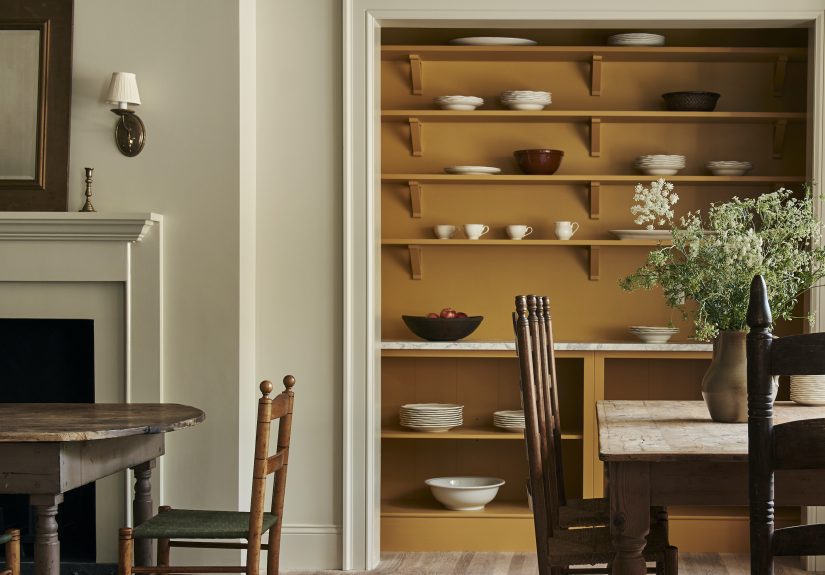
The color in question was spotted at INNESS, a country refuge and members club in Accord, New Yorkabout 90 minutes
outside New York Citywhere the design leans modern-vernacular: minimal forms, lots of wood, and views treated like
the main event. In Remodelista’s Reconnaissance feature, the yellow shows up on open shelving in the farmhouse dining
area, acting like a small sunrise tucked into a neutral palette.
The “perfect yellow” is called Nicotine, a color developed by Plain English in collaboration with designer
Rita Konig. Remodelista describes it as a “lived-in murky gold,” and Plain English’s own write-up adds a wonderfully specific
mood: it’s meant to evoke storied interiors where the haze of tobacco has long since faded (so… warm history, not active
ventilation issues).
What makes this an especially good rural-retreat yellow is how it behaves in context. INNESS intentionally limits much of its
paletteblack, white, natural wood, and muted tonesso the architecture can sit quietly against the landscape. In that kind of
environment, a complicated yellow reads as a surprise, not a siren. It brings warmth without turning the room into a
giant sticky note.
Why This Yellow Works: It’s Not “Yellow Yellow”
If you’ve ever painted a room what you thought was “soft sunshine” and ended up with “aggressive banana,” you already know the
problem: yellow is incredibly sensitive to lighting, surrounding colors, and undertones.
Nicotine succeeds because it sits in a sweet spot:
- Muted saturation: It’s more ochre/gold than canary, so it doesn’t vibrate on the wall.
- Complex undertone: It has a slightly smoky, brown-leaning depth that reads “aged” instead of “new toy.”
- Best-in-small-doses behavior: Used on shelving or inside cabinetry, it acts like a “sunny surprise,” not a full-room takeover.
Benjamin Moore puts it plainly: saturated yellows can be intense, which is why brighter versions often work better as accents,
while lighter or muted yellows are easier to live with across larger areas. Nicotine basically took that advice, put on a tweed
jacket, and moved to the countryside.
The Big Yellow Comeback: Butter, Nostalgia, and the “New Neutral”
Yellow’s popularity isn’t happening in a vacuum. A softer, creamy, butter-leaning yellow has been trending across fashion and
interiors, with design writers calling it the “color of the season” and linking it to the wider habit of naming colors after food
(because apparently we all want our walls to sound snackable).
The butter-yellow wave is often framed as nostalgia with a modern polishwarmth without heaviness, cheer without neon.
Southern Living notes that designers describe butter yellow as a comeback with retro charm that adds warmth and personality,
and Real Simple highlighted KitchenAid’s 2025 Color of the Year, “Butter,” as a soft, creamy yellow chosen specifically for its
comfort-and-nostalgia vibe.
Nicotine is not exactly butter yellowit’s deeper and more “aged gold”but it lives in the same emotional neighborhood:
welcoming, warm, a little vintage, and far less clinical than the cool grays that dominated for years.
How to Find Your Perfect Yellow (Without Repainting Twice)
Yellow rewards planning. Here’s a practical approach that designers useminus the part where you pretend you’re “fine” after
the third sample jar.
1) Start with a light map, not a paint chip
Light direction matters. North-facing rooms get consistent but cooler, muted lightoften making colors read grayer or colder than
expected. Better Homes & Gardens points out that this bluish light can dull or chill paint colors, so warmer tones (often with
red or yellow undertones) tend to feel more inviting. Benjamin Moore similarly recommends balancing northern exposure with warmth,
especially when choosing neutrals or whites with a hint of yellow.
In practical terms: if your room is north-facing or shaded by trees (hello, rural retreat), your yellow may need a warmer base than
you’d pick for a bright, south-facing room.
2) Decide what kind of yellow you actually want
“Yellow” is a family reunion, not a single person. Narrow it down:
- Buttercream / pale yellow: soft, cozy, easy on walls; great for kitchens and low-contrast rooms.
- Golden / ochre: richer, earthier, often feels historic; plays well with wood and black accents.
- Mustard / deep gold: dramatic, moody, and surprisingly sophisticated when paired with the right neutrals.
- Bright lemon / canary: energetic and high-contrast; best as an accent unless you truly enjoy adrenaline.
Sherwin-Williams notes that many people gravitate toward mustard and pale yellows right nowbold enough to feel intentional, but
not so bright they overwhelm a space.
3) Undertones are the difference between “golden” and “greenish”
Undertones are the quiet colors hiding underneath the loud one on the label. Sherwin-Williams’ guidance on undertones boils down to:
if undertones clash, the room can feel “off” even when the color is objectively pretty.
A helpful trick: compare your yellow sample against a sheet of clean white paper and a warm off-white. If it suddenly looks a bit
chartreuse or sickly, that’s a green undertone waving from the background. If it looks peachy or caramel, you’re in the warm zone.
4) Use LRV to avoid the “too much sun” effect
LRV (Light Reflectance Value) is basically how much light a paint color bounces back. Sherwin-Williams explains that higher-LRV
yellows can make a room feel brighter and largerbut also warns that in rooms with lots of natural light, yellow can read overly
saturated. (They even joke about attracting bugs who think your wall is a gigantic flower, which is a hilarious way to say:
“test first.”)
Rule of thumb: if the room is already bright, consider a more muted or deeper yellow. If the room is dim, a lighter, creamy yellow
can lift it without looking harsh.
5) Test in the real room, at real times
Yellow changes throughout the day like it’s trying to win a reality show. To test smart:
- Paint a large sample area (or a foam board) and move it around the room.
- Look at it morning, midday, and evening.
- Check it next to your fixed finishes: counters, floors, cabinets, and the trim color you’re keeping.
- Stand in the doorway and in the far corneryellow can read differently at distance.
HGTV’s editor-approved yellow roundup repeatedly shows the same lesson: the best yellows “shift” in interesting ways without turning
weirdwarming up in the morning, getting moodier at night, and staying friendly through it all.
6) Build a palette so your yellow has friends
Yellow is more cooperative when you give it a supporting cast. The Spruce suggests that deeper, warmer yellows often pair beautifully
with blues and greens, while brighter yellows can play well with pinks and oranges. It also flags the obvious-but-important point:
lighting changes intensityyellow can look more intense in a sunny room and more orange in a darker one.
For a rural retreat vibe, consider pairings that feel grounded:
- Yellow + natural wood: warm, organic, timeless.
- Yellow + black accents: crisp contrast that keeps yellow from feeling sugary.
- Yellow + muted blue (or navy): classic, slightly coastal, always smart.
- Yellow + warm whites: brightens without looking clinical.
Southern Living specifically calls out butter yellow with light woods and natural textures as an easy win, and notes it can also
stand up to deeper contrasts like navy or charcoal.
7) Choose placement like a designer, not a daredevil
The reason Nicotine works so well at INNESS is placement: shelving and larder moments, not necessarily full-room immersion.
If you want to experiment without repainting your entire life:
- Paint the inside of a cabinet, pantry, or hutch for a “sunny surprise.”
- Try a yellow door (front, pantry, or mudroom) for instant warmth.
- Use it on a smaller zone: a breakfast nook, a fireplace surround, or built-ins.
- Color-drench a tiny room (powder bath, laundry) if you want drama without commitment.
Yellow Examples to Steal (Legally, Emotionally)
If Nicotine is your inspiration but you want to explore similar vibes, here are examples that show how wide the yellow spectrum
really is:
Golden, earthy yellows for cabinets and built-ins
- Benjamin Moore Semolina (HGTV featured it on cabinetry and a range hood for an earthy golden look).
- Benjamin Moore Hawthorne Yellow, often praised for warming up wood and balancing cooler grays.
- Sherwin-Williams Kingdom Gold, a warm, sitting-room-friendly gold in the mustard family.
Soft, approachable yellows for walls and low-light spaces
- Sherwin-Williams They Call It Mellow, a muted option for cautious dabblers.
- Warm whites with yellow hints (Benjamin Moore recommends them to counter cooler northern exposure).
Moody, sophisticated yellows for “small room, big payoff”
- India Yellow (HGTV includes it as a bright-meets-moody choice that can be surprisingly sophisticated).
- Deep ochres that read like aged plaster when paired with warm neutrals and vintage textures.
The takeaway: don’t chase a single “best yellow.” Chase the yellow that fits your light, your finishes, and
your tolerance for cheer.
Troubleshooting: When Yellow Goes Sideways
Problem: It looks greenish
Likely cause: a green undertone reacting to cool light or nearby greens. Fix: shift to a warmer, more ochre-based yellow, or pair it
with warmer whites and wood tones to pull it back toward gold.
Problem: It’s too bright in daytime
Likely cause: high natural light amplifying saturation. Fix: go deeper/more muted, or use yellow as an accent zone rather than a full wall.
(Also: congratulations on having great light. Please accept my jealous silence.)
Problem: It turns orange at night
Likely cause: warm artificial bulbs shifting the color. Fix: test under your actual bulbs, and consider adjusting bulb temperature if the room
feels too amber.
Problem: It feels “kids’ room” instead of “country-house chic”
Likely cause: too clean/bright a yellow with no grounding neutrals. Fix: add black accents, aged metals, textured linens, darker woods, or
choose a yellow with more depth (think “golden ochre,” not “school bus”).
Conclusion: The Perfect Yellow Is a Mood, Not a Number
Remodelista’s Nicotine sighting is a reminder that “perfect yellow” doesn’t have to be loud. In the right placelike a rural retreat built around
landscape and calmit can be a quiet hit of warmth that makes a neutral palette feel human.
If you want a yellow that lasts longer than a trend cycle, look for complexity: a little smoke, a little earth, an undertone that behaves, and a
placement strategy that lets yellow do what it does bestlift the roomwithout taking over the entire conversation.
Experience Notes: 5 Real-World “Perfect Yellow” Moments (and What They Teach You)
The fastest way to understand yellow is to watch it in actionon real walls, in real homes, with real lighting that refuses to cooperate.
Below are five experience-based scenarios that come up again and again when people hunt for the perfect yellow (especially one with that
Nicotine-style “aged gold” charm). If you recognize yourself in any of these… welcome. You’re among friends.
1) The North-Facing Kitchen That Looked “Sunny” in the Store
Someone brings home a pale yellow that looked creamy and gentle under showroom lights. In their north-facing kitchen, it instantly reads
cooler, flatter, and a bit gray-greenlike the color took a deep breath and decided it was tired. This is the classic north-light effect:
cool, consistent illumination can drain warmth from paint. The fix is usually not “go brighter.” It’s “go warmer.” A slightly more golden,
ochre-leaning yellow (or a warm white with a yellow hint) often restores that cozy glow without turning the room into a cartoon.
2) The Sunny Room That Became a Banana Republic (Not the Store, the Fruit)
In a south-facing living room with big windows, a cheerful mid-yellow can become aggressively saturated by midday. It’s not that the paint is
“wrong”it’s that sunlight is basically a spotlight, and yellow loves attention. People often solve this by stepping down the saturation (choosing
a more muted yellow) or stepping up the depth (a deeper gold that reads richer rather than brighter). Another smart move: keep yellow on a feature
like built-ins or a fireplace surround, and let the surrounding walls stay neutral. Same happiness, fewer migraines.
3) The Cabinet Interior That Made the Whole Kitchen Feel Expensive
This is the “sunny surprise” strategy that Nicotine nails. Instead of painting every wall, someone paints the inside of glass-front uppers or a pantry.
Suddenly, the kitchen feels layeredlike there’s a secret little glow hiding behind dishes and linens. It’s a high-impact, low-risk move: you get the
warmth of yellow, but it only shows when the cabinet is open (or when you want to show off, which is absolutely allowed).
4) The “Perfect Yellow” That Didn’t Match the Stone Countertop
Yellow has a complicated relationship with stone. If your counters have strong veiningcaramel, rust, gray, even greenyour yellow will either harmonize
or fight. In one common scenario, an earthy golden cabinet color looks incredible because it echoes the warm veining in the stone (HGTV shows this effect
beautifully in projects where yellow ties directly into the countertop’s warmth). The lesson: don’t choose yellow in isolation. Hold the sample up to the
counter, the floor, and the trim. If it “clicks,” you’ll feel it immediatelylike your materials are speaking the same language.
5) The Yellow That Looked Different on Every Wall (Because It Did)
People sometimes think they’re imagining things: one wall looks buttery, another looks tan, and the corner looks weirdly peach. They’re not imagining it.
Yellow reacts strongly to shadow lines, adjacent colors, and even the direction you’re viewing from. The most useful “experience hack” is this: test on a
movable board and walk it around your space for a full day. If you love it in multiple spots and multiple lighting conditions, you’ve found a keeper. If you
only love it at 11:00 a.m. while standing on one foot near the window… it’s probably not your forever yellow.
The overall takeaway from these lived-in scenarios is simple: the perfect yellow isn’t about finding a magic label. It’s about choosing a yellow that
behaves in your light, flatters your materials, and delivers warmth at the volume you actually wantwhether that’s a whisper inside a cabinet or a full,
golden moment on the walls.







 Close
Close