
Table of Contents >> Show >> Hide
- What Makes a $20 Bill Valuable?
- 11 Rare $20 Bills Worth Watching
- 1. 1861 $20 Demand Note
- 2. 1869 $20 Legal Tender Note, the “Rainbow Twenty”
- 3. 1882 $20 Gold Certificate
- 4. 1890 $20 Treasury Note, the “Fancy Back” Marshall Note
- 5. 1905 $20 Gold Certificate, the “Technicolor” Note
- 6. 1914 $20 Red Seal Federal Reserve Note
- 7. 1915 $20 Federal Reserve Bank Note
- 8. 1928 $20 Federal Reserve Note with Serial Number 1
- 9. 1929 $20 National Bank Note from a Tiny Issuer
- 10. 1934 $20 Light Green Seal Replacement Notes with Serial Number 1
- 11. 1934A $20 Hawaii Emergency Notes, Especially Mules and Stars
- How to Tell If Your $20 Bill Might Be Special
- Common Mistakes Collectors Make
- The Real Experience of Hunting Rare $20 Bills
- Final Thoughts
- SEO Tags
Most people see a $20 bill and think, “Lunch money.” Collectors sometimes see the very same bill and think, “Please let that be a low-serial, star-note monster.” That is the sneaky magic of paper money collecting: one ordinary-looking twenty can be worth exactly twenty bucks, while another can pay for a vacation, a used car, or a very dramatic victory lap around a coin show.
If you have ever wondered whether an old twenty tucked inside a book, found in a dresser drawer, or handed to you in change might be special, you are asking the right question. Some rare $20 bills are valuable because very few survived. Others are desirable because of unusual seals, districts, star replacements, Serial Number 1 pedigrees, famous emergency issues, or eye-popping designs that make modern cash look a little underdressed.
Below are 11 rare $20 bills that can be worth far more than face value. Some bring a few thousand dollars in the right condition. Others have crossed into five figures. A select few have sold for six figures and beyond. So yes, your next $20 bill probably is not a treasure. But “probably” is a dangerous word in numismatics.
What Makes a $20 Bill Valuable?
Before diving into the list, it helps to know what separates a collectible twenty from one that is only useful at the grocery store. In general, value comes down to a handful of factors working together.
- Rarity: Some notes had low print runs, limited issuing districts, or tiny survival numbers.
- Condition: In paper money, crispness matters. Sharp corners, strong color, original paper quality, and little to no handling can send values soaring.
- Variety: Mules, stars, emergency issues, unusual signature combinations, and short-lived series often carry premiums.
- Serial number appeal: Low numbers, solid numbers, radars, ladders, and especially Serial Number 1 notes are collector catnip.
- District and bank importance: For Federal Reserve and National Bank Notes, where a bill was issued can be a huge part of the story.
- Provenance: If a note comes from a famous collection or has a famous owner, the bidding room tends to wake up very quickly.
In other words, value is not just about age. Plenty of old twenties are collectible, but not every old twenty is rare. A wrinkled, common note is still a wrinkled, common note. Time alone does not perform miracles.
11 Rare $20 Bills Worth Watching
1. 1861 $20 Demand Note
This is where the serious money starts. Demand Notes were the first federally issued paper currency of the Civil War era, and $20 examples are among the great prizes of American paper money. They are historic, visually bold, and scarce enough to make advanced collectors act like they just spotted Bigfoot holding a wallet.
The headline-grabbing version is the famous “for the” variety. On early Demand Notes, clerks added “for the” after signatures because the wording had not yet been engraved on the plate. In the $20 denomination, that variety is essentially legendary. One unique example sold for more than $400,000. Even non-unique pieces can be major trophies, and mid-grade notes have long commanded near-six-figure attention.
If you ever find one in an attic, please do not spend it on tacos. Even excellent tacos.
2. 1869 $20 Legal Tender Note, the “Rainbow Twenty”
If a banknote can be called glamorous, this is the one. The 1869 $20 Legal Tender note is nicknamed the “Rainbow Twenty” because of its colorful design, especially the dramatic blue anti-counterfeiting tint that sweeps across the face. It is one of the most recognizable notes in U.S. currency history and one of the prettiest pieces of paper the Treasury ever turned loose on the public.
Collectors love this note for two reasons: it is attractive and it is not easy to find in truly high grade. That combination is basically collector rocket fuel. Nice circulated examples are already expensive, and gem examples can climb into major-money territory. Recent auction results show strong five-figure prices for high-grade pieces, which tells you the market is not treating this note like a novelty. It is a serious collectible with museum-level charm.
3. 1882 $20 Gold Certificate
The 1882 $20 Gold Certificate is the kind of note that makes collectors lean in closer. It features President James A. Garfield on the face and a striking orange back that is famous in its own right. Bright backs bring stronger money because the color often fades over time, so eye appeal matters a lot here.
This is not a note you stumble across every day. High-grade examples are rare and fiercely desired, and strong auction records show that top-tier pieces can sell for six figures. Even less spectacular examples still command solid collector premiums because the design is elegant, the denomination is popular, and the type has real historic weight.
In short, this is one of those notes that can look classy, important, and expensive all at once. Because it is.
4. 1890 $20 Treasury Note, the “Fancy Back” Marshall Note
The 1890 $20 Treasury Note is famous for its ornate reverse design, which is why collectors call it the “Fancy Back.” It features John Marshall on the face and a bold, intricate back that looks like an engraver had too much coffee and zero interest in minimalism.
This type is beloved because it blends artistry with rarity. The finest examples can hit six figures, and the upper end of the market has shown serious strength for premium pieces. A top example with elite quality has been estimated in the $100,000 to $150,000 range, and public sale records prove that collectors are willing to pay handsomely for strong notes from this series.
If your taste in money runs toward dramatic scrollwork and maximum nineteenth-century flair, this bill absolutely delivers.
5. 1905 $20 Gold Certificate, the “Technicolor” Note
Few notes have a nickname as perfect as “Technicolor.” The 1905 $20 Gold Certificate stands out because of its vivid yellow-orange tint, bright seal, and unforgettable look. It is one of the most iconic $20 bills ever issued, and collectors know it instantly.
That popularity matters. This note is rare enough to be important, but famous enough to attract constant demand. Even lower-grade examples can bring strong prices simply because everyone wants one. Once you move into nicer condition, the numbers get serious in a hurry. Premium specimens have sold for six figures, and a famous Serial Number 1 example once realized more than half a million dollars.
This is the note that proves a bill does not need to be obscure to be valuable. Sometimes the superstar is valuable because everybody knows it is a superstar.
6. 1914 $20 Red Seal Federal Reserve Note
Early 1914 Federal Reserve Notes are direct ancestors of the modern paper money Americans use today, but the red-seal versions have a special place in the hobby. They were printed for only a short period before the seal color changed to blue, and that makes them more elusive than many later issues.
Some districts are much scarcer than others, which means two 1914 red-seal twenties can look similar at first glance and still live in very different price brackets. Attractive examples from tougher districts are hard to find, and rare serial-number or district combinations can become heavy hitters. One Serial Number 1 San Francisco example sold for more than $86,000.
The lesson here is simple: with 1914 red seals, details matter. District, serial number, grade, and Friedberg variety can turn a “nice old bill” into a genuine prize.
7. 1915 $20 Federal Reserve Bank Note
The 1915 $20 Federal Reserve Bank Note is a different animal from the regular Federal Reserve Notes of the period, and collectors know it. These notes are rich in district-specific nuance, signature varieties, and scarcity. Some are collectible but attainable. Others are flat-out difficult and can go missing from the market for long stretches.
Certain rare Friedberg numbers are represented by only a handful of recorded notes. That is the kind of sentence that makes paper money specialists grin like villains in an old movie. Auction records show that scarce varieties have sold for strong prices, and elite examples have carried estimates well into five figures. Rare district notes from Chicago, Dallas, and other banks can become fierce bidding targets when the right combination of rarity and condition appears.
This is one of those areas where advanced collectors spend a lot of time, because the real treasure is often hiding in the fine print.
8. 1928 $20 Federal Reserve Note with Serial Number 1
The first small-size Federal Reserve Notes appeared in 1928, and Serial Number 1 examples are on a completely different planet from ordinary notes. Collectors love low numbers in general, but a genuine Serial Number 1 note from the very first small-size series is the hobby equivalent of finding front-row tickets in your coat pocket.
A 1928 Atlanta $20 with Serial Number 1 sold for more than $20,000, which should immediately clear up any confusion about whether low serials matter. They matter a lot. These notes appeal to both currency collectors and people who specifically chase elite serial numbers, which creates a wider buyer pool and stronger competition.
So yes, sometimes the design is ordinary, the history is straightforward, and the serial number does all the heavy lifting. In this case, it lifts very well.
9. 1929 $20 National Bank Note from a Tiny Issuer
National Bank Notes add local history to the collecting equation. Instead of a generic federal issue, these notes were tied to specific banks in specific towns. That means rarity can depend not just on the denomination and series, but on the town name, charter number, and surviving population.
Some 1929 $20 National Bank Notes from tiny issuers are genuinely scarce. A note from Melissa, Texas, for example, was cataloged as one of only four small-size notes reported from that bank, which had issued just 234 sheets of Type 1 twenties. That is microscopic by paper-money standards. Serial Number 1 examples from certain small-town banks can be even more desirable because they combine local rarity with low-number appeal.
These notes may not always scream “fortune” to a casual observer, but to the right collector, a rare town can be every bit as exciting as a famous federal issue.
10. 1934 $20 Light Green Seal Replacement Notes with Serial Number 1
Now we enter the niche where specialists lose all ability to play it cool. A 1934 light green seal $20 replacement note with Serial Number 1 is not just rare. It is the kind of trophy that can anchor an elite collection.
Replacement notes, also called star notes, were printed to substitute for defective sheets. They already have built-in collector appeal. Add a very low serial number, an early small-size series, and a scarce district, and the result is fireworks. One comparable light green Serial Number 1 replacement note sold for $88,125, which tells you this category is very much playing in the high-stakes sandbox.
For collectors who love the intersection of serial numbers, production quirks, and early small-size currency, this is premium territory.
11. 1934A $20 Hawaii Emergency Notes, Especially Mules and Stars
Hawaii emergency notes were issued during World War II after Pearl Harbor, when the government feared that ordinary U.S. currency circulating on the islands could become a liability if Japanese forces gained control. The overprinted “HAWAII” notes are historically important, visually distinctive, and widely collected.
Regular examples are collectible. The real excitement begins with special varieties, especially mules and star notes in top condition. A superb 1934A Hawaii $20 mule realized more than $40,000, and high-grade star notes are closely watched because relatively few survive in pristine shape. This is a classic example of history meeting rarity: the backstory pulls collectors in, and the better varieties keep them bidding.
If a plain-looking old twenty is the wallflower at the dance, a Hawaii emergency note is the one everybody remembers.
How to Tell If Your $20 Bill Might Be Special
If you want to check a $20 bill quickly, start with the basics.
- Look at the series year.
- Check whether it is large-size or small-size.
- Look for a star in the serial number.
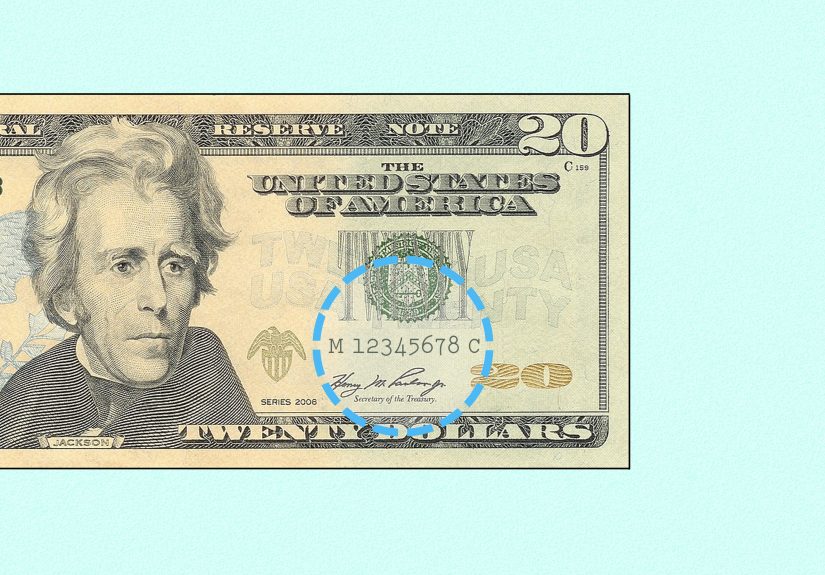
- Check for low serial numbers, especially 00000001 through 00000100.
- Watch for fancy serials like radars, solids, repeaters, ladders, and million numbers.
- Inspect the seal color, district letter, and any unusual overprints such as HAWAII.
- Do not ignore condition. Crisp paper can make a huge difference.
And please, for the love of paper fibers, do not fold it ten more times “to keep it safe.” Rare currency does not improve with extra wallet gymnastics.
Common Mistakes Collectors Make
The biggest mistake is assuming every old bill is valuable. The second biggest is assuming every star note is rare enough to retire on. Most are not. Many modern star notes and fancy-looking serials are collectible, but only the most desirable combinations bring major prices.
Another mistake is cleaning, pressing, ironing, laminating, or “fixing” a note. That usually harms value, sometimes badly. If you think you found something important, store it flat in an inert currency sleeve and get an opinion from a reputable paper-money dealer or grading service.
One more thing: authenticity matters. The more expensive the note category, the more careful you should be. Valuable bills deserve expert evaluation, not wild guesses from a blurry online photo and a comment section full of confidence.
The Real Experience of Hunting Rare $20 Bills
There is a very specific thrill that comes with checking twenties, and collectors know it well. It usually starts with a tiny spark of curiosity. Maybe the paper feels stiffer than usual. Maybe the seal color looks odd. Maybe the serial number seems too neat, too low, too symmetrical to ignore. Then your brain starts racing faster than it has any right to over a piece of paper that might still only buy coffee and a sandwich.
For many people, the experience begins in a wonderfully unglamorous place: a cash drawer, a flea market, a box from an estate sale, a bank strap, a grandparent’s Bible, or the random envelope everybody in the family was afraid to throw away because it looked “kind of important.” You slide the bill out, flatten it gently, and suddenly history is sitting in your hands. Not abstract history from a textbook, but real, ink-on-paper history that somebody folded, spent, saved, or forgot.
And that is part of the charm. Rare $20 bills are not just expensive because they are scarce. They are exciting because they feel personal. A tiny-town National Bank Note whispers about a local bank that once mattered deeply to one community. A Hawaii emergency note carries the tension of wartime America. A red-seal Federal Reserve Note looks like a missing link between older ornate currency and the money in your pocket today. Even a modern $20 with Serial Number 1 feels like a small bureaucratic miracle that somehow escaped into the world instead of being tucked away forever.
The emotional roller coaster is also very real. First comes hope. Then doubt. Then obsessive comparison. Then fifteen browser tabs. Then the classic collector thought: “I am either holding a four-figure note or a very educational disappointment.” That cycle is basically a hobby tradition.
Even when a note turns out to be ordinary, the hunt still teaches you something. You learn how to read district letters. You notice the difference between a star note and a regular serial number. You start to recognize what crisp original paper looks like. Over time, your eyes get better, your patience gets better, and your odds improve. The hobby rewards attention in a way few modern activities do. It asks you to slow down, look closely, and care about detail. That alone feels oddly refreshing.
Then there is the moment when a note is genuinely better than expected. Maybe not life-changing, maybe not six figures, but still real. Maybe it is a scarce district. Maybe it is a tough star. Maybe it is a great low serial. In that instant, the bill stops being just currency and becomes a story, a collectible, and a little piece of luck all at once. That feeling is hard to fake and even harder to forget.
So yes, most twenties are just twenties. But the experience of checking them is part treasure hunt, part history lesson, part detective work, and part comedy of self-inflicted obsession. That is exactly why people keep doing it.
Final Thoughts
Rare $20 bills cover an amazing range, from Civil War-era showstoppers to wartime emergency issues, tiny-town bank notes, low-serial trophies, and brilliantly designed gold certificates that still look like they belong under glass. The key takeaway is simple: not every twenty is special, but the special ones can be very special indeed.
If you think you have one, slow down, handle it carefully, document the details, and compare the series, seal, serial number, district, and condition before making any assumptions. In paper money, tiny details can separate a spendable bill from a small fortune. And that is what makes the hunt so much fun.






 Close
Close