
Table of Contents >> Show >> Hide
- What Actually Happened in the Viral Lion Photo Story
- Why the Image Hit So Hard Online
- What the Lion’s Behavior Likely Meant
- Where the Photographer Took the Biggest Risk
- The Bigger Lesson for Wildlife Photography
- When a Headline Runs Wilder Than the Lion
- A 500-Word Reflection on the Experience Behind the Image
- Conclusion
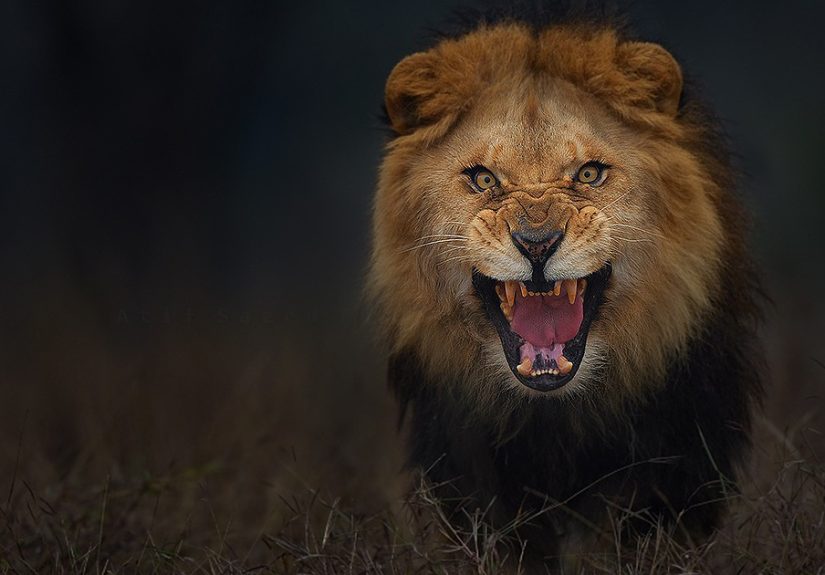
Some photographs are beautiful. Some are terrifying. And some manage to be both while making every viewer instinctively whisper, “Buddy… maybe back up a little.” That is exactly why the now-famous image of a glaring, open-mouthed lion taken by Pakistani photographer Atif Saeed has stuck in people’s minds for years. It looks like the kind of shot that belongs on a gallery wall and in a cautionary tale at the same time.
The image became widely shared because it appears to freeze the split second between awe and disaster. But the story behind it is even more compelling than the frame itself. According to widely cited reports, Saeed photographed the lion during a visit to Lahore Zoo Safari, and moments later the animal moved aggressively toward him. He made it back to his vehicle without physical injury. That detail matters, because the internet loves to inflate a close call into a full-blown mauling. The documented version is still dramatic enough without adding extra Hollywood sound effects.
What makes this story so fascinating is not just the danger. It is what the image reveals about wildlife photography, lion behavior, risk-taking, and the thin line between a remarkable shot and a terrible decision. The photograph is gripping because it captures raw animal power. The backstory is gripping because it reminds us that power does not care about your camera settings.
What Actually Happened in the Viral Lion Photo Story
In the most credible retellings of the incident, Saeed said he entered the lion’s habitat area in Lahore in January 2012 to take close-up photographs. He positioned himself near his car with the door open, giving himself a possible escape route. He later described the lion as approaching aggressively and said the animal appeared to regard him as prey. After a few tense moments, the lion made what he described as an offensive move, and Saeed jumped back into the vehicle and escaped unharmed.
That sequence is important because it turns the story from simple clickbait into something more instructive. The headline version sounds like a photographer was attacked and barely survived with dramatic claw marks and shredded khaki. The stronger factual version is this: a wildlife photographer got dangerously close to a lion, captured an unforgettable image, and then experienced exactly why experts keep repeating the same advice about distance, animal stress signals, and not treating apex predators like oversized house cats with attitude problems.
The photo later went viral because it has everything the internet loves: suspense, danger, a charismatic predator, and one deeply human questionwhy would anyone choose to be that close? The answer, at least in part, is that great wildlife photography often aims to show character, not just anatomy. A flat, distant lion in the grass is a lion. A close portrait with tension in the eyes, the mouth, and the posture feels like a confrontation. It tells a story in one frame. The problem is that sometimes the story tells you back.
Why the Image Hit So Hard Online
People did not respond to this lion photograph only because it was dangerous. They responded because it looked personal. The lion is not merely existing in the frame. It appears to be making a decision. That distinction matters in visual storytelling. A lot of wildlife imagery creates distance between viewer and subject. This shot does the opposite. It collapses the space so completely that you can almost hear the growl and feel your pulse trying to leave your body.
That emotional punch is what separates an ordinary wildlife image from a viral one. Viewers were not just admiring the lion’s mane, teeth, or expression. They were imagining the moment after the shutter clicked. The photograph created its own sequel in the audience’s mind, and that sequel was not exactly relaxing.
There is also a reason big-cat imagery always travels fast online. Lions already carry a giant symbolic load in popular culture. They are used to represent courage, royalty, menace, dominance, wilderness, and occasionally sports teams with questionable seasons. So when a lion appears angry in a photograph, people do not read it as just another animal portrait. They read it like a myth wearing fur.
What the Lion’s Behavior Likely Meant
Lions communicate in more ways than a casual observer may realize. Roaring, snarling, growling, posture, territorial signaling, and proximity all matter. Male lions in particular are built not just for spectacle, but for warning. A roar can announce territory. A snarl can escalate tension. A direct approach can be a test, a threat, or the opening move in a very bad day for the nearest human who confused access with safety.
That is why this story resonates beyond the photograph itself. It is really about reading animal body language before the animal decides to underline its point with claws. Ethical wildlife photography guidance repeatedly emphasizes the same principle: know the species, watch for signs of stress, and back away when the animal reacts to your presence. In plain English, if a lion is looking at you like you just wandered onto its dinner menu, that is not a creative breakthrough. That is your cue to leave.
Even in managed environments such as safari parks or wildlife facilities, a lion is still a lion. The setting may have fences, roads, rules, and ticket booths, but none of those things change the animal’s instincts. An apex predator does not become harmless because humans feel organized nearby. It simply becomes an apex predator in a place where humans have become a little too comfortable.
Where the Photographer Took the Biggest Risk
The obvious risk was proximity. Close-range wildlife photography can produce spectacular images, but it also compresses your reaction time into almost nothing. With a large predator, that margin can disappear in one burst of movement. Lions are capable of explosive speed, especially over short distances. A person sitting near the ground, focused through a camera, is not exactly starting from an athletic advantage.
The second risk was psychological. Cameras can do strange things to human judgment. Once photographers begin chasing a once-in-a-lifetime frame, the shot starts to feel more important than the circumstances. It is not always recklessness in the cartoon sense. Often it is something quieter: concentration, ambition, tunnel vision, confidence built from earlier success, and the seductive idea that just one more second will make the image perfect. Sometimes it does. Sometimes it makes the emergency exit plan very popular.
The third risk was assuming an escape route would be enough. Yes, staying close to the car probably helped Saeed survive the encounter. But “I can jump back in” is not the same thing as being safe. It is the wildlife-photography version of saying, “I’ll stand near the fire extinguisher while doing something questionable.” Better than nothing? Sure. Ideal? Absolutely not.
The Bigger Lesson for Wildlife Photography
The real takeaway from this viral lion story is not that daring photographers are heroic. It is that the best wildlife photography usually depends more on patience, fieldcraft, ethics, and equipment than on nerve. Great photographers do not need to pick a fight with distance. They use long lenses, observe behavior, stay outside the animal’s comfort zone, and let the subject remain wild.
That approach is not less authentic. It is more professional. A telephoto lens exists for a reason. Cropping exists for a reason. Waiting exists for a reason. And none of those reasons is “because photographers are cowards.” They exist because a good image should not require provoking an animal or gambling with basic safety. The strongest wildlife portrait often comes from understanding the subject well enough to predict behavior without forcing it.
There is an ethical layer here, too. When photographers crowd wildlife, they are not only endangering themselves. They may also stress the animal, disrupt normal behavior, or encourage copycat behavior from less experienced people who see the finished image without understanding the risk behind it. That is one reason modern discussions of wildlife photography place so much emphasis on ethics. The animal comes first. The shot comes second. The ego can wait in the car.
When a Headline Runs Wilder Than the Lion
The title of this article is dramatic because the story itself is dramatic. But honesty matters, especially for web content that will live long after the initial viral buzz. Based on the best available reporting, the lion did not maul Saeed in the way many retellings imply. The more accurate version is that he photographed an angry lion just before it charged or attempted to attack him, and he escaped. That may sound like a small difference, but in factual storytelling it is a meaningful one.
Ironically, the true version is arguably more powerful. A full attack becomes a survival story. A near-attack becomes a study in tension, judgment, and consequences. It leaves room to examine why people take such risks and what the image reveals about the human obsession with proximity. We do not just want to see wildness. We want to feel near it, prove ourselves against it, and occasionally forget that wildness never signed a cooperation agreement.
That is why this story continues to circulate. It is not merely about one photographer and one lion. It is about a modern impulse to get closer, capture more, and turn danger into content. Sometimes that instinct creates unforgettable journalism or art. Sometimes it creates an obituary. The difference is often measured in distance, judgment, and a willingness to let the animal set the limit.
A 500-Word Reflection on the Experience Behind the Image
Imagine the experience from the photographer’s side for a moment. Not the polished, viral version with shares and headlines, but the real one: dust in the air, a pulse climbing into your throat, the sound of a shutter that suddenly feels much too small for the situation unfolding in front of you. Wildlife encounters are strange because they collapse thought into instinct. One second you are making artistic choices about framing, angle, light, and expression. The next second your entire creative process is replaced by a very ancient human idea: run.
That may be part of why so many people are captivated by stories like this one. They reveal how thin the barrier is between admiration and danger. Most of us are used to seeing lions through screens, zoo glass, documentaries, logos, plush toys, and sports mascots. Even when we respect them, we often experience them at a comfortable emotional distance. A story like Saeed’s destroys that distance. It reminds us that a lion is not a symbol first. It is an animal firstlarge, fast, territorial, and fully uninterested in being reduced to an inspirational desktop background.
There is also something deeply human in the urge to keep shooting when common sense has already packed its bags and left. Photographers, journalists, and adventurers often talk about “the moment” as if it were a rare weather pattern that must be entered before it disappears. That instinct can lead to extraordinary work. It can also convince smart people to stay in bad situations two seconds too long. Many memorable images are born in that contested space between discipline and temptation.
Experiences related to dangerous wildlife photography often share the same emotional arc. First comes excitement. Then focus. Then a weird confidence that maybe the animal is calm, maybe the angle is worth it, maybe one more frame will make the entire trip unforgettable. Then comes the sudden correction from reality: a charge, a bluff, a snarl, a posture shift, a movement so quick it makes the world feel badly edited. After that, survivors often describe laughter, disbelief, shaky hands, and a delayed realization of how close things actually came. The body catches up to the truth more slowly than the mind.
That aftermath matters. It is where bravado usually fades and perspective shows up. People who survive close wildlife encounters often come away with more respect, not less. They understand in a visceral way what all the guidelines were trying to say. Keep your distance. Read behavior. Do not push your luck. Do not confuse access with control. And never assume the subject is collaborating just because it has not moved yet.
In that sense, the angry lion photo is more than a viral image. It is a lesson disguised as a masterpiece. It shows why wildlife photography can be so compelling when it captures genuine presence and tension. But it also shows why the strongest stories from the field are not about conquering nature. They are about encountering it honestly, surviving it humbly, and returning with a deeper respect for the fact that the natural world is magnificent precisely because it does not revolve around us.
Conclusion
The story behind Photographer Pictured Angry Lion Just Before It Attacked Him endures because it offers more than shock value. It gives us a memorable image, a real-world lesson in wildlife safety, and a revealing look at the psychology of getting too close for the perfect shot. The facts suggest Atif Saeed escaped a charge rather than a mauling, but that distinction does not reduce the drama. If anything, it sharpens it.
In the end, the lion photo matters because it captures two truths at once: wildlife is breathtaking, and wildlife does not owe us comfort. That balance is the heart of the best wildlife storytelling. It invites wonder without erasing danger. It rewards curiosity without glorifying recklessness. And it leaves us with the clearest takeaway of all: when an apex predator starts posing like your worst idea, the correct camera setting is probably “back away slowly.”




 Close
Close