
Table of Contents >> Show >> Hide
- Quick context: Why the U.S. feels like 50 countries in a trench coat
- Getting around: Roads, walking, and the art of improvisation
- Pavement just randomly ends
- You can’t always walk to the store, even if it’s “close”
- The four-way stop: a polite standoff
- Right turn on red (…except when it’s not)
- Gas stations that feel like mini supermarkets
- So. Many. Lanes.
- Distances are described in time, not miles
- School buses stop traffic like they’re royalty
- Money and paperwork: The land of receipts, rules, and surprise totals
- Sales tax isn’t included in the listed price
- Tipping isn’t just “a little extra”
- Tip screens everywhere (even when you did the work)
- Healthcare bills come in chapters
- Credit scores affect everyday life
- Checks still exist (and yes, people still use them)
- Mailboxes, ZIP codes, and very serious addressing
- Return policies can be surprisingly generous
- Food and daily life: Big portions, big ice, and bigger convenience
- Ice in drinks by default
- Free refills (especially soda)
- Portion sizes and the casual normality of leftovers
- Drive-thru everything
- Grocery stores: gigantic aisles and bulk buying
- Pharmacies that sell everything (including snacks and makeup)
- Air conditioning as a lifestyle
- Garbage disposals in kitchen sinks
- Social rules and local culture: Friendly, confusing, and sometimes contradictory
- Extra: of real-life moments foreigners often describe
- Conclusion
Visiting (or moving to) the United States can feel a bit like landing in a familiar movie set where the props are real, the rules are… flexible,
and the sequel was filmed in a completely different state with a different budget.
One minute you’re thinking, “Ah, yes, modern society,” and the next minute you’re standing on a sidewalk that simply stops existinglike it got bored mid-sentence.
To be fair, the U.S. is huge, highly local, and often run by a patchwork of city, county, state, and private responsibilities.
That patchwork creates a lot of “Wait, that’s a thing?” momentsespecially for people from countries with more standardized systems.
Below are 30 common USA quirks that confuse foreigners, plus the real-world logic (and occasional chaos) behind them.
Quick context: Why the U.S. feels like 50 countries in a trench coat
The U.S. shares a federal framework, but daily life is shaped by states, counties, cities, and even neighborhood rules (looking at you, HOAs).
That means prices, traffic norms, and basic expectations can change across a state lineand sometimes across the street.
If you’ve ever thought, “Surely there’s one national rule for this,” welcome to America, where the national rule is: “It depends.”
Getting around: Roads, walking, and the art of improvisation
-
Pavement just randomly ends
In many areas, sidewalks aren’t built as a continuous public network. They may appear in front of newer developments, then vanish where older streets never had them
or where funding/maintenance isn’t coordinated. The result: “sidewalks to nowhere” that leave you walking on grass like it’s an optional feature. -
You can’t always walk to the store, even if it’s “close”
Suburban planning often prioritizes cars, with big roads, limited crossings, and shopping clustered in plazas surrounded by parking lots.
A place that’s 0.8 miles away can still feel like a level in a video game designed by someone who hates pedestrians. -
The four-way stop: a polite standoff
Four-way stop signs are common, and the “right” order (first to arrive goes first) can turn into a friendly negotiation.
Expect lots of waving, hesitant creeping forward, and the occasional overly confident person who treats courtesy like a competitive sport. -
Right turn on red (…except when it’s not)
In many places, drivers can turn right at a red light after a full stopunless signs prohibit it.
But some locations restrict it heavily. New York City is a famous example where turning right on red is generally illegal unless a sign specifically allows it. -
Gas stations that feel like mini supermarkets
Many U.S. gas stations sell hot food, coffee, drinks the size of aquariums, and enough snacks to survive a road trip across three time zones.
In some states, they’re also common stops for basic groceries when the “real” store is a drive away. -
So. Many. Lanes.
Wide multi-lane roads are normal in many regions, and intersections can be massiveespecially in sunbelt cities built for high car traffic.
If you come from a place with narrower streets, the first big intersection can feel like trying to cross an airport runway. -
Distances are described in time, not miles
Ask how far something is and you’ll often get “about 20 minutes,” not “12 miles.”
Travel time matters more than distance because traffic, highways, and signals can completely change the experience of a trip. -
School buses stop traffic like they’re royalty
When a school bus stops with flashing lights and a stop arm, drivers are typically required to stop.
Foreign visitors are often shocked (and then quickly impressed) that an entire road can pause for kids getting on and off.
Money and paperwork: The land of receipts, rules, and surprise totals
-
Sales tax isn’t included in the listed price
In much of the U.S., shelf prices don’t include sales tax, so the number you see isn’t the number you pay.
Since sales tax rates vary by state and locality, stores often add it at checkoutcreating a small moment of betrayal at the register. -
Tipping isn’t just “a little extra”
In restaurants and many service settings, tipping is baked into how workers are paid and how customers are expected to behave.
Visitors often struggle with “Who do I tip?” and “How much?” especially when payment screens suggest tips for things like handing you a muffin. -
Tip screens everywhere (even when you did the work)
Many checkout tablets prompt for a tip by default.
This can feel awkward if you’re from a culture where tips are rarelike being asked to rate and reward gravity for keeping your coffee in the cup. -
Healthcare bills come in chapters
U.S. healthcare costs can involve multiple bills: the doctor, the facility, labs, and the insurer’s explanation of benefits.
Add in deductibles, copays, and coinsurance, and the process can feel like a subscription boxexcept it’s invoices and mild panic. -
Credit scores affect everyday life
A credit score can influence renting an apartment, setting up utilities, getting a phone plan, and loan pricing.
People arriving from countries with different lending systems are often surprised that a three-digit number can follow you around like a financial shadow. -
Checks still exist (and yes, people still use them)
While cards and digital payments dominate, paper checks still appear in rent payments, contractor work, and older systems.
Foreigners sometimes react to checks like they’ve been handed a museum exhibit that’s somehow still legally binding. -
Mailboxes, ZIP codes, and very serious addressing
ZIP codes are used constantly, from online shopping to identity verification.
Addresses can include apartment numbers, building codes, and “ZIP+4,” making it feel like you need a minor in Logistics to receive a package. -
Return policies can be surprisingly generous
Many retailers allow returns with minimal friction (especially large chains), and customers expect it.
Visitors from stricter retail environments can be stunned to see people returning items like they’re reversing time.
Food and daily life: Big portions, big ice, and bigger convenience
-
Ice in drinks by default
Water arrives cold, often with ice, and refills may appear before you realize you’ve taken two sips.
If you come from a place where room-temperature water is standard, this can feel like America is personally trying to chill your entire soul. -
Free refills (especially soda)
In many casual restaurants, fountain drinks come with free refills.
Visitors often find this delightful and confusing: “So… I can just keep drinking?” Yes. Welcome to the land of “Are you sure you want more?” -
Portion sizes and the casual normality of leftovers
Restaurant portions can be large, and taking leftovers home is common.
Asking for a to-go box isn’t rudeit’s practically a meal-planning strategy disguised as dining out. -
Drive-thru everything
Drive-thru lanes aren’t just for burgers. Depending on the area, you might find drive-thru pharmacies, coffee, banking, and even package drop-offs.
The U.S. has truly committed to the concept of “What if we did it without leaving the car?” -
Grocery stores: gigantic aisles and bulk buying
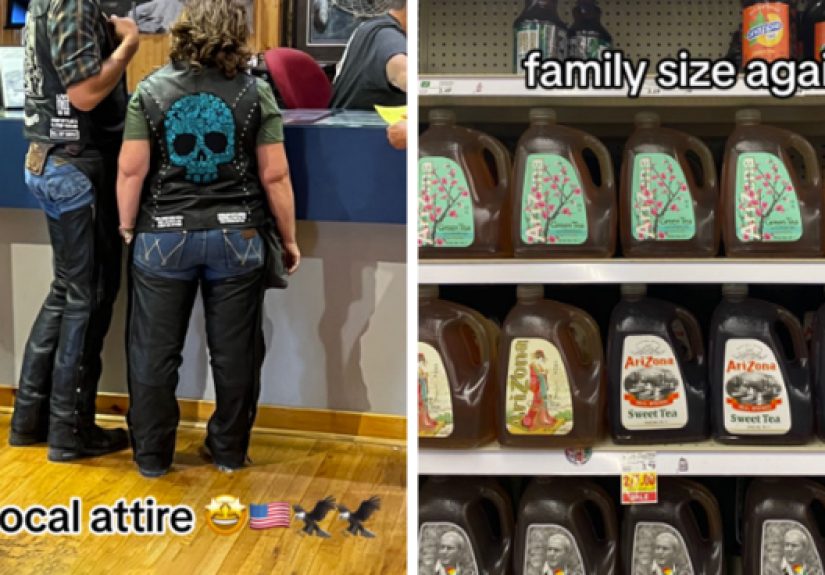
Many American supermarkets are large, and warehouse clubs sell items in bulk.
If you’re used to shopping every day or two, seeing a two-liter bottle of ranch dressing can feel like a personal challenge. -
Pharmacies that sell everything (including snacks and makeup)
Drugstores often function like convenience stores with medicine.
Visitors expecting “pharmacy only” are surprised to find candy, cosmetics, greeting cards, and sometimes a full refrigerator section beside the cough syrup. -
Air conditioning as a lifestyle
Many buildings blast A/C in summer, sometimes to sweater-requiring levels.
Foreigners from milder climates often pack for the heat and then shiver through dinner like they booked a meal inside a polite freezer. -
Garbage disposals in kitchen sinks
The sink disposal surprises many visitors: “You put food scraps into the drain on purpose?”
It’s common in many homes, but not universalso you may encounter it suddenly, like a tiny mechanical dragon living under the faucet.
Social rules and local culture: Friendly, confusing, and sometimes contradictory
-
“How are you?” is often just a greeting
Americans frequently use “How are you?” like “Hello.”
Visitors may start giving an honest life updateonly to realize the expected answer is “Good, you?” said at conversational sprint speed. -
Small talk with strangers is normal
Chatting with cashiers, baristas, and random people in elevators is common in many regions.
For some foreigners, this feels warm. For others, it feels like social pop quizzes happening without notice. -
The flag is everywhere
You’ll see U.S. flags on homes, schools, car lots, shirts, and snacks with suspiciously patriotic packaging.
Visitors often find it strikingless “national holiday” and more “everyday aesthetic.” -
HOAs: neighborhood rules with surprising power
In many planned communities, a homeowners association can regulate details like lawn height, paint colors, and visible trash cans.
Foreigners are often baffled that your neighbors can hold a meeting about your mailbox like it’s a matter of national security. -
College sports fandom goes hard
In some places, college football and basketball are massive cultural events.
Visitors expect a casual campus game and end up at a stadium with tens of thousands of fans treating a Saturday matchup like a sacred ritual. -
Emergency systems: 911 is universal, but non-emergency is local
The U.S. has a universal emergency number (911), but non-emergency lines vary by city or county.
Visitors may not know when to use whatespecially if their home country uses one number for everything.
Extra: of real-life moments foreigners often describe
If you want a quick “what it feels like,” imagine a newcomer’s first weekend in a typical American metro area.
They wake up in a hotel, decide to be healthy, and look for a nice morning walk. The map says the coffee shop is “nearby.”
They step outside, find a sidewalk, and think: “Great. This is easy.”
Thenwithout warningthe pavement ends. Not at a construction site. Not at a bridge. It just… stops.
Suddenly they’re walking on a strip of grass beside a fast road while SUVs fly past at “I’m late for something” speed.
They make it to the coffee shop and feel like they’ve completed a side quest.
Inside, the menu board looks simple: a latte is $5.50. They pay… and the total is higher.
Sales tax arrives like a plot twist. Not huge, but enough to make them squint at the receipt and wonder if they accidentally bought a second latte spiritually.
Then the tip screen appears: 18%, 22%, 25%.
Their brain runs through cultural math at full speed:
“Did the tax get tipped? Do I tip on the whole thing? Is the barista paid normally? Is this optional-optional or mandatory-optional?”
They choose something, smile politely, and hope they didn’t just commit an international incident.
At lunch, they order a “medium” soda. It arrives in a cup that could double as a flower vase.
The server returns and asks, “Refill?”
The visitor hasn’t even processed the first sip.
By dinner, they’ve learned that asking for a to-go box is normal and not a sign of defeat.
It’s strategy. It’s tomorrow’s lunch. It’s how Americans turn one meal into a two-part mini-series.
The next day they try driving. At a four-way stop, everyone is waving everyone else through like a politeness traffic jam.
Finally someone goes. Then they hit a red light and watch a car calmly turn right on red after stopping.
Their passenger explains, “Yeah, you can do that.”
The visitor nods, filing it under “America’s relationship with rules is… interpretive.”
Later they visit New York City, try the same thing, and discover that “interpretive” has regional dialects.
A few days in, they set up life logistics. Someone asks for a ZIP code in a context where ZIP codes do not exist in their home country’s daily vocabulary.
Another form asks about a credit scoresomething they never needed to rent an apartment back home.
Then they learn what a deductible is and realize healthcare bills can arrive separately, from different places, at different times.
That’s when the “pavement ends” metaphor starts to feel bigger:
some American systems are brilliantly convenient, others are stitched together, and newcomers often find themselves adapting in real time.
It’s confusingbut it’s also kind of fascinating once you realize the U.S. isn’t one experience. It’s many experiences, stacked side by side, sometimes without a sidewalk connecting them.
Conclusion
The most confusing U.S. quirks usually come from the same source: local variation.
Once you accept that “America” is a collection of different rulesetsplus habits shaped by car culture, state-by-state policy, and convenience-first design
the weird stuff becomes easier to decode. And if the pavement ends, at least you’ll know you’re not lost. You’re just having a very authentic American moment.







 Close
Close