
Table of Contents >> Show >> Hide
- Start With the Right Mindset (Because Your Brain Is Lying to You)
- Read the Room: Timing Is Half the Skill
- Easy Conversation Starters That Don’t Sound Like a Robot
- The Secret Sauce: Ask Better Follow-Up Questions
- How to Be Confident Without Acting Like a Tryhard
- What to Say When You’re Nervous and Your Brain Goes Blank
- How to Build a Real Connection (Not Just a One-Time “Hey”)
- How to Tell If She’s Interested (Without Becoming a Detective)
- When (and How) to Ask for Her Number or Socials
- How to Ask Her to Hang Out (Without Making It Weird)
- Respect and Boundaries: The Non-Negotiable Part
- What Not to Do (A.K.A. How to Avoid Becoming “That Guy”)
- If She’s Not Interested: How to Handle It Like a Legend
- A Quick “Script” You Can Use This Week
- Conclusion: Your Goal Isn’t “Perfect”It’s “Real”
- Experience Roundup: Realistic School Moments (and What They Teach) ~
Let’s be honest: talking to a girl at school can feel like trying to open a pickle jar in front of the entire cafeteria. You’re pretty sure you can do it… but your brain is screaming, “DON’T DROP IT.”
The good news? You don’t need magical “rizz,” a perfect jawline, or a soundtrack that plays when you walk down the hall. You need a simple plan, some respect, and a few conversation moves that don’t sound like they were copy-pasted from a cringe compilation.
This guide is for boys who want to talk to a girl at school in a normal, confident, non-weird waywhether you’re trying to be friends, get to know her, or eventually ask her out.
Start With the Right Mindset (Because Your Brain Is Lying to You)
When you like someone, your brain turns them into a “final boss.” Suddenly, saying “hey” feels like launching a rocket. But here’s the truth: she’s a personbusy, stressed about assignments, thinking about lunch, worrying about her own awkward moments, and probably not grading your conversation like a teacher with a red pen.
Two mindset upgrades that change everything:
- Goal #1: Have a normal interaction. Not “win her over.” Not “make her fall in love.” Just talk like a decent human.
- Respect beats impressing. Being kind, calm, and genuine is more attractive than acting like a performer.
Also: you don’t have to be hilarious. You just have to be real. Think “friendly teammate,” not “stand-up comedy special.”
Read the Room: Timing Is Half the Skill
If you want your conversation to go well, choose moments when she’s actually available to talk. The best timing is when she’s not rushing, stressed, or surrounded by people who will turn your conversation into a public event.
Good times to talk
- Before class starts (when everyone’s settling in)
- After class (walking out, packing up)
- During group work
- At lunch when she’s not mid-conversation
- In clubs, sports, or shared activities
- While waiting (bus line, hallway, library, office line)
Not-great times (unless you enjoy chaos)
- When she’s wearing headphones and locked in
- When she’s visibly upset, crying, or overwhelmed
- When she’s rushing to class or being pulled by friends
- When her friend group is in “protective squad mode”
- In the middle of a serious teacher talk
Timing isn’t about “strategy.” It’s about being considerate. Considerate is cool.
Easy Conversation Starters That Don’t Sound Like a Robot
The best opener is simple, relevant, and low-pressure. You’re not starting a TED Talkyou’re starting a moment.
1) Use the environment (the “we’re both here” opener)
- “That quiz was… something. How do you think you did?”
- “Do you get what we’re supposed to do for this project?”
- “Is it just me or did the teacher speed-run that lesson?”
- “Do you know when this is due? I’m trying not to guess and suffer.”
2) Compliment something she chose (not her body)
Keep compliments respectful and specific. Focus on style, effort, or personalitynot physical features. The goal is to make her comfortable, not put her on the spot.
- “Your presentation was actually really clear. How’d you organize it?”
- “That’s a cool backpack pinwhere’d you get it?”
- “Your notes are legendary. Do you share that power with mortals?”
3) Ask a small question (then build from the answer)
- “What’d you think of that movie everyone’s talking about?”
- “Are you going to the game Friday?”
- “What music do you listen to when you’re studying?”
- “Do you like this class or are we both just surviving it?”
Pro tip: your opener matters less than your follow-up. Most people can say “hi.” What makes you stand out is listening and continuing naturally.
The Secret Sauce: Ask Better Follow-Up Questions
Conversations die when you ask one question, get an answer, and then panic like your brain’s Wi-Fi cut out. Instead, use follow-ups that show you’re listening.
Try these follow-up patterns
- “How” or “what was that like?” → “How’d you get into that?”
- Small detail follow-up → “Wait, you like drawingwhat do you usually draw?”
- Shared connection → “Same. I always end up doing homework late. What subject is the worst for you?”
- Light opinion question → “What’s your favorite part about that?”
Think of it like playing catch. You toss a question, she tosses back an answer, you toss back interest. If you throw a bowling ball (too intense) or stop throwing entirely (awkward silence), the game ends.
How to Be Confident Without Acting Like a Tryhard
Confidence isn’t loud. It’s calm.
Body language that helps (no flexing required)
- Stand at a comfortable distance (not right up in her space)
- Keep your shoulders relaxed
- Make normal eye contact (look away sometimesstaring is not a superpower)
- Don’t block her path or “corner” the conversation
- Smile a little if it fits (you’re not at a funeral)
If you’re nervous, that’s fine. You can still be respectful and friendly while nervous. Being nervous doesn’t mean you’re failingit means you’re human.
What to Say When You’re Nervous and Your Brain Goes Blank
Here are “panic-proof” lines that keep things moving:
- “I’m kinda bad at starting conversations, but hi.”
- “Random questiondo you know if we have homework?”
- “I was going to say something normal and my brain just left. Anywayhow’s your day?”
Yes, you can admit you’re nervous. When you do it casually, it often makes you more likable because it’s honest and not dramatic.
How to Build a Real Connection (Not Just a One-Time “Hey”)
Talking once is easy. Talking consistently is where you actually get to know each other. The trick is to create small, natural repeats.
Ways to create repeat interactions
- School-related: “Want to compare answers for the study guide?”
- Shared routine: “See you in third periodgood luck surviving.”
- Shared interest: “You said you like that banddid you hear their new song?”
- Small helpful moment: “I can send you the notes from yesterday if you want.”
Don’t force it. You’re building familiarity, not running a campaign.
How to Tell If She’s Interested (Without Becoming a Detective)
Look for patterns, not one moment.
Positive signs
- She asks you questions too
- She smiles or laughs naturally
- She keeps the conversation going instead of ending it fast
- She seems comfortable and engaged
- She talks to you again later without you always starting it
Signs to slow down or back off
- Very short answers every time (“yeah,” “idk,” “cool”)
- She avoids eye contact and looks for an exit
- She never asks anything back
- She consistently says she’s busy and doesn’t follow up
None of this means she’s “bad” or you’re “bad.” It just means the vibe might not be thereand that’s normal.
When (and How) to Ask for Her Number or Socials
Ask when you’ve already had a couple decent conversations and it feels naturalnot as your first move like you’re speedrunning a relationship.
Simple ways to ask
- “Do you want to swap numbers for the project?”
- “You seem coolwant to talk on Instagram?”
- “If you want, we can text about the homework sometimes.”
If she says no, you say: “No worries.” Then you keep your dignity and continue being normal. That’s the whole play.
How to Ask Her to Hang Out (Without Making It Weird)
Keep it low-pressure and specific. Think “easy yes, easy no.”
Good low-pressure invites
- “Do you want to study together after school sometime?”
- “A few of us are going to the game Fridaywant to come?”
- “I’m grabbing a snack after schoolwant to come with?”
Key idea: invitations are offers, not demands. If it’s a demand, it stops being attractive and starts being uncomfortable.
Respect and Boundaries: The Non-Negotiable Part
If you want to talk to a girl at school in a way that actually works long-term, you need to be good at one thing: respect.
- If she seems uncomfortable, give space.
- If she says no (to talking, texting, hanging out), accept it.
- Don’t pressure, guilt-trip, or keep asking the same thing.
- Don’t tease in a way that embarrasses her or puts her on display.
- Don’t share private messages or moments with friends.
Respect isn’t just “being nice.” It’s recognizing her choices and boundaries without trying to override them.
What Not to Do (A.K.A. How to Avoid Becoming “That Guy”)
- Don’t insult her as “flirting.” If she has to guess whether you hate her, it’s not flirting. It’s confusion.
- Don’t interrupt her in front of her friends to “claim a moment.” She’s not a checkout line.
- Don’t do grand public gestures. Most people don’t want to be put on the spot at school.
- Don’t ask super personal questions immediately. Earn comfort first.
- Don’t turn every conversation into a mission. Let things breathe.
If She’s Not Interested: How to Handle It Like a Legend
Rejection hurts. That’s real. But how you handle it is what people remember.
If she’s not interested, you can say something like:
- “Got itthanks for being honest.”
- “No worries. Have a good one.”
- “All good. See you around.”
Then you back offno drama, no trash talk, no “but why not?” speech. That’s confidence. And it protects both your self-respect and her comfort.
A Quick “Script” You Can Use This Week
If you want a simple plan, try this:
- Day 1: Smile + “Hey” + one school-related question.
- Day 2–3: Follow-up conversation: “How’d that assignment go?”
- Day 4–5: Small compliment + interest question: “You’re really good at explaining stuffhow do you study?”
- Week 2: Low-pressure invite: “Want to study for the test together after school?”
Keep it simple. Consistency beats intensity.
Conclusion: Your Goal Isn’t “Perfect”It’s “Real”
Talking to a girl at school isn’t about memorizing lines. It’s about showing up as a respectful, curious person and creating a comfortable moment. Start small, pick good timing, ask thoughtful follow-ups, and keep your vibe relaxed. If it turns into a friendship, great. If it turns into something more, great. If not, you still leveled up a skill that will help you for life.
Experience Roundup: Realistic School Moments (and What They Teach) ~
Here are a few realistic “school-life” scenarios boys often run into, plus what actually works in each one. Think of these as composite experiencesnot movie scenes, just normal days where someone tried, learned, and got better.
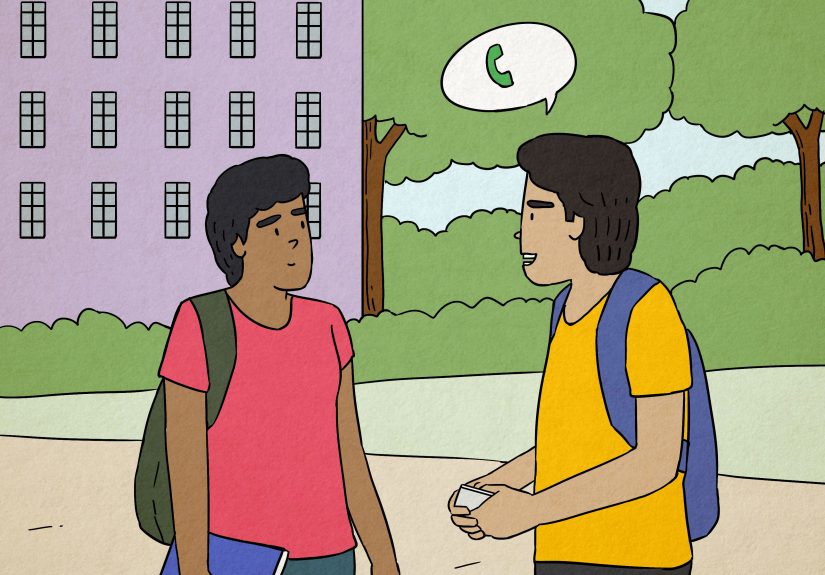
1) The hallway moment that felt like a boss fight. A guy sees his crush walking to class and thinks, “If I don’t talk now, I never will.” He speeds up, then slows down, then panics and pretends to check his phone like it’s delivering emergency information. Later, he realizes the hallway wasn’t the problemhis pressure was. Next time he tries a lighter approach: walking at a normal pace and saying, “Heydid you understand the homework?” It’s not dramatic, but it works because it’s natural. The lesson: lower the stakes and your courage increases.
2) The group project glow-up. Another guy sits near a girl during group work. Instead of trying to be smooth, he focuses on being helpful: “Do you want to take slides 1–3 and I’ll do 4–6?” They collaborate, she laughs at one of his comments, and suddenly talking feels easier. Later, he says, “You explain stuff really clearlyhow do you organize your notes?” That one question becomes a real conversation. The lesson: shared tasks create easy openingsuse them.
3) The compliment that didn’t land… until it did. A boy tries “You’re pretty” in the hallway. She says “thanks,” but it’s awkward because it’s random and puts her on the spot. He learns to compliment choices and effort instead: “Your presentation was really goodhow’d you make it so clear?” Now she can respond with a story, not just a polite escape. The lesson: compliments should invite conversation, not end it.
4) The lunch table fear. Approaching a group can feel like joining a live audience. One guy tries to jump into a friend group conversation and gets ignored (not always on purposegroups are loud). He stops thinking “they rejected me” and instead tries a one-on-one moment later: “Hey, I meant to askare you going to the game Friday?” It goes way better. The lesson: if a group setting feels too hard, don’t force itchoose calmer timing.
5) The “no” that taught confidence. A boy finally asks, “Do you want to hang out sometime?” She says she’s not really looking for that. He feels embarrassed for ten minutes… then he does the mature thing: “Got it. No worries.” He stays respectful, doesn’t gossip, and keeps being normal in class. Weeks later, he notices something important: his confidence improved because he proved to himself he can survive awkwardness and still be okay. The lesson: rejection handled well is actually a confidence shortcut.
Most guys who get good at talking to girls didn’t start out “naturally smooth.” They started out nervous, practiced small moments, learned what respect looks like, and kept it human. That’s the pathand it’s available to you.







 Close
Close