
Table of Contents >> Show >> Hide
- What Actually Happened: The Anatomy of a Viral Parenting Faceplant
- Instant Noodles: Not a Villain, But Not a Multivitamin Either
- Why the Parent Got “Destroyed” in the Comments (Even If They Had a Point)
- A More Sane Parenting Take: What to Do When Your Kid Loves Instant Ramen
- What This Says About Parenting Culture in 2026: The “Perfect Parent” Hunger Games
- Conclusion: Your Kid Ate Ramen. The World Still Spins.
- Bonus: of Real-World “Instant Noodles” Experiences (Because This Story Is Everywhere)
Somewhere on Facebook, a parent just learned two hard truths at the same time:
(1) kids will eat whatever is fastest when they’re hungry, and
(2) the internet will fact-check your feelings with the subtlety of a marching band in a library.
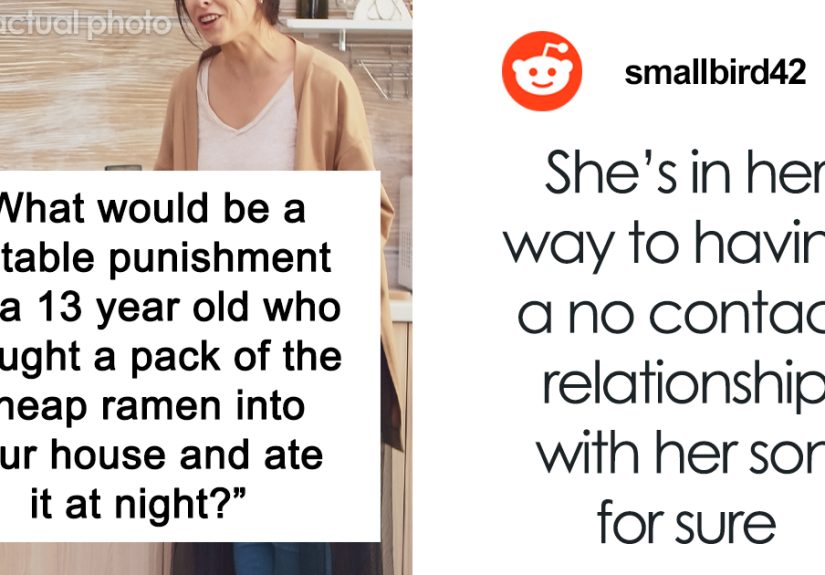
The setup is almost too perfect. A son eats instant noodles (instant ramen, cup noodles, the dorm-room delicacypick your brand).
Parent sees the empty container, hears “it was delicious,” and decides this is not a household moment… it is a public emergency.
Cue the Facebook rant: “This is poison.” “We’re being failed as a society.” “My child deserves better.” “Back in my day we ate… (something that definitely had salt, but please don’t interrupt the monologue).”
Then the comments arrive. Not gently. Not kindly. More like a swarm of raccoons discovering an open trash can.
And suddenly the parent isn’t just mad at instant noodlesthey’re mad at everyone, including the one friend who suggests “maybe… log off?”
What Actually Happened: The Anatomy of a Viral Parenting Faceplant
These posts blow up because they hit three emotional pressure points at once:
food fear, parent identity, and public performance.
Put them together and you get a rant that reads less like a nutrition concern and more like a dramatic reading of “My Child, My Brand.”
1) Instant noodles become a symbol, not a snack
In the parent’s head, those noodles aren’t just noodles. They’re “processed food,” “bad influences,” “lazy culture,” or whatever else is trending in their internal TED Talk.
The kid’s actual experience is simpler: “I was hungry, it was quick, it tasted good.”
2) Facebook turns every opinion into a performance review
A private moment (“my kid ate ramen”) becomes a public audition (“am I a good parent?”).
If the post is dramatic enough, it attracts two kinds of commenters:
people who want to help, and people who want to win.
Guess which group types faster.
3) The “pile-on” effect takes over
Once a few comments land, the tone is set. People don’t just respond to the postthey respond to each other.
The thread becomes a competitive sport: sarcasm, screenshots, quote-tweets, and a whole lot of “Actually…”
It stops being about noodles and becomes about status, judgment, and dunking for applause.
Instant Noodles: Not a Villain, But Not a Multivitamin Either
Let’s be adults about this (or at least adult-ish). Instant noodles aren’t “poison.”
They’re a highly convenient processed food that tends to be heavy on
sodium and refined carbs, often light on fiber,
and not exactly bursting with vegetables unless you count the dehydrated “mystery confetti.”
The real concern most experts circle back to: sodium
Sodium is the headline issue because it adds up fast across a day of common foods.
The federal guidance for teens and adults is often summarized as keeping sodium under about
2,300 mg/day, with many people in the U.S. averaging well above that.
Some instant noodle servings can take a noticeable bite out of that daily limitespecially if the entire seasoning packet gets used.
Here’s the simplest math without the panic:
if a noodle cup has about 1,000 mg of sodium, that’s roughly 43% of 2,300 mg.
That’s not a reason to call a press conference. It’s a reason to keep the rest of the day in perspective.
What about the “instant noodles will ruin your health” headlines?
You may have seen studies suggesting frequent instant noodle consumption is associated with certain health risks.
The key word is associated. Observational research can flag patterns, but it doesn’t prove that noodles alone are the cause.
People who eat instant noodles multiple times per week may also have other dietary patterns (less produce, more ultra-processed foods, irregular meals, etc.).
The practical takeaway most dietitians would endorse:
frequency and context matter.
Instant noodles as an occasional convenience meal? Fine.
Instant noodles as a major food group? Maybe we add a plan that includes protein, vegetables, and actual chewing.
Why the Parent Got “Destroyed” in the Comments (Even If They Had a Point)
If you’ve ever watched an internet dogpile unfold, you know the pattern:
the original point may be reasonable (“this food is salty; I’d rather my kid eat balanced meals”),
but the delivery detonates the message (“society is collapsing because ramen exists”).
Social media punishes dramatic certainty
When someone posts with absolute certaintyespecially about parentingpeople feel invited to correct them.
And because it’s the internet, “correct” often means “humiliate while adding a GIF.”
Food moralizing triggers big feelings
Labeling foods as “good” or “bad” can backfire, especially with kids and teens.
It can create guilt, secrecy, or rebellionthe exact opposite of building a healthy relationship with food.
Many pediatric resources focus on reducing mealtime pressure, avoiding bargaining, and preventing food from becoming a power struggle.
Comment sections reward cruelty
The more public the thread, the more likely it becomes performative.
Some people aren’t trying to help a parent they’re trying to entertain strangers.
And strangers tend to “like” a clever insult more than a calm explanation.
A More Sane Parenting Take: What to Do When Your Kid Loves Instant Ramen
If your child ate instant noodles and loved them, you have options that don’t involve a public meltdown.
You can keep your standards and keep your relationship with your kid intact. Wild, I know.
1) Don’t turn a snack into a moral trial
Treat it like information, not a betrayal. Your kid likes salty, savory, quick food.
Congratulations: your kid is a human.
2) Zoom out: it’s about patterns, not single meals
A balanced diet is built across days and weeks, not one Tuesday night.
If most meals include some mix of protein, fiber, and produce, the occasional ramen doesn’t undo your entire parenting résumé.
3) Upgrade the noodles instead of banning them
This is where you “win” without fighting.
Keep the noodles as the base, then add what they’re missing:
- Protein: egg, leftover chicken, tofu, edamame, or even beans (yes, it works).
- Fiber + color: frozen veggies, spinach, shredded carrots, mushrooms, bell peppers.
- Flavor without going full salt-bomb: use part of the seasoning packet, then add garlic, ginger, lime, or chili.
You don’t have to “healthify” it into sadness. Just nudge it toward “meal” instead of “salt-flavored string.”
4) Teach label literacy in a non-terrifying way
If your kid is old enough, show them how to check sodium and serving size.
Not with doom. With curiosity. “Wow, this has a lotlet’s see what else we ate today.”
You’re raising a future adult, not training a contestant for “Who Can Worry the Hardest.”
5) If you’re worried about nutrition, talk offline first
If this is really about your child’s diet, energy, or healthtalk to a pediatrician or a registered dietitian.
Facebook comments are not a credential. They’re a mood.
What This Says About Parenting Culture in 2026: The “Perfect Parent” Hunger Games
The reason these posts go viral isn’t just noodles. It’s the modern pressure to be a flawless parent in public.
Social media can make normal parenting moments feel like evidence in a trial:
“Exhibit A: the ramen cup.”
Add in algorithmic reward for outrage, and suddenly the loudest, most dramatic take gets the most attention
even when it’s not the most helpful.
Why we love watching “delusional rants” implode
If we’re being honest, the internet enjoys a morality play.
It’s satisfying to watch someone act overly superior about something mundane (like noodles) and then get checked.
It feels like justice. It’s also a little mean. Both can be true.
But the pile-on has collateral damage
When ridicule becomes the default response, people learn the wrong lesson:
not “how to handle food concerns,” but “never admit you’re struggling.”
That’s not great for parents, kids, or anyone trying to learn in public.
Conclusion: Your Kid Ate Ramen. The World Still Spins.
Instant noodles are a convenient, salty comfort foodnot a personalized attack on your parenting.
If you want to improve your child’s eating habits, you’ll get farther with calm routines, smart upgrades, and less pressure than with a public rant.
And if you’re tempted to post about it on Facebook, here’s the gentle truth:
you can either raise your kid… or raise your engagement metrics. Choose wisely.
Bonus: of Real-World “Instant Noodles” Experiences (Because This Story Is Everywhere)
Instant noodles aren’t just a foodthey’re practically a life stage. And the reason this “parent rant gets destroyed” story feels so familiar
is that almost everyone has a ramen chapter. Here are a few real-world patterns (and a few composite moments) that show why noodles spark such big reactions.
1) The “After Practice, I’m Starving” Kid
A middle schooler comes home from sports practice with the hunger of a small wolf pack. They want food now, not after a lecture on micronutrients.
Instant noodles become the fastest bridge between “hangry” and “functional human.”
Parents who treat that moment as an emergency often end up in a fight they didn’t need.
Parents who treat it as logistics tend to win quietly: noodles + egg + frozen veggies, and everyone lives.
2) The “Budget Week” Family
Some weeks are just expensive. Rent hits, the car needs something, and suddenly the grocery budget gets tight.
Instant noodles are cheap, shelf-stable, and predictablethree things that matter when life is unpredictable.
Shaming families for using affordable convenience foods misses the bigger picture.
If you’ve never had to stretch meals, it can be easy to judge. If you have, it’s easy to recognize the strategy: keep something easy in the pantry
so dinner doesn’t become a crisis.
3) The College “Ramen Is a Love Language” Era
For a lot of young adults, instant ramen isn’t just foodit’s independence.
It’s the first meal they can make without calling home. It’s comfort when they’re stressed. It’s also… what happens when the dining hall closes at 7.
Parents who panic about a college kid eating ramen sometimes aren’t really worried about sodium.
They’re worried their kid is struggling, lonely, or not taking care of themselves.
The better move is to ask the real question: “How are you doing?” not “Why did you eat noodles?”
4) The “Food Rules” Household That Backfires
There are families where certain foods are treated like moral failures. Kids learn fast: if ramen is “bad,” then enjoying ramen makes them bad.
That can lead to secrecyeating it at a friend’s house, hiding wrappers, or feeling weird shame around normal cravings.
When those kids grow up, they often swing hard in the other direction: either rigid restriction or “I can’t be controlled” rebellion.
What helps more is a neutral approach: “Some foods are everyday foods, some are sometimes foods, and all foods can fit.”
That tone reduces drama and keeps food from turning into a loyalty test.
5) The “Internet Parenting Court” Moment
The parent who gets “destroyed” usually didn’t start out wanting a fight. They started with anxiety and hit “post” hoping for validation.
But online spaces don’t reliably deliver supportespecially when a post sounds judgmental or dramatic.
The moment the comments turn into a pile-on, the parent’s nervous system goes into defense mode.
They double down, commenters escalate, and suddenly you’ve got a 200-comment thread where nobody learns anything except
that sarcasm travels faster than empathy.
If there’s a lesson in all these experiences, it’s this: instant noodles are rarely the real problem.
They’re a symptom of time pressure, money pressure, stress, or the simple fact that kids (and adults) like salty comfort food.
Handle the underlying pressure, and the noodles become what they always werejust dinner on a busy night.







 Close
Close