
Table of Contents >> Show >> Hide
Oculopharyngeal muscular dystrophy, or OPMD, is one of those medical names that sounds like it was built out of leftover Scrabble tiles. But behind the tongue-twister is a real, rare, and often overlooked genetic muscle disorder that can quietly reshape everyday life. It usually shows up in adulthood, often in the 40s or 50s, and it tends to affect two things people rely on constantly without thinking much about them: keeping their eyes open and swallowing safely.
That is why OPMD can feel sneaky at first. A person may assume their droopy eyelids are just “getting older,” or blame coughing during meals on eating too fast. Then the pattern becomes harder to ignore. Meals take longer. Dry foods become annoying little enemies. Reading and driving may feel more tiring because the eyelids start acting like heavy curtains that forgot they are supposed to stay up.
This article breaks down the symptoms, causes, diagnosis, treatment options, and day-to-day experience of OPMD in plain American English. No unnecessary drama, no medical fog machine, just the facts with enough personality to keep you awake, unlike those eyelids.
What Is Oculopharyngeal Muscular Dystrophy?
OPMD is a rare, slowly progressive form of muscular dystrophy. The name tells you where the biggest trouble spots are: oculo refers to the eyes, and pharyngeal refers to the throat. In practical terms, the disease mainly weakens the muscles of the upper eyelids and the throat, though other muscles can become involved over time as well.
Most people with OPMD do not notice symptoms until midlife. That delayed onset is one reason the condition can be missed or mistaken for normal aging, another neurological disorder, or a separate swallowing problem. OPMD affects men and women and is usually inherited, most often in an autosomal dominant pattern. In simpler terms, one altered copy of the gene can be enough to cause the disorder.
While OPMD is considered rare in the general population, it appears more often in certain groups because of founder effects. These include French-Canadian families, Bukhara Jewish families, and some Hispanic families in northern New Mexico. That does not mean everyone in those communities will develop it, only that the inherited mutation shows up more often there than in the broader population.
The Most Common Symptoms of OPMD
The hallmark symptoms of OPMD are ptosis and dysphagia. Those are the official words for droopy eyelids and difficulty swallowing. Unfortunately, they are not just inconvenient. They can affect vision, nutrition, speech, confidence, and safety.
Droopy Eyelids (Ptosis)
Ptosis is often the first sign people notice. Usually both eyelids are involved, and the drooping tends to get worse over time. At first, a person may look tired even when they are not. Then the drooping can begin to interfere with vision. Some people unconsciously tip their heads back to see better, which can lead to neck strain. Others raise their eyebrows all day long, basically giving their forehead a part-time job it never asked for.
In some cases, eye movement can also become limited, especially upward gaze. That can make reading, climbing stairs, or scanning the environment feel more awkward than it used to.
Difficulty Swallowing (Dysphagia)
Dysphagia is the symptom that deserves the most respect. Trouble swallowing in OPMD may start subtly. A person may cough during meals, feel like food is sticking in the throat, need extra sips of water to get food down, or begin avoiding dry, crumbly, or tough foods. Steak, crackers, rice, and bread can suddenly start behaving like tiny pranksters.
As swallowing muscles weaken, eating can become slow, tiring, and stressful. Some people also notice a wet or gurgly voice caused by pooled saliva. Others start taking much smaller bites or needing more time to finish meals. Because swallowing is such a basic daily function, this symptom often has the biggest impact on quality of life.
Other Symptoms That May Show Up
Although the eyelids and throat get most of the attention, OPMD is not always limited to those areas. Over time, some people develop weakness in the tongue, face, shoulders, hips, or upper legs. That can lead to a softer voice, mild speech changes, trouble climbing stairs, difficulty getting up from a chair, or slower walking.
As the disease progresses, mobility problems may become more noticeable. Some people eventually need a cane, walker, or wheelchair for longer distances. Progression is usually slow, but “slow” does not mean “easy.” A gradual loss of strength can still be frustrating, especially because it tends to pile onto everyday routines one small annoyance at a time.
What Causes OPMD?
OPMD is caused by a mutation in the PABPN1 gene. In most cases, the problem involves a short repeat expansion in the gene. Normally, the gene contains 10 repeats of a certain sequence. In OPMD, that number is expanded, usually to 11 to 18 repeats. That small genetic change causes the protein to behave abnormally and form clumps inside muscle cell nuclei.
Researchers believe those abnormal protein clumps interfere with normal muscle cell function over time, leading to gradual muscle damage and weakness. It is a good reminder that in genetics, tiny changes can have very large consequences. One small repeat expansion can end up turning swallowing dinner into a strategic event.
OPMD is usually inherited in an autosomal dominant pattern, meaning one affected parent can pass it on. A rarer autosomal recessive form also exists. In that form, a person inherits altered copies from both parents, and the presentation may be milder or start later, though patterns can vary.
How Doctors Diagnose OPMD
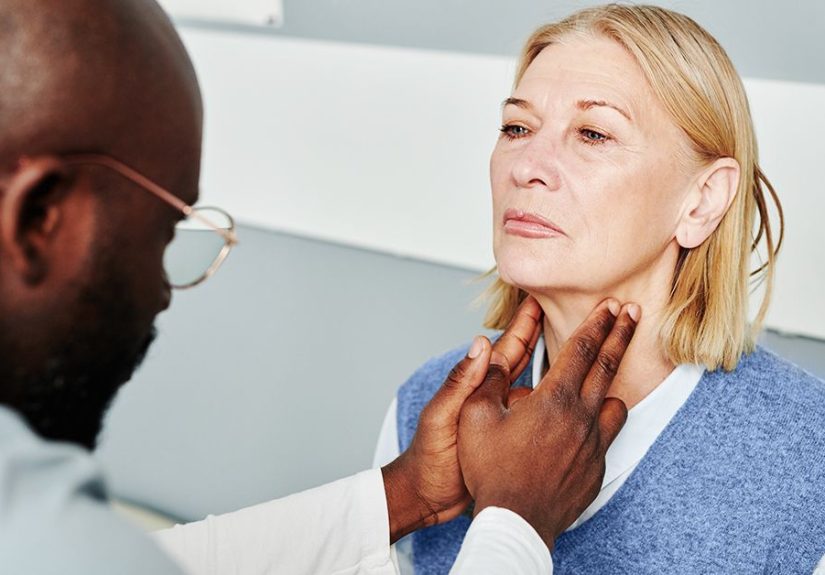
Diagnosis often begins with a careful history and physical exam. A clinician may suspect OPMD when there is a combination of adult-onset ptosis, dysphagia, mild limb weakness, and a family history of similar symptoms. Because these features can overlap with other neuromuscular conditions, diagnosis is not always immediate.
The main test used to confirm OPMD is genetic testing, usually a blood test that looks for the characteristic PABPN1 repeat expansion. This is generally the most direct way to verify the diagnosis.
Doctors may also order additional tests depending on the situation. These can include swallowing studies to see how well food and liquid move through the throat, electromyography to assess muscle activity, and occasionally a muscle biopsy if the genetic picture is unclear. A biopsy may show intranuclear inclusions and other changes that support the diagnosis.
The reason swallowing tests matter so much is simple: symptoms do not always tell the whole story. A person might say, “I’m just eating slower,” while the throat is already showing signs of serious dysfunction. Testing helps guide treatment before the problem turns into a medical emergency.
Treatment Options and Symptom Management
There is currently no cure that reverses OPMD at its root, so treatment focuses on managing symptoms, protecting nutrition and breathing, and helping people stay independent for as long as possible. In other words, the goal is not magic. The goal is function, safety, comfort, and a better quality of life.
Managing Swallowing Problems
For dysphagia, treatment may start with practical strategies. A speech-language pathologist can teach safer swallowing techniques, posture adjustments, pacing methods, and food modifications. People may benefit from taking smaller bites, eating more slowly, choosing softer foods, and avoiding meals when they are overly tired.
Commercial thickeners or texture changes may help with liquids in some cases. If swallowing becomes more impaired, doctors may consider procedures such as cricopharyngeal dilation or cricopharyngeal myotomy. These aim to improve how food passes through the upper esophageal sphincter. In advanced situations, tube feeding may be discussed to reduce choking risk and maintain nutrition.
Managing Ptosis
Droopy eyelids can sometimes be managed with low-tech tools such as ptosis crutches, which are small attachments on glasses that help lift the eyelids. When ptosis significantly blocks vision or contributes to head and neck strain, surgery may be recommended. Procedures such as levator advancement, blepharoplasty, or frontalis suspension can improve eyelid position, though results and durability vary.
Managing Limb Weakness
Physical therapy and occupational therapy can help with balance, mobility, energy conservation, and fall prevention. Adaptive tools may make dressing, bathing, reaching, or walking easier. Some people benefit from canes, walkers, braces, or scooters, especially when leg weakness becomes more noticeable.
Treatment plans often work best when they are multidisciplinary. Neurologists, speech-language pathologists, ophthalmologists, physical therapists, occupational therapists, dietitians, and genetic counselors may all have a role. It takes a team because OPMD does not politely limit itself to one body system.
Complications and Outlook
The biggest concern in OPMD is not usually the eyelids. It is the swallowing problem. Dysphagia can lead to choking, aspiration pneumonia, and malnutrition. Those risks make early recognition and treatment especially important.
The overall course is usually slow, and many people live for years with gradually changing symptoms. Still, slow progression can create a false sense of security. A person may adapt so well that the seriousness of the swallowing issue gets underestimated. If meals are becoming effortful, weight is dropping, coughing during meals is frequent, or chest infections are recurring, that is a strong sign it is time for a more urgent medical evaluation.
Research is ongoing into disease-modifying therapies, including gene-targeted approaches, but for now the standard of care remains supportive and symptom-focused. That may sound underwhelming, but good supportive care is not small stuff. It can meaningfully improve safety, function, independence, and confidence.
When to Talk With a Doctor
A healthcare professional should evaluate symptoms such as adult-onset droopy eyelids, frequent choking, persistent coughing during meals, unexplained weight loss, a wet voice after swallowing, or a family history of similar issues. The same goes for new difficulty climbing stairs, rising from a chair, or walking steadily.
It is especially important not to shrug off swallowing problems as “just aging.” OPMD is uncommon, but swallowing trouble deserves attention whether the cause is OPMD or something else. The throat is not the place for guesswork.
What Living With OPMD Can Actually Feel Like
Reading about symptoms in a medical list is one thing. Living with them is another. OPMD often changes daily life in a series of small, irritating negotiations rather than one dramatic movie scene. A person may notice they need brighter light because their eyelids narrow their field of vision. They may find themselves lifting their chin during conversations, choosing restaurant meals based on texture rather than taste, or quietly avoiding social dinners because coughing through half the meal is nobody’s idea of a relaxing evening.
Many people with OPMD describe meals as becoming work. Foods that once felt ordinary can become strategic choices. Dry chicken, crusty bread, popcorn, and crumbly crackers may get demoted from “snack” to “absolutely not.” Softer foods, sauces, soups, and careful chewing often become the new normal. Even drinking water may require more attention than before. That kind of constant vigilance can be exhausting because eating is supposed to be automatic, not a tactical operation.
Ptosis brings its own brand of frustration. It can affect reading, driving, watching television, working on a computer, and recognizing faces across a room. Some people say they look sleepy, sad, or uninterested when they are actually fully engaged. That mismatch between how you feel and how your face appears can chip away at confidence. It is not vanity. It is communication. Eyelids matter more than they get credit for.
There can also be a long diagnostic journey. Because symptoms usually begin in middle age, people are often told they are tired, stressed, getting older, or just eating too fast. Some are treated for isolated eyelid problems or generic swallowing issues before anyone connects the dots. For families with a history of similar symptoms, the diagnosis can bring a strange combination of relief and grief: relief that the pattern finally has a name, and grief because a name does not equal a cure.
Emotionally, OPMD can create a push-and-pull between adaptation and loss. People often become highly skilled problem-solvers. They learn which foods are safest, where to sit in restaurants, how to pace a meal, when to rest, and how to use glasses, therapy, or surgery to stay functional. But adaptation does not erase the emotional side of things. It is hard when activities that once felt effortless now require planning, backup plans, and maybe a smoothie.
Family life can shift too. Loved ones may start noticing coughing at dinner, a head tipped back to see, or more hesitancy on stairs. Support can be incredibly helpful, but it needs to be thoughtful. Most adults with OPMD do not want to be treated like fragile museum pieces. Usually they want something simpler: to be heard, taken seriously, and given enough room to stay independent while still getting help when help is actually useful.
Work and social life may also change in subtle ways. Longer meals, speech changes, eye fatigue, and mobility issues can all add friction to careers and relationships. Some people begin declining invitations that revolve around big meals. Others feel self-conscious about coughing, speaking more softly, or looking tired. Honest communication can help, especially when friends and coworkers understand that the person is not disengaged or rude. Their muscles are just making ordinary tasks less ordinary.
The good news, relatively speaking, is that many people with OPMD can still preserve a strong quality of life with proper support. Small changes matter. Early swallowing therapy matters. Fall prevention matters. Surgical decisions matter. Nutritional support matters. And emotionally, being believed matters a lot. Rare diseases can make people feel invisible. Good care does the opposite. It says: we see the problem, we understand the risks, and we are going to build a workable plan around your real life.
Final Thoughts
OPMD is rare, progressive, and undeniably inconvenient, but it is not mysterious once you know what to look for. Adult-onset droopy eyelids and difficulty swallowing are the biggest clues. From there, genetic testing can help confirm the diagnosis, and symptom-focused care can make daily life safer and more manageable.
The key message is simple: do not ignore swallowing trouble, do not assume droopy eyelids are always cosmetic, and do not underestimate the value of early support. With OPMD, the small symptoms are often the big story.
Note: This article is for educational purposes only and is not a substitute for diagnosis, treatment, or personalized medical advice from a qualified healthcare professional.






 Close
Close