
Table of Contents >> Show >> Hide
- When Is the Next Solar Eclipse?
- Where Will the August 12, 2026 Eclipse Be Visible?
- What About the Next Solar Eclipse in the United States?
- Why This Next Solar Eclipse Matters
- Total vs. Annular vs. Partial: Know What You’re Watching
- Why Don’t Solar Eclipses Happen Every Month?
- How to Watch the Next Solar Eclipse Safely
- Planning Ahead for the Next Solar Eclipse
- What Comes After the Next Solar Eclipse?
- Conclusion
- Experiences Related to the Next Solar Eclipse
Search interest in the phrase next solar eclipse tends to explode every time the sky does something dramatic, which is understandable. Humans are deeply curious creatures, and also a little helpless around cosmic suspense. But this question has a sneaky twist: people usually mean either the next solar eclipse anywhere on Earth or the next one they can actually see from where they live. Those are not always the same thing, and mixing them up is how innocent astronomy turns into group-chat confusion.
As of March 2026, the next solar eclipse is the total solar eclipse on August 12, 2026. That is the next major solar event after the annular eclipse of February 17, 2026. So if you are scanning the calendar and wondering when the moon next steps in front of the sun, that August date is the one to circle, underline, and possibly build a vacation around.
When Is the Next Solar Eclipse?
The next solar eclipse on the global calendar is the August 12, 2026 total solar eclipse. A total solar eclipse happens when the moon lines up directly between Earth and the sun and completely blocks the sun’s bright face for people standing inside the narrow path of totality. For everyone else outside that slim corridor, the event becomes a partial solar eclipse, which is still impressive, but not quite the full cinematic blackout people rave about for decades.
That difference matters. A partial eclipse is like hearing your favorite band from the parking lot. A total eclipse is front row, house lights down, crowd screaming, reality briefly malfunctioning.
Where Will the August 12, 2026 Eclipse Be Visible?
The path of totality for the next solar eclipse will cross parts of Greenland, Iceland, Spain, and a tiny portion of Portugal. Outside the totality track, a much wider area will see a partial eclipse. That means the event will still be visible across a broad region, but the truly unforgettable version, the one with the darkened sky, visible solar corona, and collective human gasping, belongs only to viewers inside that narrow line.
For eclipse chasers, that makes the 2026 event especially appealing. Iceland offers dramatic landscapes and a strong visual hook, while Spain is expected to draw massive interest because it combines accessibility, tourism infrastructure, and a rare total eclipse opportunity in Europe. In some locations, the eclipse will also happen with the sun fairly low in the sky, which could create an extraordinary horizon view if the weather cooperates.
How Long Will Totality Last?
The maximum duration of totality for the August 12, 2026 eclipse is a little over two minutes. That may sound suspiciously short for an event that inspires years of planning, but eclipse veterans will tell you the same thing: two minutes of totality can feel both instant and enormous. Time gets weird when the sky goes dark in the middle of the day and the sun grows a ghostly halo.
What About the Next Solar Eclipse in the United States?
This is where the answer gets location-specific. If you are in the United States and searching for the next solar eclipse, the August 12, 2026 event still matters because parts of North America will see a partial eclipse. But if you are asking about the next total solar eclipse visible from the contiguous United States, the wait is much longer. That next big totality event does not arrive until August 23, 2044.
Yes, that is a long wait. No, the cosmos did not consult your travel schedule.
That long gap is one reason eclipse travel has become such a big deal. After the spectacular total solar eclipse of April 8, 2024 crossed the United States, many skywatchers immediately started looking overseas. For Americans who do not want to wait until the 2040s for another home-field total eclipse, Spain and Iceland suddenly look less like vacation ideas and more like destiny.
Why This Next Solar Eclipse Matters
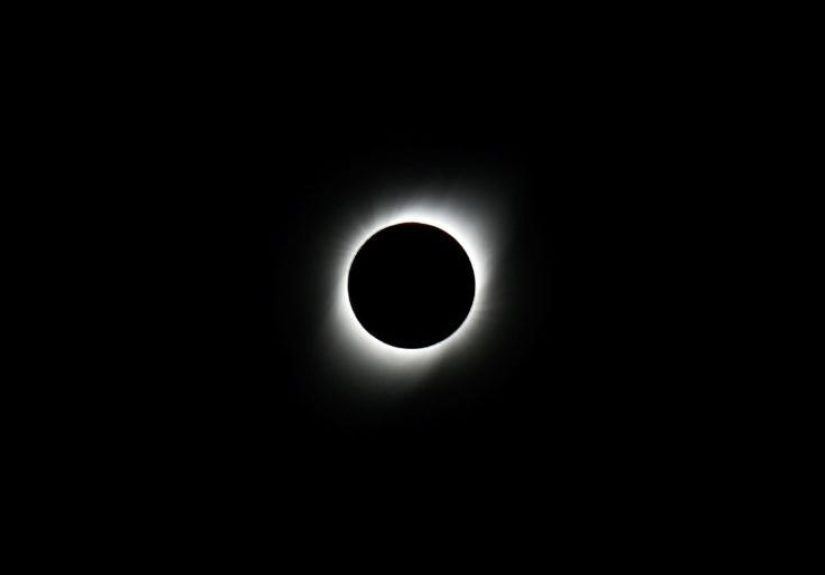
Not every eclipse earns the same level of buzz. The next solar eclipse matters because it is a total eclipse, and total eclipses are the headline acts of skywatching. During totality, the sun’s outer atmosphere, called the corona, becomes visible. The sky darkens, bright planets and stars can pop into view, temperatures may drop, and the light takes on an eerie metallic quality that photographs never fully capture.
Scientists value total eclipses because they offer a rare chance to study the corona and other solar features that are normally overwhelmed by the sun’s brightness. Casual viewers value them because they are unforgettable. Both groups are correct, which is one of the few times science and goosebumps line up so neatly.
Total vs. Annular vs. Partial: Know What You’re Watching
When people search for the next solar eclipse, they often lump all solar eclipses together. That is understandable, but the experience changes a lot depending on the type.
Total Solar Eclipse
This is the gold standard. The moon fully covers the sun’s bright disk, and totality becomes visible along a narrow path. The corona appears, daylight fades dramatically, and eclipse obsession is born.
Annular Solar Eclipse
An annular solar eclipse happens when the moon is farther from Earth and appears slightly too small to cover the sun completely. The result is the famous ring of fire. It looks incredible, but it does not create true darkness the way a total eclipse does.
Partial Solar Eclipse
In a partial eclipse, the moon covers only part of the sun. This is the most common version seen from outside the central path of a total or annular eclipse. It is still worth watching, but it never becomes safe to look at directly without protection.
Why Don’t Solar Eclipses Happen Every Month?
This is one of the most common questions tied to the next solar eclipse, and it is a fair one. After all, the moon passes between Earth and the sun at every new moon, right? Not exactly. The moon’s orbit is tilted by about five degrees relative to Earth’s orbit around the sun. Most months, that slight tilt causes the moon’s shadow to pass above or below Earth instead of falling directly on it.
That tiny angle is the reason eclipses stay special instead of becoming just another calendar reminder between utility bills and dentist appointments.
How to Watch the Next Solar Eclipse Safely
Safety matters every single time, and this is not the place for improvisation. For any partial or annular eclipse, and for the partial phases before and after totality during a total solar eclipse, you need proper solar eclipse glasses or a safe handheld solar viewer that meets recognized safety standards. Ordinary sunglasses are not enough. Not even your expensive ones. Not even the ones that make you look like a celebrity avoiding paparazzi.
You can also use indirect viewing methods, such as pinhole projection. These are simple, safe, and surprisingly fun, especially for families, classrooms, and anyone who likes old-school science tricks that still feel magical.
The only time direct viewing without eclipse protection is safe is during the brief period of totality, and only for people inside the path of totality when the sun is completely covered. The moment even a tiny sliver of the sun reappears, eye protection goes back on immediately.
Planning Ahead for the Next Solar Eclipse
If your goal is simply to know the next solar eclipse date, the answer is easy: August 12, 2026. If your goal is to actually experience it well, planning matters. Eclipse viewing depends on location, weather, local horizon conditions, crowd levels, and how close you are to the centerline of totality. The closer you are to that centerline, the longer totality lasts.
Travelers often pick eclipse destinations based on a blend of science and logistics. Can you reach the path of totality without heroic effort? Is cloud cover likely? Will the eclipse happen high enough in the sky for a clean view? Is there a backup driving route? These are the glamorous questions that turn stargazing into project management.
For the August 2026 eclipse, popular viewing plans will likely focus on Spain and Iceland. Spain may appeal to travelers who want easier access, road infrastructure, and the chance to pair an eclipse with a broader European trip. Iceland may attract those who want dramatic scenery and the thrill of watching a total solar eclipse in a place that already looks like another planet.
What Comes After the Next Solar Eclipse?
One reason the phrase next solar eclipse gets so much attention is that eclipse fans rarely stop at one date. Once people discover how predictable and spectacular these events are, they want the whole calendar. After August 12, 2026, another solar eclipse follows in 2027, and the global sequence keeps rolling. Eclipses are not rare on a planetary scale. What is rare is having a great one happen near you, with clear skies, on a day you can actually reach the right spot.
That is the real trick of eclipse watching. The universe is punctual. Humans are the complicated part.
Conclusion
So, what is the next solar eclipse? As of March 2026, it is the total solar eclipse on August 12, 2026. It will be total along a narrow path crossing Greenland, Iceland, Spain, and a tiny part of Portugal, while many other regions will see a partial eclipse. For people in the contiguous United States, this is a reminder that the next total eclipse at home is still far away, which is exactly why international eclipse travel is getting so much attention.
Whether you are a casual skywatcher, a full-on eclipse chaser, or someone who simply wants the right answer without the usual internet fog, this one is worth remembering. The next solar eclipse is not just another date on an astronomy chart. It is a precise moment when the ordinary daytime sky briefly stops acting ordinary, and people all over the world look up at the same impossible-looking scene.
Experiences Related to the Next Solar Eclipse
Reading about the next solar eclipse is one thing. Standing under it is something else entirely. The experience begins long before totality. At first, the day looks normal enough that people start doubting the hype. Birds keep moving, traffic keeps humming, and the sun still seems confidently in charge. Then the light begins to change. It does not simply get dimmer like evening. It turns strange. Shadows sharpen. Colors flatten. The world starts to look as if someone quietly adjusted reality with a settings menu no one else can find.
During the partial phases, many first-time viewers make the same mistake: they expect drama too early. A lot of the eclipse unfolds gently, almost politely. Then the final minutes arrive, and suddenly the entire event stops being academic. The temperature can dip. Wind can shift. People who were casually chatting start speaking in shorter sentences. Even the loudest person in the group tends to go quiet, which may be the most supernatural effect of all.
If you are inside the path of totality for the next solar eclipse, the transition can feel surreal. The last bright edge of the sun narrows to a sliver, then breaks into bright points. Daylight collapses. The sky darkens in a way that feels immediate and impossible. And then there it is: the black disk of the moon framed by the pale, delicate corona. Photos can show the shape, but they usually miss the scale, the emotional punch, and the fact that your brain keeps insisting this should not be happening at noon.
People often describe totality as beautiful, but that word is too tidy. It is beautiful, yes, but also eerie, thrilling, and weirdly moving. Some people cry. Some laugh. Some just stand there blinking like they have accidentally walked into the wrong dimension. A crowd that has spent hours dealing with traffic, weather anxiety, snacks, cameras, and questionable folding chairs suddenly reacts as one organism. It is one of the rare public experiences that can make total strangers feel briefly united without anyone needing a speech.
Even outside totality, a partial view of the next solar eclipse can still be memorable. Watching the moon carve a clean bite from the sun reminds you that celestial mechanics are both exact and spectacular. With eclipse glasses on, you are seeing geometry happen in real time. With a pinhole projector, you are turning a sidewalk or sheet of paper into a tiny observatory. It is simple, nerdy, and unexpectedly fun.
What lingers after an eclipse is often not just the image of the sun and moon, but the mood around it. People remember the unnatural light, the quiet, the sudden cheers, the moment everyday concerns briefly lost the argument. That is why so many people who witness one total eclipse immediately start searching for the next solar eclipse before they are even home. They are not just chasing an astronomical event. They are chasing that rare feeling of seeing something precise, ancient, and astonishing happen exactly when science said it would.






 Close
Close