
Table of Contents >> Show >> Hide
- The Plattsburgh Story: Cheap Hydropower Met Expensive Consequences
- Why New York Officials Hit Pause
- Was It a Ban or a Moratorium?
- The Utility Bill Problem: Bitcoin Is Digital, but the Grid Is Not
- How a Local Fight Turned Into a Statewide New York Debate
- Greenidge and the Bigger Question of Crypto, Power Plants, and Climate
- The Case Miners Make
- What Other Communities Learned From Plattsburgh
- Conclusion: New York Did Not Just Ban Miners. It Changed the Conversation.
- Experiences Related to “New York Town Bans Bitcoin Miners”
- SEO Tags
Bitcoin is supposed to be borderless, digital, and gloriously futuristic. But when a small community in upstate New York started feeling the very old-fashioned pain of higher power costs, fan noise, and local frustration, the crypto dream crashed straight into municipal reality. That is the heart of the story behind the headline “New York Town Bans Bitcoin Miners.”
To be precise, the place that made national headlines was the City of Plattsburgh, not a town. And what it passed in 2018 was an 18-month moratorium on commercial cryptocurrency mining operations while officials figured out how to regulate a business that could devour electricity like it was an all-you-can-eat buffet with no closing time. It was widely described as the first local crackdown of its kind in the United States, and it helped turn Plattsburgh into a case study for the national debate over Bitcoin mining, energy use, local control, and climate policy.
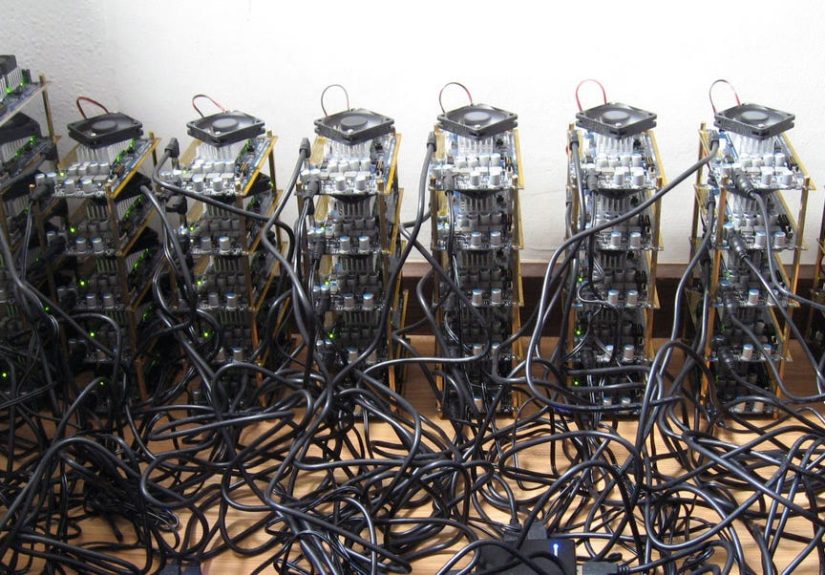
What happened there matters because it revealed a simple truth: Bitcoin mining may live on the blockchain, but its consequences land in very real places. On utility bills. On power systems. On zoning boards. On city councils. And on the nerves of people trying to sleep while industrial fans hum like a jet engine with a side gig in cryptocurrency.
The Plattsburgh Story: Cheap Hydropower Met Expensive Consequences
Plattsburgh looked like a miner’s paradise. The city had access to low-cost hydropower, cool weather, and infrastructure that made it attractive for high-density computing. For Bitcoin miners, that combination is basically the equivalent of beachfront property. Proof-of-work mining rewards operators who can run specialized machines at the lowest possible electricity cost. If power is cheap enough, the math works. If it is not, the machines become very expensive space heaters.
That is exactly why miners showed up. But Plattsburgh’s power advantage came with a catch. The city had a limited allocation of cheap hydropower. Once demand exceeded that quota, it had to buy more electricity on the open market at higher prices. The result was not just a spreadsheet problem for city officials. It hit local residents and businesses. State regulators later said that average residential monthly bills in Plattsburgh rose by nearly $10 during one winter month because of the heavy electricity demand tied to cryptocurrency operations.
That detail explains why the issue escalated so quickly. The controversy was never only about whether Bitcoin is good or bad. It was about whether one extremely energy-hungry industry should be allowed to use a community’s limited low-cost electricity in a way that pushes costs onto everyone else. That is not an abstract policy debate. That is the kind of thing that gets people to show up at public meetings with folded arms and the unmistakable face of “Absolutely not.”
Why New York Officials Hit Pause
In March 2018, Plattsburgh enacted Local Law 3-2018, creating a moratorium on commercial cryptocurrency mining operations. The purpose was not to erase Bitcoin from the map or outlaw private ownership of crypto. The city wanted time to update its zoning code and municipal lighting rules before mining operations caused what the law described as potentially irreversible changes to the city’s character and direction.
That language matters. The moratorium was framed as a local planning and public welfare measure, not a symbolic anti-tech protest. Officials were worried about electricity consumption, neighborhood impacts, health and safety, and the ability of city government to regulate a use case that looked more like a mini industrial utility stress test than a typical business.
Plattsburgh then followed the moratorium with local regulations. By late 2018, the city approved zoning rules for cryptocurrency mining while keeping the pause in place. Local reporting showed that noise became a major concern in public debate, with regulations limiting mining operations to 90 decibels at a distance of 25 feet from the structure. That may sound technical, but the translation is easy: residents did not want industrial-scale crypto operations roaring next door like someone had parked a permanent turbine behind the fence.
Was It a Ban or a Moratorium?
This is where headlines can get a little dramatic. “Bans Bitcoin miners” sounds cleaner and punchier than “adopts a temporary moratorium while developing zoning and electrical rules for high-density load facilities.” Fair enough. Headlines need caffeine. Reality needs footnotes.
Plattsburgh did not permanently outlaw all cryptocurrency mining. It imposed a temporary halt on new or expanding commercial operations, then moved toward a more regulated framework. In March 2019, the city lifted the moratorium after adopting rules and after state utility authorities created higher electricity rates for heavy-use crypto customers. In other words, the city went from “stop everything” to “you can operate, but not on terms that dump costs and headaches onto everyone else.”
That distinction is important for SEO readers and policy watchers alike. The Plattsburgh example was not really a story about a local government declaring war on innovation. It was a story about a municipality trying to prevent a new industry from gaming a public resource without paying the full community cost.
The Utility Bill Problem: Bitcoin Is Digital, but the Grid Is Not
One reason the Plattsburgh case traveled so far in national media is that it exposed a practical weakness in the Bitcoin mining business model. Proof-of-work mining is often described in lofty terms: decentralization, financial freedom, censorship resistance, and the future of money. All of that may sound exciting. But the machines still need massive amounts of electricity, 24 hours a day, in the physical world, from actual grids operated by actual people who get very grumpy when the numbers stop working.
New York’s Public Service Commission responded in 2018 by allowing upstate municipal power authorities to charge higher electricity rates for heavy electricity-using cryptocurrency companies. Regulators said the decision was necessary to prevent local residential and business customers from seeing price spikes caused by soaring demand. That move was a major clue about where the debate was headed: even when a community does not impose a ban, the power system can still impose consequences.
For miners, cheap electricity is not a bonus. It is the business model. For towns, cheap electricity is often a community asset meant to support residents, employers, and long-term economic development. The conflict begins when those two ideas stop playing nicely together.
How a Local Fight Turned Into a Statewide New York Debate
Plattsburgh’s crackdown did not happen in a vacuum. It became part of a much larger New York conversation about climate goals, fossil-fuel power plants, and whether proof-of-work crypto mining belongs in a state that has aggressive decarbonization targets.
New York’s Climate Act set ambitious goals, including deep greenhouse gas reductions and a path to a zero-emission electricity system. As state officials and environmental groups looked at the growth of proof-of-work mining, they increasingly saw a tension between climate planning and a sector whose energy appetite grows by design. The issue became especially heated when mining operations were linked to power plants supplying behind-the-meter electricity directly to crypto facilities.
That broader pressure helped lead to a first-in-the-nation state law in 2022. Governor Kathy Hochul signed legislation placing a two-year moratorium on certain new and renewed air permits for proof-of-work mining operations that rely on carbon-based fuel and behind-the-meter power. The law also required a statewide environmental review. In 2025, NYSDEC released a draft generic environmental impact statement examining the environmental and social costs and benefits of proof-of-work cryptocurrency mining operations.
So the local Plattsburgh controversy was not just a weird one-off involving a few noisy buildings and stressed-out electric meters. It became an early warning sign. First came the city moratorium. Then came new power pricing rules. Then came statewide climate scrutiny. In policy terms, Plattsburgh was the spark before the larger fire alarm.
Greenidge and the Bigger Question of Crypto, Power Plants, and Climate
Another major chapter in New York’s mining debate involved Greenidge Generation in the Finger Lakes. That fight was different from Plattsburgh’s municipal moratorium, but the themes were similar: energy demand, environmental impact, and whether crypto mining should reshape local and state energy policy. In 2022, NYSDEC denied Greenidge’s Title V air permit renewal, arguing that the facility’s emissions profile conflicted with the state’s climate law. Litigation followed, and the broader legal battle continued beyond that point.
The Greenidge saga showed that once crypto mining becomes connected to fossil-fuel generation, the debate moves beyond utility rates and zoning. It becomes a climate governance issue. Suddenly the question is not just, “Can this town handle the load?” It becomes, “Should the state allow this kind of load growth at all if it undermines legally adopted emissions targets?”
That shift helps explain why New York became one of the most watched states in America on crypto mining policy. The state did not merely ask whether mining was profitable. It asked whether the profits justified the public costs.
The Case Miners Make
To be fair, the mining industry has never sat quietly in the corner twirling an Ethernet cable like a cartoon villain. Operators argue that mining can revive dormant industrial sites, create local investment, buy power that might otherwise go unused in certain conditions, and support grid flexibility. Some also argue that not all mining is equal. A facility powered by renewables is different from one tied to carbon-intensive generation, and a well-managed operation in an industrial zone is not the same as a loud, poorly sited server farm rattling a neighborhood.
Those arguments are not silly. They just do not automatically win. In Plattsburgh, local officials and residents concluded that the mismatch between community benefit and community burden had become too large. Bitcoin mining used lots of power but created relatively few jobs compared with traditional industries that might have made use of the same low-cost electricity. That is a hard sell in any town trying to think beyond the next press release.
What Other Communities Learned From Plattsburgh
The most important lesson from Plattsburgh is not “ban Bitcoin.” It is “do not wait until the transformers are sweating.” Communities that have cheap power, cool climates, or vacant industrial space can look very attractive to miners. If local rules are vague, operators can move fast. Governments usually do not.
Plattsburgh learned that municipalities need clear definitions, zoning standards, electrical service rules, and noise limits before high-density load industries arrive. They also need a realistic way to calculate who pays when a supposedly lucrative new business starts pushing grid costs onto households. A town may love innovation in theory, but theory gets less charming when Grandma’s light bill becomes a crypto subsidy.
For policymakers, the case also showed that energy-intensive digital industries cannot be treated like ordinary office tenants. A cryptocurrency mining facility may occupy a building, yes, but from a municipal standpoint it behaves more like an industrial power user with nonstop heat, nonstop computing, and very real externalities.
Conclusion: New York Did Not Just Ban Miners. It Changed the Conversation.
The headline “New York Town Bans Bitcoin Miners” captures the drama, but the deeper story is more useful. Plattsburgh’s moratorium was an early and highly visible example of a local government saying that crypto mining had to answer to the same things every other industry does: public cost, community impact, and rules written for real places, not online slogans.
That local fight helped shape a broader New York response that moved from city hall to state regulators, from electric rate design to climate law, and from nuisance complaints to environmental review. In that sense, Plattsburgh did more than pause a handful of mining operations. It helped force a grown-up conversation about who benefits from Bitcoin mining, who pays for it, and how much disruption communities should tolerate in the name of digital gold.
Bitcoin may promise financial independence. But in New York, at least, it discovered something humbling: the blockchain still has to live somewhere. And that somewhere gets a vote.
Experiences Related to “New York Town Bans Bitcoin Miners”
One reason this story stuck in the public imagination is that it felt unusually human for a crypto policy fight. People were not arguing over abstract tokenomics in a podcast studio. They were dealing with ordinary quality-of-life issues. A resident did not need to understand hash rates to notice that power bills were rising or that a building nearby sounded like it had swallowed an airport ventilation system.
For city officials, the experience was a crash course in how fast a digital industry can overwhelm analog systems. Municipal governments are used to reviewing projects like apartments, warehouses, restaurants, and office space. Bitcoin mining forced them to ask a different set of questions. How much electricity will this operation use in winter? What happens when the cheap hydropower allocation is exhausted? How many jobs will this facility actually create? If neighbors complain about noise, who enforces what standard? Those are not glamorous questions, but they are the questions that decide whether a community feels protected or steamrolled.
For local residents, the experience was often one of confusion first, then irritation, then mobilization. At the beginning, many people simply did not know what cryptocurrency mining was. The phrase sounds harmless enough, almost cute, like a treasure hunt conducted by laptops wearing tiny hard hats. Then the real-world effects became easier to understand: heavy power consumption, local cost pressure, industrial noise, and the fear that a few operators were using a public advantage without delivering much in return. Once that happened, the issue stopped feeling futuristic and started feeling personal.
For miners and crypto advocates, the experience was also sobering. Plattsburgh revealed that a place with cheap power is not automatically a place with social permission. Operators could point to investment, infrastructure use, and technological progress, but those claims ran into a practical reality: communities want to know what they are getting back. If the answer sounds like “a lot of megawatts, a handful of jobs, and some very loud fans,” the sales pitch gets shaky in a hurry.
For the wider public, the Plattsburgh episode became a kind of shorthand for the limits of techno-optimism. It showed that a shiny new industry does not get a free pass just because it uses advanced hardware and crypto vocabulary. If a business model depends on consuming extraordinary amounts of power in a community with finite low-cost electricity, that community is going to ask hard questions. And it should.
That is the lasting experience behind the headline. The ban was not really the punchline. The real story was the awakening: a small New York community realized that Bitcoin mining was not just a digital trend happening somewhere else. It was a local issue with local consequences. Once residents, regulators, and lawmakers saw that clearly, the conversation changed for good.






 Close
Close