
Table of Contents >> Show >> Hide
- First, a reality check: Menopause isn’t usually a “test result”
- What doctors actually do first (and yes, it counts as a “test”)
- Hormone tests: What they can tell you (and what they really can’t)
- When doctors DO order menopause-related labs
- The underrated “menopause tests”: ruling out look-alikes
- What about at-home menopause tests?
- “Do I need hormone testing?” What doctors want you to hear
- If you want to get the most out of your appointment, do this
- So… what tests might a doctor order, and why?
- Conclusion: The best menopause “test” is the one that leads to relief
- Experiences: What “menopause testing” feels like in real life (and what doctors wish you’d hear)
- Experience #1: The “lab shopping spiral”
- Experience #2: “My labs are normal, so why do I feel like a haunted Victorian lamp?”
- Experience #3: The birth control plot twist
- Experience #4: The “early” fear (and the relief of a clear workup)
- Experience #5: The surprise diagnosis that wasn’t menopause at all
If menopause had a single, magical “yes/no” blood test, you could stop doom-scrolling at 2 a.m., clutching a space heater in July,
and waiting for a lab result to tell you whether your body is “doing a thing.” But menopause doesn’t work like a pop quiz where FSH is
the answer key. Most of the time, doctors diagnose the menopause transition based on your age, your symptoms, and what’s happening with
your periodsnot a hormone number that changes its mind every other Tuesday.
Quick note: This article is educational and meant to help you have better conversations with your clinician. If you have
new symptoms, heavy bleeding, severe mood changes, fainting, chest pain, or anything that feels urgent, get medical care right away.
First, a reality check: Menopause isn’t usually a “test result”
Menopause is officially a point in time: when you’ve gone 12 consecutive months without a menstrual period (and there’s no
other obvious cause). The years leading up to that are often called perimenopause (the transition), and the years after are
postmenopause. In the U.S., menopause happens around age 52 on average, but “normal” spans a wide range.
Here’s what makes “menopause tests” confusing: during perimenopause, estrogen and progesterone can swing up and down unpredictably. That means
a single snapshot blood test may reflect how your ovaries felt that morning, not what’s happening overall. Doctors know thisso many
focus on the bigger picture instead of chasing a perfect number.
What doctors actually do first (and yes, it counts as a “test”)
The most useful “menopause test” is often a set of unglamorous questions. A clinician typically starts with:
- Cycle history: Are periods spacing out, getting lighter/heavier, or disappearing?
- Symptom pattern: Hot flashes, night sweats, sleep disruption, vaginal dryness, brain fog, mood shifts, joint aches, libido changes.
- Medication and birth control use: Hormonal contraception can mask cycle changes.
- Bleeding details: New heavy bleeding or bleeding after sex matters and should be evaluated.
- Risk factors and family history: Thyroid disease, anemia, autoimmune issues, early menopause in relatives, smoking history, etc.
Many clinicians also use symptom questionnaires or a simple tracking approach: “Let’s document what you’re feeling for 4–8 weeks.”
Not because they doubt youbecause patterns are powerful, and treatment can be tailored to what’s actually bothering you.
Hormone tests: What they can tell you (and what they really can’t)
Hormone tests aren’t useless. They’re just often misunderstood. Think of them like weather apps in hurricane season:
helpful for context, but not a guarantee of what happens next.
FSH (Follicle-Stimulating Hormone): the “popular” one
FSH tends to rise as ovarian function declines. That’s why it shows up in so many Google searches and home kits. But in perimenopause, FSH can
go up and downsometimes dramaticallyso one test may not settle anything. Doctors may use FSH as part of the picture in specific situations
(more on that below), but routine testing in typical perimenopause is often not helpful.
Estradiol (E2): the slippery one
Estradiol is a major estrogen in reproductive years. In the transition, estradiol can be high, low, or “normal-looking” depending on timing.
That can be maddening when symptoms are loud but labs look calm. Estradiol can support a diagnosis in certain cases, but by itself it rarely
gives a clean answer.
AMH (Anti-Müllerian Hormone): ovarian reserve, not a menopause countdown clock
AMH is often discussed for fertility and ovarian reserve. People sometimes assume it can “predict menopause,” but it’s not considered a primary
diagnostic test for menopause or for conditions like primary ovarian insufficiency. In clinical practice, AMH is more about egg supply context
than a clear “you’re menopausal” stamp.
Progesterone, LH, testosterone, cortisol, “full hormone panels”
These tests can be appropriate for specific symptoms or diagnoses, but blanket panels sold as “menopause confirmation” are frequently more
expensive than helpful. Testosterone, for example, may be considered in certain sexual health concernsbut it’s not a standard menopause
diagnostic tool. Cortisol testing isn’t a routine menopause test either; it’s for targeted concerns when symptoms suggest something else.
When doctors DO order menopause-related labs
There are times when testing makes a lot of sense. Doctors are more likely to order labs when the story is atypical, the age is younger,
periods can’t be used as a clue, or symptoms could be caused by something else.
1) Symptoms before age 45 (especially under 40)
If someone has months of missed/irregular periods in their 30s or early 40s, clinicians may evaluate for primary ovarian insufficiency
(sometimes called premature ovarian failure) or early menopause. This is a different clinical situation than “typical” perimenopause.
Testing may include FSH (often repeated), estradiol, and additional evaluation depending on the case.
2) No periods for “non-menopause” reasons
If you don’t get periods due to a hysterectomy (uterus removed), an endometrial ablation, an IUD that stops bleeding, or continuous hormonal birth control,
the classic “12 months without a period” definition becomes harder to apply. In these scenarios, a clinician may use symptoms plus selective testing to
support decision-makingespecially if you’re trying to figure out whether contraception is still needed or why symptoms changed.
3) Fertility planning or contraception questions
This is a big one: perimenopause doesn’t equal zero pregnancy risk. If you’re still ovulating sometimes, pregnancy is still possible.
When someone is trying to avoid pregnancy or plan timing, clinicians may focus more on practical guidance than hormone numbers alone.
4) Symptoms that don’t “fit” or raise red flags
If symptoms are sudden, severe, or paired with things like unexplained weight loss, palpitations, significant depression/anxiety, or heavy abnormal bleeding,
clinicians may order targeted tests to rule out look-alike conditions.
The underrated “menopause tests”: ruling out look-alikes
Here’s what doctors really want women to know: sometimes the most valuable lab isn’t a menopause hormone at allit’s the test that catches a different,
treatable issue. Common examples include:
Thyroid testing (TSH ± free T4)
Thyroid dysfunction can mimic or worsen menopause-like symptoms: heat intolerance, sweating, anxiety, sleep problems, fatigue, and menstrual changes.
That’s why clinicians often check thyroid function when symptoms overlap.
Pregnancy test (when relevant)
If you have a uterus and missed periods, a pregnancy test may be part of the workupyes, even in your 40sbecause “unlikely” is not the same as “impossible.”
Prolactin
Elevated prolactin can disrupt periods and mimic early menopause patterns. It’s not the most common cause, but it’s important when cycles change significantly.
CBC, iron studies, B12 (fatigue and brain fog detectives)
Fatigue, dizziness, hair shedding, and brain fog aren’t “owned” by menopause. Anemia and nutrient deficiencies can pile on, and they’re treatable.
Metabolic screening: lipids and glucose
The menopause transition is a good time to check cardiovascular risk factors and metabolic health, because risk tends to increase with age and hormonal shifts.
Even if hormones aren’t tested, your long-term health absolutely is.
What about at-home menopause tests?
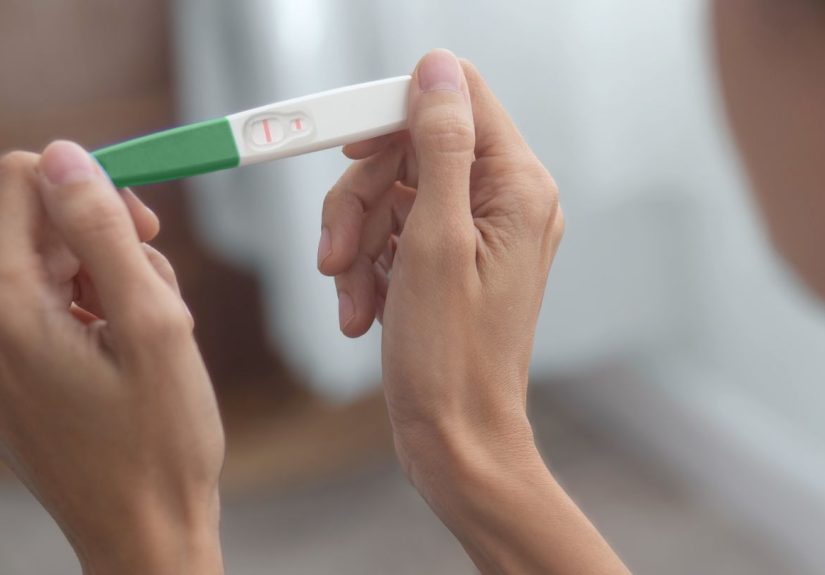
Home kits usually test urine FSH. They often can detect FSH accurately, but that’s not the same as diagnosing menopause or perimenopause.
The main problem is interpretation: FSH fluctuates during the cycle and during the menopause transition, and you can have a high reading and still
ovulate later. Translation: a home test may validate that “something is changing,” but it shouldn’t be treated as a final verdict.
If you’ve already taken one and it made you more anxious, you’re not alone. A useful way to use a home test result is as a conversation starter:
bring it to your clinician alongside your symptom history and cycle changesthen focus on what actually improves your quality of life.
“Do I need hormone testing?” What doctors want you to hear
In many women, especially over 45 with classic symptoms and changing periods, routine hormone testing doesn’t add much. The more helpful questions are:
- Are your symptoms consistent with perimenopause?
- Do we need to rule out another condition?
- What’s the safest, most effective plan to treat the symptoms that are bothering you?
And if you feel dismissedif someone says “your labs are normal” as if that ends the conversationremember this:
normal labs don’t cancel real symptoms. They simply narrow the possibilities and help guide next steps.
If you want to get the most out of your appointment, do this
Track for 2–4 weeks
Write down hot flashes/night sweats, sleep quality, mood shifts, headaches, heart palpitations, vaginal symptoms, and what seems to trigger or relieve them
(spicy food, alcohol, stress, exercise, room temperature). Patterns help clinicians tailor treatment.
Bring your medication list (including supplements)
Sleep aids, SSRIs/SNRIs, stimulants, thyroid meds, steroids, and supplements can affect symptomsor test interpretation.
Know your “top three” goals
Examples: “I need to sleep,” “I want fewer hot flashes,” “sex hurts and I want help,” or “my mood feels unstable.” Menopause care is best when it’s
symptom-driven, not lab-driven.
So… what tests might a doctor order, and why?
Below is a practical, non-scary guide to common tests and how clinicians often think about them:
| Test | Why it might be ordered | What it can (and can’t) tell you |
|---|---|---|
| FSH | Suspected early menopause/POI; unclear status without periods | Can support ovarian decline, but fluctuatessingle value may mislead |
| Estradiol (E2) | Support evaluation in atypical cases | Low can support hypoestrogenism; timing matters a lot |
| TSH (± free T4) | Rule out thyroid disease | Very useful when symptoms overlap (fatigue, heat intolerance, palpitations) |
| Pregnancy test | Missed periods with pregnancy potential | Important because perimenopause ≠ zero pregnancy risk |
| Prolactin | Irregular/missed periods; galactorrhea; atypical symptoms | Can identify a hormone issue that mimics early menopause |
| CBC / iron / B12 | Fatigue, dizziness, brain fog, heavy bleeding | Finds treatable contributors that often get blamed on menopause |
| Lipids / glucose | Cardiometabolic risk screening | Doesn’t diagnose menopausehelps protect long-term health |
Conclusion: The best menopause “test” is the one that leads to relief
Doctors want women to know this: menopause isn’t a pass/fail lab exam. For many, the diagnosis is clinicalbased on age, symptoms, and cycle changes.
Hormone tests can help in special cases, especially when symptoms happen younger than expected or periods can’t guide the timeline. But the bigger win
is using this life stage as a checkpoint: rule out look-alike conditions, address sleep and mood, protect bone and heart health, and treat the symptoms
that are stealing your joy (or your REM sleep).
If you’re seeking clarity, aim for a plannot just a number. The goal isn’t to “prove” menopause. The goal is to feel better and stay healthy while
your body rewrites its own instruction manual.
Experiences: What “menopause testing” feels like in real life (and what doctors wish you’d hear)
Menopause testing isn’t just a medical momentit’s often an emotional saga. Below are common experiences clinicians hear, shared here as
realistic, composite scenarios (not individual patient stories). If any of these feel familiar, congratulations: you’re human, and your nervous
system deserves a snack.
Experience #1: The “lab shopping spiral”
A woman in her late 40s starts waking up at 3 a.m. drenched in sweat, convinced her bedroom has been relocated inside a volcano. She buys a home FSH kit,
gets a “high” reading, and feels triumphant for about 17 minutesuntil the next thought arrives: “Wait… does this mean I can’t get pregnant?”
Then she takes another kit two weeks later and gets a different result, because hormones in perimenopause are nothing if not committed to surprise.
What doctors want her to know: the home kit may detect FSH, but it can’t reliably confirm menopause status. The more useful next step is a symptom-focused
visit: talk about hot flashes, sleep, mood, bleeding changes, and whether thyroid testing or other screening makes sense.
Experience #2: “My labs are normal, so why do I feel like a haunted Victorian lamp?”
Someone gets a hormone panel and is told, “Everything looks normal.” But she still has night sweats, irritability, and brain fog so thick she
forgets why she opened the fridge (and yet somehow still remembers every embarrassing thing she did in 2009). This is where menopause care can go sideways:
normal labs are sometimes treated like a dismissal. Doctors want women to know: “normal” doesn’t mean “nothing is happening.” It often means the timing
of testing didn’t capture the hormonal swing, or that symptoms are being driven by fluctuating hormones rather than a steady decline. The clinical story
matters more than one lab snapshot.
Experience #3: The birth control plot twist
A woman uses a hormonal IUD or takes continuous birth control and hasn’t had a period in a long time. Then hot flashes hit, sleep unravels, and she wonders
if she’s menopausal. Friends say, “Just get your hormones checked!” But hormones can be hard to interpret while using certain contraceptives, and the
“12 months without a period” definition may not apply. Doctors want women to know: this is a normal reason to feel confused, and it’s exactly when a clinician
might use symptoms plus selective testing (and practical counseling about contraception) rather than a one-and-done hormone panel.
Experience #4: The “early” fear (and the relief of a clear workup)
A 37-year-old notices her periods are spacing out and she’s having intense hot flashes. She worries she’s “too young for menopause,” which is a valid concern.
In this scenario, doctors are more likely to evaluate for early menopause or primary ovarian insufficiency. That workup can include repeat FSH testing,
estradiol, and checks for other contributors like thyroid or prolactin issues. What doctors want women to know: when symptoms happen younger than expected,
testing is not only reasonableit can be crucial, because the health implications (bone, heart, fertility, mental well-being) and treatment choices are different.
Experience #5: The surprise diagnosis that wasn’t menopause at all
Another common story: a woman attributes palpitations, sweating, anxiety, and insomnia to menopause. Totally reasonablethose can overlap. But a clinician checks
thyroid function, and it turns out hyperthyroidism is the main culprit. Treatment improves the symptoms dramatically. Doctors want women to know: ruling out
“look-alikes” isn’t a detour. It’s smart medicine. Menopause can be real and happening at the same time as something else, tooso good care stays curious.
The shared theme in all these experiences is that the best care doesn’t chase a perfect hormone number. It builds a roadmap: confirm what needs confirming,
rule out what must be ruled out, and treat what’s disrupting your life. If you leave an appointment with only a lab printout, you’re allowed to ask for more:
“What’s our plan for my sleep?” “What are my options for hot flashes?” “How do we protect my bone health?” Those are the questions that change outcomes.






 Close
Close