
Table of Contents >> Show >> Hide
- Why Deals Stall (Spoiler: It’s Not Always the Price)
- What “Tasks” Really Means in Modern Sales
- The Core Rule: Every Interaction Must Create a Next Step
- Build a Deal-Momentum Task System (That People Actually Use)
- Automation: Save Humans for Human Work
- Cadences: Tasks as the Backbone of Follow-Up
- 9 Task Types That Keep Deals Alive
- How to Measure Task Quality (Without Becoming a Spreadsheet Gremlin)
- Common Task Mistakes (And the Fixes)
- A Concrete Example: From Demo to Signature Using Tasks
- Conclusion: Tasks Keep Deals Honest
- Bonus: of Real-World Task Experiences (The Kind You Only Learn After Missing a Quarter)
Deals don’t usually die in a dramatic explosion. They die the way leftovers die: slowly, quietly, and because nobody
remembered they existed. One day you’re “circling back next week,” and the next day your prospect has ghosted you so
hard you start wondering if they moved to a lighthouse to avoid Wi-Fi.
The cure isn’t more “hustle.” It’s a task system that turns good intentions into scheduled actions.
When tasks are done right, your pipeline stops feeling like a haunted house (“I swear I heard movement in Stage 3”)
and starts behaving like a predictable machine.
Why Deals Stall (Spoiler: It’s Not Always the Price)
Most stalled deals share a handful of causes that have nothing to do with your product and everything to do with
momentum:
- No clear next step: Everyone “agrees” but nobody owns the next move.
- Vague follow-up: “I’ll check in soon” is not a date. It’s a vibe.
- Too much feature talk: Buyers don’t move forward because they saw another dropdown menu.
- Lost context: The story of the deal lives in someone’s brain… which is a terrible CRM.
- Admin overload: Reps spend plenty of time doing everything except talking to prospects.
A modern task system attacks these problems by making next steps unavoidable and follow-up automaticwithout turning
you into a robot that emails “Just bumping this to the top of your inbox” for the 11th time.
What “Tasks” Really Means in Modern Sales
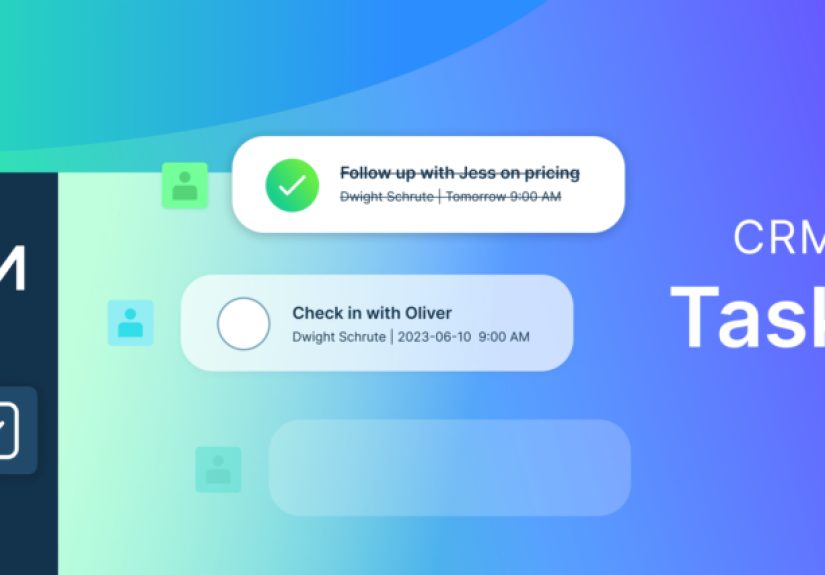
In sales, a task is a single, owned action that moves a deal forward: a call, a follow-up email, a
document request, a stakeholder intro, a timeline confirmation, a legal handoff. Not a novel. Not “handle procurement.”
One action, one outcome.
Tasks vs. Events vs. Notes (Quick sanity check)
- Tasks = something someone must do (and by when).
- Events = time on calendars (meetings, demos, workshops).
- Notes = context and decisions (what happened and what it means).
Your pipeline needs all three, but tasks are the gears. Notes explain the “why.” Events create the “when.” Tasks make
the “then” happen.
The Core Rule: Every Interaction Must Create a Next Step
If a call ends without a concrete next step, you didn’t “have a great conversation.” You hosted a podcast episode.
Great sales calls end with commitment: a scheduled meeting, a promised intro, a technical review date, a draft agreement,
a budget confirmation. And the moment you get that commitment, it should become a task with an owner and due date.
Make the task painfully specific
Compare these two:
- ❌ “Follow up with buyer.”
- ✅ “Email recap + ROI summary; ask for security questionnaire; due Wed 2pm.”
Specific tasks reduce “I’ll do it later” because they remove the need to think. And thinking is where procrastination
does its best work.
Build a Deal-Momentum Task System (That People Actually Use)
1) Use the pipeline as a to-do list, not a museum exhibit
The healthiest pipelines treat stages as activity checkpoints. A deal moves stages because an action happenednot
because someone felt optimistic on a Monday morning. When your stages map to real actions, your pipeline tells you
exactly what’s done, what’s next, and what’s stuck.
2) Standardize “next step” task templates by stage
Create a small menu of default tasks for each stage so reps don’t reinvent the wheel:
- Discovery: confirm pain, stakeholders, timeline; schedule demo/workshop.
- Evaluation: send recap; share case study; schedule technical deep dive.
- Proposal: confirm decision process; align on success criteria; set pricing review.
- Procurement/Legal: deliver docs; assign internal approvers; confirm signature date.
- Closed-won handoff: kickoff scheduling; onboarding checklist; executive sponsor intro.
3) Create a daily “Today List” that’s priority-based
A long task list is just anxiety with checkboxes. Instead, force a daily shortlist: the 5–12 actions that move revenue
today. Many CRMs and sales platforms help you filter tasks by due date, type (call/email), and priority so your
day starts with a clear playbook instead of a scavenger hunt.
4) Use task queues for team selling
Complex deals aren’t won by lone wolves; they’re won by coordinated packs (in the nicest possible way). Use task queues
for shared responsibilities:
- SDR queue: first-touch + follow-up sequence tasks.
- AE queue: next-step alignment + stakeholder mapping.
- SE queue: technical validation tasks.
- RevOps/Deal Desk queue: approvals, pricing exceptions, paperwork routing.
Automation: Save Humans for Human Work
Automation should do the boring parts: creating reminders, routing tasks, nudging when deals go quiet, and logging
predictable follow-ups. Humans should do the meaningful parts: discovery, problem-solving, negotiation, trust-building.
High-impact automation triggers
- Inbound lead arrives → create an immediate follow-up task and assign by territory or account owner.
- Meeting logged → auto-create a 48–72 hour follow-up task (“recap + confirm next step”).
- Email opened but no reply → schedule a call task for the next business day.
- Deal sits too long in a stage → create a “stuck deal review” task for rep + manager.
- New decision-maker appears → create a task to tailor messaging and request an intro.
The point isn’t to automate everything. The point is to automate the forgettable thingsbecause forgetting is
expensive, and your competitor is not forgetting.
Cadences: Tasks as the Backbone of Follow-Up
“Follow-up” shouldn’t be a mood. It should be a cadence: a structured sequence of touches across email, phone, and
social. The magic of cadences isn’t spamming people; it’s consistency. Most prospects won’t respond to one message,
and task-driven cadences keep you persistent without being chaotic.
A simple, sane follow-up cadence (example)
- Day 0: recap email + confirmed next step (task due same day).
- Day 2: call attempt + voicemail (task).
- Day 4: value add email (case study, ROI insight) (task).
- Day 7: LinkedIn touch + comment on relevant update (task).
- Day 10: “close the loop” message with an easy out (task).
Notice what’s missing: desperation. Notice what’s present: a plan. Task management turns the plan into execution.
9 Task Types That Keep Deals Alive
If you want “keep deals moving forward” to be more than a motivational poster, build your task library around actions
that reliably create momentum:
- Recap + confirmation: summarize decisions, confirm next step, confirm date.
- Stakeholder expansion: identify who cares (finance, security, ops) and assign intro tasks.
- Risk removal: security questionnaire, compliance docs, implementation plan tasks.
- Value proof: ROI model, benchmark, business case, mutual success plan tasks.
- Champion enablement: give buyer internal-email draft + slide deck + FAQ tasks.
- Decision process mapping: clarify steps, approvals, and timeline tasks.
- Commercial alignment: pricing review, legal redlines, procurement steps tasks.
- Mutual action plan: shared checklist with dates (tasks) for both sides.
- Post-sale continuity: kickoff scheduling + onboarding handoff tasks.
How to Measure Task Quality (Without Becoming a Spreadsheet Gremlin)
Counting tasks completed is like counting steps on a smartwatch: useful, but not the full story. What you want is
task quality and task impact.
Metrics that actually help
- Overdue task rate: if it’s high, your process is unrealisticor your priorities are unclear.
- Time-to-next-step: how long between customer interactions and the next scheduled action?
- Stage aging with activity: deals can sit, but they shouldn’t sit silently.
- Follow-up coverage: percentage of deals with a future-dated next-step task.
The goal is visibility: you should be able to glance at a deal and instantly know the next move, the owner, and the
due date. If that’s not true, your “pipeline management” is just pipeline hope.
Common Task Mistakes (And the Fixes)
Mistake: Tasks are too big
Fix: break them into atomic actions. “Move procurement forward” becomes “send vendor packet,” “schedule legal review,”
“confirm signature date.”
Mistake: Tasks aren’t tied to outcomes
Fix: include the purpose in the task title. “Call CFO to confirm approval path” beats “Call CFO.”
Mistake: Tasks don’t have owners
Fix: one owner per task. Collaboration is great. Shared ownership is how tasks go to live on a farm upstate.
Mistake: Reps drown in reminders
Fix: prioritize. Not every task is urgent. Use “Today,” “This week,” and “Later” buckets so the list doesn’t become a
graveyard of good intentions.
A Concrete Example: From Demo to Signature Using Tasks
Let’s say you run a demo on Tuesday. Here’s what a momentum-focused task chain can look like:
Day of demo (Tuesday)
- Task 1: Send recap email with decisions + next meeting options (due 2 hours after demo).
- Task 2: Log key pains + success metrics in CRM notes (due same day).
- Task 3: Create “Stakeholder map” task: list missing roles (security, finance, ops) (due EOD).
Two days later (Thursday)
- Task 4: Call champion to confirm internal timeline + approval steps.
- Task 5: Send ROI snapshot tailored to their stated business impact.
- Task 6: Book technical validation session with SE (or schedule it yourself).
Next week
- Task 7: Deliver security docs / SOC 2 / questionnaire (as applicable).
- Task 8: Draft mutual action plan with dates (shareable doc).
- Task 9: Proposal review meetingconfirm commercial terms and success criteria.
Procurement and close
- Task 10: Route internal approvals (discounts, legal, finance).
- Task 11: Confirm signature date and onboarding kickoff date.
- Task 12: Post-sale handoff: kickoff agenda + stakeholder intros.
This looks like a lot, but it’s the opposite of chaos: it’s clarity. The deal moves because the work is visible, owned,
and scheduled.
Conclusion: Tasks Keep Deals Honest
“Keep deals moving forward with tasks” isn’t about adding more busywork. It’s about designing a system where momentum
is the default. Tasks create a single source of truth for next steps, prevent leads from slipping through the cracks,
and give managers real coaching data instead of “I think it’s going well.”
If you want a simple starting point, use this rule for the next 30 days: no deal exists without a future-dated
next-step task. You’ll be amazed how quickly your pipeline goes from “mysterious” to “manageable.”
Bonus: of Real-World Task Experiences (The Kind You Only Learn After Missing a Quarter)
Here’s what tends to happen when teams start taking tasks seriouslynot in theory, but in the messy reality where
calendars explode, champions go on vacation, and procurement moves at the speed of a cautious turtle.
First, the best teams stop treating tasks like a personal reminder app and start treating them like a deal
contract with themselves. One sales org I observed had a rule: if you leave a customer meeting without a task
due within 24 hours, you owe your team donuts. It sounds silly until you realize donuts are cheaper than a stalled
six-figure deal. The rule worked because it forced a habit: recap fast, confirm next step, keep the thread warm.
Second, people learn the difference between activity and progress. Teams often “do a lot” and still
lose because their tasks aren’t tied to buyer movement. A rep can complete 30 tasks and still be spinning if none of
them answer the buyer’s real questions. The turning point is when tasks are written like mini hypotheses:
“If we deliver the security packet by Friday, we remove the #1 blocker to legal review.” Suddenly, the list becomes a
strategy, not a chore.
Third, automation quietly saves relationships. When inbound inquiries hit at 4:58 p.m., the human brain hears, “Tomorrow.”
Automation hears, “Now.” Teams that auto-create follow-up tasks for new leads consistently respond faster, which changes
the tone of the entire relationship. The buyer feels prioritized. The rep doesn’t feel guilty. And nobody has to pretend
they “just saw this” three days later.
Fourth, a good task system exposes weak pipeline hygiene in the most helpful way: it makes the gaps obvious. If your
“Proposal” stage has no tasks related to decision process, approvals, or timeline, you don’t have a proposal stageyou
have a wishful thinking stage. Teams that win more deals usually aren’t doing magic; they’re simply running a
repeatable checklist that covers stakeholder mapping, value proof, and risk removal every single time.
Finally, the best improvement is cultural: tasks become a shared language. Managers stop asking, “How’s the deal going?”
(which invites optimism) and start asking, “What’s the next task, who owns it, and when is it due?” (which invites truth).
That shift creates better forecasting, better coaching, and fewer end-of-quarter surprisesbecause surprises are fun at
birthday parties, not in revenue meetings.






 Close
Close